Novel Kicks Writing Room: Two Strangers, One Bench
 Welcome back to the Novel Kicks Writing Room.
The focus of today’s exercise is two strangers, one bench.
Two strangers sit down on the same bench. They don’t know each other. They have never met before. Something small happens — a dog runs past, a phone rings, a bus doesn’t arrive — and one of them speaks. A conversation begins.
By the end of the conversation, one of them will have changed their mind about something.
Before you write a single word of dialogue, jot down brief notes on each character. For each one, decide:
How old are they roughly?
What were they doing before they sat down?
What is on their mind today that they haven’t told anyone?


 by

A Moment With… Dr Martyn Pritchard
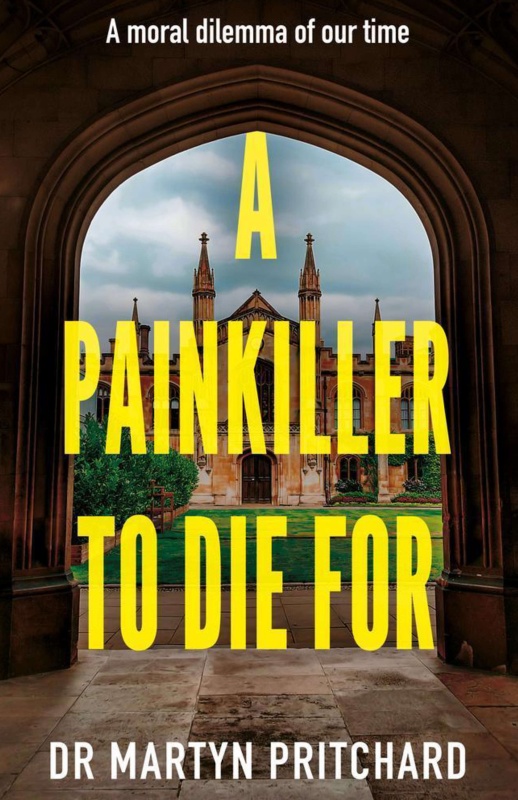 I am pleased to welcome Dr Martyn Pritchard to Novel Kicks as we shine a light on his book, A Painkiller to Die For. It’s celebrating one year since its publication.
It was difficult for Will Jeavons to imagine just how his life could possibly get any better. Having overcome a traumatic childhood, he had gone on to study molecular pharmacology and win tenure as a lecturer at his beloved Cambridge University. But his life was soon to become better still, the CEO of a biotech company. Will’s unique research led to the discovery of a non-addictive drug for chronic pain. A remarkable solution for the opioid epidemic which had claimed the life of his mother.
Will’s flourishing company was subsequently acquired, and this was when he first met Celeste Simmonds. The beguiling Celeste would steer Will away from his earlier hedonistic, womanising lifestyle. However, the only way he could ensure the success of his drug was to bury key safety data which could have led to the clinical trials being terminated.
Clinical trials which resulted in the husband of Lydia Goldberg falling into a deep coma. It was Lydia’s scientific training which led her to discover Will’s fraudulent cover-up. She was determined to seek vengeance and concocted an elaborate honeytrap and a decision for Will to make. A career ending confession or being submitted to a life-threatening game of Russian roulette.
To talk about his experience with writing, it’s over to you, Martyn.
Why write novels? Why ‘A Painkiller to Die For’? A reasonable enough question, I suppose, to ask a career scientist who only passed his English Language O-level after two attempts. As with most novelists, I imagine, it was a combination of events which made me open up my laptop some 25 years ago and type those first few words. Those early efforts in the noughties amounted to a rather disjointed first 100 pages or so which were almost completely rewritten when Covid came along and the free time I needed to dive back into the book.
The overall premise remained pretty much the same, but the book turned out to be very different to what I had originally imagined all those years ago. ‘A Practical Arrangement’ was my first novel and came out towards the end of 2023 but not under my name! I used the nom de plume of Verity Trevethan as my assumption was that those few who ended up reading the book would give bad reviews. Poor Verity could shoulder the blame. But there were a few readers who wrote very generous commentaries and so Verity was outed to my family soon after publication (they never even knew I was writing a book!).

 by
Novel Kicks Fiction Friday: The Photograph
 Welcome to Fiction Friday, our weekly flash fiction challenge.
Here’s how it works:
Set a timer for five minutes and start writing
Keep going for as long as you can once the timer goes off
No editing allowed—raw writing only
When you’re finished, feel free to share in the comments (but there’s no pressure.)
Today’s prompt – The Photograph.
A woman buys a second-hand coat from a charity shop. When she slips her hands into the pockets, her fingers close around a photograph she’s never seen before. Two people she doesn’t recognise, standing somewhere she’s never been, smiling at someone she’ll never know.
Write the moment she finds the photograph. What does she see in it? What details does she notice — the background, the clothing, the expressions, the light? What story does she begin to piece together from the image alone?
Write what she does next. Does she try to trace the people in the photograph? Does she keep it? Does something about the image unsettle her, comfort her, or mirror something in her own life she wasn’t prepared to face?

 by
Book Review: If Could Be With You By M W Arnold
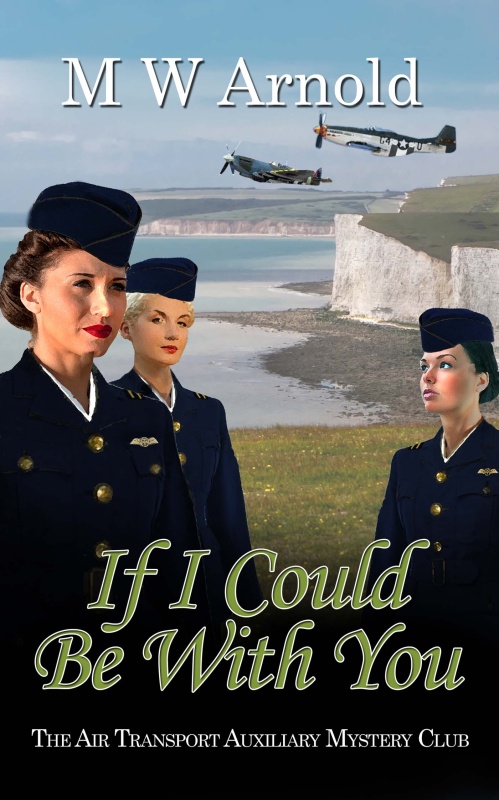 I am so happy to welcome M W Arnold back to Novel Kicks as we take part in the blog tour for If Could Be With You.
May 1944, it’s the build-up to D-Day, for which the girls of the Air Transport Auxiliary Mystery Club are busy delivering the aircraft sorely needed, and the search goes on for a Nazi spy, who has information which cannot be allowed to get into the enemies hands.
For one of the girls, her husband in badly burned after his Mosquito is shot down, bringing the war closer to home than it’s ever been before.
With danger at every corner, the girls unbreakable bond is put to the test like never before. Through it all, they stand firm, taking all the war can throw at them, before daring it to try again.
*****
The girls of the ATA are back, and they have new challenges to face. When two of the girls hear devastating news, one is fighting old memories, and the hunt for a Nazi spy intensifies, the gang must pull together as D-Day approaches.
Oh, it’s so good to be back with the girls of the Air Transport Auxiliary Mystery Club. I know I have said this before in other reviews from this series, but it really is like going back to visit old friends and being welcomed with open arms. It’s for this reason that I always jump at the chance to join the blog tours for the Broken Wings series and why I couldn’t wait to get started – and it’s a chance to welcome Mick Arnold back to Novel Kicks too.

 by
Novel Kicks Writing Room: The Object
Welcome back to the Novel Kicks Writing Room.
Today’s exercise is about looking at something a different way.
First, choose your object –
Look around you right now. Pick the first object that catches your eye. It could be anything — a mug, a set of keys, a book, a pen, a candle. Don’t overthink it. Just choose.
Observe it –
Take a few minutes to study the object closely. Notice the details you’d normally overlook — the texture, the weight, the colour, the wear and tear. Does it have a scratch, a chip, a stain? Write down five specific physical details about it in short, precise sentences.
Now it’s time to give it a history –
Now, imagine this object belongs to a fictional character. Write a short passage (150–250 words) from that character’s perspective explaining how they came to own it and why they could never throw it away. Think about:
Who gave it to them, or where did they find it?
What memory is attached to it?
What would losing it mean?
Don’t worry about perfection. Just write.

 by
Book Club