A Moment With…Deborah Lawrenson
 Monday has rolled around once again and we are now over halfway through November and National Novel Writing Month. Most of the people taking part will be over 25,000 words into their NaNoWriMo novel (or not even close if you are having a writing month like mine.) At this stage, it’s very easy to fall into the mid-book slump. Later on today, we will be hearing from Cathy Kelly with her advice on how to conquer the mid-book slump but first, we hear from the author of The Sea Garden, Deborah Lawrenson. She gives us her advice on what she does to get through it.
The mid-book slump is a genuine threat. For me, it’s the moment when the thought strikes that what I’ve written so far might all be a load of rubbish, an implausible story and so tangled that any readers will rip it to shreds. How do I get over it?
I just walk away from it for a few days. I don’t stop working, though. I keep a notebook for each book, beginning with ideas, details of characters, reminders to myself, and whole passages of writing I’ve played around with. This is the time to re-read the notebook, and keep it close to jot down my thoughts.


 by

Novel Kicks Chats To: Jo Mazelis
 Jo is the author of non-fiction, poetry and short stories. Her first novel, Significance was released by Seren Books last month. We had a chat with Jo about her book, her ideal dinner guests and her favourite word…
Hi Jo, thank you so much for joining us. Can you tell us about your novel, Significance and how the idea originated?
The idea for the novel came from two sources; first, a sort of unease about reading and watching stories about murder. Like a lot of people I have enjoyed the recent Nordic Noir TV series The Killing and The Bridge, and I’ve also enjoyed novels on the same theme. On the other hand real murder as it hits our headlines is brutal and awful and it has often been said that while we remember the names of the killers the victims’ names are forgotten. I think the book is also informed by a series of murders in the town where I lived of three girls the same age as me at the time. Two of them had been to the same club as my friend and I on the night they died and so obviously this had an impact, and while I never knew them I have never forgotten them. So it was exploring these memories and ideas that provided the backbone of the book.
Out of all the books you’ve read, which three have made the most impact on you?
So many books come to mind, but for different reasons – if I think about impact my first thoughts go to those books that had a real emotional impact – for example, Sophie’s Choice by William Styron, one passage of which made me weep loudly and uncontrollably on the London underground. Edna O’Brien’s The Country Girls Trilogy has also remained memorable for its tragicomic scenes and O’Brien’s droll understated humour. Ian McEwan’s collection of short stories, First Love, Last Rites impressed for the strangeness of the situations his characters found themselves in, the borderlands of loneliness and love with dark undertones of decay.

 by
Novel Kicks Fiction Friday: Memory Loss
 Friday 14th November 2014: Memory Loss.
Fiction Friday is our weekly prompt. The aim is to write for a minimum of five minutes and then keep going for as long as you can. Once you’ve finished, don’t edit, just post in the comments box below.
Today’s prompt: You wake up in a strange hotel room. You appear to be alone but the room is messy and there were signs of a party. You don’t remember anything. You spot a digital camera on the bedside table. On it is a photo of you with a mystery person. This is the first clue as to what happened the previous evening. You begin to try to work out the chain of events….

 by
Novel Kicks Chats To: Kerry Barrett
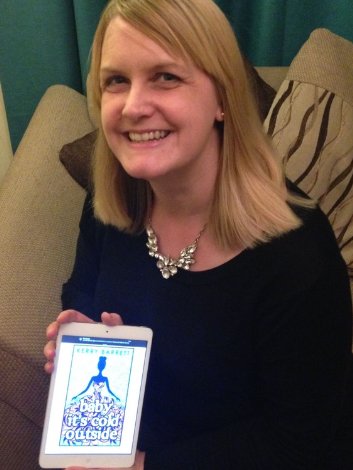 Kerry is the author of the Could It Be Magic series. The first in the series is Bewitched, Bothered and Bewildered followed by I Put a Spell on You. The third book in the series, Baby, it’s Cold Outside was released at the beginning of last month. We had a catch up with Kerry where we chat about her book series, her writing rituals and Chocolate!
Can you tell us a little about your Could It Be Magic Series?
The series follows Esme, who’s a lawyer, and her cousin Harmony, known as Harry. Harry runs her own business and is a successful, sassy, together 30-something. Esme’s a few years younger. She’s more relaxed than Harry – about some things. Oh, and they’re both witches. Esme is reluctant to use the powers she’s inherited from her mum while Harry embraces them and has built her whole life around them.
Is there a fictional character you’d like to swap places with for a day and why?
Oooh, that’s a good question! I think I’d like to swap places with Becky Bloomwood from Sophie Kinsella’s brilliant Shopaholic novels. She always has so much fun!
Out of all the books you’ve read, which three have impacted you most and why?
At the moment I can’t stop thinking about The Woman Who Stole My Life – the latest novel by Marian Keyes, which I have just finished. It’s really staying with me and I keep wondering what I would do if I found myself in Stella’s position. It’s very thought-provoking. Another book that has stayed with me is Life After Life by Kate Atkinson, which I absolutely loved because of all the alternatives it offered. I find myself thinking about that a lot. And Possession by AS Byatt is the most perfect novel I’ve ever read. I remember when I finished it thinking I’d never have to read another novel again because that was always going to be the best. In fact, I’ve read hundreds – thousands probably – of novels since then and I must go back an re-read it to see if I still think that way!

 by
A Moment With…. Margaret James
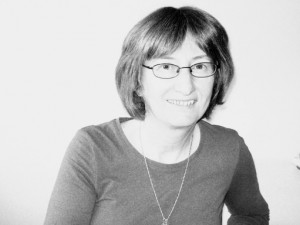 Day twelve of National Novel Writing Month. So far we’ve heard from Jill Mansell who talked about planning a novel, Victoria Fox who gave us advice about discipline and Milly Johnson who chatted to us about heroes. Today, Margaret James joins us. She talks to us about what elements she believes creates a great story.
A great story needs a great premise – think of the tag lines and/or memorable quotes from some of the movies you’ve seen and you’ll soon come up with one yourself. Here are a few to get you thinking.
Love means never having to say you’re sorry.
You killed my father so prepare to die.
Houston, we have a problem.
Toto, I have a feeling we’re not in Kansas any more.

 by
Book Club