NaNoWriMo Author Advice: Day Fourteen
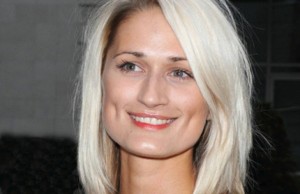 On day 14 of NaNoWriMo, Victoria Fox chats to us about editing.

My advice? Keep going, keep going, keep going. Don’t look back. If I stop after every chapter and try to edit what I’ve done, I get sucked into changes and tweaks and I never push on with the word count. This can shake your confidence, especially if you’re a perfectionist. So much will change when you’ve finished – scenes you thought were terrible suddenly have a new significance; likewise others you loved might no longer be needed. You can’t know your parameters until you’ve written ‘The End’ and you have an entire book. Keep going until you get there, a little every day.
For more information on Victoria, visit http://www.victoriafox.net/


 by

NaNoWriMo Author Advice: Day Thirteen
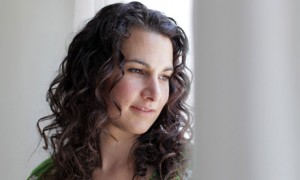 It’s day thirteen of National Novel Writing Month. Today, Michele Gorman, the author of Single in the City and Christmas Carol, talks about recurring characters…

Hi Laura, thanks for asking me on the blog today, and best of luck to everyone participating in NaNoWriMo!
Writing recurring characters is a bit like visiting an old friend. Of course you love her, but you also know all about her flaws. And so do your fans.
Plus: You already know the character. This makes it easy to put her into a new situation and know how she’ll behave.
Minus: You already know the character. It can be difficult to sustain your enthusiasm for the book over 80,000-100,000 words.
Plus: Continue reading

 by
NaNoWriMo Author Advice: Day Twelve

Freya North
Day twelve of National Novel Writing Month. Freya North gives us her writing advice.
Write because you want to tell stories, not because you ‘want to be a writer’
Look after your posture – this is ESSENTIAL!
Don’t spend too long faffing and editing – that’s just a fancy way of procrastinating.

 by
My Writing Space: Meredith Goldstein
 Meredith Goldstein is the author of The Wedding Guests. She chats to us about her writing space.

I used to have to leave my apartment to work on “The Wedding Guests.” I’d lock myself in my friend’s beach house where I had no cell phone reception, or I’d go to my Aunt Nancy’s and hide in the basement where there was no TV. I had to block out all distractions. I had no attention span whatsoever. But I’ve matured since then. (Sort of.) Now that I’m writing my second book, I don’t have to hide in remote locations. I can write in my bedroom, and the décor is all the motivation I need. On the wall in front of my writing spot (my very fluffy bed) is a painting of cotton candy, my favorite sweet. My friend’s ex-husband, a professional artist, made it for me as a housewarming present. They decided to divorce shortly after I hung the piece on my wall. I almost took it down after they split, but then I remembered that it’s my friend’s hand in the painting. She was the model, holding up the cone of cotton candy while he tried to get it down on canvas. There’s something inspiring about having the finished product nearby as I write. My friend’s hand looks so tough, so determined — just like she was in real life after the divorce. I see her strong grip and I think, “Keep moving.”

 by
NaNoWriMo Author Advice: Day Eleven
 Matt Dunn is the author of A Day at The Office. On day eleven of National Novel Writing Month, he tells us how we need a good plot…

Whether you’re an author writing a novel, a gardener on an allotment, or an evil genius planning to take over the world, if there’s one thing you need, it’s a good plot. Assuming you’re reading this because you’re doing NaNoWriMo (so we’re talking about novels here), put simply, a plot is the sequence of events that make up a story – and while the order of those events (and of course, the events themselves) are up to you, getting that order (and the events) right is crucial if you’re going to engage the reader. I’m a romantic comedy novelist, and while everyone knows how romantic comedies go (girl meets boy, stuff happens, girl and boy end up together), it’s always helped me to think about my plots (the stuff that happens) not as HOW they get together, but as what STOPS them from getting together. Some writers plot their whole novels before writing a word, others just sit down, start writing, and see how the plot develops. I’ve tried both approaches, and probably prefer the latter. But if you like to plot beforehand and are having trouble, you’ll be pleased to hear seven ready-made ones already exist for you to choose from for FREE (don’t believe me? Just type ‘The Seven Basic Plots’ into Google). Presumably you know the start and end points of your novel – then ‘all’ you need to do is pick the one that applies to your story/setting/characters and get writing!

 by
Book Club