Clink Street Spring Reads 2018: Extract from The Book of Air by Joe Treasure
 The Clink Street Spring Reads 2018 event is back with Novel Kicks and I am happy to be welcoming Joe Treasure to the blog today. His novel, The Book of Air was released by Clink Street Publishing on 4th April 2018.
Joe and Clink Street have shared an extract today.
**** Start of extract****
Baptised in the river
In his teenage years, Jason, his mother and his younger sister Penny are part of a Christian community, travelling on the ‘ Jesus Bus’. When the decision is taken to settle permanently in a farmer’s field, Derek, their leader, sets about re-baptising everyone. Jason is the last.
Next day I sat with the others for breakfast. My mother brought me bacon and eggs and some black pudding, which she knew I liked. She gave me a pleading look. ‘Be a good boy, Jason. This is our future now.’
Derek stood up and said that everyone had been baptised except me, and today it was my turn. ‘From now on,’ he said, ‘you shall be called Tarshish.’
I knew he meant to humble me. I said, ‘Who’s Tarshish when he’s at home?’
And Derek said, ‘You know, Tarshish son of Javan son of Gomer son of Japheth son of Noah who built the ark and lived for nine hundred and fifty years.’
And I said, ‘B***** that, I’m not changing my name to Tarshish.’
And Derek got in a strop. ‘You wanna watch it son,’ he said. ‘I’ve had my eye on you, and I reckon you been pitching your tent towards Sodom.’
‘That’s a lie,’ I said, ‘a f******* lie and you know it.’
For a moment I thought he was going to hit me. But he closed his eyes and started praying. ‘Dear Lord Jesus Christ, if it be thy will, cleanse this child of his foul words and foul thoughts and whatever else he’s been getting up to.’ He took a deep breath, while the wind touched the leaves with a dry sound. Then he opened his eyes and said, ‘Come on Lester. Lloyd. Let’s get on with it.’
I turned to run, but Lloyd was standing in my way. I felt his meaty hands on me. Then my legs were lifted off the ground. I saw faces swing past – Granny Cheryl with one hand over her mouth, little Tiffany squirming on her lap, Penny frowning. I saw my mother’s eyes, large and sorrowful, before her head dropped. They carried me into the river and held me upright while I kicked about to find my footing.


 by

NK Chats To… A.K. Mills
 Your book is called The Snow White Effect. Can you tell me about it and what inspired the story?
My sister was diagnosed with leiomyosarcoma in 2013 after having a laparoscopic hysterectomy. We learned shortly after her diagnosis that her cancer had been made worse by the tool used in her procedure. As a writer, I wanted to help tell her story to prevent it from happening to more women. It’s a love story wrapped in a medical drama. Being told through four different vantage points allows the reader to see the story from more than one angle.
What elements do you think make a good novel?
Twists. In every story I write, I try to have at least one twist the reader didn’t see coming.
Can you talk me through your writing process from idea to editing to pitch.
All of my writing starts with one main idea. I have a basic idea of where I would like to see the story go, but I never hold myself to any one path. Instead, I allow for the characters to develop and tell their stories through me. I am blessed to have a supportive family. My mom and sister always read the first version of my manuscript and offer their brutally honest opinions. From there, I make changes and edits. At that point I usually walk away from it for about to weeks. After a couple of weeks, I come back to it and re-read it. If I’m happy with it, I’ll send it to my editor. I’ve been fortunate enough to work with a great editor who challenges my writing and thought process at every level. The editing process with her takes about two months, after which I know my book is ready. The pitching process is my least favorite because I don’t like to talk about myself. But I believe in my writing, which helps me pitch my stories.
What is your typical writing day like? Do you have any rituals like lots of coffee or writing in silence?
Tea and music. I love tea. I am a big tea drinker. So when I start writing, I always have a steaming fresh cup next to my computer. I’d like to say I have a writing ritual, but with young children I write when I can. Most of my writing is done at night when everyone is asleep. I tend to become an insomniac when I am in the middle of a story. Music is also important for me because it helps me feel the mood I am writing. By the time my manuscript is complete, I have a playlist to go along with it.
What is your favourite word and why?
Hope. Life is full of lows and high. Hope bridges the gap between the two. It gets us through the lows so we can attain the highs.

 by
Clink Street Spring Reads 2018: Lee Cockburn and Creating a Sinister Villain
 Clink Street Spring Reads 2018 has arrived at Novel Kicks and I am pleased to be welcoming the author of Devil’s Demise, Lee Cockburn to the blog. Lee, how do you create a sinister villain?
In everyone’s mind, there are ideas of what a villain should be, so it is a very individual thing, each to their own, as to what would make a realistic and frightening bad guy so to speak, they come in all shapes and sizes, many blending in unnoticed in society, living along side us.
My villain in Devil’s Demise is truly evil, filled with hate and anger with a genuine belief that these feelings truly lie at the feet of the women he now hates, which of course is absolutely not the case, and his failings and attitudes in life are his own doing and no-one else can be blamed.
What makes a villain sinister and frightening, is what he or she is capable of, the fear they install in others, the victim’s inability to defend themselves against them, or to get escape from them and all of these factors put together, set the scene for a terrifying situation, the one of desperation and helplessness, and true fear of the baddie!.
Eyes are very important, soulless eyes, eyes that show no emotion, no hint of remorse or willingness to listen or understanding the pleas of their victims, evil emotions fixed on their prey and totally focussed on what they intend on doing, leaving no chance for a change of heart, no human caring emotions, no conscience or remorse, just a broken mind, filled with hate and intent.
Throughout the novel I play on the readers fear too, they put themselves in the situation of futility, helplessness, and terror , one of sheer desperation and in their minds they too become truly frightened of the monster, the shape or vision they have created by themselves of villain’s appearance and genuinely fear this person.

 by
 A big massive hello and welcome to Carole Matthews. I am pleased to be kicking off the blog tour for her new novel, Million Love Songs which was released by Sphere on 22nd March 2018.
Ruby Brown is ready for a change. She’s single for the first time in years and she’s going to dive into this brave new world with a smile on her face and a spring in her step. The last thing she’s looking for is a serious relationship.
Mason represents everything Ruby wants right now: he’s charming, smooth and perfect for some no-strings-attached fun. Joe on the other hand is kind and attractive, but comes with the sort of baggage Ruby wants to avoid: an annoyingly attractive ex-wife and two teenage children.
Ruby thinks she knows what she wants, but is it what she needs to be truly happy? It’s about to get emotional in Million Love Songs.
Carole has created a spotty playlist for this new book which you can check out here: https://open.spotify.com
Looking at this playlist, it has me thinking about my favourite love songs. I am very much a hopeless romantic. A romantic film, a song about love and I am trying not to cry.
There are many love songs I love and to be honest, I have found it hard to pick. Therefore, I have picked three (i know, it’s cheating but I don’t care.)

 My first favourite is one that is also on Carole’s list and that is ‘I Knew I Loved You’ by Savage Garden. This song was the one played for the first dance at my wedding and so it will always hold a special place.
My second favourite is ‘She is Love’ by Oasis. This is a great, upbeat love song (and in my opinion, one of the songs by this band that I can hear The Beatles sing.)
My final favourite is ‘Once in a Lifetime’ by Landon Austin. This song is a beautiful song that I just think is very romantic.

My verdict on Million Love Songs:

 by
Book Extract: The Zero and The One by Ryan Ruby
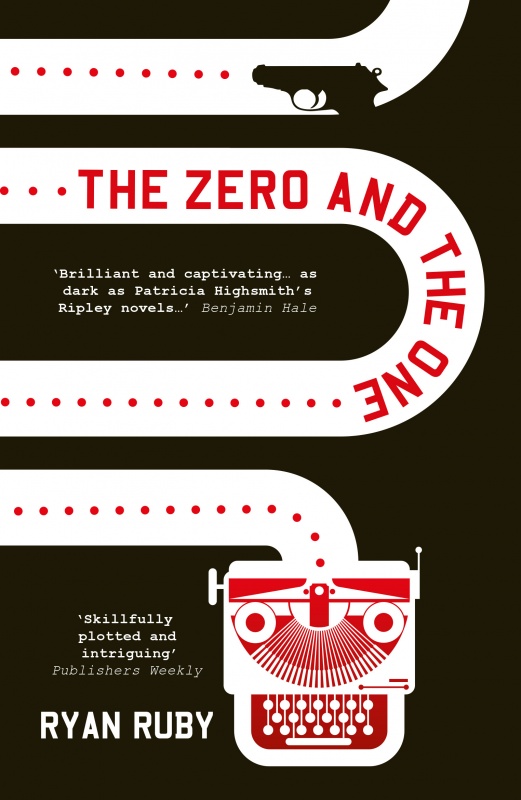 Zero and The One is the latest novel from Ryan Ruby. It was released by Legend Press on 15th March. Ryan and his blog tour join me today.
A bookish scholarship student, Owen Whiting has high hopes of Oxford, only to find himself immediately out of place. Then he meets Zachary Foedern from New York. Rich and charismatic, Zach takes Owen under his wing, introducing him to a world Owen has only ever read about.
From Oxford to the seedy underbelly of Berlin, they dare each other to transgress the boundaries of convention and morality, until Zach proposes the greatest transgression of all: a suicide pact. But when Zach’s plans go horribly awry, Owen is left to pick up the pieces and navigate the boundaries between illusion and reality to preserve a hold on his once bright future.
Thanks to Ryan and Legend Press, we have an extract to share with you today.
******* Start of extract.*******
RITUALS OF SUSPENSION.— The ritual that can withstand the deadening weight of its own unbroken repetition has yet to be choreographed. Any ritual so rigid that it fails to include the means of its own periodic suspension is bound to go extinct.
Pembroke is one of the smallest and poorest of Oxford’s colleges. The Cotswold stone buildings seem to turn inward, away from bustling St. Aldate’s, as if ashamed of the plainness of their features. The Old Quad, where I was given rooms, lies quite literally in the shadow of the fairer sister over the road. Tourists would come from round the world to visit Pembroke Square, only to turn their backs on our Porter’s Lodge so they could have a better angle from which to snap a photograph of Tom Tower, the lavishly ornamented gateway to Christ Church.
The college was old enough to have produced a few notable alumni, but the most famous of them, Samuel Johnson, was sent down after a year for a lack of funds. Today, its students are better known for the speed of their oars on the Isis than the speed of their pens in the Exam Schools. It is largely made up of those like me, who have what the Student Union euphemistically calls non-traditional backgrounds, and who were only able to attend the oldest university in England by grace of what the Bursar called, rather less euphemistically, hardship grants. (Mine in particular were nanced by the sale, a few years previously, of Man in a Chair, an early painting by Francis Bacon, a poster of which was the only decoration on the walls of my rooms.) Rounding out the Junior Common Room were the thicker products of the public schools, Erasmus scholars from the continent, and Americans on their year abroad.
Of this last group there were around twenty, paying American tuition fees to add English polish to their CVs. The reason for their presence at Pembroke was nakedly economic, a way for a college whose endowment consisted almost entirely of subsidies from its wealthier neighbours to generate a bit of additional revenue. They were lodged in the back staircases of the North Quad, on the main site, with the rest of us first years. Though they were only two years older than I, and though they were living, many for the first time, in a country not their own, this slight difference in age lent them an air of cosmopolitan sophistication; I certainly wasn’t the only one to regard the visiting students, as they were called, more as elders than as peers. For better or worse, they generally had the run of the place.
 Zach was not long in distinguishing himself, mostly through skirmishes with various members of the college staff concerning the finer points of college etiquette. The first time I recall seeing him, he was being reprimanded by Richard Hughes, the Head Porter, a lean and sallow-faced man in his fifties, whose fingernails were worn longer than his sense of humour. I remember looking out my window to see what the fuss was about below. Zach, it seems, had walked across the immaculate square of lawn in the Old Quad on his way to the pantry. Not content to defer to authority — or local custom — he was demanding, in those at syllables I’d come to know so well, the explanation for such an absurd rule. The one he was given (“only fellows and newlyweds are permitted to walk on the lawn of the Old Quad”) didn’t satisfy him. He demanded another. The exasperated Head Porter told him that it was “out of respect for the sleep of the dead monks who are buried there.” To this he nodded, convinced and perhaps a tad impressed. But whenever he walked through the Old Quad, he made sure to toe the cobblestones near the edge of the lawn, not seeming to care, now that he had been reprimanded, that he was liable to pay a ne if he lost his balance.
A fortnight later, I was sitting alone at what had already become my regular seat at my regular table, reading whilst I waited for Formal Hall to begin. I was dressed subfusc— jacket, white bowtie (in my case poorly knotted), black commoner’s gown— the requisite attire. Zach arrived in the company of Gregory Glass, in the middle of a heated political debate.
“I can’t believe what I’m hearing!” Gregory was saying. The other visiting student from Columbia, Gregory was short and barrel-chested, with long curly brown hair that was held off his face, no matter what time of day, by a sporty pair of sunglasses. I’d already seen him several times at macroeconomics lectures, furiously scribbling away in the front row. That term, not a single lecture would conclude without Gregory raising his hand to ask a question, or rather, to give a meandering observation in an interrogative tone.
He asked me if they could sit at my table and, without waiting to hear my answer, continued talking to his friend. “Don’t tell me,” he said, in a voice that could be heard from one end of the hall to the other, “you’re going to throw your vote away on Nader!”

 by
Book Club
Recent Comments