Book Reviews : The Lighthouse by P.D James.
The Lighthouse’ by P.D James.
Read by Michael Jayston.
BBC AUDIOBOOKS LTD.
Review by Laura Parish.
I must admit that Audio Books aren’t my favourite medium for reading fiction. I love holding books in my hand as I read. Therefore, it took me a while to settle into ‘The Lighthouse,’ – not through the story’s fault, but my attention to something I can’t hold as I read. When I discovered that an Audio Book is a perfect driving partner, I was away and then couldn’t stop listening. Continue reading


 by

NK Chats To.... : Alison Baverstock
Alison Baverstock is an experienced Writer, Publisher and Trainer. She’s the author of ‘Is There A Book In You’ and ‘Marketing Your Book – An Author’s Guide.’ Novel Kicks had a chat with Alison to ask her how she approached a typical writing day and which authors she admired the most….
Describe your typical writing day?
I love writing early in the morning, and even more so going to bed thinking that I shall get up early tomorrow to write. There is both a peace and energy about the house first thing in the day – I am aware that my family are asleep beneath me (my writing room is at the top of the house) and that they may wake up soon (although this got less likely as they all became teenagers) so there is a limit on how much time I have. It’s a bit like driving sleeping children in the car at night – you feel responsible, alive and excited.
Once I have written for a couple of hours I stop and then find myself sneaking up to edit or add bits throughout the day – but the main sweep is always done in the morning.
You’re a publisher as well as a writer; what advice do you have for writers submitting work?
Don’t submit until you are ready to be judged by your work. It doesn’t matter how good the marketing package is, or how enticing your cleverly drafted introductory email, if the work is not as good as it could be, it will show. Given that my particular expertise has been marketing it may be ironic for me to say this, but there’s a growing strand to some writing about writing that puts forward the thesis that all that matters is the marketing. It doesn’t, the writing has to be the most important thing.

 by
Book Corner : July’s Book
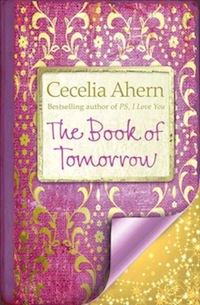 The Book of Tomorrow – Cecelia Ahern
Tamara Goodwin has always lived in the here and now, never giving a second thought to tomorrow. Until a travelling library arrives in her tiny village, bringing with it a mysterious, large leather-bound book locked with a gold clasp and padlock. What she discovers within the pages takes her breath away and shakes her world to its core.

 by
NK Chats To.... : Jonathan Lee
Jonathan Lee is an English author. Who is Mr Satoshi? is his debut novel. We had a chat with Jonathan to find out a little about him and his novel, as well as his writing habits…..
Have you always wanted to write?
I spent quite a long time wanting to be a writer. The only thing I wasn’t so keen on was the actual writing. It’s a bit like that Mark Twain quote about a ‘classic’ book being something that everybody wants to have read and nobody wants to read. I wanted to skip the pencil buying, back ache and paper cuts and have the finished novel in my hands. When I got to university I started penning terrible autobiographical bits and pieces, but I was too preoccupied with other things to have a serious stab at developing any kind of craft. I did a lot of reading, though. With hindsight, that helped me learn some of the tricks a novelist needs.
What was your route to publication?
I’m 29 now. When I was around 25 I had a kind of quarter-life crisis. It wasn’t anything particularly dramatic. I didn’t buy a Porche or run off with anyone inappropriate. But I was sitting in an office in the City all day, wolfing down soggy sandwiches at my desk, and I realised that I hadn’t made any inroads into this niggling ambition of mine, this desire to be a writer. So I started to write more seriously. And then a twenty-something friend of mine published a novel and it did well. The sense of envy probably gave me the final push I needed. I ended up taking six months off work to write full-time. At the end of that period I sent the first three chapters off to a few literary agents, and I was fortunate that Clare Alexander liked what I had sent. We worked together on getting the full manuscript into shape and, a few months later, Jason Arthur called and offered me a two book deal with Random House. I’m skipping over the rejections and the days when things seemed genuinely bleak, but the truth is it all happened very quickly and I was lucky in all sorts of ways.

 by
Book Reviews : Nanny Returns by Nicola Kraus & Emma Mclaughlin
Nanny Returns
Nicola Kraus & Emma Mclaughlin
Simon & Schuster (April 2010)
Review by Laura Parish.
Ten years after the fateful night when Nan was fired, she returns to New York with her husband, HH. Finally settling in to build a permanent home and get her consulting business off the ground, Nan’s plans are derailed by HH’s sudden desire to start a family – and her surpisingly strong resistance to the idea. Matters are further complicated by a late-night, drunken visit from a now fifteen-year-old Grayer, who’s stumbled upon the nanny-cam tape Nan made on her last night in his mother’s employment – and wants some answers. Racked with guilt and struggling to find a way to help Grayer and his seven-year-old brother, Stilton, through their parents’ vicious divorce, Nan finds herself getting sucked into the Upper East Side world of wealth, power and dysfunction all over again. Continue reading

 by
Book Club
Recent Comments