NK Chats To… Eliza J. Scott
 Hello Eliza. I am so happy to be chatting to you today. I am excited to be heading back to Lytell Stangdale with A Christmas Kiss. What is this one about and how does it fit in with the others in the Life on the Moors series?
Hi there Laura, thank you for taking part in the Publication Day Blog Tour for A Christmas Kiss; I’m very happy to be chatting to you, too! So, this book sees us getting better acquainted with Zander Gillespie, who briefly featured in The Secret – Violet’s Story.
After a last-minute change of plans with his girlfriend, he finds himself – and his adorable black Labrador Alf – driving through a snow storm to his holiday cottage in a very wintry Lytell Stangdale. There, in an unusual set of circumstances, he meets Livvie.
Thanks to her boyfriend, she’s also had a last-minute change of plans and has come to Lytell Stangdale to lick her wounds. It soon becomes apparent that fate may have had a hand in their situation and they find themselves fighting a powerful mutual attraction.
Over the course of their story, we get to see all of the usual characters once again – Kitty, Molly, Vi, Jimby, Ollie and Camm feature heavily; a Life on the Moors book wouldn’t be complete without them! Hopefully, A Christmas Kiss should slot in rather well.
What is your writing process like from idea to the final draft, where do you like to write and do you have any writing rituals?
I have notebooks allocated to all of my different story ideas, it makes them easy for me to locate if an idea suddenly pops into my head. When it eventually comes to writing that story, I’ll grab the relevant notebook, sit at my laptop and start to plot it properly.
After that, I’ll then work on developing the characters – I go into quite a lot of detail for this so I get a really clear idea of each one of them in my head.
Once this is done, I launch into the actual writing of the story. I’ve learnt that I’m not the sort of writer who can just get anything down on a page for the first draft; I have to do as clean a first draft as possible, then go back and do a little editing the following day.
Once I’ve got that first draft done, I print it off and read through, making lots of notes along the way. I then edit the first draft and repeat the process of reading through and editing several times before I send it off to my editor.
 Once it’s returned, I get stuck into her edits, check through them, amend them, get them proof read, then convert the document to a mobi and send it to my Kindle for another read through. Phew! It involves an awful lot of reading!
As far as writing rituals are concerned, I don’t have any as such, though I do need a regular supply of Yorkshire tea and plenty of ginger biscuits to nibble on!
How has your process evolved since your first novel? Is there anything you know now that you wished you’d known then?
I’d say I’ve become much more organised in my writing process since my first novel, which makes it much more enjoyable for me. Though, I wish I’d known that everyone has their own system that works for them, and that there isn’t a right or a wrong way; it’s okay not to just get words down if that process doesn’t work for you. Of course, if I’m pushed for time, I will just list ideas, conversations etc. so when I go back to my manuscript, I can flesh it all out and get it to make sense.
How important is planning when writing a series like this and what challenges did you face?
For me it was very important to plan, particularly for the first three books, as I had to ensure that time-lines matched. I’d say the challenges for making sure everyone’s age was right leading from one story to the next.
Do you think character or plot is more important?
For me, I think a story needs to have a good plot, otherwise there’ll be nothing to keep the reader interested. Though well-rounded characters are important, too; I feel they can help move the story along – does that make sense? I hope so!
Which fictional character (other than any of yours) would you like to spend Christmas with?


 by

NK Chats To… Stephen Clark
 Hi Stephen, thank you for joining me. Can you tell me about your writing day, where you like to write and do you have any writing rituals?
Thanks so much for having me. When it’s time to write, that’s when I hunker down in front of the TV or get on Twitter or remember that I have a wife and kid. Basically, I procrastinate as long as possible until the muse possesses me and compels me to burn the midnight oil in the solitude of my den.
It’s not that I like to write in my den or any place of isolation for that matter. But when I’m in the zone, it’s best to leave me alone. I don’t have any writing rituals per se, but I need to create some, especially when the muse goes MIA.
Your novel is called Hands Up. What is it about?
Hands Up follows three characters from different worlds on are on collision course after a deadly police shooting spins their lives into chaos. Officer Ryan Quinn is on the fast track to detective until he shoots an unarmed black male. Now he embarks on a quest for redemption that forces him to choose between conscience or silence.
Jade Wakefield is an emotionally damaged college student who lives in one of the city’s worst neighbourhoods. She sets out to find the truth and get revenge after learning that there’s more to her brother’s death than the official police account.
While mourning the death of his son, Kelly Randolph returns to his hometown broke and broken to seek forgiveness for abandoning his family 10 years earlier. But when he is thrust into the spotlight as the face of the protest movement, his disavowed criminal past resurfaces and threatens to derail the family’s pursuit of justice.
What’s your writing process like from idea to final draft?
It’s like a sausage factory on fire. It’s not pretty or safe. As Ernest Hemingway said, the first draft of anything is s***. My writing process aims to turn that s***, speck by speck, into gold.
What music would be on a playlist for Hands Up?

 by
NK Chats To… Laura Briggs
 Hi Laura. It’s lovely to welcome you to Novel Kicks today and happy book birthday for A Wedding in Cornwall. Can you tell me a little about it and what inspired it?
Thanks so much, and very excited to share with your readers today! The romance read A Wedding in Cornwall is the first novella in a series that focuses on an American event planner’s adventures working at a Cornish manor house in a remote village. It was heavily inspired by other Cornish-themed stories, including the television shows Poldark and Doc Martin.
What’s your writing process like, from idea to final draft and how has it evolved from your first novel?
My writing process is actually much the same as when I first started. I usually start with brainstorming some notes, and then create an outline. This can range from anything from a few lines to describe each scene to a more full-blown, descriptive document outlining what happens in the story. From there, it’s just a matter of getting it all on paper and then onto revisions and editing for the final draft.
Where do you like to write, do you prefer silence and do you write longhand? Need coffee?
I work with a laptop, but my work station is most often in my living room (usually with a cat or two on hand for company!). I often work to music or sometimes a favourite television program, although silence is okay too. No coffee, but occasionally a cup of hot chocolate in the winter time!
What elements need to be in place for beginning a novel?
For me, the basic events of the story need to be outlined, so I don’t get too off track, so to speak! And I need to have some basic notes on character background too, even though certain things about both plot or characters may change as the story goes on paper.
Do you think plot or character is more important?

 by
NK Chats To… Ann Morgan
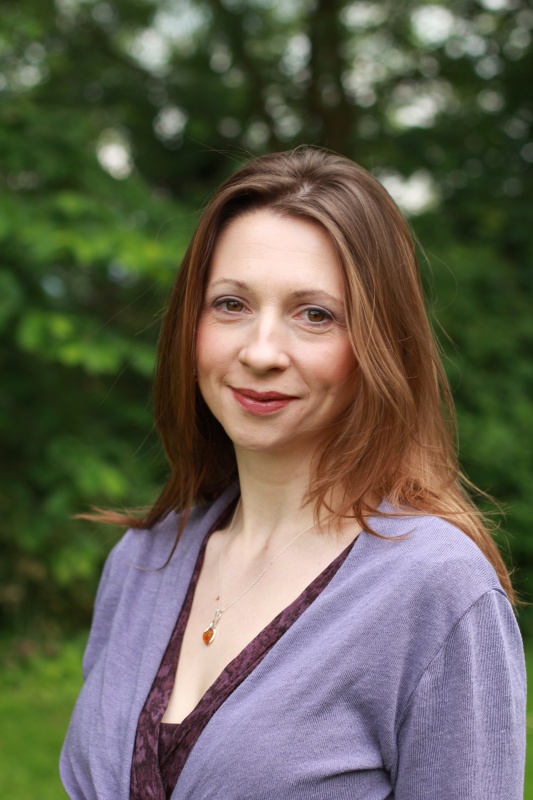
Photo credit: Steve Lennon
Hi Ann, thank you so much for joining me today. Your book is called Crossing Over. Can you tell me a bit about it and what inspired the story?
Thanks for having me! Crossing Over is the story of an unlikely friendship between an elderly woman living alone on the Kent coast and a traumatized Malawian migrant hiding in her barn. On the surface, the two characters have little in common and in some ways they can never fully understand one another, but through their interaction they gain new perspectives on their own experiences and uncover more similarities between their lives than you might expect.
For several years, I’d wanted to write about the little ships manned by civilians that were sent to rescue soldiers from the beaches in Dunkirk early in the second world war. I knew this would probably involve an elderly character who had been involved in the evacuation effort. Then, when reports started to surface of refugees attempting to cross the Mediterranean and more recently the Channel in small boats, the parallels and contrasts between the two types of crossings seemed powerful.
In addition, I’m fascinated by representing altered mental states in narrative and how mental illness affects storytelling (something I explored with bipolar disorder in my first novel, Beside Myself). Many therapies are built on the theory that telling a story can help a person move past a traumatic event – so what are the implications for people who are unable to articulate what has happened to them coherently? It struck me that bringing together two characters whose storytelling is compromised – one through PTSD and the other through dementia – might provide an interesting way to explore this.
What challenges did you face in regards to the themes of the book?
I was representing the story from the point of view of two characters with markedly different life experiences to my own. It required sensitivity and a great deal of thought. Indeed, for a long time I would have doubted my entitlement as white British writer to try and tell the story of a Malawian character.
However, recent books such as The Good Immigrant and Reni Eddo-Lodge’s Why I’m No Longer Talking to White People About Race challenged my thinking on this and made me see that it’s important for writers of all backgrounds to do what we can to increase representation and diversity in storytelling.
The key is to do your best to do it well – in fact that is always a writer’s job. In the case of Jonah and Edie, this involved a huge amount of research and time spent talking to people with direct knowledge of and insight into many of the things I was writing about.
I then had to filter all this research through my own imagination and sensibility to try to make sure that it lived in the story as human experience, rather than two-dimensional information.
What’s your typical writing day like? Is there somewhere specific you like to write?
I get up very early and start at 5am in my writing room looking out over the hills and the white cliffs. Those early hours when the house is quiet are golden. If I have all day and am not going out for meetings, I will work in two- or three-hour stints, with breaks for meals and probably a run in the middle of the day, until around 6pm.
What’s your favourite word and why?

 by
NK Chats To… Sophie Tanner
 Your book is called Reader, I Married Me (I love this title.) Can you tell me a little about it and what inspired it?
I wrote this book after going through a bad break up – being cheated on, lied to and rejected by the person I trusted the most. But, you know what, looking back I realise it was one of the best things that ever happened to me. Romantic love is wonderful and all, but realising that I didn’t need ‘another half’ to make me happy or ‘complete’ me was an awesome revelation to have. So much so that I decided to take vows of self-commitment and marry myself in Brighton! I know it sounds bonkers but the idea was to start conversations and ask the question ‘why shouldn’t self-love be AS important as romantic love?!’ After all, your relationship with yourself deserves as much attention as any other – and the more you deal with your own crap the less other people have to, right?
So, my new novel is loosely based on my own experience of sologamy because it turns out that loving yourself so publicly is not easy – in fact, it got me a lot of haters. Which kind of highlights the complex attitude our culture has to self-love in the first place! The title slightly adulterates the words of literary heroine Jane Eyre 🙂
What’s your favourite word and why?
Discombobulate. I love this word because it sounds amazing in your mouth and describes the rather marvellous state of being tumbled from your comfort zone. It kind of reminds me of how Winnie the Pooh thinks.
What’s your writing process like from idea to final draft?
Well, I’m still figuring that out actually. Writing the novel was such a great learning curve and I think the next book I write should be a lot more streamlined. Because there is a certain formula to plot and character development and I think if you can pin that down first then your writing becomes a lot less chaotic!
Where do you normally write and do you need coffee, silence, noise?

 by
Book Club