Audiobook Review: Murders of Old China by Paul French
 One country rich in history, 12 unsolved murders. Reopening the archives on China’s long forgotten past.
Why did a remote police station, built to combat pirates, find itself at the centre of a murder-suicide after a constable went on the rampage? How did Chinese gangsters avoid conviction after serving a deadly dinner to Frenchtown’s elite? And why is the Foreign Office still withholding a key document to solving a murder that took place in the Gobi desert in 1935?
By delving deep into 12 of China’s most fascinating murder cases, Murders of Old China delivers a fast-paced journey through China’s early 20th-century history – including its criminal underbelly.
Uncovering previously unknown connections and exposing the lies, Paul French queries the verdict of some of China’s most controversial cases, interweaving true crime with China’s chaotic and complicated history of foreign occupation and Chinese rival factions.
I rarely feature non-fiction on Novel Kicks but when I was asked if I wanted to take part in the blog tour for Murders of Old China and read about the premise, I jumped at the chance.
 Murders of Old China is an Audible original and is narrated by the author, Paul French. He looks at twelve murder cases that happened in China in the early 20th century.
Each chapter focuses on a different case and even though it’s non-fiction, it felt that I could have been reading a fictional murder mystery novel. Some of it was almost unbelievable.
The mystery and the twists and turns in these cases appealed to my love of puzzles and history.
This has made me want to know as much as possible about this era that I have previously not known anything about.


 by

NK Chats To: Sasha Wagstaff
 Hi Sasha, thank you so much for joining me today. Can you tell me a little about Christmas in Chamonix and what inspired the novel?
Hi there! Thank you for putting these fabulous questions together for me. So, first things first – I absolutely loved writing Christmas in Chamonix. I have recently fallen in love with skiing (although I have really struggled with it – Lily’s fear of heights echoes my own!) and I have always adored Christmas. My parents have always been huge fans of Christmas and made it such a special time of year for myself and my brother, with lots of traditions and magical moments – which I now carry out with my own children.
So Chamonix was mostly inspired by my absolute love of Christmas. But it was also the opportunity to take readers into a beautifully Christmassy environment – with falling snow, gorgeous, festive decorations and the delicious food and drink involved. Add skiing into that – and I was in writing heaven! Skiing is such an exhilarating sport…it’s amazing if you master even a small part of it, let alone manage to ski down a steep mountain and not fall over!
How do you approach the planning of a novel and how has it evolved since your debut novel?
I approach the planning of a novel with military precision – and always have done. With lots of creativity thrown in, of course, but for me, it’s about being organised and disciplined. So I begin with the idea. I expand it with lots of notes (I use a different, A4 sized notebook with a lovely cover for each new novel) and begin writing character notes to flesh out my main players. I then write a synopsis which will be two pages or fifteen, depending on how much of the story flows out at that stage, but the main point is to get down the beginning, the middle and the end. After that, I write a full version of this, which is where I will structure scenes and make sure each section moves smoothly on to the next one. With some cliff hangers thrown in here and there. I find this process easier and more fun than I used to in the early days and it also makes writing the novel itself fairly straight forward as I have a strong structure as a guideline and I’m essentially then delving into the thoughts and feelings and emotions of my characters.
 Do you think character or plot is more important?
Well, that’s a seriously good question! Ok. So even with a killer idea, if you don’t have the right personalities in place to play the story out, it’s going nowhere and it’s just a concept with no heart and soul. Equally, if you have fantastic lead players and strong secondary characters but no real idea of what the story is about or where it’s going, the reader won’t feel invested as there isn’t anything for them to connect with and relate to. For me, they are equally important. You need a killer idea and you need relatable characters your readers can fall in love with and care about.
What’s your favourite word and why?
My favourite word….I’m loving these questions! I love the word ‘serendipitous’. Which means ‘occurring or discovered by chance in a happy or beneficial way’. I just think it’s a really positive word and one which puts me in a strong headspace of believing that everything happens for a reason and that there is something to be grateful for everywhere you look.
Can you tell me about your typical writing day, where you like to write, do you need endless amounts of coffee and silence or do you prefer noise?

 by
Novel Kicks Book Club: Dash and Lily’s Book of Dares by David Levithan and Rachel Cohn
 Hello December. I am excited as this is my favourite time of the year.
The trees and lights are going up and the cold weather has certainly arrived so there is no better reason to curl up with a cup/glass of something and a book (I know I say this every month,) and I am hoping you’ll join me with reading this month’s book club.
I’ve chosen Dash and Lily’s Book of Dares by David Levithan and Rachel Cohn.
This book sounds like a lot of fun and has an interesting premise. As normal, I have posted a question to kick off the discussion. Hopefully see you in the comments.
About Dash and Lily’s Book of Dares.
I’ve left some clues for you. If you want them, turn the page. If you don’t, put the book back on the shelf, please.
At the urge of her lucky-in-love brother, sixteen-year-old Lily has left a red notebook full of dares on her favourite bookshop shelf, waiting for just the right guy to come along and accept. Curious, snarky Dash isn’t one to back down from a challenge – and the Book of Dares is the perfect distraction he’s been looking for.
As they send each other on a scavenger hunt across Manhattan, they’re falling for each other on paper. But finding out if their real selves share their on-page chemistry could be their biggest dare yet….

 by
NK Chats To… Emma Jackson
 Hi Emma, thank you so much for joining me today. Can you tell me about your new novel, A Mistletoe Miracle?
Beth, my heroine, has returned to her childhood home – the Hotel Everdene – after a bad breakup. Her confidence is badly shaken & she’s struggling to know what to do next in life. When her mother is stranded in a blizzard, Beth is left in charge of the fully booked hotel, feeling completely out of her depth. But one thing Beth isn’t, is a quitter and, with a bit of help from Nick, a gorgeous guest, she does her best to make sure Christmas doesn’t end in catastrophe!
What’s your typical writing day like? Do you need coffee? Silence? Where do you like to work?
It varies through the week. On a Monday & Tuesday, when my 3yo is in nursery, I usually get back from the school & nursery run by 9.30. Then I run around tidying up the mess from breakfast, make a start in some housework & settle down to write at my desk at around 10.30-11.00. I have a fantastic pull down desk in my bedroom which my partner put in as a surprise for me when I was away at the RNA conference in July & I love it so much. I always have music playing, the house is so quiet without the kids in it, and I probably spend too much time creating special playlists for each project. The rest of the week when I have my 3yo home, writing takes place in the evenings on the sofa with my headphones on!

Emma’s writing space
What’s your route to publication been like?
It feels like it has been very long. I started writing my first novel over a decade ago & I did query it but in hindsight I had no clue what I was doing! Writing became sporadic over the last eight years as we started a family & I became a stay-at-home mum. Some people might think that gives you lots of time to write but I find it so hard to concentrate on writing with my kids around me.
Then I joined the RNA at the beginning of 2019 & really got serious about finishing my manuscript, sending it for the NWS critique & submitting it. Orion announced their new digital first imprint called Dash at the RNA Conference & I sent it along. Overall, I probably submitted A Mistletoe Miracle to twenty agents & publishers, and entered half a dozen competitions. So, lots of no’s but you only need one yes!
What would be on a playlist for this novel?
As I mentioned earlier I have an extensive playlist for this novel on Spotify (which I’m going to make available very soon). Also, Beth is a music tutor so music is very important to her & lots of songs feature in the story. Three Little Birds by Bob Marley, Come Away with Me by Norah Jones & Words Are Dead by Agnes Obel all play a significant part in her journey.
What’s your favourite word?

 by
A Moment With…. Lynne Shelby
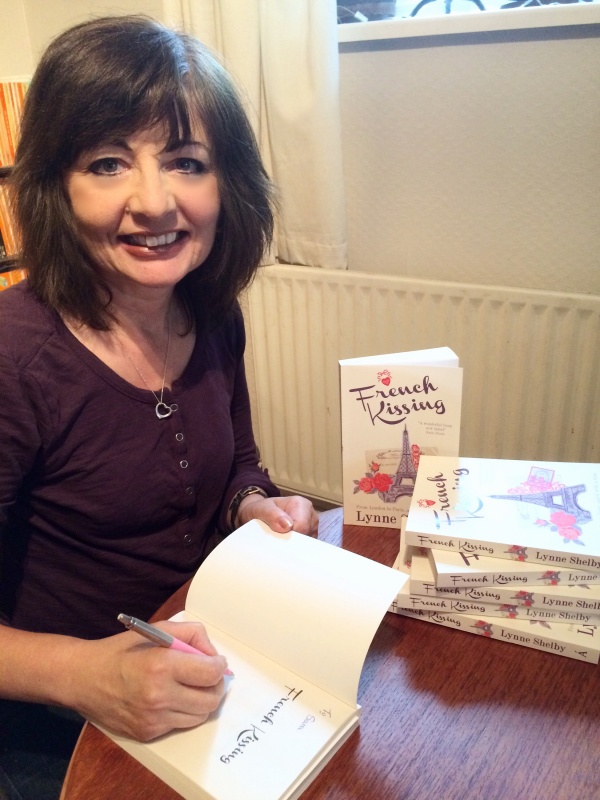 We have entered the last week of National Novel Writing Month. As you get to the end and are contemplating the edits, author Lynne Shelby has some advice about that all important first sentence.
There are no hard and fast rules for writing that all-important first sentence of a novel, but I like to think of it as an invitation to a reader that will make them want to read on, a hint of what is too come without revealing too much.
An effective first sentence establishes an important aspect of the book. You could begin with a short statement of a fact that plunges the reader headlong into the story, or a line of dialogue that establishes the character of story’s narrator.
I think it’s best to avoid long, waffling description as this tends to put readers off, but a short, effective first sentence can set the style and mood of a novel, if it is comical, serious or even shocking!
What a writer is doing with a first sentence is showing the reader that something interesting is going on, encouraging them to take their first step into the world of the book.
Good luck to everyone taking part in NaNoWriMo.
About Lynne:

 by
Book Club