Novel Kicks Fiction Friday: Radio GaGa
 It’s Friday which means it’s time to start writing some fiction.
Fiction Friday is our weekly writing prompt. The aim is to write for a minimum of five minutes and then keep going for as long as you can. Once you’ve finished, don’t edit, just post in the comments box below.
Radio Gaga.
Turn on the radio and make a note of the first three songs you hear.
These are now the three themes that will make up your story.
Combine them all together, including any characters mentioned in the song. So for example, you have to include Loretta if you hear Get Back by the Beatles.


 by

Book Extract: When Polly Met Olly by Zoe May
 I am happy to be welcoming Zoe May to Novel Kicks today and the blog tour for her novel, When Polly Met Olly.
Polly might spend her days searching for eligible matches for her elite list of clients at her New York dating agency, but her own love life is starting to go up in smoke.
Even worse, she can’t stop thinking about the very person she’s meant to be setting her latest client up with… surely it can’t get any worse!
But then Polly bumps into oh-so-handsome Olly, who heads up a rival agency, and realizes that perhaps all really is fair in love and dating war…
I have reviewed the book below but first, Zoe and HQ have shared an extract today.
***** beginning of extract*****
Chapter One
Surely, I’m not qualified to be a matchmaker?!
You’d think getting a job at a dating agency might actually require you to have found love, or at least be good at dating, but apparently not. I’ve been single for three years and I haven’t had a date for six months, yet I’m pretty sure I’m nailing this interview.
‘So, what kind of message would you send Erica?’ Derek asks, handing me a print-out showing a dating profile of a pretty, tanned brunette. Derek is the boss of To the Moon & Back dating agency, although with his nicotine-stained teeth, lurid purple shirt stretching over his giant pot belly and cramped city office, he’s not exactly what I imagine when I think of Cupid.
What kind of message would I sent Erica? When Derek says ‘you’, he doesn’t mean me, as in Polly Wood. He means me pretending to be 34-year-old bachelor Andy Graham, because that’s what my job as a matchmaker would involve. While Andy, and the rest of the busy singletons on the agency’s books, are out earning the big bucks, too busy to trawl internet dating sites looking for love, I’ll be sitting here with Derek, firing off messages on their behalf in the hope of clinching dates. It’s a little morally questionable I suppose, since the women will be chatting to me beforehand, and will no doubt become enamoured with my witty repartee and effortless charm, but to be honest, I haven’t really given the moral side of it much thought. According to Derek, it’s what all dating agencies do, and anyway, ethics somehow stop being so important when you really need cash.
I try to put myself in the mindset of Andy, while thinking up a message for Erica. I only know about him from reading a form he’s supposedly filled in, which Derek gave me to study five minutes earlier. According to the form, Andy is an ex-army officer turned property surveyor. He grew up in a small town in Ohio where his family still reside. His younger brother, aged 31, has already settled down with a wife and three kids, and reading in between the lines, I get the impression that Andy feels he’s beginning to lag behind. He works long hours, reads Second World War history books in his spare time, enjoys visiting aviation museums and likes to play tennis at the weekends. Oh, and he has a penchant for Thai food.

 by
NK Chats To… Rachel Burge
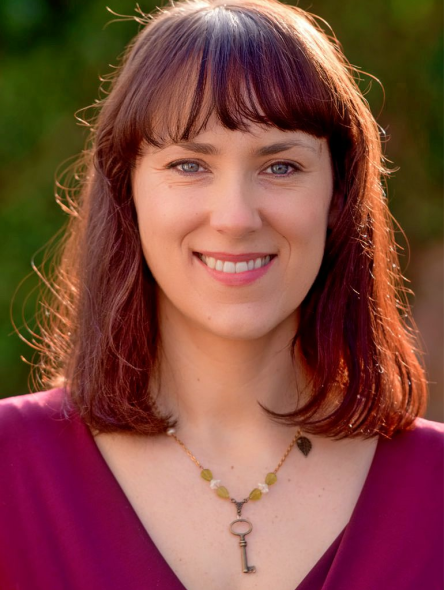 Hello Rachel. Thank you for joining me today. Can you tell me a little about your debut novel, The Twisted Tree?
Hi, thank you so much for having me.
The story is about a girl called Martha who can tell things about people just by touching their clothes, as if their thoughts and emotions have been absorbed into the material. It started the day she fell from the tree at her grandma’s cabin in Norway. The day she became blind in one eye.
Determined to find out why she has this strange ability, Martha returns to Norway, hoping that her grandma can give her answers. But when she gets there, she finds her grandma is dead and a peculiar boy is hiding out in her cabin. From then on, things start to get spooky!
What inspired you to write it?
The book is based on Norse mythology, in particular the story of Odin hanging from the world tree, Yggdrasil, and finding the runes in the well.
As I began to research the myths, I came across the Norns, three mythical women who dwell in Yggdrasil and weave fate. In Viking culture, magic was the preserve of women and associated with their work, predominantly spinning and weaving. Odin’s wife Frigg was a practitioner of magic and a weaver (of clouds), and is often depicted at a spinning wheel.
Putting the two ideas together – weaving cloth and magical ability, I came up with the idea of being able to tell things about people by touching their clothes. It was then a journey of discovery for me to figure out why my main character had this gift.
Which came first: character, theme, setting, etc?
I started out with the genre I wanted to write (a ghost story) and a theme that interested me (darkness) and brainstormed ideas from there. This led to me wanting to write about a blind/partially sighted character – which later happened to work beautifully with Norse mythology.
The story takes place in winter in the Lofoten Islands, when there is near-permanent darkness. The theme also influenced Martha’s character arc. She refuses to ‘see’ the truth about her mother and grandmother’s relationship, and her journey is about finding the courage to accept the darkness within her / the parts of herself that she doesn’t like.
The theme came first, but the story only clicked into place once I decided to use Norse myth.
What was your writing process like?
Once I was confident I had a ‘high concept’ idea and a strong character arc, I worked out a rough outline. That makes it sound like the process was straightforward, but I took numerous wrong turns and introduced and abandoned many story elements along the way.
How do you work: music or silence?
I prefer to write to music, or if there’s a really great storm outside, the howl of the wind.
There were a few pieces of music I listened to on a loop while writing The Twisted Tree, most of them by the Norwegian band Wardruna. If I’m working on a particularly scary scene, I will listen to a horror movie soundtrack and also light candles and burn incense – which has the added advantage of warning everyone in the house not to disturb me!

 by
Book Review: The Ember Blade by Chris Wooding
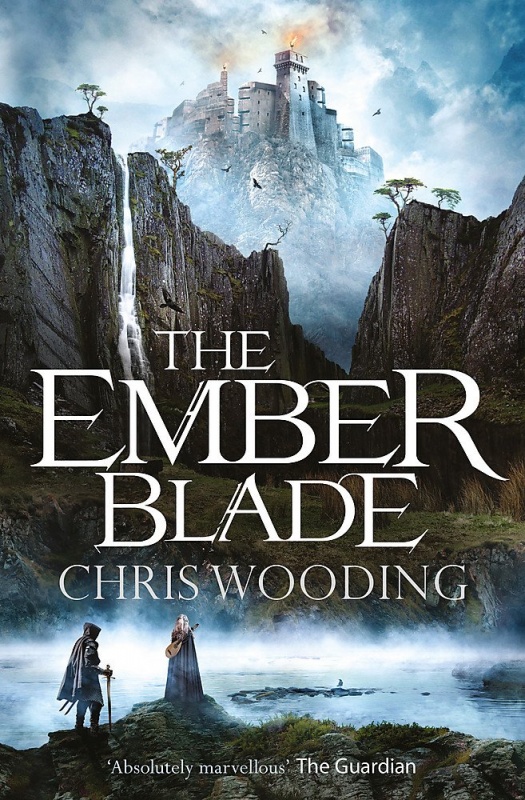 A land under occupation. A legendary sword. A young man’s journey to find his destiny.
Aren has lived by the rules all his life. He’s never questioned it; that’s just the way things are. But then his father is executed for treason, and he and his best friend Cade are thrown into a prison mine, doomed to work until they drop. Unless they can somehow break free . . .
But what lies beyond the prison walls is more terrifying still. Rescued by a man who hates him yet is oath-bound to protect him, pursued by inhuman forces, Aren slowly accepts that everything he knew about his world was a lie. The rules are not there to protect him, or his people, but to enslave them. A revolution is brewing, and Aren is being drawn into it, whether he likes it or not.
The key to the revolution is the Ember Blade. The sword of kings, the Excalibur of his people. Only with the Ember Blade in hand can their people be inspired to rise up . . . but it’s locked in an impenetrable vault in the most heavily guarded fortress in the land.
All they have to do now is steal it . . .
Set in fantasy world with echoes of our own, The Ember Blade is part of the Darkwater Legacy and is one of the most enjoyable pieces of fantasy writing I have had the pleasure to read in some time. The story centres around Aren, a young man living in a country under occupation.
Raised to believe that the occupiers, the Krodans, are superior and that he should emulate them, he is in for a rude awakening when his Father’s past catches up with him.
He finds himself with a band of rebels seeking to regain control of their country’s most sacred relic; The Ember Blade.

 by
Novel Kicks Writing Room: Showing and Telling
 Today in the writing room, I wanted to look at showing and telling.
As I am trying to write my first novel, I am finding out the hard way that it is very easy to tell and not show. It’s a very quick trap to fall into.
Convert the following sentences into something that is showing action rather than just telling.
She felt tired.
He came home drunk.
He loved her.
They hated each other.

 by
Book Club