Novel Kicks Writing Room: From Three Different Ways
 Welcome back to the Novel Kicks Writing Room.
Today’s exercise is about looking at the same event in three different ways.
First, pick one of the following scenarios –
- You’re at a magic convention and you bump into the one person who has made your life a misery.
- You go speed dating but it’s all your previous partners.
- You wake up and all of the colour has disappeared from the world. You go on a quest to find out why.
- Your life is being narrated by a mysterious voice.


 by

NK Chats To… Caroline James
 Hi Caroline. Thank you so much for inviting Novel Kicks onto your blog tour!
Thank you so much for inviting me to join you and your wonderful followers on your lovely blog. I do hope that you all enjoy my new novel, The Arctic Cruise.
Can you tell us about The Arctic Cruise and what inspired it?
I’ve always dreamed of seeing the Northern Lights, so when the chance arose to take a winter cruise to Norway, it felt like the perfect opportunity—and irresistible research for a new story. The fjords were breathtaking, with snow-capped mountains rising above icy waters, and the atmosphere was completely magical. As we sailed beyond the Arctic Circle, the idea for The Arctic Cruise began to take shape: a story about two people drawn together aboard the ship, while the lives of other passengers subtly and unexpectedly intertwine with theirs, shaping a journey none of them will ever forget.
What were the best and most challenging parts of writing this novel?
The most rewarding part was exploring the emotional connection between Henry and Joy as their chemistry grew and obstacles intensified. Portraying those vulnerable moments—where attraction, doubt, and hope collide—was satisfying. The biggest challenge was ensuring those emotions resonate with readers and keep them invested in the characters and story, which demands honesty and careful crafting.
What’s your typical writing day like? Do you have any writing rituals?
I start each day with coffee, then answer correspondence and check social media before working on my novel. My target is 2,000 words a day; reaching that gives me a strong sense of accomplishment.
 How do you approach the planning, writing, and editing processes?
I tackle planning, writing, and editing with discipline. I honour my publishing deadlines and treat writing as both a profession and a passion by refining my work to its best and marketing it effectively.
What comes first for you, plot or characters?
Plot comes first. I visualise and research the setting, then add characters to fit the story.
What kind of scene do you find the hardest to write?
Emotional scenes at a character’s most vulnerable moments are the hardest, requiring complete honesty and authenticity on the page. Achieving this is a challenge I strive to meet every time.
What are you currently working on?

 by
Book Review & Giveaway: The Croatian Island Library By Eva Glyn
 Please join me in welcoming Eva Glyn to Novel Kicks and the blog tour for her latest book, The Croatian Island Library.
Where books are borrowed, and friendships are forged…
When her beloved grandfather dies, Ana Meštrović buys a catamaran in his memory, which she names Dida Krila – Grandad’s Wings.
For the summer months, it will be transformed into a travelling library, delivering books to children living across the Croatian islands.
Joined by crew members Natali, a young mechanic afraid of her own shadow, and Lloyd, an older widower who needs a fresh start, the newly-formed trio all have their own reasons for needing the floating library to be a success.
Embarking on an adventure that will change them for good, they each discover that a new chapter is only a boat ride away…
*****
Ana is a woman who is living with guilt when it comes to family expectations. Lloyd is trying to run from grief after the loss of his wife. Natali is a young woman who is fearful of many things and hides from the world.
These three different people are due to come together for one summer. Can they help each other find what they’re missing, are looking for and have lost? Can the power of books bring them together?
I am pleased to be welcoming Eva Glyn back to Novel Kicks. Despite featuring this author previously, The Croatian Island Library is the first of her books I’ve read.

 by
Novel Kicks Writing Room: Journal Entries
Hello and welcome back to the Novel Kicks Writing Room.
Today, I thought it would be fun to write a journal entry from the point of view of your main character from your work in progress.
What I thought would be interesting, is if we write three journal entries in total.
The first entry would be based toward the beginning of your story.
The second entry would be based in the middle of your story.
And, you’ve guessed it, the third entry would be from the end of your story.
With each one, focus on what is happening within that story section. Have your character ask themselves questions like –
What is currently going on?
How am I feeling now?
What is my reaction to what is going on?
How have I changed from the first/last entry?

 by
Book Extract: Assassins By Mike Bond
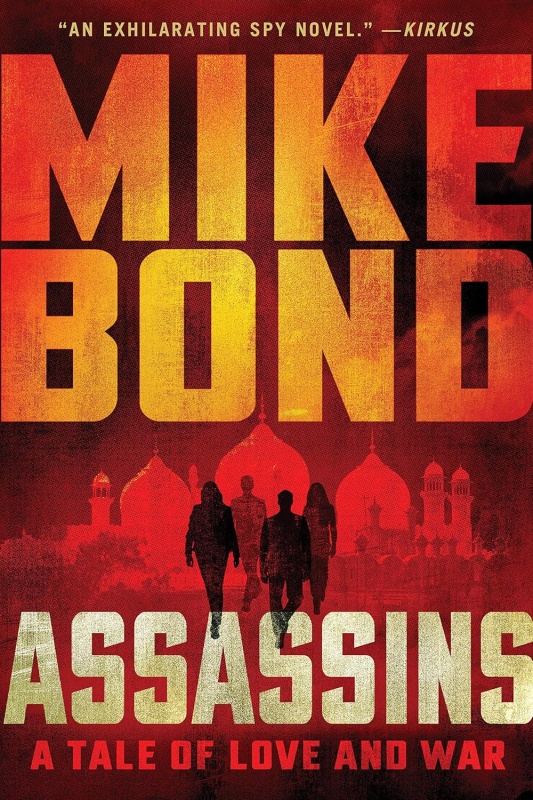 I’m excited to be welcoming Mike Bond to Novel Kicks and the blog tour for his book, Assassins.
Night drops, covert deals, and consequences that stretch across decades form the backbone of Assassins by Mike Bond. The novel opens the door to a world where intelligence missions rarely end when the operation does, and where personal history becomes inseparable from global conflict.
Jack is a CIA operative sent into the shadows of America’s longest and most complicated conflicts. His work begins with covert missions supporting resistance fighters and expands into intelligence operations shaped by terrorism, retaliation, and shifting political priorities. Along the way, personal bonds formed under humanitarian cover refuse to stay separate from his professional life.
As alliances shift and former partners reemerge as future threats, Jack is repeatedly drawn back into conflicts he helped set in motion. Militants he once trained resurface years later, and decisions made in secrecy return with devastating consequences. Spanning more than three decades, Assassins follows a man caught inside the machinery of covert war, where victory is never clean and the past never truly stays buried.
Mike has kindly shared an extract from Assassins with us today. We hope you enjoy it.
*****beginning of extract*****
An Evening in Paris
November 2015
IT WAS WARM for mid-November. They sat on the terrace of a little restaurant. Anyplace in France, she said, how wonderful the food, the delicious wine, the gentle harmony of others there for love, food, friendship, ideas, freedom, the joys of life.
They had been through the wars together, fallen in love amid the hail of bullets and thud of explosions in cities drenched with blood. Knowing, as the cliché put it, any moment could be their last.
It gave an intensity to love, that this person dearer to you than life itself could be extinguished at any instant. Someone you cherished so completely, composed of neurons, cells, muscles, bone, tissue and memories, could be blown apart, riddled with bullets, any second.
“I love you so much,” she said. “But I think I love you even more in Paris.”

 by
Book Club