A Moment With…Julie Cohen
 This is it. Day thirty of National Novel Writing Month. Well done to all who have finished, good luck to all the people who are still going and if you didn’t manage it, you’ve still got words written that you didn’t have when you began which is fantastic. Today, Julie Cohen joins us to chat about her editing process (she uses Post-its and I have to say I like her style.)
After I’ve finished the first (very rough) draft of my novel, I usually have a list of all the things I want to change. I write it all down as instructions to myself.
After that, I often spend some time analysing what I’ve written. I find that Post-Its are really handy for this. I outline the entire book, event by event, using colour-coded Post-Its for each story thread. Then I arrange in them in order on the wall, or on paper.
This method lets me see all of the story at a glance. It can make it much easier to understand where you’ve got problems, and to see where new parts can fit, or irrelevant parts need to be cut.
Here’s a picture of one of my novels after it’s had the Post-It treatment.

Julie is the best-selling author of Getting Away With It and Dear Thing and Where Loves Lies (which was released by Bantam Press on 31st July.) To find out more about Julie, visit her website: http://www.julie-cohen.com


 by

A Moment With…Jane Fallon
 Jane Fallon’s books include Getting Rid of Matthew, Foursome and Got You Back. Her latest, Skeletons was released by Penguin earlier this year. She’s also a producer whose credits include Teachers and This Life. On day twenty-nine of National Novel Writing Month, she talks to us about supporting characters:
Your supporting characters create your world. They’re your colour and texture. Without them your book will feel two-dimensional and flat. Every character, however small a part they play needs to feel authentic and alive. It’s always a temptation to try to use shorthand to get across a character who is only going to appear a few times in your book. Everyone understands a cliche. But if you do that your reader is going to lose their sense of disbelief. You’ve asked them to immerse themselves into the world you’ve created so it’s important that world never feels cliched or flimsy. Make sure they’re as real as your leads.
Lesser characters can also be like a breath of fresh air – light relief, a pause from the intensity of the main story. They can throw a different light on your main characters. allowing us to see our heroes in a different way. They are what makes us feel we have entered a world that exists whether we’re there or not. Don’t underestimate them.
To find out more about Jane, visit her website: http://www.janefallon.co.uk

 by
A Moment With…Cathie Hartigan
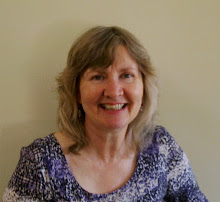
Cathie Hartigan-
National Novel Writing Month finishes tomorrow. I can’t believe we are almost at the end of another year. I hope you’ve had a good month. If you’re still going; that 50,000 word goal still being elusive, you can do it! Today, Cathie Hartigan talks about whether there is a right place to write:
Is there a right place to write? Perhaps there is, but it certainly isn’t the same place for everyone. I’ve met writers who can only work in a café or with the television on and those who need complete silence and become all night long writers. My friend and colleague, novelist Sophie Duffy writes in a lovely shed at the bottom of her garden, although she also recommends writing in bed. Hopeless for me! I fall asleep almost immediately.
My writing space is doubles as the HQ for CreativeWritingMatters and it’s chock full of files, books, several computers and stationary for England. We all know writing is sedentary so in order to get some exercise and not be distracted by a sudden need to turn on the washing machine, I take myself to the wonderful Devon and Exeter Institution (it’s a library, honest!) as often as I can. There I can sit at a huge mahogany table, which has nothing on it except a fabulous shine. Perfect. I’m nose to screen until from across the green I hear the Cathedral clock strike five and it’s time for the library to close.

 by
Bella’s Scribblings: Christmas Shopping!
 So here we are on the downward straight to Christmas – isn’t it exciting?! There is probably no easier way to divide an audience than to ask them about Christmas. As many people that relish it and countdown from August (No, that isn’t me) and get their festive jumpers washed and ready in October (OK, that might be me) there will be the same number of people that either don’t care or actively loathe it.
And just like religion and politics it is very unwise for any of the ‘Happy Christmas’ gang to try to persuade the opposition to defect – it’s just not going to happen. I accepted this years ago and I am a lot happier for it. I will still continue to wear my reindeer jumper with pride and extoll the virtues of roasted chestnuts.
Some people carry on regardless, mumble obscenities under their breath (yes, I do do that but it’s not Christmas related) they try to block it out, pretend it’s not happening and avoid all things festive. But however you feel about the season of good cheer there is one thing most people cannot avoid and that’s Christmas shopping.
Again the camp will be divided into those that get excited about finding the perfect gifts and those that anything will do, those that plan out trips to specific stores and those who grab a few things at the local petrol station.
It will be no surprise to regular readers that I obsessively plan out my approach to Christmas. There is a spreadsheet with columns for budget, ideas, actual items purchased, cost and a column to tick when the items are wrapped. I know this would drive many to the gin bottle but it works for me. It also means that most of my shopping is completed by now with just a few things left to buy (mainly so I can enjoy the late night shopping and Christmas markets – so much better when you are buying things).

 by
A Moment With…Suzanne McCourt

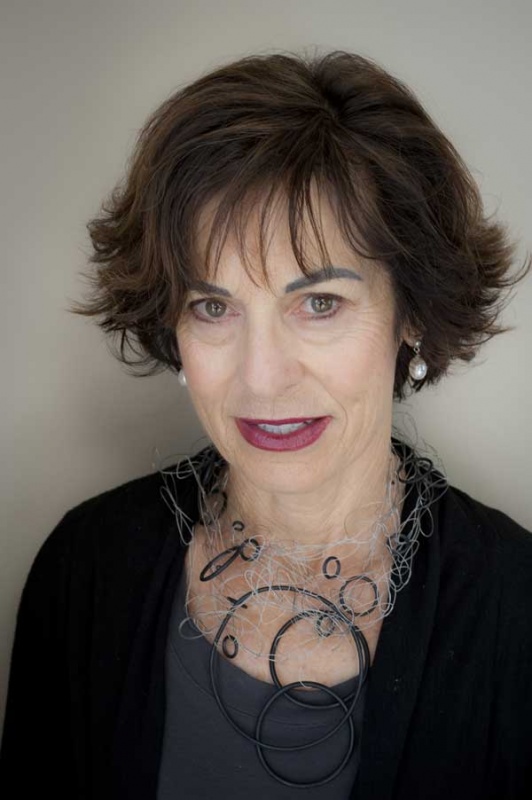 Suzanne McCourt also joins us on day twenty-seven of National Novel Writing Month. Her debut novel, The Lost Child has been released today. She shares with us her writing process and route to publication.
It took me almost ten years to write The Lost Child, in part because I tried to control the process: I thought writing came from my head and it took some time to discover that it needed to come from my heart. Losing my mother and having four family deaths within eight months, taught me a lot about letting go of control. So did Barbara Turner-Vesselago’s freefall writing workshops. But it was only when I let myself trust the voice of a child who’d tried to take over a previous novel—only when I allowed Sylvie to tell her own story—that The Lost Child began to unfold without interference from me.
Nabokov suggests that a writer is part storyteller, teacher and enchanter, and that by far the most important of these is enchanter. One of the great joys of writing from Sylvie’s perspective was that I was able to enter a child’s world of innocence, spontaneity, vulnerability and humour and lose myself in the process.

 by
Book Club