Book Review: A Perfect Cornish Christmas by Phillipa Ashley
 Christmas in Cornwall is just around the corner…
But after last Christmas revealed a shocking family secret, Scarlett’s hardly feeling merry and bright. All she wants this Christmas is to know who her real father is.
So Scarlett heads to the little Cornish town of Porthmellow, where she believes the truth of her birth is hidden. She just didn’t bargain on being drawn into the Christmas festival preparations – or meeting Jude Penberth, whose charm threatens to complicate life further.
Everything will come to a head at Porthmellow’s Christmas Festival … But can Scarlett have the perfect Christmas this year, or are there more surprises on the way?
Firstly, Phillipa has created the type of village that I think we’d all love to live in…or maybe that’s just this reviewer?
In our second visit to the Cornish village of Porthmellow, we are treated to the ime after Scarlett’s worst Christmas ever, and how her sister Ellie and her deal with the fall-out. This is so much a family story, though with more twists and turns than a snake!


 by

Book Extract: Nadine by John Steinberg
 A big hello to John Steinberg and the blog tour for his novel, Nadine.
London 1974 – and Peter Greenberg is riding high. Thanks to his magic touch, every play he puts on in Theatreland is a hit and the money is rolling in. The young man’s empire feels secure – but then everything changes. One evening, he calls in to see a rival’s musical and falls head over heels in love.
The beautiful Paris-born dancer who catches his eye is Nadine – a major star in the making. Like Greenberg, the young dancer too is in love – but with someone else. The eternal triangle is complicated by the birth of a child, and by tragic secrets that go back before World War Two; slowly, those secrets reveal themselves in a drama that out-performs anything on the West End stage or Broadway.
Nadine is a poignant story of unrequited love, a love that will one day be returned – and in a most unexpected way…
John has shared an extract today. Enjoy.
**** beginning of extract*****
INTRO
Greenberg has lost his theatre and his luxurious Georgian home. His wife has run off with his accountant with whom she’s been having an affair and he’s been relegated to living in a one bed flat above a North London Florists. With too much time on his hands, Greenberg is teetering on the edge of depression.
A phone call from an unexpected source, Nadine’s father, offers him a lifeline and a chance to salvage his reputation.
*****
 Jacques Bertrand had described himself perfectly. Medium height, with a full head of white hair and a tanned complexion. He resembled Alan Ladd, the 1940s Hollywood actor, Greenberg thought to himself. They had arranged to meet at Nadine’s graveside. It was probably his last chance, Jacques said, to see where his daughter had been laid to rest and to beg for her forgiveness.
***
Greenberg couldn’t believe what the other man was proposing. The chance to put together a major musical production based on his daughter’s life seemed completely surreal. It was, in the old man’s words, his ‘last opportunity to try to make up for the despicable way he had discarded Nadine when she had needed him most’.
‘Alors, Monsieur Greenberg, do we have an agreement?’ the old man said, suddenly coming to life.
‘Jacques, it’s very kind of you, but I’ll need to give it some thought. What you are asking is a huge commitment.’

 by
NK Chats To… Laura Briggs
 Hi Laura. It’s lovely to welcome you to Novel Kicks today and happy book birthday for A Wedding in Cornwall. Can you tell me a little about it and what inspired it?
Thanks so much, and very excited to share with your readers today! The romance read A Wedding in Cornwall is the first novella in a series that focuses on an American event planner’s adventures working at a Cornish manor house in a remote village. It was heavily inspired by other Cornish-themed stories, including the television shows Poldark and Doc Martin.
What’s your writing process like, from idea to final draft and how has it evolved from your first novel?
My writing process is actually much the same as when I first started. I usually start with brainstorming some notes, and then create an outline. This can range from anything from a few lines to describe each scene to a more full-blown, descriptive document outlining what happens in the story. From there, it’s just a matter of getting it all on paper and then onto revisions and editing for the final draft.
Where do you like to write, do you prefer silence and do you write longhand? Need coffee?
I work with a laptop, but my work station is most often in my living room (usually with a cat or two on hand for company!). I often work to music or sometimes a favourite television program, although silence is okay too. No coffee, but occasionally a cup of hot chocolate in the winter time!
What elements need to be in place for beginning a novel?
For me, the basic events of the story need to be outlined, so I don’t get too off track, so to speak! And I need to have some basic notes on character background too, even though certain things about both plot or characters may change as the story goes on paper.
Do you think plot or character is more important?

 by
NK Chats To… Ann Morgan
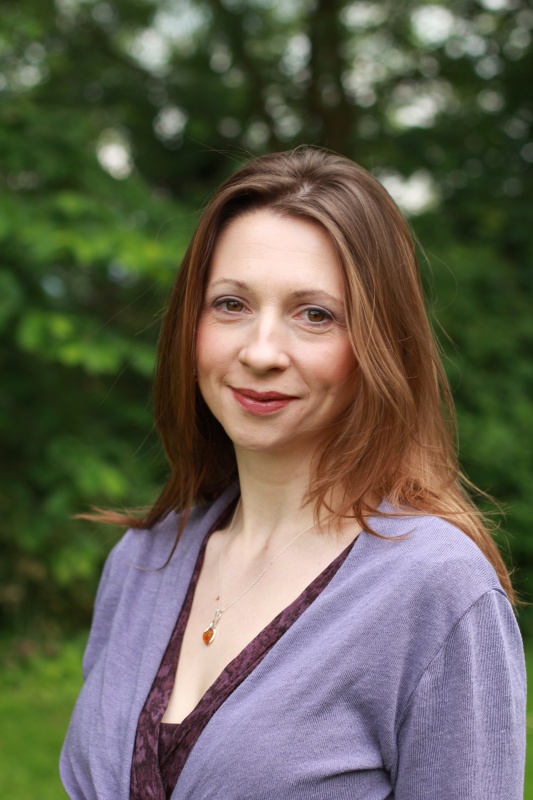
Photo credit: Steve Lennon
Hi Ann, thank you so much for joining me today. Your book is called Crossing Over. Can you tell me a bit about it and what inspired the story?
Thanks for having me! Crossing Over is the story of an unlikely friendship between an elderly woman living alone on the Kent coast and a traumatized Malawian migrant hiding in her barn. On the surface, the two characters have little in common and in some ways they can never fully understand one another, but through their interaction they gain new perspectives on their own experiences and uncover more similarities between their lives than you might expect.
For several years, I’d wanted to write about the little ships manned by civilians that were sent to rescue soldiers from the beaches in Dunkirk early in the second world war. I knew this would probably involve an elderly character who had been involved in the evacuation effort. Then, when reports started to surface of refugees attempting to cross the Mediterranean and more recently the Channel in small boats, the parallels and contrasts between the two types of crossings seemed powerful.
In addition, I’m fascinated by representing altered mental states in narrative and how mental illness affects storytelling (something I explored with bipolar disorder in my first novel, Beside Myself). Many therapies are built on the theory that telling a story can help a person move past a traumatic event – so what are the implications for people who are unable to articulate what has happened to them coherently? It struck me that bringing together two characters whose storytelling is compromised – one through PTSD and the other through dementia – might provide an interesting way to explore this.
What challenges did you face in regards to the themes of the book?
I was representing the story from the point of view of two characters with markedly different life experiences to my own. It required sensitivity and a great deal of thought. Indeed, for a long time I would have doubted my entitlement as white British writer to try and tell the story of a Malawian character.
However, recent books such as The Good Immigrant and Reni Eddo-Lodge’s Why I’m No Longer Talking to White People About Race challenged my thinking on this and made me see that it’s important for writers of all backgrounds to do what we can to increase representation and diversity in storytelling.
The key is to do your best to do it well – in fact that is always a writer’s job. In the case of Jonah and Edie, this involved a huge amount of research and time spent talking to people with direct knowledge of and insight into many of the things I was writing about.
I then had to filter all this research through my own imagination and sensibility to try to make sure that it lived in the story as human experience, rather than two-dimensional information.
What’s your typical writing day like? Is there somewhere specific you like to write?
I get up very early and start at 5am in my writing room looking out over the hills and the white cliffs. Those early hours when the house is quiet are golden. If I have all day and am not going out for meetings, I will work in two- or three-hour stints, with breaks for meals and probably a run in the middle of the day, until around 6pm.
What’s your favourite word and why?

 by
Book Extract: The Time of Our Lives by Abby Williams
 Welcome to Abby Williams and the blog tour for her novel, The Time of Our Lives.
Two women from two very different generations are brought together through dramatic circumstances and help each other to forge new paths.
Twenty-six-year-old Erin has everything she’s ever wanted – a good job, a gorgeous fiancé and a best friend who’s always there for her. But suddenly her life comes crashing down around her. Unable to return home to her parents, she takes a room in a house nearby and her life starts over in the most unexpected of ways…
Seventy-six-year old Lydia, who, shocked by the sudden death of her husband, is devastated to discover that he has left her in crippling debt. With no choice but to take in a lodger, Erin comes into her life. When they find a letter hidden in the attic old secrets come to light and, with Erin by her side, Lydia finds herself going on a trip of a lifetime.
Abby and Aria have shared an extract with us today. Enjoy.
***** beginning of extract*****
Brad and I had been together for three years, and now I was a fully qualified architect but still also worked as his PA. Watching him now as he walked along the open plan office towards me I felt my heart bang against my chest. Tall, with chocolate eyes and thick, black hair, Brad still gave me butterflies.
‘Erin, have you got my itinerary for the conference tomorrow?’ he asked, standing in front of my desk.
‘Of course,’ I replied, pulling out a glossy brochure from my in-tray and handing it to Brad. ‘I booked you into your usual hotel for two nights and I’ve arranged for the hotel business centre to set up your presentation material so you don’t need to worry.’
Brad smiled. ‘Thank you, that was very thoughtful.’
‘All part of the job,’ I replied sweetly.

 by
Book Club