A Moment With…Sue Watson
 Day twenty five of NaNoWriMo. Only five days left. Today, Sue Watson tells about whether she thinks character or plot is more important.
If a great character doesn’t have a reasonable plot it won’t work and at the same time, if a fantastic plot has cardboard characters then neither will work, so it’s a tough question. However, if I had to choose, I’d say for me the character is absolutely the most important. Well developed, believable characters drive the plot, and sometimes even change the direction of a novel.
I always plan a novel through my main character or characters; for me it may be a woman who has a problem/ a sadness/ or something in her past that has brought her to this point and causes her to behave in a certain way. I like to know my character’s star signs, their favourite colours, foods and preferred music – all these elements help to build the character and help me to imagine their choices and the way they live. It may never be necessary to reveal all this minutiae to the reader – but it helps me as the writer to really get under my character’s skin, create realistic dialogue and decide how they would react to a situation or another person.


 by

A Moment With…Rob Pateman

Rob Pateman (Photo Paul Stuart)
Author, Rob Pateman is with us today (day 24 of NaNoWriMo,) to talk about creating believeable characters.
The grit in the oyster cell makes the pearl – and it’s the friction between the antagonist and the protagonist that lies at the heart of a good book.
The conflict between them drives the narrative, so establish early on what’s at stake for both characters. It could be life or death, financial ruin, the moral high ground, the end of civilisation as we know it, property, family happiness or something more tenuous, like love or truth.
With the basic tension set up, your characters’ personalities, attitudes, beliefs, and life circumstances will begin to follow. One might be demure, conventional, social and funny. The other more calculating, secretive and moody. And the social and funny one might not necessarily be your protagonist!
People aren’t all black and white – so your characters can’t be either. There has to be some light and shade to make them believable and make your readers more likely to engage with them.
Rob writes under the name, R.S Pateman and is the author of The Second Life of Amy Archer. His new book, The Prophecy of Bees was released earlier this month (both published by Orion.) For more information on Rob and his novels, visit his website: http://rspateman.com/

 by
A Moment With…Kelly Florentia
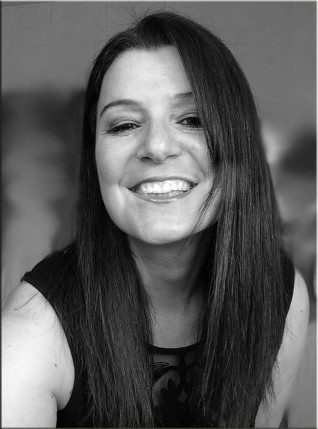 Kelly Florentia is the second author to join us today for our collection of posts to coincide with NaNoWriMo. Kelly joins us to talk about short stories.
I love reading short stories. There’s something quite gratifying about a sharp, tight tale with a satisfying or clever ending. Although not as widely read as novels, short stories are a lot more prominent than some people may think. Breakfast at Tiffany’s is a film adaptation of Truman Capote’s novella (1958). And Alfred Hitchcock’s 1963 classic The Birds was inspired by Daphne Du Maurier’s short story of the same name taken from her anthology The Apple Tree (1952). Oscar Wilde, one of my favourite authors of all time, mainly wrote plays and short stories.
Producing fine, short literature requires great skill and tenacity. Unlike a novel, you only have a few hundred or a few thousand words to create a strong, believable plot with convincing characters and a fulfilling conclusion. Your aim is to engage readers within the first sentence, keep them connected, and not let them down in the last paragraph with a poor or predictable finish. Most of the stories I write have a twist or surprise ending simply because that’s what I like to read, but not all short stories need to take this form. Stories can be humorous, moving, romantic, inspirational or chilling. But, primarily, they must be entertaining.
Personally, the most challenging aspect of short story writing is coming up with new ideas. Magazine editors are always on the lookout for fresh material, and the last thing you want is for your reader to find your story predictable or worn. So when ideas arise I jot them down and work on them later. Ideas are everywhere. A comment someone makes, a newspaper article, a conversation, something I see on T.V. or read on the internet.

 by
A Moment With…Christina Jones
 In our second post today to coincide with National Novel Writing Month, we talk to author, Christina Jones about her route to publication and how all started with a boy called Tony…
My route to publication was – to quote every contestant X-Factor has ever had – a bit of a roller-coaster… And a lifelong roller-coaster at that… I’d always enjoyed writing stories and making things up, and I had my first short story published when I was 14 (in a teenage magazine – remember them?). I wrote about Tony from the chip shop who I was madly in love with and who ignored me and went out with my best friend instead. I poured every bit of teenage heartbroken angst into that story I can tell you! I sent it to the magazine without ever thinking it’d be published – but they loved it, bought it and paid what was a fortune to me then, and it opened up a nice little niche for me – and I carried on writing short stories, serials, articles (I became the pop correspondent for “Jackie” – was the envy of all my friends!), and anything else they’d pay me for (!) for the teenage mags while I was still at school, and then did the same for the women’s magazines for years. It was my hobby – and I was earning enough pocket money from it to have a couple of nice holidays each year – and that was about as far as I ever imagined my writing career was going.

 by
A Moment With…Hannah Beckerman
 We are twenty days into National Novel Writing Month. How is everyone getting on? Today, we have the author of The Dead Wife’s Handbook, Hannah Beckerman who is sharing her five writing tips…
1. Write a lot. That’s not meant to sound glib. Writing’s like a game of pass the parcel: you have to wade through all the boring, tedious layers of wrapping on the outside before you get to the prize in the middle. And with writing, it can take an inordinate amount of time to reach that prize.
2. Be brave. I don’t just mean in terms of what you write (although obviously that too). But allow other people you trust to read and comment on what you’ve written. It’s scary putting yourself out there but it can be invaluable in helping your work develop.
3. Suit yourself. Some people will insist that you have to write in a particular place or according to a particular routine. But writing’s one of the most personal things you can do and you need to find what works for you.
4. Be disciplined. Wherever you choose to work on your writing, don’t forget that it is work. Lots of people ask me if I wait for inspiration to write. The answer is a resounding no. You have to write through the days when you’re not in the mood and when you know what you’re writing will end up in the virtual (or even the real) bin. But that’s how you get to the days when you write something that you know just might be okay. Sometimes, on really good days, something that’s even better than okay.

 by
Book Club