A Moment With…Cathie Hartigan
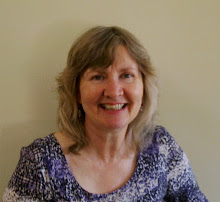
Cathie Hartigan-
National Novel Writing Month finishes tomorrow. I can’t believe we are almost at the end of another year. I hope you’ve had a good month. If you’re still going; that 50,000 word goal still being elusive, you can do it! Today, Cathie Hartigan talks about whether there is a right place to write:
Is there a right place to write? Perhaps there is, but it certainly isn’t the same place for everyone. I’ve met writers who can only work in a café or with the television on and those who need complete silence and become all night long writers. My friend and colleague, novelist Sophie Duffy writes in a lovely shed at the bottom of her garden, although she also recommends writing in bed. Hopeless for me! I fall asleep almost immediately.
My writing space is doubles as the HQ for CreativeWritingMatters and it’s chock full of files, books, several computers and stationary for England. We all know writing is sedentary so in order to get some exercise and not be distracted by a sudden need to turn on the washing machine, I take myself to the wonderful Devon and Exeter Institution (it’s a library, honest!) as often as I can. There I can sit at a huge mahogany table, which has nothing on it except a fabulous shine. Perfect. I’m nose to screen until from across the green I hear the Cathedral clock strike five and it’s time for the library to close.


 by

A Moment With…Suzanne McCourt

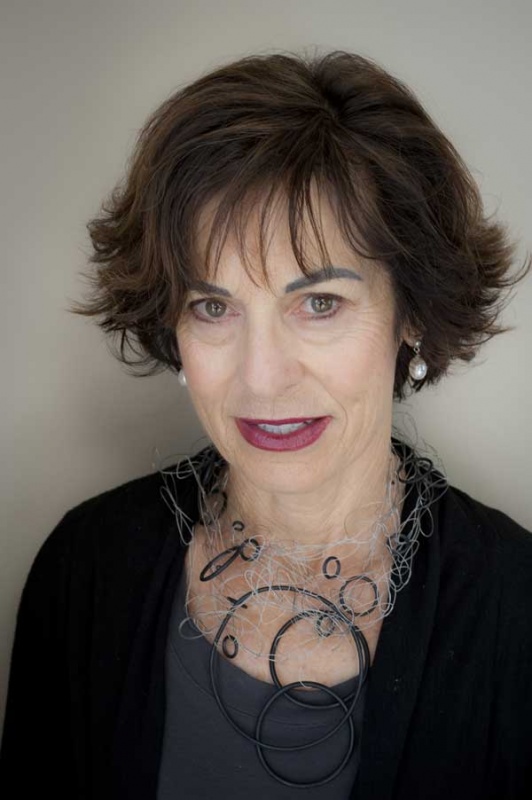 Suzanne McCourt also joins us on day twenty-seven of National Novel Writing Month. Her debut novel, The Lost Child has been released today. She shares with us her writing process and route to publication.
It took me almost ten years to write The Lost Child, in part because I tried to control the process: I thought writing came from my head and it took some time to discover that it needed to come from my heart. Losing my mother and having four family deaths within eight months, taught me a lot about letting go of control. So did Barbara Turner-Vesselago’s freefall writing workshops. But it was only when I let myself trust the voice of a child who’d tried to take over a previous novel—only when I allowed Sylvie to tell her own story—that The Lost Child began to unfold without interference from me.
Nabokov suggests that a writer is part storyteller, teacher and enchanter, and that by far the most important of these is enchanter. One of the great joys of writing from Sylvie’s perspective was that I was able to enter a child’s world of innocence, spontaneity, vulnerability and humour and lose myself in the process.

 by
A Moment With…Ali McNamara
 Day twenty-seven of National Novel Writing Month and Ali McNamara joins us today to talk about returning to a character.
It’s lovely to write again about a bunch of characters you’ve got to know in a previous book. It’s like meeting up with old friends again, and that’s exactly how I feel when I return to Scarlett and her Notting Hill friends.
I’ve written about them three times now, and it becomes easier with every book. Both you and the reader already know so much about each character, that you know just how they’ll behave in every situation.
There aren’t many drawbacks – trying to keep a new reader who might not have read the other books in the series, up to date with what’s gone on in previous stories is probably the trickiest thing, as you don’t want to bore fans of the series with lots of information they already know. But hopefully I usually find a way to suit all!
I love writing the Notting Hill series, and I really hope to write more in the future.
Ali is the author of the Notting Hill series which include From Notting Hill with Love Actually, From Notting Hill to New York, Actually and her new novel, From Notting Hill with Four Weddings Actually which was released by Sphere in October.
To find out about Ali and the fantastic Notting Hill series, visit her website: www.alimcnamara.co.uk
You can also follow her on Twitter @AliMcNamara

 by
A Moment With…Tracy Buchanan
 NaNoWriMo is almost over. Most of you will be almost at the end. Tracy Buchanan talks to us about plot twists.
The best plot twists are the most believable ones. Don’t you hate it in novels or films where a twist is thrown in for the drama, and while it might be a ‘wow, really?’ moment, it doesn’t feel true to the characters as it sinks in.
The actions that lead to that twist need to be completely convincing and not out of character. Subtle hints (foreshadowing, as we call it) need to be littered throughout the novel, so subtle that it’s only when you read those final pages that you realise how it all ties together.
A little technique I use (and this doesn’t just apply to plot twists, it can also apply to ‘reveals’ in general, so elements of information held from the reader until later on) is to list the reveals I want to unveil. Then beneath each one, list how I can hint at these reveals throughout the novel without giving anything away.

 by
A Moment With…Portia MacIntosh
 With NaNoWriMo, the pressure to write anything in the thirty days is tough. Should you make it easier for yourself and write what you know? Does it help or hinder your writing? Portia MacIntosh tells us whether she thinks it does or doesn’t…
Stick with what you know, that’s what they say. Well when it comes to writing, sticking with what I know is something that has served me well so far.
The truth is that I never set out to become a writer, it just sort of happened. As a teenager I got ‘in’ with a few pretty big bands at the time. This lead to me spending a lot of time around touring musicians and eventually getting a job in the industry. With lots of cool stories to tell and lots of empty hours waiting around for soundchecks or struggling to sleep on the tour bus, I started thinking about ways to show people what life behind the scenes was like – not the approved version you read about in autobiographies or see in documentaries – and I knew that it was important to keep things anonymous, lest I get sued or, even worse, kicked out of the inner circle and no longer invited to the cool parties.
It was during the writing of my first two books about the music industry that I realised I loved telling stories, and that I wanted to write lots more books about lots of different things. That’s when I realised that I didn’t need to keep writing about showbiz to benefit from letting my real life influencing my fictional work. You don’t need an unusual job or to have been through something out of the ordinary, anyone can let their day-to-day life influence their writing. Here are some of the pros and cons.

 by
Book Club