Author Interview: Alison May
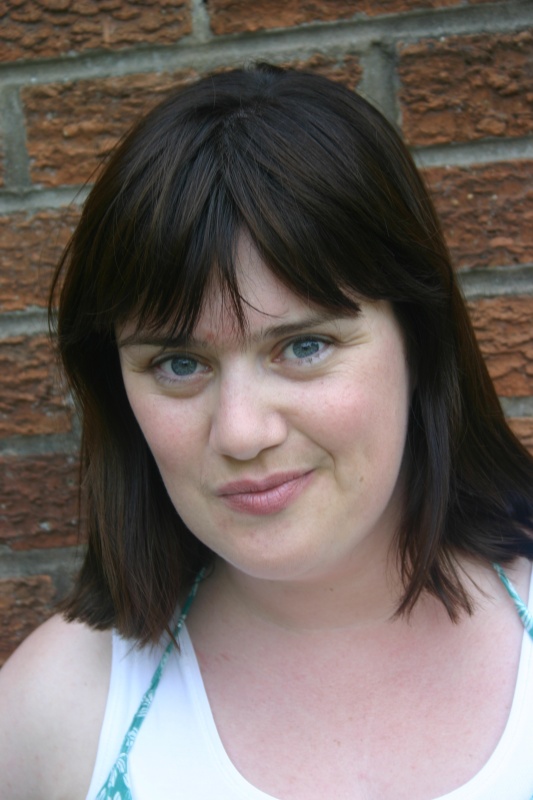 I’m very pleased to be welcoming author, Alison May to Novel Kicks today. Hello Alison. Thank you for joining me.. For people who are new to your books, can you tell me a little about your novels and writing style?
I write romantic comedies. When I’m being flippant I say I write books about twenty and thirty-somethings getting drunk and making bad life choices. When I’m not being flippant I try to make it sound more serious and important than that, but really it’s mainly drinking and bad decisions.
What is your typical writing day like?
Morning: Get up. Wonder about putting proper clothes on. Eat toast in pyjamas. Accidentally get sucked into watching episodes of The Gilmore Girls I’ve seen about eighteen times before. Get cross with self and actually turn laptop on. Answer email and look at social media (which is totally definitely work and not procrastinating at all). Realise it’s lunchtime and resolve to definitely do better in the afternoon.
Afternoon: Much like the morning, but hopefully ending up with a phase of frantic writing of words which will almost certainly turn out to be terrible.
Where do you normally like to write? Do you normally like to write in silence or surrounded by noise?
I mostly write at home in my tiny purple office, but I try to mix things up, so I’ll turn music on and off over the course of the day, or I’ll move with my laptop and write in bed or on the dining table for a bit. I do that because I’m a huge procrastinator, and I find that changing the environment can trick my brain out of faffing and get it to refocus on whatever it’s supposed to be doing. For the same reason I sometimes drag myself to the local library (The Hive in Worcester – it’s very big and very gold). I usually go to the library if I’ve got one big task that I’m procrastinating at home, and set myself a rule about when I’m allowed to leave the library eg. ‘You can’t go home until you’ve drafted that short story’ or ‘You can’t go home until you’ve finished reading that draft.’
What is your process like in regard to planning, daily word count and editing?
It’s different for every book to be honest. For my first novel I just wrote 2000 words a day with no planning at all until I had a first draft. It was an awful first draft, but it had the right number of words at least. Now it varies – I plan more than I used to, but I invariably abandon the plan as soon as I start writing. I sometimes find notes I made at the start of a book and I can barely recognise which book they were supposed to relate to.


 by

A Moment With….Tara Guha

Tara receiving her award for the Luke Bitmead Bursary
Tara Guha won the Luke Bitmead Bursary in 2014 and her first novel was published on 1st September 2015. Tara talks to me about how she feels about being a writer...
Two years ago I didn’t describe myself as a writer. Mother, of course. Charity project worker, self-evidently. But writer – one who writes (and had in fact written an entire novel) – not a chance. For years I’d been saying apologetically “I’m writing a novel” but never felt able to use the term writer, fearing questions about publication and generally being “found out.”
Then one night in late November 2014 everything changed. From 8pm to 8.01pm I went from being one who writes to a Writer. Of course, nothing had changed in terms of my abilities or passions, but suddenly the world and I accepted me as the thing that I had in fact been since the age of five. That crucial minute saw me named as the winner of the Luke Bitmead Bursary 2014, an award for unpublished novelists with a publishing deal as first prize. It was the most mind-boggling experience of my life.
I’d spotted the ad for the Bursary back in May. Luke Bitmead was a talented young writer, Legend Press’s first signed author, who tragically took his own life in 2006. His inspirational mother Elaine launched the award with Legend Press to help struggling writers to get a foot in the publishing door – one that is so often closed politely in your face. I was delighted to be short-listed but my expectations of winning were truthfully non-existent. I went along to the Bursary night to enjoying the experience of a night in London, a new dress and the chance to meet fellow “writers.”

 by
Author Interview: Hannah Vincent
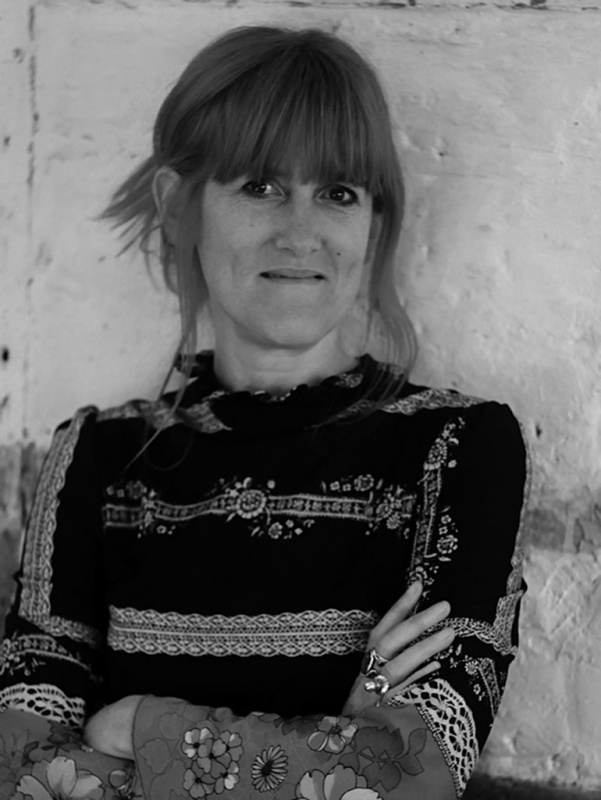 I am pleased to be joined by author, Hannah Vincent today. Her novel, Alarm Girl was released by Myriad Editions in August 2014. Thank you for joining me, Hannah. Can you tell us about Alarm Girl and how the idea originated?
I was travelling in Africa when I came across a newspaper article about a woman who died on the eve of her young daughter’s birthday. The image of a mother preparing for her child’s birthday which she will never see caught my imagination.
It’s a rite-of-passage story, told partly from the point of view of a child who hasn’t been told enough about the circumstances surrounding her mother’s death. To fill in the gaps she makes up her own version of the truth. Set in South Africa, the book’s location is a metaphor for the strange emotional world a child inhabits after the death of a parent.
What’s your writing process like? How much do you plan and do you edit as you go?
I make notes for scenes for a long time and when the time is right (and judging this is crucial, I think) I start ‘joining up the dots’, filling in the gaps in between these scenes. Edit as I go, yes. Writing is rewriting.
You’re also a playwright. How did this contribute toward writing the novel?
My experience of writing plays means I am confident writing dialogue. Also, I visualise scenes, with characters moving about and relating to one another physically.
In a play, the writer only reveals the tip of the iceberg – what characters say to one another and what they do on stage. In prose, the writer has the freedom to show the reader a lot more of the iceberg but writing plays taught me how to be economic and show only what is necessary to the drama.

 by
A Moment With… David Nicholls.

Wordsworth Editions, New Ed: Dec 1993

Penguin Classics, January 2003
As part of Booktober, one of the books I’ve been reading is Us by David Nicholls. We asked David the following question: if he were only allowed to own three books, which three would he pick? Here are his choices…
The first would be a Dickens – if not a single volume complete works then ‘Bleak House’, his masterpiece, a great, brilliant, rich and endlessly complex novel that’s also endlessly moving.
The story is told partly by the novel’s heroine, Esther Summerson, and partly by an omniscient narrator. Memorable characters include haughty Lady Honoria Dedlock, the menacing lawyer Tulkinghorn, the realistic John Jarndyce, and the childish and disingenuous Harold Skimpole, as well as the imprudent Richard Carstone. At the novel’s centre is long-running litigation Jarndyce and Jarndyce, which has far-reaching consequences for all involved. This case revolves around a testator who apparently made several wills. Dickens’ satirization of the English judicial system is based in part on his own experiences as a law clerk, and in part on his experiences as a litigant seeking to enforce copyright on his earlier books.
Secondly, I’d probably go for Shakespeare’s complete works, including the sonnets.
Finally, Anna Karenina by Leo Tolstoy, simply because I’ve never read it and always pretend that I have.

 by
Blog Tour: Pretending to Dance by Diane Chamberlain
 I’m thrilled to welcome author, Diane Chamberlain and her blog tour to Novel Kicks today. Diane is the best-selling author of The Silent Sister and The Dance Begins. Her new novel, Pretending to Dance was released by Macmillan on 8th October 2015.
About Pretending to Dance:
When the pretending ends, the lying begins . . . Molly Arnette is good at keeping secrets. As she and her husband try to adopt a baby, she worries that the truth she’s kept hidden about her North Carolina childhood will rise to the surface and destroy not only her chance at adoption, but her marriage as well. Molly ran away from her family twenty years ago after a shocking event left her devastated and distrustful of those she loved. Now, as she tries to find a way to make peace with her past and embrace a healthy future, she discovers that even she doesn’t know the truth of what happened in her family of pretenders.
To celebrate the release of her book, Diane has shared with us the twenty four things she’s learnt when writing a novel. Over to you, Diane…
- Figure out your ending first. Although it may change ten times during the writing, it gives you a target to aim for.
- Don’t stress about formatting. I once asked an editor what font and margin size she preferred. She responded “I wish writers wouldn’t worry about that sort of thing. Just give me a good story.”
- It takes an hour to sign your name 250 times. When my novel Necessary Lies was a Target Bookclub Pick, I had to sign 5000 copies. It took 20 hours and half a bottle of Tylenol. (But so worth it!)
- No matter how brilliant your novel is, several people will still give it one star on Amazon. Get over it.
- Editors are your friends, not your enemies. They want your book to be every bit as extraordinary as you want it to be. Take their suggestions to heart.

 by
Book Club