NK Chats To… Owen Knight
 Hello Owen, thank you for joining me today. Your book is called Another Life. Can you tell me about it and what inspired the story?
I had an idea for a character who, despite trying to do the best for everyone he encounters, feels his life to be one of disappointment and failure. Eventually, we discover that his decisions and actions have had a profound, beneficial effect on the lives of others. You could say it’s a modern-day interpretation of the film ‘It’s A Wonderful Life’.
I am also intrigued by quests and the twilight world of things that may or may not be. I am a great admirer of David Lynch and his ability to suggest that things are not as they seem was influential.
As for the story, it’s set in a secretive, hidden corner of Middle England, combining folklore, legends and ancient beliefs with the contemporary issue of what it means to be human in an increasingly technological world.
Thirty years ago, Oliver Merryweather is intrigued by a woman who waves to him from the window of a house in a village he discovers by accident.
In the present day, Oliver believes his life to be a series of failures and regrets. When the same woman appears to him in a dream, Oliver embarks on an obsessive quest to find her. With the village inexplicably absent from all maps, all he has to go on is the unusual mark on her wrist.
Journeying back into his past, Oliver finds himself inextricably drawn into a decades-old mystery involving missing children, pagan beliefs and the Green Man of folklore, while coming face to face with the disappointments and tragedies of his own life. As the story draws towards its unexpected and uplifting conclusion, the line between reality, dreams and memory begins to blur and Oliver gains an insight into the true purpose of his existence.
What were the challenges you faced whilst writing Another Life?
The bringing together of disparate ideas presented several difficulties. The biggest challenge was how to link my protagonist’s ordinary family life to the idea of the myths and legends associated with the Green Man.
The border between dreams and reality is a key theme in Another Life. This needed care, to avoid confusing the reader. There is the suggestion that something on the edge of the supernatural may be involved. It was essential to keep this as no more than a possibility in the mind of the reader. I’m not interested in writing pure fantasy – there has to be a grounding in reality, the possibility that the weirdest of events has a rational explanation. This was also important in creating a hidden community in Middle England, where the normal rules do not apply. I addressed this using a combination of geography and historical fact.
Finally, there was the challenge of the resolution: how to explain the mysteries and strange events encountered by the protagonist. Two-thirds of the way through the book the reader encounters a major change that makes sense of what comes before.
In summary, Another Life combines elements of family life, myths and legends, a quest and cutting-edge science. These elements are introduced in a natural, uncomplicated way, avoiding technical explanations, so as not to alienate the reader.
What’s your typical writing day like? Do you need things like coffee? Do you prefer to write in silence?
I’m an early morning person, whether it be writing and related activities, walking, running, photography. Writing comes first; it’s a passion that can never fully be satisfied.
A typical pattern is revision of the previous day’s work, followed by new words, including necessary research and then more research, finishing with a review of the current day’s progress.
I have to work in silence, other than birdsong. Music is too distracting. Any breaks have to be at a time of my choosing, usually ten minutes out of every hour. The exception is when I’m engaged in a long passage that’s going well. You have to take advantage of those occasions.
What’s your favourite word and why?
Apricot. I like the falling rhythm of the three syllables with a pause between the first and second. It’s like a musical phrase, sensuous, as is the shape and texture of the fruit.
How do you approach a writing project from idea to final draft and how long does it typically take you to get from the beginning of the process to the end?
A new book begins with a lot of thinking. A primordial soup of apparently unrelated ideas seeking to connect with the ideal partner. I write a few experimental passages, in isolation, to test whether they work, or at least have promise. Even at this early stage, I’m keen to ensure I can write engaging prose and believe in the idea. Much research follows until I’m happy that there is a story, a voyage embracing change. It is good to have an early idea for one or more endings. Much more important to let the characters lead you on a journey.
A new book takes me between nine and twelve months, including long periods of revision, particularly in the latter stages.
Which fictional world would you like to escape to for a while and why?


 by

NK Chats To… Mari Jane Law
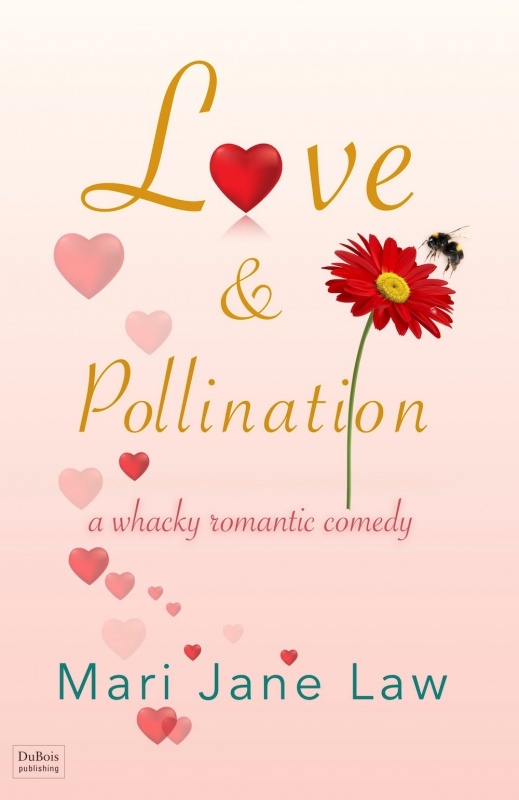 Hi Mari Jane, thank you for joining me today. Can you tell me about your novel, Love and Pollination and what inspired the story?
Hi Laura, thank you for inviting me to Novel Kicks and giving me this opportunity to talk about my book.
Love & Pollination is about an extremely naïve young woman called Perdita whose Catholic education and convent upbringing did not prepare her for having an intimate relationship. Being so innocent, she makes mistakes – and she ends up pregnant. Then she loses her job – and her home. But she’s optimistic and makes the best of things despite the intrusion of Saul Hadley into her life. She thinks that she can get the better of him – and readers will have to see if she succeeds!
The story was inspired by the fact that faith schools in the UK are not required to have Sex and Relationship Education (the government has now changed it to Relationship and Sex Education as they probably realised the revised word order was more appropriate for young people). So students in religious schools can end up being pretty ignorant about the birds and the bees – and how to spot a no-good womaniser.
I thought it would be fun to have a character who was brought up by nuns in an orphanage attached to a convent – and who had a Catholic convent education – to explain her innocence. And the plot set-up relies on her naïveté as do many of the jokes. That aside, she is still a unique character as you will see if you read the book – she has an interesting approach to problem-solving.
How long did it take you to write Love and Pollination and what’s your process like from idea to final draft?
I began the idea of the book about thirty years ago – I tried for Mills & Boon and had no luck. I worked on other things and, on and off, came back to this novel. But it wasn’t until about eight years ago that I decided to completely re-write it and change the tone of my writing. Then something seemed to click – and I started to make people laugh at the writers’ group I’d recently joined. I decided the plot worked far better as a comedy.
I bought some books on writing comedy, and I watch a lot of comedy on TV. But I didn’t labour on the book continuously over the eight years – I had other comedy romance ideas and began work on those. It took a great deal of slog to get Love & Pollination to the stage where it was finally published and I’m incredibly grateful to DuBois Publishing for giving me the opportunity to present my book to the world. I am hoping that I will be quicker getting my next book out. I just have to find a publisher…
You were a member of the Romantic Novelists’ New Writers’ Scheme. How did that help you write your novel? Is this something you’d recommend to new writers?
I belong to a writers’ group – we read out a piece of our work for ten minutes and get feedback for another ten minutes or so. This is very valuable but people giving feedback in a writers’ group can only see snippets of the novel at a time. The great thing about the New Writers’ Scheme is that the entire novel gets read by one person and they give a comprehensive critique. This gives feedback on plot and character development and can identify problems that a writers’ group can’t.
I recommend the NWS unreservedly. I think it’s fantastic. The membership fee is small compared to what it would cost to have someone from, for example, a critique company read the book – it makes getting personalised help much more affordable.
What’s your typical writing day like?
I don’t have a typical day – my writing is erratic. Sometimes I go through a fertile period and make a great deal of progress and then I can go for weeks with not being able to work on my manuscript at all for one reason or another.
What elements do you feel make a good story?

 by
NK Chats To… M W Arnold
 Hello Mick. I am so very pleased and proud to be welcoming you to Novel Kicks. What’s the experience been like so far compared to your first novel, ‘The Season for Love’?
Hi Laura, it’s wonderful to be back celebrating my second novel, I’m delighted to be here. It’s never easy to obtain a contract for a book, and for some reason, in my opinion, if it’s not already in place, obtaining that second one is always the most nerve-shredding. When the email offer came through for this one, it was like a weight lifting from my mind.
Can you tell me a little about your first historical saga, ‘A Wing and a Prayer’ and what inspired the story?
Because of ill health, I hadn’t been writing, I’d wanted to but it hadn’t been working. My author friends had all been encouraging me to try, so when a friend suggested I try something new rather than to pick up an unfinished project, it was like a serendipitous moment. I was watching a program on tv called, Spitfire Women, about the lady pilots of the Air Transport Auxiliary in WW2. Before I was even aware I was doing it, I found myself scrolling around the internet and the beginning of a story idea reared its head. For this prod up the proverbial, I have two excellent authors and good friends to thank; best-selling romance author Sue Moorcroft and historical saga author par excellence, Elaine Everest. Also, after finding out so much about the brave women and men of the ATA, I wanted to write a kind of tribute to them. I hope I’ve done so.
What are the challenges of setting your novel in WWII?
Getting your facts right. Well, that’s only partially true, as in this day and age of the internet, you really shouldn’t be getting anything wrong, though it does happen. The other part, at least so far as I’m concerned, is making sure your characters behave and talk as they did back then. Compared to my romance, which was set in contemporary times, this was initially much harder to write until I got into the swing of it and now, it’s quite natural. Now I’m well into writing the third book in the series, writing as if my mind is back in the 1940’s seems natural. My main issue is, and will probably remain, writing in US English, as my publisher is based in the USA and prefers this. It still looks strange to me.
 What’s your writing process like from first idea to final draft? Are there any challenges when writing a book series?
A lot of my ideas, when I first tried my hand at writing, came from listening to Radio. I’d hear a song and that would spark an idea. I still have a folder with about 20 idea for stories, some are brief outlines, a few lines, some are up to 6 or 7 pages, quite full of detail, a few even with a start, a middle and an end. I’d like think I can get back to some of those at some point. For this saga series, once the idea came, I was able to start writing pretty fast. I like to begin a story as soon as the idea hits me and as I’m more of a panster than a planster, I can get the first draft down pretty quickly, even taking into account that my first drafts are more akin to between a second and third draft, as I edit as I go along; each chapter has to read right before I can move on to the next one. I also keep each chapter as its own file, as I find it much easier to go to what I need to if, well, I need to.
So far as writing a series is concerned, this is my first series as ‘The Season for Love’ was a standalone romance, I’m kind of learning my own way as I go along. I’m sure everyone who writes a series has their own ways, so there may be an easier way than the one I’m using, but so far, it works for me. I like to, if it’s possible, to leave each chapter on a cliffhanger. That’s not possible with a series of books, so far as the end of the book is concerned. I’d like to, but each book has to be able to be read as a standalone too, so that’s out of the question. What I have to do is give the reader an enjoyable reading experience, whilst making them want to find out what the characters get up to next. It’s a nice feeling to know that I’ll be coming back to these characters again too.
You are a member of the Romantic Novelists’ Association Do you feel that the RNA New Writers’ Scheme is worth joining if you’re wanting to start writing a novel?
My route to publication was through this esteemed scheme so, yes, very much so. I know so many authors who became published by joining the NWS scheme of the Romantic Novelists Association. It’s one of the hardest things to accomplish, having a book published and the support which this scheme provides is invaluable. I would recommend it to anyone who wishes to become an author.
What’s your favourite word and why?

 by
NK Chats To… Emily Carpenter
 Hi Emily, thank you so much for joining me today. What’s your typical writing day like and do you have any pre-writing rituals, for example, needing coffee? Silence?
Thanks for having me! It’s funny, I don’t seem to have a typical writing day, which is something I actually enjoy. I will say, I’m not an early morning writer. Not a morning person in the least. I like to wake up, drink coffee and eat, get my son off to school and then exercise. Then I’m ready to sit down at the computer. I don’t really have rituals, but I do like to have the TV running in the background – a show or movie that I’ve seen before or don’t have to pay attention to. For some reason my brain likes multi-tasking in that way. Recently, I’ve been re-watching Peaky Blinders and it’s nice to, every once in a while, look up and go, “Oh, hello, Cillian Murphy, how’s the crime going?” I do firmly believe in hitting a minimum word count every day while I’m drafting a new novel. But if I don’t get my words, or I go weeks without writing, it’s fine. I kind of trust my creativity to lead the way and ask for what it needs.
Can you tell me about your novel, Reviving the Hawthorn Sisters and what inspired the story?
I had just finished my fourth book UNTIL THE DAY I DIE, which was an adventure-thriller, and I was feeling the need to get back to my Southern gothic, family focused work. I decided to write a sequel or follow up to my first book “Burying the Honeysuckle Girls” because there was still so much I wanted to explore with those characters. I toyed with some ideas, but it was when an author friend of mine said to me that this story was really about Dove Jarrod from “Honeysuckle Girls”, that it all came together.
The story is about Eve Candler (Dove’s granddaughter) who is in charge of administering her grandmother’s family foundation when she discovers that Dove may have been a con woman, thief and possibly a murderer. She has three days in Alabama to clear her grandmother’s name and protect her family’s legacy.
What elements do you feel make a good story?
Something unusual, that I haven’t seen before. I want a main character who’s dealt with very specific troubles from her past and who’s up against a really unique and specific problem in the present. You need the suspense and ticking clock and a vivid setting, yes, but unless your character and their problem isn’t specific, I find myself bored. I think it’s so fascinating how, the more unique those elements are, the more universal the story ends up being.
What were the biggest challenges you faced whilst writing Reviving the Hawthorn Sisters?
It was challenging to make the character of Eve, who’s living a quite unusual life, feel realistic and relatable. Eve’s a young woman but her job is maintaining her grandmother’s legacy as a beloved, famous tent evangelist / tent healer / miracle worker from the 1930s and 40s. Eve isn’t personally religious, doesn’t even believe that her grandmother actually ever worked a miracle, but she’s surrounded with people, like her mother, and all these donors who are true believers—and also it’s her job to raise money for the foundation. She doesn’t want to be disrespectful, but she’s dying to escape. She wants to fly – go to graduate school, have a romance, be a normal twenty-something. But she’s got to be this cheerleader for the memory of an old-time religious preacher.
Which authors do you admire and why?
Oh. So many writers today are just brilliant and creative and then, on the business side, just impress me daily with their marketing savvy. I think Ruth Ware tells epic stories. Riley Sager has his finger on the pulse of what people want to read. Shannon Kirk writes these vivid, incredibly poetic horror books that have created a fictional network of uber-rich American families whose descendants get away with murder.
 How do you approach the writing process, from idea to final draft and how long does it typically take you to write and edit a book?
Different books have different journeys. Some books take a lot of thought before I write. Some I’ll start writing the minute I have the idea. I am a bit superstitious about not talking about a book until it’s written. It’s taken me anywhere from a year to six months to one month to write different books.
Which fictional world would you like to visit and why?
Well, I say I’d like to visit 18th century Scotland like in Outlander but only if Jamie is there and also, honestly, I’d probably end up complaining about the lack of hot running water and electricity and constant danger.
What’s your favourite word and why?

 by
Book News: RNA Joan Hessayon Award 2020
 The winner of the Romantic Novelists’ Associations’ Joan Hessayon Award is due to be announced tomorrow (5th September 2020) via an online presentation.
The contenders for this award are published authors who have passed through the RNA’s New Writers’ Scheme (as a member of this scheme myself, I can’t recommend it enough.) If you’d like more information on the scheme, click here.
There is a wonderful selection in this year’s shortlist from romantic comedies, to fairytale romance, to both historical and paranormal romance.
The Joan Hessayon Award is generously sponsored by gardening expert Dr. David Hessayon OBE, in honour of his late wife, Joan, who was a longstanding member of the RNA and a great supporter of its New Writers’ Scheme.
The winner will be announced at 3pm on Saturday 5th September (for more details, click here or here.) I wanted to say good luck to everyone.
The writers shortlisted for the 2020 award have shared a little about their novels and what it means to them to be nominated. Some of them have also shared some writing tips with us.
Impervious by Zoe Allison

 (Totally Bound).
Vampires exist in secret. The malevolent of their kind exploit their powers to terrible ends and a league of benevolent vampires works covertly against them. Amber Ridley is unique as the only human on that team. She’s an ‘Impervious’, and immune to vampire attack. However, is Amber impervious to love?
Zoe said, “I am delighted to be in the running for this award alongside other fantastic authors. I’m also extremely grateful for the Romantic Novelists’ Association’s amazing New Writers’ Scheme which gives us all such an amazing opportunity.
My bottom line in writing advice is don’t be afraid to do things your way. Whether you’re a plotter, a pantster, or a plantster there’s no right or wrong way and we’re all different. When it comes to editing the best tip I’ve had is to read your work out loud. You’ll catch loads of errors with missing or additional words and issues with flow that you’d otherwise miss because your brain automatically fills them in when you read in your head.”
Zoe Allison is a medic who writes romance in her spare time as a means to create the happy endings that real life often doesn’t provide.
Follow Zoe on Twitter. Click to view Impervious on Amazon UK.
Her Mother’s Secret by Jan Baynham.

 (Ruby Fiction)
Alexandra inherits Elin’s diary after her death, and is shocked to discover a part of her mother’s life she knew nothing about. Why had Elin kept her summer in Greece a secret? Compelled to visit the same island, will Alexandra uncover what really happened in that summer of ’69?
She said, “When I started writing short stories, I never thought I’d be able to write a novel. After I’d accomplished that, I never in a million years thought I’d be published, so to be a contender for the Joan Hessayon Award 2020 is beyond my wildest dreams. Without the RNA and so much support from other authors, I would not be here.
Always look for the positive and NEVER give up. Whenever I get a written critique, I highlight the positive comments first. Next, I do the same for the shortcomings, using a contrasting colour. If I agree, I then make a list of those, ticking them off as I edit to improve my manuscript. Seeing a critique visually and progressing through a list of things to work on is a great motivator for me.
Thank you. Good luck to my fellow contenders, too.”
Jan Baynham loves family secrets and finding skeletons that lurk in cupboards. When she decided that her main character was an artist with a well-hidden secret, she knew exactly where she wanted to set her story. As a Grecophile, she felt that the colours of the sea and flowers, together with the warmth of the people, would be perfect for an artist’s travels and it would involve more Greek holidays for Jan for the purposes of research!
Follow Jan on Twitter. Click to view Her Mother’s Secret on Amazon UK.
The Beginner’s Guide to Loneliness by Laura Bambrey.
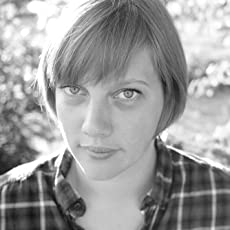
 (Simon & Schuster)
Tori is offered a reviewer’s spot on a wellbeing retreat, and is worried that she’ll have to share too much of herself. But as The Farm weaves its magic, she soon realises that opening up isn’t the worst thing in the world. And sharing a yurt with Bay definitely isn’t!
Laura Bambrey said, “Being shortlisted for the Joan Hessayon award, along with so many other fabulous debuts, is such an honour. I can’t thank the RNA enough for their support.
My top piece of writing advice is to read your manuscript out loud to yourself. Don’t plug it into a piece of technology to do it for you – read it in your own voice. Doing this helps you check the ebb and flow of your writing – the pacing and the sentence structure. If anything trips you up, change it so that it flows better. This is particularly helpful with dialogue – and stops any of your characters from hogging the limelight with a monologue!”
Laura Bambrey has been a book blogger for nearly ten years, writing about and reviewing books from a range of genres, but mainly commercial women’s fiction. She’s also held down a range of weird and wonderful jobs, including trapeze choreographer, sculpture conservator and stilt walker. She has always dreamt of writing her own books.
Whilst writing, Laura did a lot of research into loneliness, anxiety and phobias – little thinking that lockdown and Covid would come along to make these issues far more prevalent. She found the Mind.Org website to be an incredible source of information and support for those who might be seeking it.
She is keen to mix the grittier bits that life throws at you with the romance and humour that make life worth living … but she’ll always make sure her heroine gets her happy ever after in the end.
Follow Laura on Twitter. Click to view The Beginner’s Guide to Loneliness on Amazon UK.
Finding Prince Charming by Victoria Garland.

 by
Book Club