NK Chats To… Svetlana Rodina
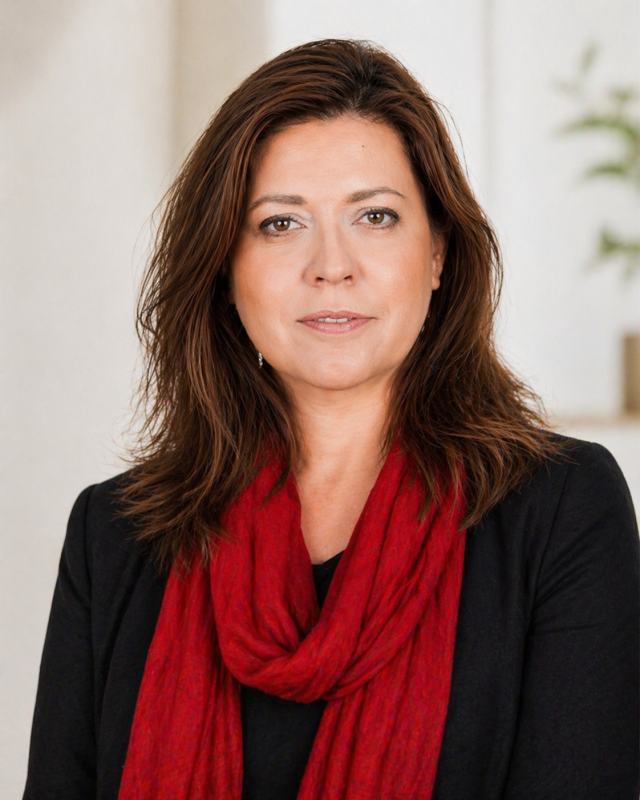 Hi Svetlana. Thank you so much for joining me today. Can you tell me about your book, Red Riding Hood: The Letter from the Wolf and what inspired it?
Thank you for inviting me. The novel began with something I kept returning to: the way a family can tell the truth about its past and still leave out enough to change the meaning of everything. I wanted to follow a woman who has lived comfortably inside one version of her history and then finds evidence that does not quite fit it.
Rose is 53 and living in Buenos Aires when photographs, letters and documents begin to contradict what she has always believed about her family. What interested me was not only the mystery itself, but the age at which she encounters it. She already has decades of relationships, decisions and loyalties behind her, so the discovery cannot be contained in the past; it inevitably alters the present as well.
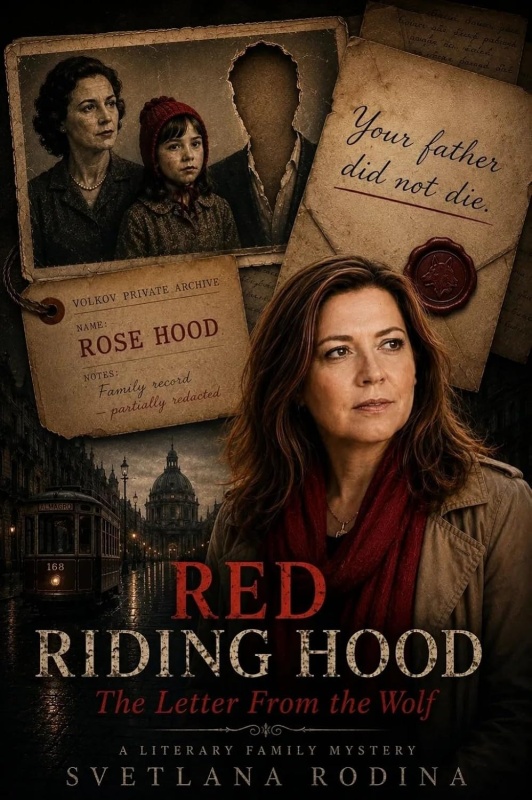
The book first appeared as Red Riding Hood: The Letter from the Wolf, and the revised English edition is now The Archive of Absence: The Letter from the Wolf. The title evolved with the book, but the story still turns on the same question: what happens when the family version of the past no longer fits the evidence in front of you? Buenos Aires felt natural for this because so many lives there have been rebuilt after leaving another place behind.
What was your route to publication like and what advice do you have for someone looking to follow a similar path?
I published independently, which meant that finishing the manuscript was followed almost immediately by a second education. Suddenly I was making decisions about editing, covers, metadata, distribution, translation and rights, while also learning how invisible a perfectly good book can remain if nobody knows where to find it.
Working across several language editions made that even clearer. The story stays the same, but the way readers encounter it does not, and each market forces you to rethink presentation, discoverability and sometimes even the title.
For anyone choosing a similar route, my advice would be to separate the jobs in your head. Writing, publishing and promotion require different kinds of attention, and trying to solve all three at once usually makes each of them worse. Give the manuscript patience, learn the practical side instead of pretending it will somehow sort itself out, and be specific about who the reader is. I learned that last part slowly, which is a polite way of saying I made several avoidable mistakes first.
Can you tell us a little about your writing day? Do you have any rituals like needing coffee or writing in silence? A favourite place to write?
My writing days are fairly unceremonious. I usually work at home in Almagro, Buenos Aires, with tea nearby and enough quiet to stay inside a scene, although the city has never signed any agreement to cooperate with that plan.
A normal day moves between new writing, editing, research, correspondence and the practical work that comes with publishing in more than one language. I do not separate those things as neatly as I probably should, but the mixture suits me because it means I rarely wait for ideal conditions before I begin.
I also work in cafés sometimes, especially when I have been looking at the same page for too long. Being around other people changes what I notice: a gesture, a strange phrase, the rhythm of a conversation. None of it goes straight into a book, but small details often return later in a completely different form.
What is your favourite word and why?
Probably “memory”, because it becomes complicated almost as soon as you look at it closely. Two people can remember the same event differently and both be sincere; affection, self-protection and inaccuracy can all exist inside the same recollection. That uncertainty gives fiction room to explore disagreement without reducing every contradiction to a lie.
 What comes first for you – plot or characters?
Usually the character comes first. Before I can build a plot, I need to know what she wants, what she keeps avoiding and what she would rather not say aloud. Once I understand that, events stop feeling interchangeable because each one asks something specific of her.
That is especially important when there is a mystery in the novel. A letter or photograph may start the external question, but I care more about what becomes impossible for Rose to believe after she has seen it. The plot matters because it changes her, not because it produces a sequence of clues.
How do you approach the writing process from idea, first draft, editing to final story? How do you know when you’ve done enough research and editing?
I tend to start with an emotional contradiction rather than a complete outline. If I know why the story matters to the character, I am comfortable not knowing every turn in advance; the first draft is partly where I discover what the book actually needs to be.
Revision is less forgiving. I look for repetition, dialogue that is too convenient, explanations that do not trust the reader and scenes I may enjoy but cannot justify. Research stays useful while it helps me write more accurately, but there is a point when another hour of reading is really just a sophisticated way of postponing the scene.
Knowing when to stop editing is harder. I usually ask whether the next change will make the book clearer, more exact or more emotionally convincing. If I cannot answer yes, I leave the sentence alone. There is always another possible revision, and eventually the book has to be allowed to exist outside the computer.
Not including your own novels, which book would you like to forget just so you have the pleasure of discovering it again?
The Master and Margarita by Mikhail Bulgakov. I have reread it, but I would love to open it once more without knowing what kind of novel I had entered. On a first reading it keeps changing its shape, and part of the pleasure comes from not yet knowing the rules of the world you are in. Later readings let you admire the construction, but they cannot reproduce that first surprise.
Any advice on how to overcome writers’ block?
I try to work out what kind of stuck I am before treating it as a grand creative crisis. Sometimes I am simply tired; sometimes the scene is wrong; sometimes I have not understood what the character wants; and sometimes I know the destination but have chosen a bad route to it.
When that happens, I might write an intentionally rough version, enter the scene from another point or move to a different section for a while. Producing something imperfect usually tells me more than waiting for the right sentence to arrive in ceremonial robes. Once there is material on the page, there is something to revise.
What drew you to this genre and what were the challenges you faced when writing?
I am drawn to literary and contemporary fiction that carries a mystery inside it without becoming only a puzzle. I like the moment when an ordinary object — a photograph, a letter, a date in a document — suddenly changes the meaning of something the character thought she understood.
The main challenge was keeping that tension without letting the mystery swallow the people around it. Each discovery had to matter because of what it did to Rose and her relationships, not merely because it brought the reader closer to an answer.
What made that balance harder was the tone. The novel deals with ageing, migration, family secrets and a mother losing parts of her memory, yet ordinary family life does not suddenly become solemn just because something painful is happening. Irritation can sit beside tenderness, and humour can appear in the middle of a difficult conversation; I wanted to leave room for that messiness rather than polish it away.
If you were creating a playlist for this book, which songs would you include?
I do not think the playlist would look especially coherent on paper, which is probably right for the novel. I would include “Alfonsina y el mar” performed by Mercedes Sosa, “Por una cabeza” by Carlos Gardel, “The Sound of Silence” by Simon & Garfunkel, “Bang Bang (My Baby Shot Me Down)” performed by Nancy Sinatra, and something by Astor Piazzolla.
I would not try to give every chapter a soundtrack, though. Some scenes benefit from music; others work better when the reader is simply left with what has just been discovered.
Would you rather
Would you rather have magical powers here on earth or live in a magical place without powers?
Magical powers here on earth. I would rather improve the world I already know.
Would you rather have the ability to communicate telepathically or know every single language on the planet?
Every language on the planet. For me, that one is not even close.
Be able to have a one-minute conversation with your past self or future self?
My past self. I think she would ask for certainty, and I would give her perspective instead.
Live in a world where it is constantly snowing or always raining?
Always raining. Snow is beautiful in photographs; rain is easier to live with.
Live in a world without music or movies?
Without movies. I would miss them terribly, but I would keep music.
Take part in a dating show or a survival show?
A survival show. At least the nature of the problem is clear from the beginning.
About Svetlana Rodina –
 Svetlana Rodina is an independent writer based in Buenos Aires.
Her fiction focuses on family memory, identity, migration and the ways people rebuild a life after the story they trusted begins to change. Her books are available in English, Spanish, Russian and Icelandic.
The revised English edition of The Archive of Absence: The Letter from the Wolf received a five-star review from Read and Reviewed.
Say hello to Svetlana on Goodreads, Facebook, and Instagram.
About Red Riding Hood: The Letter from the Wolf –
 Her father did not vanish. He was edited out.
At fifty-three, Rose Hood has become skilled at living beside loss: an ageing mother in Moscow, a grown son pulling away, a career quietly reducing her to “institutional memory”, and a city that keeps people company without offering comfort.
Then a worn parcel arrives at her Buenos Aires apartment: photographs, tram tickets, old receipts, and a file marked with her name. Inside is a version of her childhood that does not match the one she was taught to survive.
As Rose follows the trail through archives, railway stations, forgotten apartments and the neighbourhood where her father may have lived within reach, her mother begins to forget the only facts that might still matter. The family story is collapsing from both ends: the documents are speaking, and the witness is disappearing.
Dry, atmospheric and unsentimental, The Archive of Absence is a literary mystery about memory, family secrets, late-life reckoning, and the stories families rewrite in order to survive.
Red Riding Hood: The Letter from the Wolf was released in June 2026. Click to buy on Amazon UK, Amazon US and Amazon AU.


 by
by 

I'm Laura. I started Novel Kicks back in 2009 as I wanted a place to discuss books and writing - two loves of my life. As someone who has anxiety, these two things give me, and I am sure countless others, a much needed escape.
There is a monthly book club, writing exercises, prompts, reviews, author interviews, competitions and guest posts. I cover many genres and I hope there is something for everyone.
I grew up by the sea in Dorset and currently live in Poole with my husband, Chris and three cats. I love writing and have a BA (Hons) in Creative Writing from Falmouth University. I am writing my first book. If only I could stop pressing delete. Chris has threatened to stop it from working. Haha.
I have always loved creative writing since I was in first school and would very much like to meet my teacher, Miss Sayers, to say thank you for all the encouragement she gave me then.
When not writing, I love reading, cats, Disney, singing (I can't sing but this doesn't stop me,) and falling into a good TV show or film. If I could step into any fictional world, it would be amongst the characters in ABC's Once Upon a Time.
I love reading many genres and discovering new authors.
There is a monthly book club, writing exercises, prompts, reviews, author interviews, competitions and guest posts. I cover many genres and I hope there is something for everyone.
I grew up by the sea in Dorset and currently live in Poole with my husband, Chris and three cats. I love writing and have a BA (Hons) in Creative Writing from Falmouth University. I am writing my first book. If only I could stop pressing delete. Chris has threatened to stop it from working. Haha.
I have always loved creative writing since I was in first school and would very much like to meet my teacher, Miss Sayers, to say thank you for all the encouragement she gave me then.
When not writing, I love reading, cats, Disney, singing (I can't sing but this doesn't stop me,) and falling into a good TV show or film. If I could step into any fictional world, it would be amongst the characters in ABC's Once Upon a Time.
I love reading many genres and discovering new authors.
Book Club
Leave a Reply