NK Chats To… Thomas Messel
Published October 5, 2026 | By Laura
 Hello Thomas. Thank you so much for joining me today. Can you tell us about your book, The Nightingale of Bath and what inspired it?
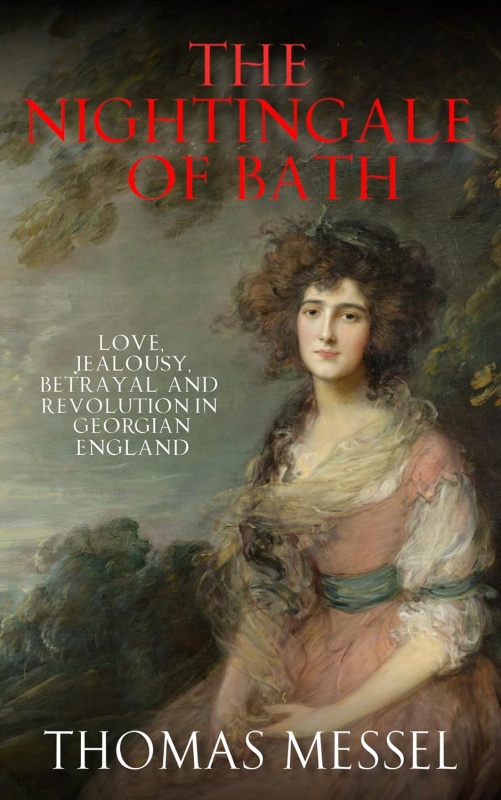
The plaque at Bath’s 11 Royal Crescent blandly says that from this house, Elizabeth Linley eloped with Richard Brinsley Sheridan on 18 March 1772 – but behind those words lies a much darker story.
Elizabeth was a stunningly beautiful teenager with a fabulous voice, ill-equipped for the adulation of stardom.
She was mercilessly exploited by her ambitious parents and prey to predatory men until she could stand it no longer and vanished, at the age of 17, on 18 March 1772. Her marriage to Sheridan proved to be no picnic, where her collaboration and authorship of two of his most celebrated plays, The Rivals and La Duenna, was given no credit, nor was any notice given to her involvement in his greatest Parliamentary coupin the impeachment of Warren Hastings.
Her passionate and loving nature was only fully recognised through tragedy.
The theme that strikes me strongly about her life was the shocking muzzling and disempowerment of women in this period, however strong and capable they were.
Her story, and that of her remarkable family, first came to my attention through an ancestral connection, through which I had several books recording her life.
What’s your typical writing day like? Do you have any writing rituals like needing
coffee or silence to write, for example?
Throughout my life, I have been an early riser in order to work undisturbed. So, for the writing of this book, my writing times would generally run from 4 am to 8.30 am, with a cup of hot chocolate to kick me off for sustenance.
How do you approach the writing process from idea, to research, first draft, editing
and final draft? How do you know when you’ve done research and editing?
Originally, I had hoped to write this book as a biography, as I felt more at ease in the world of non-fiction, the genre in which I have previously written. However, as I researched more into the subject, there were so many undocumented parts to Elizabeth Linley’s life that were crucial to the eventual flow of events, which meant the only way to cover the subject would be to link them through a historical novel.
My research was profound, covering several years and volumes of work, reading into primary and secondary source material, including original paintings, letters and documents.
The research never really ended, as I picked up more during the writing phase and even now, a year after publication, through giving talks and lectures, more information comes to light.
Editing could have gone on forever, a stage in which I was helped by engaging a structural editor, Alpha and Beta Readers and a professional script editor. I also engaged a ‘fact-checker’ editor and still can see faults in my book, which I would have liked to have spotted, but had to draw the line and press the publication button.
What’s your favourite word and why?
I love saving endangered species, so ‘fubsy’ is my pet word. It means what it sounds like!
What were the challenges you faced when writing historical fiction?
Dialogue was my first hurdle. The writing and language of the late 18th century can seem remote, stiff and obscure, so I tried to make these passages understandable to a modern reader, but I also tried to incorporate phrases or expressions that sound appropriate to the period.
Which fictional character would you like to meet and why?
Becky Sharp, Thackeray’s manipulative anti-hero of Vanity Fair, would have been an utterly detestable character, although in many ways she was alluring and fascinating. It is also a colourful period of British history.
In your opinion, what are the most important things you need to be a writer?
Patience is most important, and being prepared to check and edit one’s work over and over again, until satisfied that it is as good as possible. I lost count of the number of my edits, but I guess it must have been in the region of 15.
Ruthlessness is another characteristic that comes in handy. This is needed as probably 60% of one’s well-crafted and meticulously researched treasured script will need to go. This is not a bad thing, as it can always find its way into a future work.
 Which authors do you admire and why?
Robert Harris’s writing never fails to engage me. His plots keep me hooked while his depth of research is masterly and highly informative. His books to me are like a packet of “Pringles”; once you start, you can’t stop!
I also love Daphne Du Maurier’s books, not only for their intriguing plots but also for the unforgettable beauty of her writing.
What is the best piece of writing advice have you ever received?
To feel the emotion of my protagonists. In this, I have tried, but am not sure if I have entirely succeeded. To me, this was a particular challenge, as I am a man, covering the life of a young lady who was facing challenges beyond my experience.
Do you have any other advice for aspiring writers?
My first piece of advice is not to be frightened or hesitant. Once you have written your first word, the project is launched and under sail.
Would You Rather –
Have the ability to see into the future or be able to visit the past?
Visit the past.
Move things with your mind or read minds?
Read minds.
Have magical powers here on earth or live in a magical place without powers?
Have magical powers on earth.
Would you rather have the ability to communicate telepathically or know every single language on the planet?
Communicate telepathically.
Be able to have a one-minute conversation with your past self or future self?
Have a word with my past life.
Live in a world without music or movies?
Live with music.
Take part in a dating show or a survival show?
Neither, but if obliged to choose, it would be a survival show.
About Thomas Messel –
 Thomas Messel, the author of this book, is better known as one of Britain’s most respected furniture designers, in which field he has worked for 40 years, and built up a celebrated reputation both in the UK and the USA.
In 2011, he co-wrote and edited the study of the work of his uncle, “Oliver Messel, in the Theatre of Design”, for which he won the Speares Book Award, in 2012.
The Nightingale of Bath was published in October 2025, since which time Thomas has given several concerts and talks on the life of Elizabeth Linley, the last one being at the Bath Royal Literary and Scientific Institute in September 2026. For more details on the Institute, click here.
Connect with Thomas via Instagram.
About The Nightingale of Bath –
 ‘It gives me great discomfort to tell you that realistically you must not stay here in Bath. You must vanish.’
Bath 1772
Elizabeth Linley, wildly famous, celebrated for her voice, charisma and beauty, painted by Gainsborough and Reynolds the most eminent artists of her day.
Events on the 18th March 1772, leave her no option but to weave herself through the intricate world of society dominated by The Prince of Wales and the scandalous Georgiana, Duchess of Devonshire, the precarious nature of Garrick and Sheridan’s London theatre and the perils of political intrigue, manipulated by the rivalry between Charles James Fox and William Pitt.
Set in an age of revolution, this is a captivating story of love, ambition, jealousy and betrayal, based upon the true life of Elizabeth Linley.
Click to buy The Nightingale of Bath on Amazon UK and Amazon US.




 by
by 

I'm Laura. I started Novel Kicks back in 2009 as I wanted a place to discuss books and writing - two loves of my life. As someone who has anxiety, these two things give me, and I am sure countless others, a much needed escape.
There is a monthly book club, writing exercises, prompts, reviews, author interviews, competitions and guest posts. I cover many genres and I hope there is something for everyone.
I grew up by the sea in Dorset and currently live in Poole with my husband, Chris and three cats. I love writing and have a BA (Hons) in Creative Writing from Falmouth University. I am writing my first book. If only I could stop pressing delete. Chris has threatened to stop it from working. Haha.
I have always loved creative writing since I was in first school and would very much like to meet my teacher, Miss Sayers, to say thank you for all the encouragement she gave me then.
When not writing, I love reading, cats, Disney, singing (I can't sing but this doesn't stop me,) and falling into a good TV show or film. If I could step into any fictional world, it would be amongst the characters in ABC's Once Upon a Time.
I love reading many genres and discovering new authors.
There is a monthly book club, writing exercises, prompts, reviews, author interviews, competitions and guest posts. I cover many genres and I hope there is something for everyone.
I grew up by the sea in Dorset and currently live in Poole with my husband, Chris and three cats. I love writing and have a BA (Hons) in Creative Writing from Falmouth University. I am writing my first book. If only I could stop pressing delete. Chris has threatened to stop it from working. Haha.
I have always loved creative writing since I was in first school and would very much like to meet my teacher, Miss Sayers, to say thank you for all the encouragement she gave me then.
When not writing, I love reading, cats, Disney, singing (I can't sing but this doesn't stop me,) and falling into a good TV show or film. If I could step into any fictional world, it would be amongst the characters in ABC's Once Upon a Time.
I love reading many genres and discovering new authors.
Novel Kicks is a blog for story tellers and book lovers.
Book Club
Archives
Recent Comments
Useful Links
Categories
- 12 Days of Clink Street
- 12 Days of Clink Street Christmas
- 12 Days of Clink Street Publishing
- 12 Days of Clink Street: Stars and Waves by Roberto Maiolino
- 25 Bookish Facts About Me
- 29 Seconds by T M Logan
- 750words.com
- A Modern Midlife Christmas Carol by Alana Oxford
- A Moment with… Colin Garrow
- A Moment With… Fiona Embers About Loving Love
- A Moment With… Rufus Purdy
- A Moment With…Florence Wetzel
- A Moment With…Tucker May
- A Random Act of Kindness by Sophie Jenkins
- A Risk Worth Sharing by Mollie Blake
- A Stargazy Night Sky by Laura Briggs
- A.K. Mills
- About Us
- Alena Graedon
- Ali McNamara
- Alias Grace by Margaret Atwood
- Alison Baillie
- Alison May
- All The Good Things by Clare Fisher
- Amelia Mandeville
- Angela Jackson
- Anna North
- Anthony Ryan
- Antoine Laurain
- Aria Fiction
- Audible
- Audible Audiobook Review: The Road to Cromer Pier by Martin Gore
- Audible Review
- Audiobook Review
- Audiobook Review: Another Life – An Audible Original by Karla Marie Sweet
- Audiobook Review: Butterfly Summer By Toni De Palma
- Audiobook Review: Cut Short By BD Spargo
- Audiobook Review: Murders of Old China by Paul French
- Audiobook Review: The Wives by Tarryn Fisher
- Audrey Davis
- Author Interview
- Author Interview & Review: Copycat by Alex Lake
- Avon Books
- Avon Publishers
- Balham Literary Festival
- Bella Osborne
- Bella's Scribblings
- Ben Adams
- Ben Fergusson
- Beneath a Burning Sky by Jenny Ashcroft
- Beth Thomas
- Beth Underdown
- Blackbird by ND Gomes
- Bllog Tour: A Little Christmas Magic by Suzanne Rogerson
- Bllog Tour: High Spirits at the Village Inn By Sharon Booth
- Blog
- Blog Blast: Make Do and Mend a Broken Heart by Katey Lovell
- Blog Blitz
- Blog Blitz Extract: A Hotel in Cornwall by Laura Briggs
- Blog Blitz: A Christmas Caroline by K.L. Crear
- Blog Blitz: A Kiss in the Snow
- Blog Blitz: Black Matter by GD Parker
- Blog Blitz: Christmas at Aunt Elsie’s by Emily Harvale
- Blog Blitz: Christmas at the Marshmallow Café by CP Ward
- Blog Blitz: Eternal Forever by Syl Waters
- Blog Blitz: Hector's Perfect Cake by Lily Clarke
- Blog Blitz: Maddy’s Christmas Wedding by Rosie Green
- Blog Blitz: Mistletoe and the Mouse by Elsa Simonetti
- Blog Blitz: Scavenger Art by Lexi Rees
- Blog Blitz: The Gathering by Bernadette Giacomazzo
- Blog Blitz: The Haunting of Hattie Hastings by Audrey Davis
- Blog Blitz: This Ruined Place by Michael Lawrence
- Blog Blitz: Trials and Tribulations of a Pet Sitter by Laura Marchant
- Blog Blitz: Wild Sky by Lexi Rees
- Blog Blitz: Winter Without You by Beth Good
- Blog Blitz: You Never See Rainbows at Christmas by Elaine Spires
- Blog Tour
- Blog Tour: #Galaxy Girl by Bev Smith
- Blog Tour: 10 Minutes 38 Seconds in This Strange World by Elif Shafak
- Blog Tour: 28 Days by Sue Parritt
- Blog Tour: A Billionaire for Christmas by Jo Lyons
- Blog Tour: A Blighter is Bumped Off By Helen Golden
- Blog Tour: A Body in the Banjo By Elaine Spires
- Blog Tour: A Breath of Fresh Air by Jessica Redland
- Blog Tour: A Brotherly Devotion By Jill Bray
- Blog Tour: A Certain Age by Beatriz Williams
- Blog Tour: A Christmas Carol with Grandfather Time by Rose English
- Blog Tour: A Christmas Gift by Sue Moorcroft
- Blog Tour: A Christmas Kiss by Eliza J. Scott
- Blog Tour: A Christmas Proposal by Rose Warner
- Blog Tour: A Christmas Wish on a Carousel by Lottie Cardew
- Blog Tour: A Classy Affair in the Country by Margaret Amatt
- Blog Tour: A Cocktail To Die For by Helen Golden
- Blog Tour: A Cornish Affair by Jo Lambert
- Blog Tour: A Cornish Daisy's Kiss by Laura Briggs
- Blog Tour: A Corpse in Christmas Close by Michelle Salter
- Blog Tour: A Deadly Inside Scoop by Abby Collette
- Blog Tour: A Deadly Portrayal by LM Milford
- Blog Tour: A Death Of Fresh Air by Helen Golden
- Blog Tour: A Dowager is Done In By Helen Golden
- Blog Tour: A Family Affair by Joy Wood
- Blog Tour: A Family Holiday by Bella Osborne
- Blog Tour: A Farewell To Imperial İstanbul by Ayşe Gülnev Osmanoğlu
- Blog Tour: A Good Man by PJ McIlvaine
- Blog Tour: A Heart Full of Hope by Kay Seeley
- Blog Tour: A Husband is Hushed Up by Helen Golden
- Blog Tour: A Lady's Fortune by Jane Dunn
- Blog Tour: A Leap of Faith at the Vineyard in Alsace by Julie Stock
- Blog Tour: A Lethal Arrogance by D.S. Lang
- Blog Tour: A Little Christmas Charm by Kathryn Freeman
- Blog Tour: A Little Christmas Spirit by Susan Buchanan
- Blog Tour: A Little Place in Prague by Julie Caplin
- Blog Tour: A Lot to Unpack by Portia MacIntosh
- Blog Tour: A Messy Affair by Elizabeth Mundy
- Blog Tour: A Mirror Murder by Helen Hollick
- Blog Tour: A Mistletoe Miracle by Emma Jackson
- Blog Tour: A Modern Midlife Christmas Carol by Alana Oxford
- Blog Tour: A Mother's War by Helen Parusel
- Blog Tour: A New Dawn at Owl’s Lodge by Jessica Redland
- Blog Tour: A New Hope in the Highlands by Rachel Debrave
- Blog Tour: A New Life in Amsterdam by Helga Jensen
- Blog Tour: A Nose For Mischief by K.T. Lee
- Blog Tour: A Not So Quiet Christmas by Suzie Tullett
- Blog Tour: A Notable Omission by Isabella Muir
- Blog Tour: A Painkiller to Die For By Dr Martyn Pritchard
- Blog Tour: A Perfect Cornish Summer by Phillipa Ashley
- Blog Tour: A Perfect Explanation by Eleanor Anstruther
- Blog Tour: A Perfect Paris Christmas by Mandy Baggot
- Blog Tour: A Postcard From Italy by Alex Brown
- Blog Tour: A Question of Us by Mary Jayne Baker
- Blog Tour: A Random Act of Kindness by Sophie Jenkins
- Blog Tour: A Rock 'n' Roll Lovestyle by Kiltie Jackson
- Blog Tour: A Scottish Island Surprise by Holly Wyld
- Blog Tour: A Shop Girl at Sea by Rachel Brimble
- Blog Tour: A Skye Full of Stars by Sue Moorcroft
- Blog Tour: A Stranger’s Revenge by K.J. McGillick
- Blog Tour: A Summer to Remember by Sue Moorcroft
- Blog Tour: A Very Merry Murder by Kate Wells
- Blog Tour: A Village Affair by Julie Houston
- Blog Tour: A Village Vacancy by Julie Houston
- Blog Tour: A Walk in Wildflower Park by Bella Osborne
- Blog Tour: A Way Back Home by Alison Sherlock
- Blog Tour: A Wedding at Sandy Cove by Bella Osborne
- Blog Tour: A Wedding in Cornwall by Laura Briggs
- Blog Tour: A Wedding in the Olive Garden by Leah Fleming
- Blog Tour: A White Christmas on Winter Street by Sue Moorcroft
- Blog Tour: A Wing and a Prayer by M W Arnold
- Blog Tour: A Winter Wedding at Mistletoe Gate Farm by Helen J Rolfe
- Blog Tour: A Winter's Sleep by Monica Cafferky
- Blog Tour: A Wonderland Wish on Ever After Street by Jaimie Admans
- Blog Tour: A Year of Mr Maybes by Judy Leigh
- Blog Tour: About Last Night by A.S. Kelly
- Blog Tour: About Us by Jon Rance
- Blog Tour: Abracadabra by Evanne Hardin Gray
- Blog Tour: Adorable April Afternoons by Stephanie Wood
- Blog Tour: After Paris by Jacqueline Bacci
- Blog Tour: After The Husbands by Gina Cheyne
- Blog Tour: After The Storm by Isabella Muir
- Blog Tour: Agony Auntics by Julie Butterfield
- Blog Tour: All Grown Up by Catherine Evans
- Blog Tour: All Or None by Clive Fleury
- Blog Tour: All She Ever Wished For by Claudia Carroll
- Blog Tour: All The Rage by Cara Hunter
- Blog Tour: All Your Little Lies by Marianne Holmes
- Blog Tour: Ally Hughes has Sex Sometimes by Jules Moulin
- Blog Tour: Almost Forever by Laura Danks
- Blog Tour: Altered Helix by Stephanie Hansen
- Blog Tour: Always and Forever at Glendale Hall by Victoria Walters
- Blog Tour: Always The Bridesmaid by Laura Carter
- Blog Tour: Always The Bridesmaid by Lindsey Kelk
- Blog Tour: Amazing Grace by Kim Nash
- Blog Tour: An Apple Butter Christmas by Terry Lynn Thomas
- Blog Tour: An Enchanted Moment on Ever After Street by Jaimie Admans
- Blog Tour: An Impossible Thing Called Love by Belinda Missen
- Blog Tour: An Italian Island Summer by Sue Moorcroft
- Blog Tour: An Unusual Boy by Fiona Higgins
- Blog Tour: Ancestral Virgins by Fiona J. Mackintosh
- Blog Tour: Assassins By Mike Bond
- Blog Tour: At The Stroke Of Midnight by Jenni Keer
- Blog Tour: Babs & Aggie: The Good The Bad and The Vegan by Hazel Hitchins
- Blog Tour: Baby One More Time by Camilla Isley
- Blog Tour: Bamboo Heart: A Daughter’s Quest by Ann Bennett
- Blog Tour: Battle Mountain by C.J. Box
- Blog Tour: Beach Read by Emily Henry
- Blog Tour: Because Mummy Said So by Shari Low
- Blog Tour: Because You Loved Me by Beth Moran
- Blog Tour: Before She Fell by Natatlie Sammons
- Blog Tour: Before The Rains by Dinah Jefferies
- Blog Tour: Before We Grow Old by Clare Swatman
- Blog Tour: Before You Go by Clare Swatman
- Blog Tour: Bella’s Countryside Christmas by Claire Huston
- Blog Tour: Bells and Bows on Mistletoe Row by Emily Harvale
- Blog Tour: Beneath Cornish Skies by Kate Ryder
- Blog Tour: Betrayal of Mercia by MJ Porter
- Blog Tour: Beyond the Smiles by Minnie Lewis
- Blog Tour: Beyond The Yew Tree by Rachel Walkley
- Blog Tour: Blind Pursuit By Rob Sinclair
- Blog Tour: Blood Loss by Kerena Swan
- Blog Tour: Blood Matters by an McFadyen
- Blog Tour: Blood on the Tyne: Red Snow by Colin Garrow
- Blog Tour: Blooming Murder by Simon Whaley
- Blog Tour: Blue Skies Over Wildflower Lock by Hannah Lynn
- Blog Tour: Bob & Shirley's Guide To Murder by Suzy K Quinn
- Blog Tour: Body Man By Al Pessin
- Blog Tour: Book Review: The Perfect Daughter by Alex Stone
- Blog Tour: Bring Me Sunshine by Laura Kemp
- Blog Tour: Broadcast by Liam Brown
- Blog Tour: Brooklyn Monroe Wants It All by Karen Booth
- Blog Tour: Brothers of the Sword by Peter Gibbons
- Blog Tour: Brown Eyes by Frances Ive
- Blog Tour: Burnt Paper Sky by Gilly MacMillan
- Blog Tour: Butterfly Summer By Toni De Palma
- Blog Tour: Can You Keep a Secret? by Jo Lovett
- Blog Tour: Candlelight Dreams in Cosy Cove by Abbey Hicks
- Blog Tour: Careful What You Hear by Helen Dunlap Newton
- Blog Tour: Careful What You Witch For by Emma Jackson
- Blog Tour: Casa Paradiso – 300 Years in the Life of a House by Francesca Scanacapra
- Blog Tour: Catch a Falling Star by Laura Carter
- Blog Tour: Celebrations at the Beach Hotel By Francesca Capaldi
- Blog Tour: Chaos at Carnegie Hall by Kelly Oliver
- Blog Tour: Charles Dickens: A Life by Derwin Hope
- Blog Tour: Chasing Moonbeams in Merriment Bay by Emily Harvale
- Blog Tour: Christmas at Aunt Elsie’s by Emily Harvale
- Blog Tour: Christmas at Holly Tree Cottage by Eliza J. Scott
- Blog Tour: Christmas at the Cabin by Rebecca Boxall
- Blog Tour: Christmas at the Cat Cafe by Jessica Redland
- Blog Tour: Christmas At The Chocolate Pot Café by Jessica Redland
- Blog Tour: Christmas Cakes and Mistletoe Nights by Carole Matthews
- Blog Tour: Christmas Ever After by Jaimie Admans
- Blog Tour: Christmas in Chamonix by Sasha Wagstaff
- Blog Tour: Christmas Nights at the Star and Lantern by Helen Rolfe
- Blog Tour: Christmas on the Riviera by Jennifer Bohnet
- Blog Tour: Christmas Secrets in Snowflake Cove
- Blog Tour: Christmas Spirit by Nicola May
- Blog Tour: Christmas With The East End Angels by Rosie Hendry
- Blog Tour: Chroma by Oscar Wenman-Hyde
- Blog Tour: Clash of Kings by MJ Porter
- Blog Tour: Claudia Carroll – Starting to Write a New Novel…
- Blog Tour: Close To Home by Cara Hunter
- Blog Tour: Cloth of Grace by Rachel J Bonner
- Blog Tour: Clover Cottage by Christie Barlow
- Blog Tour: Codename Firefly by C. J. Daugherty
- Blog Tour: Coincidentally in Venice by Kate Zarrelli
- Blog Tour: Cold Breath by Quentin Bates
- Blog Tour: Collateral Damage By Sam Cogley
- Blog Tour: Come a Little Closer by Rachel Abbott
- Blog Tour: Come Fly With Me by Helen Rolfe
- Blog Tour: Coming Home to Penvennan Cove by Linn B Halton
- Blog Tour: Coming Home To Puddleduck Farm by Della Galton
- Blog Tour: Confessions of an Alleged Good Girl by Joya Goffney
- Blog Tour: Could It Be Magic? By Fay Keenan
- Blog Tour: Country Lovers by Fiona Walker
- Blog Tour: Creative Writing Skills: Over 70 Fun Activities For Children by Lexi Rees
- Blog Tour: Creature Comforts by Trisha Ashley
- Blog Tour: Crikey A Bodyguard by Kathryn Freeman
- Blog Tour: Cuckoo by Sophie Draper
- Blog Tour: Cupcakes and Kisses in Micklewick Bay by Eliza J Scott
- Blog Tour: Cut Short By BD Spargo
- Blog Tour: Cynthia Smart's Midwife Crisis by Liz Davis
- Blog Tour: Daisy Does It Herself by Gracie Player
- Blog Tour: Dangerous Days for the Home Front Nurses by Rachel Brimble
- Blog Tour: Dangerous Decisions by Evie Jacobs
- Blog Tour: Dangerous Descent by Evie Jacobs
- Blog Tour: Dark Days at the Beach Hotel by Francesca Capaldi
- Blog Tour: Dark Orchid Affair by Robert Whanslaw
- Blog Tour: Dashiki by Florence Wetzel
- Blog Tour: Date With Death by Julia Chapman
- Blog Tour: Dating Daisy by DaisyMae_224
- Blog Tour: Dating Little Miss Perfect by Cassandra O’Leary
- Blog Tour: Dating the It Guy by Krysten Lindsay Hager
- Blog Tour: Daughter of the Sea by Elisabeth J. Hobbes
- Blog Tour: Dead and Talking by Des Burkinshaw
- Blog Tour: Deadly Odds 9.0 By Allen Wyler
- Blog Tour: Deadly Reckoning by Liz Mistry
- Blog Tour: Deadly Truths By Paul Gitsham
- Blog Tour: Deadly Whispers in Lower Dimblebrook by Julie Butterfield
- Blog Tour: Dear Edward by Ann Napolitano
- Blog Tour: Death at Fakenham Races by Ross Greenwood
- Blog Tour: Death at Horsey Mere by Ross Greenwood
- Blog Tour: Death At the School of Translators by Esther Knight
- Blog Tour: Death in the Hills by Kate Wells
- Blog Tour: Death of a Billionaire by Tucker May
- Blog Tour: Death on the High Seas by Anna Legat
- Blog Tour: Decide To Hope by June A. Converse
- Blog Tour: Dohva: The Land Within by Sophie Haeder
- Blog Tour: Don't Turn Around by Amanda Brooke
- Blog Tour: Doris Flies Solo by M W Arnold
- Blog Tour: Dragon Kin’s Blood By Jo Gatenby
- Blog Tour: Dragon Kin’s Choice by Jo Gatenby
- Blog Tour: Dreams Come True at Glendale Hall by Victoria Walters
- Blog Tour: Dressing The Countess by Rachel Brimble
- Blog Tour: Driven by Kerena Swan
- Blog Tour: Driven to Murder by Debbie Young
- Blog Tour: Dying To Bake by Helen Golden
- Blog Tour: Eagle and the Flame by Adam Lofthouse
- Blog Tour: Ember by Catherine Yardley
- Blog Tour: End Game by Liz Mistry
- Blog Tour: Enemies of the Crown by Peter Gibbons
- Blog Tour: Escape To Seahaven Bay By Nicola May
- Blog Tour: Escape to the Northern Lights by Carrie Walker
- Blog Tour: Escape To The Riviera by Jules Wake
- Blog Tour: Escape to the Turquoise Seas By Carrie Walker
- Blog Tour: Escape To Willow Cottage by Bella Osborne
- Blog Tour: Eve's Christmas by Julie Butterfield
- Blog Tour: Every Breath by Nicholas Sparks
- Blog Tour: Excalibur by Peter Gibbons
- Blog Tour: Falling for a Star in the City by Krysten Lindsay Hager
- Blog Tour: Falling for the Competition by Jen Smith
- Blog Tour: Fantaisie by Michael Kenneth Smith
- Blog Tour: Far Across the Ocean by Susie Hull
- Blog Tour: Far Across the Ocean by Suzie Hull
- Blog Tour: Far From Home by T.A. Williams
- Blog Tour: Fatal Equation by Gethyn Jones
- Blog Tour: Feathertide by Beth Cartwright
- Blog Tour: Feel-Good Stories by Sarah Swatridge
- Blog Tour: Field Rules by Carla Luna
- Blog Tour: Finding Family at the Cornish Cove by Kim Nash
- Blog Tour: Finding Love At Sunset Shore by Bella Osborne
- Blog Tour: Finding Love at the Magical Curiosity Shop by Jaimie Admans
- Blog Tour: Finding Love in Micklewick Bay by Eliza J Scott
- Blog Tour: Finding Love on Sunshine Island by Georgina Troy
- Blog Tour: Finding Refuge in Bellbird Bay by Maggie Christensen
- Blog Tour: Fine Points Malice and Payback by Sherrie Todd Beshore
- Blog Tour: Fire on the Mountain by Jean McNeil
- Blog Tour: First Descent by Mike Pace
- Blog Tour: Five Days by Zoë Folbigg
- Blog Tour: Five Things I Love About You by Clare Swatman
- Blog Tour: Floored by Chrissie Harrison
- Blog Tour: Flowerpot Romeo By Simone Goodman
- Blog Tour: For Once In My Life by Sian O’Gorman
- Blog Tour: Forever Love at Wildflower Lock by Hannah Lynn
- Blog Tour: Four Christmases and a Secret by Zara Stoneley
- Blog Tour: Frantic by Dr. Brent Bradley
- Blog Tour: Friends For Life by Liz Murphy
- Blog Tour: Friendship Fails of Emma Nash by Chloe Seager
- Blog Tour: Gerard Philey’s Euro-Diary: Quest for a Life by Brendan James
- Blog Tour: Girl With Secrets by Carol Rivers
- Blog Tour: Gone by Ruby Speechley
- Blog Tour: Good Grief by Jon Rance
- Blog Tour: Grace By A.M. Shine
- Blog Tour: Gravity Well by Melanie Joosten
- Blog Tour: Greta Horwood
- Blog Tour: Growing Up For Beginners by Claire Calman
- Blog Tour: Hani's Daughter Mysteries series by N.L. Holmes
- Blog Tour: Happy Ever After at Puddleduck Farm by Della Galton
- Blog Tour: Happy Ever After at the Second Chances Sweet Shop by Hannah Lynn
- Blog Tour: Hazard Night by Laura Vaughan
- Blog Tour: he Affair by Claire Allan
- Blog Tour: He Loves Me He Loves Me Not by Aimee Brown
- Blog Tour: Heading Home To Lavender Cottage by Alison Sherlock
- Blog Tour: Healing Hearts at the Forever Cottage by Jill Steeples
- Blog Tour: Hellcorp by Jonathan Whitelaw
- Blog Tour: Her Husband's Lie by Amanda Reynolds
- Blog Tour: Hidden Family Secrets by Evelyn Hood
- Blog Tour: Hidden in the Mists by Christina Courtenay
- Blog Tour: Hidden Intentions by Dave Flint
- Blog Tour: Hidden Truth By C.D Steele
- Blog Tour: High Tides and Summer Skies by Jennifer Bohnet
- Blog Tour: Higher Ed by Tessa McWatt
- Blog Tour: Highland Fling on the Whisky Trail by Margaret Amatt
- Blog Tour: Him With The Beard by Pernille Meldgaard Pedersen
- Blog Tour: His Guilty Secret by Hélene Fermont
- Blog Tour: His Other Life by Beth Thomas
- Blog Tour: Hit For Six by Isabella May
- Blog Tour: Homewood Bound by Richard Smith
- Blog Tour: Honeybee Cottage by K.T. Dady
- Blog Tour: Hopeful Hearts at the Cornish Cove by Kim Nash
- Blog Tour: Hopes and Dreams at the Chocolate Pot Café By Jessica Redland
- Blog Tour: Horsing Around by Lexi Rees
- Blog Tour: Hotel on Shadow Lake by Daniela Tully
- Blog Tour: House of Thieves By Rachel Walkley
- Blog Tour: House of Twisted Shadows By J.H.Mann
- Blog Tour: How Not To Be A Loser by Beth Moran
- Blog Tour: How to Avoid Getting Mugged in Rio de Janeiro by Singing Songs by The Police and Other Lesser Known Travel Tips by Simon Yeats
- Blog Tour: How To Fix A Broken Heart by Nicola May
- Blog Tour: How To Marry Your Husband by Jacqueline Rohen
- Blog Tour: How To Save A Life by S.D. Robertson
- Blog Tour: How To Slay At Work by Sarah Bonner
- Blog Tour: How To Start A Riot In A Brothel In Thailand By Ordering A Beer And Other Lesser Known Travel Tips by Simon Yeats
- Blog Tour: How to Survive Making Yourself Look Silly While Dancing with the German Mafia at a Bavarian Nightclub and Other Lesser Known Travel Tips by Simon Yeats
- Blog Tour: Humility and Tolerance by Noni Valentine
- Blog Tour: Hungry For Love by Lucy Beresford
- Blog Tour: Hunted by Paul Finch
- Blog Tour: Husbands by Mo Fanning
- Blog tour: Hush Hush by Mel Sherratt
- Blog Tour: I Can’t Tell You Why by Elaine Robertson North
- Blog Tour: I Don't Do Mondays by Colette Kebell
- Blog Tour: I Invited Her In by Adele Parks
- Blog Tour: I Kill Always Love You by Helen Golden
- Blog Tour: I Love You Always Forever by Charlie Dean
- Blog Tour: I Love You Billy Langley by Monika Jephcott Thomas
- Blog Tour: I Spy With My Little Die by Helen Golden
- Blog Tour: I Wanted You To Know by Laura Pearson
- Blog Tour: I'll Take New York by Miranda Dickinson
- Blog Tour: I'm Glad I Found You This Christmas by CP Ward
- Blog Tour: I’ll Be Home For Christmas by M W Arnold
- Blog Tour: Identical by Saskia Sarginson
- Blog Tour: Idle Hands by Cassondra Windwalker
- Blog Tour: If Could Be With You By M W Arnold
- Blog Tour: If Ever I Fall by S.D Robertson
- Blog Tour: If They Knew by Joanne Sefton
- Blog Tour: IKONA By M.D. Dixon
- Blog Tour: In The Dark by Andreas Pflüger
- Blog Tour: In The Mood by M W Arnold
- Blog Tour: In the Shadow of War by Adrienne Chinn
- Blog Tour: In Too Deep by Elly Redding
- Blog Tour: Insider by Owen Mullen
- Blog Tour: Invisible by Heleyne Hammersley
- Blog Tour: iRemember by SV Bekvalac
- Blog Tour: It Never Rains by Tony Bassett
- Blog Tour: It Started With A Book by Camilla Isley
- Blog Tour: It's Not PMS It's You by Rich Amooi
- Blog Tour: Ivy & Abe by Elizabeth Enfield
- Blog Tour: Jane's Away by Clare Hawken
- Blog Tour: Joyful June Journeys by Stephanie Wood
- Blog Tour: Just Bea by Deborah Klee
- Blog Tour: Just Date and See by Portia MacIntosh
- Blog Tour: Just For The Holidays by Sue Moorcroft
- Blog Tour: Just One Day – Autumn by Susan Buchanan
- Blog Tour: Just One Day – Summer by Susan Buchanan
- Blog Tour: Kalahari Passage by Candi Miller
- Blog Tour: Karma Never Sleeps by R. John Dingle
- Blog Tour: Katie’s Really Bad Day: A Story About Test Anxiety By Kathleen Jeffrey
- Blog tour: Keep Her Silent by Theresa Talbot
- Blog Tour: Keeping up with the Kershaws by Helen Buckley
- Blog Tour: Kill Me Again by Rachel Abbott
- Blog Tour: Killer at the County Show by Kate Wells
- Blog Tour: Kindred Spirits at Harling Hall by Sharon Booth
- Blog Tour: Kings of Conflict by MJ Porter
- Blog Tour: Lady Ludmilla’s Accidental Letter by Sofi Laporte
- Blog Tour: Landsliding by Mandy Jameson
- Blog Tour: Last Christmas by Clare Swatman
- Blog Tour: Last Seen in Havana by Teresa Dovalpage
- Blog Tour: Lean on Me by Beth Moran
- Blog Tour: Learning to Fly by Jane Lambert
- Blog Tour: Legacy Of The Runes by Christina Courtenay
- Blog Tour: Let in the Light by Gerard Nugent
- Blog Tour: Let it Snow by Beth Moran
- Blog Tour: Let It Snow by Sue Moorcroft
- Blog Tour: Let Me Love You by Lasairiona E. McMaster
- Blog Tour: Let Your Lips Twitch by R.A. Clarke
- Blog Tour: Liar Liar by Mel Sherratt
- Blog Tour: Lil's Bus Trip by Judy Leigh
- Blog Tour: Little Boy Lost by J.P. Carter
- Blog Tour: Little Girl Gone by Alexandra Burt
- Blog Tour: Little White Secrets by Carol Mason
- Blog Tour: Living Your Best Life by Maxine Morrey
- Blog Tour: Local Girl Missing by J.A. Baker
- Blog Tour: Loki's Deceit by Donovan Cook
- Blog Tour: Love Among The Treetops
- Blog Tour: Love Beyond Lindisfarne by Kimberley Adams
- Blog Tour: Love Blooms at the Cornish Cottage By Kim Nash
- Blog Tour: Love Blossoms at Puddleduck Farm by Della Galton
- Blog Tour: Love in the Wings by Ellie White
- Blog Tour: Love Like Blood by Mark Billingham
- Blog Tour: Love Me Like You Do by Aimee Brown
- Blog Tour: Love Punked by Nia Lucas
- Blog Tour: Love Quest by Camilla Isley
- Blog Tour: Love Song at the Music Festival by Margaret Amatt
- Blog Tour: Love You From A-Z by Linda Corbett
- Blog Tour: Loving Spirits at the Vintage Teashop by Sharon Booth
- Blog Tour: Lucky Jack (1894-2000): Memoirs of a World War 1 POW by S Bavey
- Blog Tour: Lying in Wait by Liz Nugent
- Blog Tour: Lyrebird by Cecelia Ahern
- Blog Tour: Magic Under the Mistletoe by Lucy Coleman
- Blog Tour: Make or Break at the Lighthouse B&B by Portia MacIntosh
- Blog Tour: Mandarin Road By Ann Bennett
- Blog Tour: Marianne Kavanagh
- Blog Tour: Marry Me in Seahaven Bay By Nicola May
- Blog Tour: Masquerade by Joanna Taylor
- Blog Tour: Maybe Baby by Carol Thomas
- Blog Tour: Me Too By Katharine Light
- Blog Tour: Meet Me in Cockleberry Bay by Nicola May
- Blog Tour: Meet Me on Platform 3 by Zara Stoneley
- Blog Tour: Meet Me Under the Clock by Jo Lovett
- Blog Tour: Men of Iron by MJ Porter
- Blog Tour: Mile High by Rebecca Chance
- Blog Tour: Million Love Songs by Carole Matthews
- Blog Tour: Miss Marley by Vanessa Lafaye
- Blog Tour: Miss Smith Commits the Perfect Crime? By Guy Rolands
- Blog Tour: Missing by Ruby Speechley
- Blog Tour: Mistletoe Moments by Stephanie Wood
- Blog Tour: Monstrous Souls by Rebecca Kelly
- Blog Tour: Moonlight Kisses at Willow Tree Hall by Alison Sherlock
- Blog Tour: Mr Todd's Reckoning by Iain Maitland
- Blog Tour: Mrs Bambi Knows by Chris Mason
- Blog Tour: Mrs Morphett’s Macaroons by Patsy Trench
- Blog Tour: Mrs Sommersby’s Second Chance by Laurie Benson
- Blog Tour: Mulberry Lane Babies by Rosie Clarke
- Blog Tour: Mummy Needs a Break by Susan Edmunds
- Blog Tour: Mummy's Favourite by Sarah Flint
- Blog Tour: Murder at Merewood Hospital by Michelle Salter
- Blog Tour: Murder at Midwinter Manor by Anita Davison
- Blog Tour: Murder at Mill Ponds House by Michelle Salter
- Blog Tour: Murder at Raven’s Gate By Louise Marley
- Blog Tour: Murder at Raven’s Hollow by Louise Marley
- Blog Tour: Murder at The Crooked Horse by Lesley Cookman
- Blog Tour: Murder at the Wedding by Anita Davison
- Blog Tour: Murder by Christmas by Lesley Cookman
- Blog Tour: Murder in Moscow by Kelly Oliver
- Blog Tour: Murder in the Multiverse by RE McLean
- Blog Tour: Murder In Trafalgar Square by Michelle Salter
- Blog Tour: Murder Most Wilde by Helen Golden
- Blog Tour: Murder on the Dancefloor by Katie Marsh
- Blog Tour: Murder on the Farm by Kate Wells
- Blog Tour: Murder on the Menu by Katie Marsh
- Blog Tour: Murders of Old China by Paul French
- Blog Tour: My Best Friend's Secret by Danielle Ramsay
- Blog Tour: My Chance to Fly By Samantha Tonge
- Blog Tour: My Fake Italian Marriage by Romy Sommer
- Blog Tour: My Heart Went Walking by Sally Hanan
- Blog Tour: My Lie Your Lie by Paul Clayton
- Blog Tour: My Lucky Night by Olivia Spring
- Blog Tour: My Rock Star Neighbor by Kathy Strobos
- Blog Tour: My Sister's Lies by S.D Robertson
- Blog Tour: My Sister's Secret by Tracy Buchanan
- Blog Tour: Mysteries at Sea: Peril on the Atlantic by A.M. Howell
- Blog Tour: Mysteries at Sea: The Royal Jewel Plot by A.M. Howell
- Blog Tour: Nadine by John Steinberg
- Blog Tour: Neptune’s Secret Code by Genna Rowbotham
- Blog Tour: Nero the Hero By Samantha Mattocks
- Blog Tour: Never Ever Getting Back Together by Phoebe MacLeod
- Blog Tour: Never Too Late by T.A. Williams
- Blog Tour: New Beginnings at Wynter House by Emily Harvale
- Blog Tour: New York Miracle by Margo Laurie
- Blog Tour: No More Tomorrows By Olivia Lockhart
- Blog Tour: No One Cancels Christmas by Zara Stoneley
- Blog Tour: No Way Back by Kelly Florentia
- Blog Tour: Nobody Puts Romcoms in the Corner by Kathryn Freeman
- Blog Tour: Nobody's Wife by Laura Pearson
- Blog Tour: North Country by Sarah Branson
- Blog Tour: Not in a Billion Years by Camilla Isley
- Blog Tour: Not In My Name by Michael Coolwood
- Blog Tour: Not Just For Christmas by Natalie Cox
- Blog Tour: Not Moving Out by Jon Rance
- Blog Tour: Not My Valentine by Tony Bassett
- Blog Tour: Number 10 by C.J. Daugherty
- Blog Tour: Odin’s Betrayal by Donovan Cook
- Blog Tour: One Christmas Star by Mandy Baggot
- Blog Tour: One Day and Forever by Shari Low
- Blog Tour: One Day in December by Josie Silver
- Blog Tour: One Day in Winter by Shari Low
- Blog Tour: One Down by Diana Wilkinson
- Blog Tour: One Family Christmas by Bella Osborne
- Blog Tour: One in a Million by Lindsey Kelk
- Blog Tour: One Last Greek Summer by Mandy Baggott
- Blog Tour: One Last Summer at Seabreeze Farm by Jo Bartlett
- Blog Tour: One Last Summer by Victoria Connelly
- Blog Tour: One Lucky Summer by Jenny Oliver
- Blog Tour: One Minute Later by Susan Lewis
- Blog Tour: One Night in Beartown by Nick Jones
- Blog Tour: One Night With Her Viking Warrior by Sarah Rodi
- Blog Tour: One Snowy Week in Springhollow by Lucy Knott
- Blog Tour: One Summer in Italy by Sue Moorcroft
- Blog Tour: Only Child by Rhiannon Navin
- Blog Tour: Operation Berlin By Michael Ridpath
- Blog Tour: Orphan Sisters by Lola Jaye
- Blog Tour: ot So Perfect Strangers by L.S. Stratton
- Blog Tour: Ottercombe Bay Gin and Trouble by Bella Osborne
- Blog Tour: Ottercombe Bay: Raising The Bar by Bella Osborne
- Blog Tour: Our Little Secret by Claudia Carroll
- Blog Tour: Our Stop by Laura Jane Williams
- Blog Tour: Out For Revenge by Tony Bassett
- Blog Tour: Out of Bounds by Val McDermid
- Blog Tour: Out of Sight by Anna Legat
- Blog Tour: Over the Sea to Skye by Sue Moorcroft
- Blog Tour: Overkill By Colin Garrow
- Blog Tour: Paper Hearts and Summer Kisses by Carole Matthews
- Blog Tour: Paper Over It by Ruth Gresty
- Blog Tour: Partner Pursuit by Kathy Strobos
- Blog Tour: Passageways: Short Speculative Fiction by Lisa Fox
- Blog Tour: Patches Through Time by Sian Turner
- Blog Tour: Perfect Moments at Duck Pond Cottage By Della Galton
- Blog Tour: Perotine By Dreena Collins
- Blog Tour: Pluto’s in Uranus! by Patrick Haylock
- Blog Tour: Poole of Light By RJ Verity
- Blog Tour: Practice Makes Perfect by Penny Parkes
- Blog Tour: Pretending to Dance by Diana Chamberlain
- Blog Tour: Pride and Prejudice and Mistletoe by Melissa De La Cruz
- Blog Tour: Private Devotions by Olivia Lockhart
- Blog Tour: Push Back: Live Love and Work with Others Without Losing Yourself by Tonya Lester
- Blog Tour: Queen Bee by Nina Manning
- Blog Tour: Quilling Me Softly by Nigel May
- Blog Tour: Rare Objects by Kathleen Tessaro
- Blog Tour: Raven: Defier of Rome by Adam Lofthouse
- Blog Tour: Reach For A Star by Kathryn Freeman
- Blog Tour: Reach for the Stars by Maxine Morrey
- Blog Tour: Reasons To Act by Jaime P. Bradley
- Blog Tour: Red Queen by Victoria Aveyard
- Blog Tour: Relativity by Antonia Hayes
- Blog Tour: Rembrandt's Mirror by Kim Devereux
- Blog Tour: Ripples Through Time by Christina Courtenay
- Blog Tour: Roar by Cecelia Ahern
- Blog Tour: Robert Ludlum's The Treadstone Resurrection by Joshua Hood
- Blog Tour: Rough Diamonds by Gillian Godden
- Blog Tour: Safe Harbour in Pelican Crossing by Maggie Christensen
- Blog Tour: Salt & Honey by Candi Miller
- Blog Tour: Saving Starlight Hall by Debbie Viggiano
- Blog Tour: Saving the Good News Gazette by Jessie Wells
- Blog Tour: Scotlander by Sheila McClure
- Blog Tour: Sea Holly and Mistletoe Kisses
- Blog Tour: Second Chances at the Log Fire Cabin by Catherine Ferguson
- Blog Tour: Secrets and Seashells at Rainbow Bay by Ali McNamara
- Blog Tour: Secrets of the Italian Guesthouse By Sue Moorcroft
- Blog Tour: See Me by Nicholas Sparks
- Blog Tour: See the Stars by Eleanor Ray
- Blog Tour: Serves You Right by Orion Gregory
- Blog Tour: Seven Days of Us by Francesca Hornak
- Blog Tour: Seventeen by Suzanne Lowe
- Blog Tour: Sewing The Shadows Together by Alison Baillie
- Blog Tour: Shadows In The Spring by Christina Courtenay
- Blog Tour: Shaken and Stirred by Bella Osborne
- Blog Tour: Shelter by Sarah Franklin
- Blog Tour: Shoot Your Shot by Fiona Embers
- Blog Tour: Sign of the Times by Susan Buchanan
- Blog Tour: Sing Me a Secret by Julie Houston
- Blog Tour: Sisters Behaving Badly by Maddie Please
- Blog Tour: Sleep by C.L.Taylor
- Blog Tour: Sleep Tight by C S Green
- Blog Tour: Smoke by Joe Ide
- Blog Tour: Snowdrops on Rosemary Lane by Ellen Berry
- Blog Tour: Snowflakes Over Bay Tree Terrace by Fay Keenan
- Blog Tour: Snowflakes over Micklewick Bay by Eliza J Scott
- Blog Tour: So Happy For You by Celia Laskey
- Blog Tour: Some Love Lasts & Getting to Yes By Tim Hunniecutt
- Blog Tour: Sometimes People Die by Simon Stephenson
- Blog Tour: Somewhere Inside of Happy
- Blog Tour: Son of the Moon by Jennifer Macaire
- Blog Tour: Space Taxies by A & H Frosh
- Blog Tour: Spandex and The City by Jenny T. Colgan
- Blog Tour: Spread: Tales of Deadly Flora
- Blog Tour: Starlight on the Palace Pier by Tracy Corbett
- Blog Tour: Starlight Over Bluebell Castle by Sarah Bennett
- Blog Tour: Stars in the City by Krysten Lindsay Hager
- Blog Tour: Starting Over at Starlight Cottage by Debbie Viggiano
- Blog Tour: Starting Over at the Vineyard in Alsace by Julie Stock
- Blog Tour: Stockbroken By Billy Hemby & Jan Hemby
- Blog Tour: Stolen by Paul Finch
- Blog Tour: Storm of Mercia By MJ Porter
- Blog Tour: Storm of War by Peter Gibbons
- Blog Tour: Stormy Days On Mulberry Lane by Rosie Clarke
- Blog Tour: Stormy Skies at the Beach Hotel by Francesca Capaldi
- Blog Tour: Storytellers by Bjørn Larssen
- Blog Tour: Stranger Child by Rachel Abbott
- Blog Tour: Stranger in the Village by Kate Wells
- Blog Tour: Strangers by C.L. Taylor
- Blog Tour: Such a Good Mother by Helen Monks Takhar
- Blog Tour: Sugar and Spice at the Pumpkin Corner Café By Laura Briggs
- Blog Tour: Summer at the French Café by Sue Moorcroft
- Blog Tour: Summer at the Santorini Bookshop by Rebecca Raisin
- Blog Tour: Summer Ever After By Mandy Baggot
- Blog Tour: Summer Nights at the Starfish Café by Jessica Redland
- Blog Tour: Summer on a Sunny Island by Sue Moorcroft
- Blog Tour: Summer on the Italian Lakes by Lucy Coleman
- Blog Tour: Summer Showers at Elder Fell Farm by Liz Taylorson
- Blog Tour: Sunny Days at the Second Chances Sweet Shop by Hannah Lynn
- Blog Tour: Sunny Skies and Summer Kisses by Eliza J. Scott
- Blog Tour: Sunshine After the Rain by Jessica Redland
- Blog Tour: Surviving Me by Jo Johnson
- Blog Tour: Sword of Vengeance by Peter Gibbons
- Blog Tour: Take a Look at Me Now by Robert Crane
- Blog Tour: Take Me Home by Beth Moran
- Blog Tour: Talking As Fast As I Can by Lauren Graham
- Blog Tour: Tell That To My Heart by Eliza J. Scott
- Blog Tour: Thalidomide Kid by Kate Rigby
- Blog Tour: That Certain Spark by Isobel Hart
- Blog Tour: That Girl by Kate Kerrigan
- Blog Tour: The 3rd Woman by Jonathan Freedland
- Blog Tour: The 6pm Frazzled Mums' Club by Nina Manning
- Blog Tour: The Accidental Debutante by Jane Dunn
- Blog Tour: The Affair by Amanda Brooke
- Blog Tour: The Afternoon Tea Club by Jane Gilley
- Blog Tour: The Alewives by Elizabeth R. Andersen
- Blog Tour: The Amalfi Secret by Dean and Catherine Reineking
- Blog Tour: The Art of Murder by Fiona Walker
- Blog Tour: The Asymmetric Man by Alex Rushton
- Blog Tour: The Automobile Assassination by MJ Porter
- Blog Tour: The Beach House by P.R. Black
- Blog Tour: The Beauty of Broken Things by Victoria Connelly
- Blog Tour: The Bench by Cromer Beach
- Blog Tour: The Best Is Yet To Come by Jessica Redland
- Blog Tour: The Billionaire Behind The Headlines by Rachael Stewart
- Blog Tour: The Black Madonna of Derby by Joanna Czechowska
- Blog Tour: The Blood Promise by Liz Mistry
- Blog Tour: The Body at Carnival Bridge by Michelle Salter
- Blog Tour: The Book Lover’s Bucket List By Hannah Claire
- Blog Tour: The Book Ninja by Ali Berg and Michelle Kalus
- Blog Tour: The Bookseller by Valerie Keogh
- Blog Tour: The Bookseller of Kathmandu by Ann Bennett
- Blog Tour: The Brazilian by Rosie Millard
- Blog Tour: The Bridesmaid by Nina Manning
- Blog Tour: The Casanova Papers by Kate Zarrelli
- Blog Tour: The Case of the Body on the Orient Express by Kelly Oliver
- Blog Tour: The Case of the Christie Curse By Kelly Oliver
- Blog Tour: The Catalyst By Andrea Goyan
- Blog Tour: The Chameleon Killer Mystery by Gina Cheyne
- Blog Tour: The Chapel by Jess B. Moore
- Blog Tour: The Chateau on the Lake by Charlotte Betts
- Blog Tour: The Choice by Nicholas Sparks
- Blog Tour: The Choir on Hope Street by Annie Lyons
- Blog Tour: The Christmas Calendar Girls by Samantha Tonge
- Blog Tour: The Christmas Love Letters by Sue Moorcroft
- Blog Tour: The Christmas Play Rehearsal by Sue Wickstead
- Blog Tour: The Christmas Trip by Sandy Barker
- Blog Tour: The Cocktail Bar by Isabella May
- Blog Tour: The Code One Club Series By Alison Naomi Holt
- Blog Tour: The Cold Killer by Ross Greenwood
- Blog Tour: The Colletta Cassettes By Bruno Noble
- Blog Tour: The Coming Darkness by Greg Mosse
- Blog Tour: The Contraband Killings by Lucienne Boyce
- Blog Tour: The Corfe Castle Murders by Rachel McLean
- Blog Tour: The Cornish Beach Hut Café by Jane Linfoot
- Blog Tour: The Cornish Cottage by the Sea by Kim Nash
- Blog Tour: The Corpse Bell by Ian McFadyen
- Blog Tour: The Cotswold Christmas Bookshop by Jill Steeples
- Blog Tour: The Cottage in Sweet Meadow Park by Liz Davies
- Blog Tour: The Courtesan’s Worth by Felicity George
- Blog Tour: The Cream Tea Killer by Judy Leigh
- Blog Tour: The Crime Writer by Diane Jeffery
- Blog Tour: The Croatian Island Library By Eva Glyn
- Blog Tour: The Crooked Medium’s Guide to Murder
- Blog Tour: The Cure by Patricia Ann Bowen
- Blog Tour: The Custard Corpses by M J Porter
- Blog Tour: The Daughter Francesca Scanacapra of Paradiso by
- Blog Tour: The Death & Life of Lucy Westenra by Rosie Fiore
- Blog Tour: The Devil’s Debt by Rae Devine
- Blog Tour: The Diary of a Nagging Wife by Donna Mensah
- Blog Tour: The Dressmaker of Draper's Lane by Liz Trenow
- Blog Tour: The Dressmaker’s Secret Earl by Susanne Dunlap
- Blog Tour: The Eagle Will Rise By MJ Porter
- Blog Tour: The Earl's Bride by Fenella J. Miller
- Blog Tour: The Echoing Shore by Jason Mann
- Blog Tour: The Escape by C.L Taylor
- Blog Tour: The Evacuee’s Secret by Deborah Klee
- Blog Tour: The Ex Wife by Sally Rigby and Amanda Ashby
- Blog Tour: The Ex-Mas Holidays by Zoe Allison
- Blog Tour: The Extremist by Nadia Dalbuono
- Blog Tour: The Falconer’s Lost Baron by Susanne Dunlap
- Blog Tour: The Fatal Farandole By Ana T. Drew
- Blog Tour: The Fecking Fabulous Forties Club by Freya Kennedy
- Blog Tour: The Final Score by Carys Jones
- Blog Tour: The Fire Killer by Ross Greenwood
- Blog Tour: The First Date by Zara Stoneley
- Blog Tour: The Five Year Plan by Carla Burgess
- Blog Tour: The Flipside by James Bailey
- Blog Tour: The Flood by Steven Scaffardi
- Blog Tour: The Flower Arranger from JJ Ellis.
- Blog Tour: The Forever Cottage by Jill Steeples
- Blog Tour: The Forever Night Stand by Bena Roberts
- Blog Tour: The Forgotten Sister by Nicola Cornick
- Blog Tour: The Foyles Bookshop Girls by Elaine Roberts
- Blog Tour: The Frog Theory by Fiona Mordaunt
- Blog Tour: The Game's Gone by Simon Barnes
- Blog Tour: The Gameshow by Alexander Raphael
- Blog Tour: The Garden of Shared Stories by Clare Swatman
- Blog Tour: The Gift of Cockleberry Bay by Nicola May
- Blog Tour: The Gingerbread House in Mistletoe Gardens by Jaimie Admans
- Blog Tour: The Girl in Seat 2a by Diana Wilkinson
- Blog Tour: The Girl in the Maze by Cathy Haywood
- Blog Tour: The Girl in the Window by Diana Wilkinson
- Blog Tour: The Girl of Lost Petals and Possibilities by Laura Briggs
- Blog Tour: The Girl She Was Before by Jess Kitching
- Blog Tour: The Girls From Alexandria by Carol Cooper
- Blog Tour: The Girls Next Door by Anita Waller
- Blog Tour: The Good News Gazette by Jessie Wells
- Blog Tour: The Good Wife by Eleanor Porter
- Blog Tour: The Graveyard Killings by Wes Markin
- Blog Tour: The Great Dick: And the Dysfunctional Demon by Barry Maher
- Blog Tour: The Happy Ever Afterlife of Rosie Potter by Kate Winter
- Blog Tour: The Haunting of Willows Cottage By Isobel Blackthorn
- Blog Tour: The Hearing Voices Series By Charles Porter
- Blog Tour: The Heart of a Peach by Jess B. Moore
- Blog Tour: The Heart Warrior’s Mother by Marilyn Cohen de Villiers
- Blog Tour: The Heart-Shaped Box By Lucy Kaufman
- Blog Tour: The Heartpine Recipes by L.C. Fields
- Blog Tour: The Helsingør Sewing Club by Ella Gyland
- Blog Tour: The Hidden Girl and Other Stories by Ken Liu
- Blog Tour: The Hiding Place by John Burley
- Blog Tour: The Highland Hens by Judy Leigh
- Blog Tour: The Highland Lodge Getaway by Julie Shackman
- Blog Tour: The Hit by Nadia Dalbuono
- Blog Tour: The Hopes and Dreams of Libby Quinn by Freya Kennedy
- Blog Tour: The Hopes and Dreams of Lucy Baker
- Blog Tour: The House Guest by Charlotte Northedge
- Blog Tour: The House of Hopes and Dreams by Trisha Ashley
- Blog Tour: The House of Light and Shadows by Lauren Westwood
- Blog Tour: The House of Lost Whispers by Jenni Keer
- Blog Tour: The House of Secrets by Terry Lynn Thomas
- Blog Tour: The House Of The Witch by Clare Marchant
- Blog Tour: The House Sitter by Elizabeth Drummond
- Blog Tour: The Housekeeper by Valerie Keogh
- Blog Tour: The Impossible Search For The Perfect Man by Debbie Howells
- Blog Tour: The Invisible Man From Salem by Christoffer Carlsson
- Blog Tour: The Invitation by A.M. Castle
- Blog Tour: The Island by C.L Taylor
- Blog Tour: The Juggle by Emma Murray
- Blog Tour: The Kill by Evie Hunter
- Blog Tour: The Knife Maker of Venice By David Gilman
- Blog Tour: The Landlord of Hummingbird House by Jane Harvey
- Blog Tour: The Last Adam By Ron Echols
- Blog Tour: The Last Day of Winter by Shari Low
- Blog Tour: The Last Days of You and Me by Debbie Howells
- Blog Tour: The Last Girl to Die by Helen Fields
- Blog Tour: The Last Mrs Parrish by Liv Constantine
- Blog Tour: The Last Mrs Sinclair by TJ Emerson
- Blog Tour: The Last of the Bowmans by J. Paul Henderson
- Blog Tour: The Last Thing You'll Hear by Jan Dunning
- Blog Tour: The Last Train from Paris by Juliet Greenwood
- Blog Tour: The Lavender Bride by Alexandra Weston
- Blog Tour: The Leap Year Proposal by Susan Buchanan
- Blog Tour: The Leopard at the Door by Jennifer McVeigh
- Blog Tour: The Letter – Kitty’s Story by Eliza. J. Scott
- Blog Tour: The Liar's Daughter by Claire Allan
- Blog Tour: The Life Sentence by Jackie Kabler
- Blog Tour: The Light of Paris by Eleanor Brown
- Blog Tour: The Lighthouse by the Sea By Margaret Amatt
- Blog Tour: The Lights of Time by Paul Ian Cross
- Blog Tour: The Lily Garden by Barbara Josselsohn
- Blog Tour: The Little Bookshop on Rosemary Lane
- Blog Tour: The Little Teashop of Lost and Found
- Blog Tour: The Little Theatre on Halfpenny Lane by Clodagh Murphy
- Blog Tour: The Little Village Christmas by Sue Moorcroft
- Blog Tour: The Locked Room By Holly Hepburn
- Blog Tour: The Lodger by Valerie Keogh
- Blog Tour: The Lost Girls by Jennifer Wells
- Blog Tour: The Lost Letters of Evelyn Wright by Clare Swatman
- Blog Tour: The Lost Queen by Carol Mcgrath
- Blog Tour: The Lottery by Peter Venison
- Blog Tour: The Lumberjills by M W Arnold
- Blog Tour: The Lumberjills Take A Stand By M W Arnold
- Blog Tour: The Magic of Miramare by Soulla Christodoulou
- Blog Tour: The Many Futures of Maddy Hart by Laura Pearson
- Blog Tour: The Matchmaker's Lonely Heart by Nancy Campbell Allen
- Blog Tour: The Matchmaker’s Mare by Hywela Lyn
- Blog Tour: The Memory Collector by Fiona Harper
- Blog Tour: The Mid-life Trials of Annabeth Hope by Alice May
- Blog Tour: The Million Dollar Blog by Natasha Courtenay-Smith
- Blog Tour: The Missing Ones by Anita Waller
- Blog Tour: The Mistress by Valerie Keogh
- Blog Tour: The Mother by Valerie Keogh
- Blog Tour: The Mystery of the Homeless Man by Gina Cheyne
- Blog Tour: The Never Have I Ever Club by Mary Jayne Baker
- Blog Tour: The Newcomer by Laura Elizabeth Woollett
- Blog Tour: The Next Breath by Laurel Osterkamp
- Blog Tour: The Next Step by B R Maycock
- Blog Tour: The Night We Met by Zoë Folbigg
- Blog Tour: The Note by Zoë Folbigg
- Blog Tour: The Novel Detective By Teresa Dovalpage
- Blog Tour: The One by John Marrs
- Blog Tour: The One That Got Away by Annabel Kantaria
- Blog Tour: The One Where They Fall in Love By Cristina Wolf
- Blog Tour: The Other Boy by Heidi Field
- Blog Tour: The Other Girlfriend by Alex Stone
- Blog Tour: The Other Gwyn Girl by Nicola Cornick
- Blog Tour: The Other Mother by Heidi Field
- Blog Tour: The Other Wife by Danielle Ramsay
- Blog Tour: The Other Woman by Jane Isaac
- Blog Tour: The Other You by J.S. Monroe
- Blog Tour: The Paris Bookshop for the Broken-Hearted by Rebecca Raisin
- Blog Tour: The Perfect Christmas Village by Bella Osborne
- Blog Tour: The Perfect Girl by Gilly Macmillan
- Blog Tour: The Perfect Life by Nuala Ellwood
- Blog Tour: The Perfect Victim by Corrie Jackson
- Blog Tour: The Perfect Widow by A.M Castle
- Blog Tour: The Personal Shopper by Carmen Reid
- Blog Tour: The Placeholder by Lynda Wolters
- Blog Tour: The Planter’s Wife By Ann Bennett
- Blog Tour: The Plus One Pact by Portia MacIntosh
- Blog Tour: The Postcard by Zoë Folbigg
- Blog Tour: The Promise of Summer by Bella Osborne
- Blog Tour: The Promise Tree by Elisabeth J. Hobbes
- Blog Tour: The Pumpkin Pact by Charlie Dean
- Blog Tour: The Puppet Maker by Jenny O’ Brien
- Blog Tour: The Quality of Silence by Rosamund Lupton
- Blog Tour: The Queen’s Necklace by Adrienne Chinn
- Blog Tour: The Quiet Sister by Alex Stone
- Blog Tour: The Quiet Wife by Diane Saxon
- Blog Tour: The Ragged Orphan by Lindsey Hutchinson
- Blog Tour: The Rector's Daughter by Jean Fullerton
- Blog Tour: The Resistance Knitting Club By Jenny O’Brien
- Blog Tour: The Retired Assassin’s Guide to Orchid Hunting by Naomi Kuttner
- Blog Tour: The Revenge Pact by Liz Mistry
- Blog Tour: The River Home by Hannah Richell
- Blog Tour: The Rock 'n' The Roll. N' That..by Steven J. Gill
- Blog Tour: The Room in the Attic by Louise Douglas
- Blog Tour: The Santa Killer by Ross Greenwood
- Blog Tour: The Santorini Writing Retreat by Eva Glyn
- Blog Tour: The Screenwriter by Amanda Reynolds
- Blog Tour: The Scribbler by Iain Maitland
- Blog Tour: The Second Chance Cafe in Carlton Square
- Blog Tour: The Secret – Violet’s Story by Eliza J. Scott
- Blog Tour: The Secret Cove in Croatia
- Blog Tour: The Secret Daughter of Venice by Juliet Greenwood
- Blog Tour: The Secret Dressmaker By Jenny O’Brien
- Blog Tour: The Secret Life of a Lady by Darcy McGuire
- Blog Tour: The Secret Lives of the Doyenne of Didsbrook by Tessa Barrie
- Blog Tour: The Secret Sauce by M. J. Porter
- Blog Tour: The Self-Made Saint by Alexandra Addams
- Blog Tour: The Sentinel’s Alliance by Suzanne Rogerson
- Blog Tour: The Shadow Killer by Catherine Yaffe
- Blog Tour: The Shadow on the Bridge by Clare Marchant
- Blog Tour: The Shape of Lies by Rachel Abbott
- Blog Tour: The Shield by C.J Bentley
- Blog Tour: The Shogun's Queen by Lesley Downer
- Blog Tour: The Side Project by Laurel Osterkamp
- Blog Tour: The Silent Friend by Alison Stockham
- Blog Tour: The Silent House by Nell Pattison
- Blog Tour: The Silent House of Sleep by Allan Gaw
- Blog Tour: The Silent Resistance by Anna Normann
- Blog Tour: The Silent Witness by K.J. Mcgillick
- Blog Tour: The Silk Weaver by Liz Trenow
- Blog Tour: The Silver Ladies Seize the Day by Judy Leigh
- Blog Tour: The Silver Tide by J.H.Mann
- Blog Tour: The Silver Witch by Paula Brackston
- Blog Tour: The Single Mums Move On by Janet Hoggarth
- Blog Tour: The Songs That Find Us by Andrea Darby
- Blog Tour: The Spark by Jules Wake
- Blog Tour: The Split by Amanda Brookfield
- Blog Tour: The Starlight Stables Gang by Esme Higgs and Jo Cotterill
- Blog Tour: The Starling Dance by Lucy Elena
- Blog Tour: The Stars in the Night by Clare Rhoden
- Blog Tour: The Summer Island Swap by Samantha Tonge
- Blog Tour: The Summer of Lies by Louise Douglas
- Blog Tour: The Summer of Serendipity by Ali McNamara
- Blog Tour: The Summer of Taking Chances by Lynne Shelby
- Blog Tour: The Summer Springsteen’s Songs Saved Me by Barbara Quinn
- Blog Tour: The Sunshine Teashop By Jaimie Admans
- Blog Tour: The Talisman – Molly's Story by Eliza J. Scott
- Blog Tour: The Three Loves of Sebastian Cooper by Zoë Folbigg
- Blog Tour: The Three Witches By Elena Collins
- Blog Tour: The Thursday Murder Club by Richard Osman
- Blog Tour: The Ticklemore Christmas Toy Shop by Liz Davis
- Blog Tour: The Time of Our Lives by Abby Williams
- Blog Tour: The Trap by Ava Glass
- Blog Tour: The Treehouse of Dreams by K.T. Dady
- Blog Tour: The Truth About You by Michael Clark
- Blog Tour: The Tuscan Contessa by Dinah Jefferies
- Blog Tour: The Twelve Wishes of Christmas by Ruby Basu
- Blog Tour: The Two Lives of Lydia Bird by Josie Silver
- Blog Tour: The Two Lives of Maddie Meadows by Sharley Scott
- Blog Tour: The Unlikely Life of Maisie Meadows by Jenni Keer
- Blog Tour: The Unswitchable by Yoav Blum
- Blog Tour: The Viking She Shouldn’t Crave By Sarah Rodi
- Blog Tour: The Village Inn of Secret Dreams by Alison Sherlock
- Blog Tour: The Village Shop For Lonely Hearts by Alison Sherlock
- Blog Tour: The Viscount’s Pearl by Melissa Addey
- Blog Tour: The Vision Board By Siobhan Murphy
- Blog Tour: The Waitress by Nina Manning
- Blog Tour: The Watcher by Ross Armstrong
- Blog Tour: The Way We Are Now by Julie Houston
- Blog Tour: The Wedding Cake Wish Little Duck Pond Cafe by Rosie Green
- Blog Tour: The Wedding Engagement by Zoe Allison
- Blog Tour: The Wedding Planner by Eve Devon
- Blog Tour: The Widow's Mite by Allie Cresswell
- Blog Tour: The Winter That Made Us by Kate Field
- Blog Tour: The Winter We Met by Samantha Tonge
- Blog Tour: The Witches of St. Petersburg by Imogen Edwards-Jones
- Blog Tour: The Witchfinder's Sister by Beth Underdown
- Blog Tour: The Wives by Tarryn Fisher
- Blog Tour: The Wives by Valerie Keogh
- Blog Tour: The Woman with All the Answers by Linda Green
- Blog Tour: The Wrong Woman by O.J. Mullen
- Blog Tour: The Wronged by Kimberley Chambers
- Blog Tour: The Year That Changed Us by Helen Rolfe
- Blog Tour: Their Second Chance Season by Ella Matthews
- Blog Tour: Then There’s Trust By Susan Gray
- Blog Tour: There She Goes by Lynne Shelby
- Blog Tour: Things Are Looking Up by Maxine Morrey
- Blog Tour: This Is Not a Holiday Romance by Camilla Isley
- Blog Tour: Thor's Revenge by Donovan Cook
- Blog Tour: Through His Eyes by Emma Dibdin
- Blog Tour: Tick Tock by Mel Sherratt
- Blog Tour: Time Waits for No One by M W Arnold
- Blog Tour: To Kill a Consul by Robert M. Kidd
- Blog Tour: Toffee Apple Strudel by Susan A. King
- Blog Tour: Too Much to Hope For By Rachel Debrave
- Blog Tour: Trace – Who Killed Maria James by Rachael Brown
- Blog Tour: Tracer by Rob Boffard
- Blog Tour: Trials and Tribulations of a Pet Sitter by Laura Marchant
- Blog Tour: Tribune and the Sword By Adam Lofthouse
- Blog Tour: Troubled Times for Tilly by Kay Seeley
- Blog Tour: True Courage by Kathryn Barrett
- Blog Tour: Trust in You by Julia Firlotte
- Blog Tour: Truth or Die by Katerina Diamond
- Blog Tour: Tucker’s Time Machine Telescope by Robin Bennett
- Blog Tour: Twelve Nights by Penny Ingham
- Blog Tour: Twenty-Six Years Living a Lie By Gina Cheyne
- Blog Tour: Two Metres From You by Heidi Stephens
- Blog Tour: Two Silver Crosses by Beryl Kingston
- Blog Tour: Two to Tango by Laura Carter
- Blog Tour: Two's Company at the Forest Light Show by Margaret Amatt
- Blog Tour: ummer Paths: An Anthology by Seasonal Collective
- Blog Tour: Under a Gilded Sky by Imogen Martin
- Blog Tour: Under a Southern Sky By Clare Flynn
- Blog Tour: Under A Starry Sky by Laura Kemp
- Blog Tour: Under The Italian Sun by Sue Moorcroft
- Blog Tour: Under the Mistletoe by Sue Moorcroft
- Blog Tour: Under The Summer Skye by Sue Moorcroft
- Blog Tour: Under Vixens Mere By Kit Fielding
- Blog Tour: Unemployed Killers Support Group By Rio
- Blog Tour: Unravelling by Helen Forbes
- Blog Tour: Until We Meet Again by Rosemary Goodacre
- Blog Tour: Valour by Richard Cullen
- Blog Tour: Vets at Hope Green by Sheila Norton
- Blog Tour: Wait For You by Lianne La Borde
- Blog Tour: War Lord: Scourge of Rome by Adam Lofthouse
- Blog Tour: We Met in December by Rosie Curtis
- Blog Tour: Welcome to Pennycress Inn by Sarah Hope
- Blog Tour: What a Way to Go by Julia Forster
- Blog Tour: What Goes Around by Michael Wendroff
- Blog Tour: Wheels of Destruction: Death in Petra by Gina Cheyne
- Blog Tour: When Darkness Begins by Book Extract: When Darkness Begins by Tina O’Hailey
- Blog Tour: When Life Gives You Lemons by Fiona Gibson
- Blog Tour: When Polly Met Olly by Zoe May
- Blog Tour: When Stars Collide in the City by Krysten Lindsay Hager
- Blog Tour: When The Children Fight Back by Barry Kirwan
- Blog Tour: When The Children Return by Barry Kirwan
- Blog Tour: When The Rainbow Turns Black by Peter J. Venison
- Blog Tour: When The Time Comes by Adele O' Neill
- Blog Tour: When We Say Goodbye by Michelle Vernal
- Blog Tour: When We Were Us by Patricia Caliskan
- Blog Tour: When You Were Mine by Emma-Claire Wilson
- Blog Tour: Where The Light is Hottest by Catherine Yardley
- Blog Tour: Whispers Through The Canvas by K.J. McGillick
- Blog Tour: Whistle in the Dark by Emma Healey
- Blog Tour: Who Do You Think You Are Maggie Pink? by Janet Hoggarth
- Blog Tour: Wicket Maiden by Chrissie Harrison
- Blog Tour: Wild Blue Yonder by Mick Arnold
- Blog Tour: Wilde Like Me by Louise Pentland
- Blog Tour: Wildflower Park: Build Me Up Buttercup by Bella Osborne
- Blog Tour: Willow Cottage Part Three by Bella Osborne
- Blog Tour: Winter Magic at Hollybrae Castle by Jaimie Admans
- Blog Tour: Winter Wishes for the Home Front Nurses by Rachel Brimble
- Blog Tour: Winter’s Season By R.J. Koreto
- Blog Tour: Wishing on a Star in the City By Krysten Lindsay Hager
- Blog Tour: Within The Silence by Nicola Avery
- Blog Tour: Woden's Spear by Donovan Cook
- Blog Tour: Would Like To Meet by Polly James
- Blog Tour: Wrapped Up for Christmas by Katlyn Duncan
- Blog Tour: You and Me on Vacation by Emily Henry
- Blog Tour: You Can’t Hurry Love by Susan Buchanan
- Blog Tour: You Let Me In by Lucy Clarke
- Blog Tour: You Too by Katharine Light
- Blog Tour: You've Got My Number by Angela Barton
- Blog Tour: Zero Kill by M.K. Hill
- Blog Tour:A Question of Country by Sue Parritt
- Blog Tour:Feed Thy Enemy by Sue Parritt
- Blogival
- Blogival: Addicted To Death by Matthew Redford
- Blogival: The Expansion by Christoph Martin
- Blogival: The Horse's Arse
- BlogTour: Hector's Perfect Cake by Lily Clarke
- Boldwood Books
- Book Birthday Blitz
- Book Birthday Blitz Tour: The Twelve Wishes of Christmas
- Book Birthday Blitz: Bamboo Heart: A Daughter’s Quest by Ann Bennett
- Book Birthday Blitz: Feel-Good Stories by Sarah Swatridge
- Book Birthday Blitz: Jana’s Brightly Coloured Socks by Sally Fetouh
- Book Birthday Blitz: Mistletoe Moments by Stephanie Wood
- Book Birthday Blitz: Sherlock Holmes & the Singular Affair by M. K. Wiseman
- Book Birthday Blitz: The Planter’s Wife By Ann Bennett
- Book Birthday Blitz: The Secret To Falling in Love by Victoria Cooke
- Book Blitz
- Book Christmas Gift Guide 2021
- Book Club
- Book Corner
- Book Cover Reveals
- Book Extract
- Book Extract: Agent Pangolin by AC Bradburn
- Book Extract: Her Outback Driver by Giulia Skye
- Book Extract: Summer at my Sister's by Emily Harvale
- Book Extract: The Confessor by Noah Christopher
- Book Extract: The Immigrant Queen by Peter Taylor-Gooby
- Book Extract: The Other Woman by Jane Isaac
- Book Extract: The Song Of Youth by Effrosyni Moschoudi
- Book Extract: Through His Eyes by Emma Dibden
- Book Haul
- Book News
- Book News: Get 20% off Used Books with Novel Kicks and Awesome Books.
- Book Releases
- Book Review
- Book Review & Giveaway: Over the Sea to Skye by Sue Moorcroft
- Book Review & Giveaway: The Croatian Island Library By Eva Glyn
- Book Review: A Calamity of Waters by Chloe Turner
- Book Review: A Million Love Songs by Carole Matthews
- Book Review: A Postcard From Italy by Alex Brown
- Book Review: Broken Hearted by Leia Stone and Julie Hall
- Book Review: Death For Sale By Erik S. Meyers
- Book Review: French Windows by Antoine Laurain
- Book Review: High Rise by Vanessa Lee
- Book Review: It's Not PMS It's You by Rich Amooi
- Book Review: My Corfu Love Story by Effrosyni Moschoudi
- Book Review: Rainbows and Lollipops by Mo Fanning
- Book Review: Runaway Horses by Carlo Fruttero and Franco Lucentini
- Book Review: The Basel Killings by Hansjörg Schneider
- Book Review: The Days of Our Birth by Charlie Laidlaw
- Book Review: The End of the Sahara By Saïd Khatibi
- Book Review: The Fortunes Of Olivia Richmond by Louise Davidson
- Book Review: The House in the Olive Grove by Emma Cowell
- Book Review: The Letter – Kitty’s Story by Eliza. J. Scott
- Book Review: The Seed of Rosewood by Massimo Rozzoni
- Book Review: The Visitors by Owen Knight
- Book Review: The Winter Runaway by Katie Flynn
- Book Reviews
- Book Spotlight
- Book Spotlight: A Cranberry For Christmas by Charlie Dean
- Book Spotlight: Body Language By Brian Fitzgerald
- Book Spotlight: The Dressmaker’s Secret Earl by Susanne Dunlap
- Book Spotlight: The Obsidian Rig by Earl D. Coobs
- Book Spotlight: The Pumpkin Pact by Charlie Dean
- Book Spotlight: Zero Kill by M.K. Hill
- Book to Movie Adaptations
- Book Trailer Reveal: Everything is Beautiful by Eleanor Ray
- Book Trailer: The Chase by Ava Glass
- Book Trailers
- Bookouture
- Books
- Books Need Us
- Books Vs Film
- Books2Door
- Bree Darcy
- Bridget Jones' Diary
- Bridget McNulty
- C.L Taylor
- Carole Matthews
- Cathie Hartigan
- Cecelia Ahern
- Charles Dickens
- Charlie Laidlaw
- Chick Lit Central
- Choc Lit
- Chris Parish
- Christmas
- Christmas at The Falling-Down Guesthouse
- Christmas Gift Guide 2019: Stocking Fillers for Writers and Readers
- Christmas Gift Guide 2023 – Ideas for Readers
- Christmas Gift Guide 2023 – Ideas for Writers
- Claire North
- Claudia Carroll
- Clemency Burton-Hill
- Clink Street Publishing Summer Tour
- Clink Street Spring Reads 2018
- Come a Little Closer Writing Challenge
- Competitions
- Courses and Competitions
- Cover Reveal: A Wedding at Heatherly Hall by Julie Houston
- Cover Reveal: Bella’s Countryside Christmas by Claire Huston
- Cover Reveal: Candlelight Dreams in Cosy Cove by Abbey Hicks
- Cover Reveal: First Contact Second Chances by Fay AbernethyCover Reveal: First Contact Second Chances by Fay Abernethy
- Cover Reveal: Just One Day – Autumn by Susan Buchanan
- Cover Reveal: Just One Day – Summer by Susan Buchanan
- Cover Reveal: Magic under the Mistletoe by Lucy Coleman
- Cover Reveal: My Rock Star Neighbor by Kathy Strobos
- Cover Reveal: Never Saw You Coming by Hayley Doyle
- Cover Reveal: Somebody I Used To Love by Eve Ainsworth
- Cover Reveal: Somewhere in Hollywood by Lisa C. Michaud
- Cover Reveal: The Banjo Book Two by Elaine Spires
- Cover Reveal: The Beach House by P.R. Black
- Cover Reveal: The Bookshop By The Loch by Julie Shackman
- Cover Reveal: The Bridesmaid's Brother by Olivia Lockhart
- Cover Reveal: The Christmas Killer by Alex Pine
- Cover Reveal: The Hotel Room Mix-Up by Kathy Jay
- Cover Reveal: The Last Train From Paris by Juliet Greenwood
- Cover Reveal: The Matchmaker’s Mare by Hywela LynCover Reveal: The Matchmaker’s Mare by Hywela Lyn
- Cover Reveal: The Mystery of Montague House by Emma Davis
- Cover Reveal: The Only Exception by Claire Huston
- Cover Reveal: The Pumpkin Pact by Charlie Dean
- Cover Reveal: The Secret Ingredient by Sue Heath
- Cover Reveal: The Summer Island Swap by Samantha Tonge
- Cover Reveal: The Venice Secret by Anita Chapman
- Cover Reveal: Tucker’s Time Machine Telescope by Robin Bennett
- Cover Reveals
- D.S. Lang
- Dani Atkins
- Daniela Tully
- Data Protection
- David Beckler
- David Joland
- David Nicholls
- Deborah McKinlay
- Diary of a Wannabe Writer, aged 32
- Diary of an Unsmug Married Blog Tour
- Discussions
- e. lockhart
- Effrosyni Moschoudi
- Elizabeth Crocket
- Ellie Campbell
- Elliott Light
- Elly Redding
- Emma Bennet
- Eve's Christmas by Julie Butterfield
- Events
- Extracts
- Farrell Keeling
- Favourites
- Film Reviews
- Fiona Gibson
- Forever by Charlie Dean
- Freya North
- Gift Guides
- Gilding The Lily by Justine John
- Giovanna Fletcher
- Giveaways
- Graeme Simsion
- Guest Posts
- Guy Mankowski
- Hannah Vincent
- HarperCollins
- Harry Potter
- Hauls
- Helen Jackson
- Hélene Fermont
- Holly Martin
- Holly Tierney-Bedford
- How Not To Fall In Love Actually by Catherine Bennetto
- Howard Robinson
- HQ Digital
- Isabella Davidson
- J. Paul Henderson
- Jacqueline Harvey
- Jane Austen
- Jane Fallon
- Jane Green
- Jane Lambert
- Jane Sanderson
- Jane Shemilt
- JD Robb
- Jen Campbell
- Jenny Colgan
- JK Rowling
- Joan Ellis
- Joanna Barnard
- John Bell
- John Burley
- John R. Bell
- JoJo Moyes
- Jon Rance
- Jonathan Freedland
- Jules Wake
- Julia Forster
- Julie by Jamie Anderson
- Julie Cohen
- Julie Gardner
- Kate Hughes
- Kate Riordan
- Kathleen Irene Paterka
- Kelly Florentia
- Kerry Fisher
- Kim Devereux
- Kimberley Chambers
- L.R Garner
- Laura Bradford
- Laura Briggs
- Laura Elliot
- Laura Parish
- Lauren Westwood
- Lee Cockburn
- Lenora Bell
- Lesley Downer
- Lesley Thomson
- Liam Brown
- Lilly Bartlett
- Lindsey Kelk
- Lisa Jewell
- Literary Fact
- Litsy
- Liz Hewett
- Losses Break by Nia Lucas
- Louise Dean
- Luke Bitmead Bursary
- Lynne North
- Lynne Shelby
- Maggie's Kitchen by Caroline Beecham
- Magic Alley
- Mandy Baggott
- Marian Keyes
- Matthew Redford
- Megan Tayte
- Michele Gorman
- mick arnold
- Mick's Musings
- Miranda Dickinson
- Miranda Richmond Mouillot
- Moment With… D.B. Carter
- Mslexia
- My 2016 Christmas Gift Guide For Readers
- My 2016 Gift Guide For Writers
- My Favourite Books
- My Favourite Christmas Books and Film Traditions
- My Favourites
- My Greek Island Summer by Mandy Baggott
- My Writing Ramblings
- My Writing Ramblings: 15 Things About Me
- My Writing Ramblings: September Favourites
- Mystery Book Competition
- Nadia Dalbuono
- Nadine Matheson
- NanoWriMo Author Advice
- Natalie K Martin
- National Novel Writing Month
- News
- Nicholas Sparks
- NK Chats To & Extract: Noah Christopher
- NK Chats To Emily Harvale
- NK Chats To… Abbey Hicks
- NK Chats To… David Anderson
- NK Chats To… Eliza J. Scott
- NK Chats To… Elliott Ajai-Ajagbe Daley
- NK Chats To… Evie Alexander
- NK Chats To… Farrell Keeling
- NK Chats To… Feyisayo Anjorin
- NK Chats To… Jessie Wells
- NK Chats To… Jodie Morgan
- NK Chats To… Jon Rance
- NK Chats To… L A Johnston
- NK Chats To… L.M Brown
- NK Chats To… Laura Heffernan
- NK Chats To… Michelle Vernal
- NK Chats To… Noah Christopher
- NK Chats To… Patricia Ann Bowen
- NK Chats To… Pernille Meldgaard Pedersen
- NK Chats To… Sandy Barker
- NK Chats To… Stephen Clark
- NK Chats To… Tony DiGerolamo
- NK Chats To… Tracy Baines
- NK Chats To….
- A Moment With
- A Moment with The Editor
- A Moment With… Catherine Curzon and Eleanor Harkstead
- A Moment With… Gina Cheyne
- A Moment With… Jessie Wells
- A Moment With… Nia Rose and Octavia J. Riley
- A Moment With… Steve Exeter
- A Moment With…Isabella Muir
- A Piece of Cake Blog Tour
- A Place To Call Home Blog Tour
- A Seaside Affair Blog Tour
- A Single Breath Blog Tour
- Blog Tour
- Blog Tour – What a Girl Wants by Lindsey Kelk
- Blog Tour: As Good As It Gets by Fiona Gibson
- Blog Tour: Campari For Breakfast by Sara Crowe
- Blog Tour: Cathy Kelly
- Blog Tour: Don't Mention The Rockstar by Bree Darcy
- Blog Tour: Liberty Silk by Kate Beaufoy
- Blog Tour: No Mercy by John Burley
- Blog Tour: Obsession in Death by JD Robb
- Blog Tour: Red Rose
- Blog Tour: Starting Over at the Crafty Bee Barn by Margaret Amatt
- Blog Tour: That Part Was True by Deborah McKinlay
- Blog Tour: The Atlas of Us by Tracy Buchanan
- Blog Tour: The Catalyst By Andrea Goyan
- Blog Tour: The Curvy Girls Club by Michele Gorman
- Blog Tour: The Dying Place by Luca Veste
- Blog Tour: The School Gate Survival Guide by Kerry Fisher
- Blog Tour: The Summer Holidays Survival Guide by Jon Rance
- Blog Tour: This Family Life by Jon Rance
- Blog Tour: Where Love Lies by Julie Cohen
- Book Extract & Q&A: Time Clocks by Yoav Avni
- Carla Caruso
- Cathy Kelly
- Charles Harris
- Chevy Stevens
- Christina Jones
- Claire Wingfield
- Deborah Lawrenson
- Emma Henderson
- Fiona Gibson/Take Mum Out Blog Tour
- Ghostwritten Blog Tour
- Giovanna Fletcher
- Going Back Blog Tour
- Half Bad Blog Tour
- It Felt Like A Kiss by Sarra Manning – Blog Tour
- Jill Mansell
- Jo Mazelis
- Joan Ellis
- Joanna Hickson
- Jonathan Whitelaw
- Julie Shackman
- Katie Fforde
- Kelly Florentia
- Kerry Barrett
- Kevin Dickson
- Lola Jaye
- Margaret James
- Marilyn Bennett
- Martine McDonagh
- Meg Howrey
- Michele Gorman
- Milly Johnson
- My Advice
- My Best Writing Moment
- N. Lombardi Jr
- Nicci Gerrard
- NK Chats To: Mick Arnold
- NK Chats To… C.D Steele
- NK Chats To… Daisy Pearce
- NK Chats To… Donna Levin
- NK Chats To… Helen Golden
- NK Chats To… Helen Taylor
- NK Chats To… Jack Jewers
- NK Chats To… Jaime P. Bradley
- NK Chats To… Janys Thornton
- Nk Chats To… Jo Johnson
- NK Chats To… M W Arnold
- NK Chats To… M.D. Dixon
- NK Chats To… Nicola K Smith
- NK Chats To… Patrick Canning
- NK Chats To… Paul Nicholls
- NK Chats To… Rachel Walkley
- NK Chats To… S.L Briden
- NK Chats To… Thomas Messel
- NK Chats To… Thomas Roehlk
- NK Chats To…Catherine Yaffe
- NK Chats To…Esther Knight
- NK Chats To…Heidi Field
- NK Chats To…Kiley Dunbar
- NK Chats To…Louise Davidson
- NK Chats With… Fran Clark
- Peach Blossom Pavilion Blog Tour
- R.S Pateman
- Rob Sinclair
- Robin York/Deeper Blog Tour
- Rosie Blake: How To Get A (Love) Life Blog Tour
- Skeletons Blog Tour
- Sue Watson
- Susan Fletcher
- Talli Roland
- The Best Thing I Never Had Blog Tour
- The Illusionists Blog Tour
- The Novel That Has Made The Most Impact
- The Rosie Effect Blog Tour
- The Separation Blog Tour
- White Rose by Joanna Hickson
- NK Chats To…Leon Mitchell
- Nora Roberts
- Novel Kicks
- Novel Kicks Book Club
- Novel Kicks Book Club: Blind Spot by Paula Hawkins
- Novel Kicks Book Club: Dash and Lily's Book of Dares by David Levithan and Rachel Cohn
- Novel Kicks Book Club: In A Thousand Different Ways by Cecelia Ahern
- Novel Kicks Book Club: Lessons in Chemistry by Bonnie Garmus
- Novel Kicks Book Club: Malibu Rising by Taylor Jenkins Reid
- Novel Kicks Book Club: Rewitched by Lucy Jane Wood
- Novel Kicks Book Club: The House in the Cerulean Sea by Travis Klune
- Novel Kicks Book Club: The Last Days of You and Me by Debbie Howells
- Novel Kicks Book Club: The Most Wonderful Crime Of The Year by Ally Carter
- Novel Kicks Book Club: The Phone Box At The Edge of the World By Laura Imai Messina (Translated By Lucy Rand)
- Novel Kicks Book Club: The Two Lives of Louis and Louise by Julie Cohen
- Novel Kicks Book Club: The Woman Who Lied by Claire Douglas
- Novel Kicks Book Club: The Wonderful Wizard of Oz by L. Frank Baum
- Novel Kicks Book Club: Then She Was Gone by Lisa Jewell
- Novel Kicks Fiction Friday
- Novel Kicks Fiction Friday: An Unusual Commute
- Novel Kicks Fiction Friday: Family Matters
- Novel Kicks Fiction Friday: The Collector
- Novel Kicks Fiction Friday: The Door
- Novel Kicks Fiction Friday: The Familiar Stranger
- Novel Kicks Fiction Friday: The Intruder in Plain Sight
- Novel Kicks Fiction Friday: Walking Into A Snow Globe
- Novel Kicks Fiction Friday: Universal Message
- Novel Kicks Visits
- Novel Kicks Writing Room
- Novel Kicks Fiction Friday: Labyrinth
- Novel Kicks Writing Room: Assembling Your Story.
- Novel Kicks Writing Room: Copperfield Editing
- Novel Kicks Writing Room: Genre Change
- Novel Kicks Writing Room: Plot Challenge
- Novel Kicks Writing Room: Plot Challenge – Inciting Incident
- Novel Kicks Writing Room: Plot Challenge – Story Conception
- Novel Kicks Writing Room: Reflection
- Novel Kicks Writing Room: Rising Action
- Novel Kicks Writing Room: Scenes From Different Genres
- Novel Kicks Writing Room: Side Characters
- Novel Kicks Writing Room: The Art Of The Free Write
- Novel Kicks Writing Room: The Question That Won't Leave You Alone
- Novel Kicks Writing Room: A Prompt Every Hundred Words
- Novel Kicks Writing Room: Midpoint
- Novel Kicks Writing Room: One Sentence In Different Genres
- Now Novel
- Oceanic Dreams Series
- On This Day…
- One Hundred Views of NW3 by Pat Jourdan
- Patricia Furstenberg
- Paul Finch
- Penelope Jacobs
- Phillipa Ashley
- Portia MacIntosh
- Product Review: Pixel Scrapper – Digital Scrapbooking
- Product Reviews
- Publication Day Push
- Rachel Abbott
- Rachel's Random Resources
- Rainbow Rowell
- Rebecca Lim
- Recent and Upcoming Book Releases
- Reluctant Bride by Sun Chara
- Remove term: Book Review: He Loves Me He Loves Me Not by Aimee Brown Book Review: He Loves Me He Loves Me Not by Aimee BrownRemove term: Blog Tour: He Loves Me He Loves Me Not by Aimee Brown
- Riley Sager
- Rob Boffard
- Romantic Novelists' Association
- Rosamund Lupton
- Rosie Millard
- Rufus Purdy
- Runaway Principessa by Sun Chara
- Sally Green
- Sara Crowe
- Sarah Winman
- Sarah-Jane Stratford
- Sasha Wagstaff
- Sea & Sex by Greta Horwood
- Seré Prince Halverson
- Short Stories
- Sophie Tanner
- Sphere
- Sponsored Content
- Stationary
- Stationary Reviews
- Stationery Spotlight
- Stephen Clark
- Steven Scaffardi
- Sue Moorcroft
- Sun Chara
- Suzanne McCourt
- Tags
- Tara Guha
- Tessa McWatt
- The Afternoon Tea Club by Jane Gilley
- The Choice by Nicholas Sparks
- The Harry Potter Series
- The Joan Hessayon Award
- The Letter – Kitty's Story by Eliza J Scott
- The Lost Notebook by Louise Douglas
- The Princess Bride
- The Sardinian Story by Francesca Scanacapra
- The Self Esteem Team
- The Witch and The Wardrobe by C.S Lewis
- The Word Exchange by Alena Graedon
- The Writers' Academy
- The Zero and The One by Ryan Ruby
- Thorne Grey and the City of Darkness
- Todd Lawton
- Tracy Buchanan
- Trisha Ashley
- Upcoming and New Releases
- Useful Links
- Vicki Wakefield
- Victoria Aveyard
- Victoria Fox
- When the Children Come by Barry Kirwan
- When The Sky Fell Apart by Caroline Lea
- Which Book Is This Anyway?
- Wish List
- Writers' & Artists' Yearbook
- Writing Advice
- Writing Process
- Writing Prompts
- Writing Quotes
- Writing Room
Leave a Reply