A Moment With… Sarah Reynolds
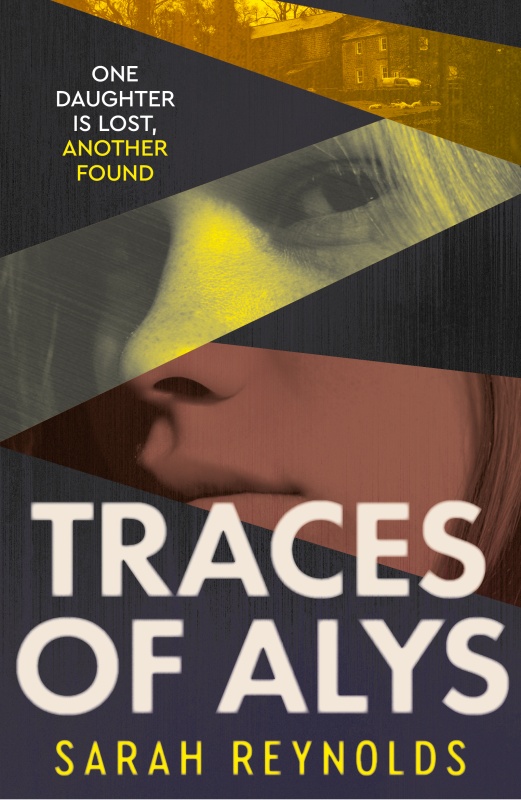 What better way to kick off a new week than by welcoming Sarah Reynolds to Novel Kicks and the blog tour for her book, Traces of Alys.
1995- 15-year-old Emma sends her family a bunch of flowers and disappears. Her best friend Kate blames herself. That night in west Wales, Idris and his son find a crashed car, a teenage girl and a man trying to kill her.
The girl can’t remember who she is. Their neighbour says it’s her missing daughter, Alys, finally home, and takes her in. Twenty years later, a body is found during renovations at a local park where Emma was last seen.
Kate believes that she has, at last, found the end of Emma’s story; instead, it is only the beginning, as finally secrets will have to be faced.
A family mystery about escaping, finding home, and what- or who-is left behind.
To talk about how characters are the answers to plotting, it’s over to you, Sarah.
When it comes to plotting, your characters have all the answers…
Traces of Alys is a novel with a strong plot. The narrative interweaves the lives of two women and there is more than one big plot twist along the way, but I didn’t start out with a roadmap in mind. In fact, I barely thought about the plot at all.
Like most of my stories, this novel began with a character. The first voice I heard belonged to Kate: at home with a newborn, sleep-deprived and wondering if she was losing her mind. I have been this woman myself. And yet Kate was not me. A bit like children, characters are born from the writer but grow into independent beings altogether.
Unlike real life, the birthing process is the easy bit. Often I hear the character’s voice in my mind, and I let my thoughts wander. Free writing is the only way I know to get started. From there, it’s an exercise in listening to what my characters are telling me about who they are – from what they say, and how they say it. While free writing is a great way to banish the blank page, it will only get you so far. At some point inspiration must give way to perspiration. This is hardest part: craft.
 I knew from the start that Kate was a little detached from reality but that this would be the key to her solving a mystery that had plagued her adult life. The question now was how.
A task that I find helpful once I am knee-deep in a story, is to stop and make some decisions. World-building is not just the preserve of fantasy fiction; all fiction is constucted around a set of rules and facts about the characters and the world they share. Of course, these are not immutable truths but it helps at the beginning to pretend that they are. Certain facts will form the scaffolding of your novel: a framework in which your story can grow. You will need to decide for example when and where this character is living, how old they are, what culture they inhabit. This process is rather like extracting a character from the multiverse of possibilities. You need to shut down all the branching paths until there is only one.
To help you through this decision-making process a character checklist can be valuable. The internet is awash with character questionnaires where you can note down what your character looks like, sounds like, and how they move through the world. It’s even more valuable however, to know what they think about their world. What are their politics? What’s their worldview? Do they see human nature as essentially good, or iredeemably bad? Sometimes the worldview they profess might be quite different to their true nature. The surest way to find out who your character really is, is to put them under pressure; this is the alchemy that turns character into plot.
 Working up a story document can be a helpful way to keep track of your decisions. For me a story document is not the same as a plot breakdown. A character’s story is everything that’s ever happened to them from birth to death. As the god of their world, you get to decide it all. It may be that the novel you’re writing only covers the last third of this character’s life, but – you need to know everything that made the character who they are at the point when the reader encounters them.
When you know everything there is to know about your character, there is a certain ineveitability about their behaviour. You know that they will be drawn towards a certain fate. And yet sometimes, they surprise you. Just when you think you know your character inside out they reveal some hidden aspect of themselves that leads you on a different course altogether. That is part of the excitement of writing – we are always treading the tightrope of what we know and what we don’t.
Here are some ‘Getting to know you’ exercises to try out with your characters:
- Imagine your character is in a therapy session. What would they want to discuss? What would they definitely not want to discuss?
- Imagine your character setting up a dating profile. How would they present themselves?
- Take your character shopping. What would they buy if money was no object? What do they buy on a budget?
- Design a perfect day for your character from the moment they wake up to the moment they fall asleep.
About Sarah Reynolds –
 Sarah Reynolds is an award-winning bilingual writer. Originally from Surrey, Sarah moved to Carmarthen in 2009. She’s written two Welsh-language novels: Dysgu Byw and Cyffesion Saesnes yng Nghymru.
Her short story, ‘Catch of the Day’ won the Rhys Davies Short Story prize and the short film adaptation, Helfa’r Heli won a BAFTA Cymru award. She has written numerous short stories, articles and scripts.
Traces of Alys came second place in the Bridport Novel Prize.
She is a lecturer in Creative Writing at Swansea University, and lives with her family in Carmarthen.
Say hello to Sarah via her website, Threads and Instagram.
Traces of Alys was released by Honno Welsh Women’s Press on 29th October 2026. Click to buy on Honno, Waterstones, TG Jones Online and Amazon UK.



 by


I'm Laura. I started Novel Kicks back in 2009 as I wanted a place to discuss books and writing - two loves of my life. As someone who has anxiety, these two things give me, and I am sure countless others, a much needed escape.
There is a monthly book club, writing exercises, prompts, reviews, author interviews, competitions and guest posts. I cover many genres and I hope there is something for everyone.
I grew up by the sea in Dorset and currently live in Poole with my husband, Chris and three cats. I love writing and have a BA (Hons) in Creative Writing from Falmouth University. I am writing my first book. If only I could stop pressing delete. Chris has threatened to stop it from working. Haha.
I have always loved creative writing since I was in first school and would very much like to meet my teacher, Miss Sayers, to say thank you for all the encouragement she gave me then.
When not writing, I love reading, cats, Disney, singing (I can't sing but this doesn't stop me,) and falling into a good TV show or film. If I could step into any fictional world, it would be amongst the characters in ABC's Once Upon a Time.
I love reading many genres and discovering new authors.
Book Club
Leave a Reply