NK Chats To… M W Arnold
 Hello Mick. I am so very pleased and proud to be welcoming you to Novel Kicks. What’s the experience been like so far compared to your first novel, ‘The Season for Love’?
Hi Laura, it’s wonderful to be back celebrating my second novel, I’m delighted to be here. It’s never easy to obtain a contract for a book, and for some reason, in my opinion, if it’s not already in place, obtaining that second one is always the most nerve-shredding. When the email offer came through for this one, it was like a weight lifting from my mind.
Can you tell me a little about your first historical saga, ‘A Wing and a Prayer’ and what inspired the story?
Because of ill health, I hadn’t been writing, I’d wanted to but it hadn’t been working. My author friends had all been encouraging me to try, so when a friend suggested I try something new rather than to pick up an unfinished project, it was like a serendipitous moment. I was watching a program on tv called, Spitfire Women, about the lady pilots of the Air Transport Auxiliary in WW2. Before I was even aware I was doing it, I found myself scrolling around the internet and the beginning of a story idea reared its head. For this prod up the proverbial, I have two excellent authors and good friends to thank; best-selling romance author Sue Moorcroft and historical saga author par excellence, Elaine Everest. Also, after finding out so much about the brave women and men of the ATA, I wanted to write a kind of tribute to them. I hope I’ve done so.
What are the challenges of setting your novel in WWII?
Getting your facts right. Well, that’s only partially true, as in this day and age of the internet, you really shouldn’t be getting anything wrong, though it does happen. The other part, at least so far as I’m concerned, is making sure your characters behave and talk as they did back then. Compared to my romance, which was set in contemporary times, this was initially much harder to write until I got into the swing of it and now, it’s quite natural. Now I’m well into writing the third book in the series, writing as if my mind is back in the 1940’s seems natural. My main issue is, and will probably remain, writing in US English, as my publisher is based in the USA and prefers this. It still looks strange to me.
 What’s your writing process like from first idea to final draft? Are there any challenges when writing a book series?
A lot of my ideas, when I first tried my hand at writing, came from listening to Radio. I’d hear a song and that would spark an idea. I still have a folder with about 20 idea for stories, some are brief outlines, a few lines, some are up to 6 or 7 pages, quite full of detail, a few even with a start, a middle and an end. I’d like think I can get back to some of those at some point. For this saga series, once the idea came, I was able to start writing pretty fast. I like to begin a story as soon as the idea hits me and as I’m more of a panster than a planster, I can get the first draft down pretty quickly, even taking into account that my first drafts are more akin to between a second and third draft, as I edit as I go along; each chapter has to read right before I can move on to the next one. I also keep each chapter as its own file, as I find it much easier to go to what I need to if, well, I need to.
So far as writing a series is concerned, this is my first series as ‘The Season for Love’ was a standalone romance, I’m kind of learning my own way as I go along. I’m sure everyone who writes a series has their own ways, so there may be an easier way than the one I’m using, but so far, it works for me. I like to, if it’s possible, to leave each chapter on a cliffhanger. That’s not possible with a series of books, so far as the end of the book is concerned. I’d like to, but each book has to be able to be read as a standalone too, so that’s out of the question. What I have to do is give the reader an enjoyable reading experience, whilst making them want to find out what the characters get up to next. It’s a nice feeling to know that I’ll be coming back to these characters again too.
You are a member of the Romantic Novelists’ Association Do you feel that the RNA New Writers’ Scheme is worth joining if you’re wanting to start writing a novel?
My route to publication was through this esteemed scheme so, yes, very much so. I know so many authors who became published by joining the NWS scheme of the Romantic Novelists Association. It’s one of the hardest things to accomplish, having a book published and the support which this scheme provides is invaluable. I would recommend it to anyone who wishes to become an author.
What’s your favourite word and why?


 by

NK Chats To… Don Waitt
 Hi Don, thank you for joining me for a chat today. Can you tell me a little about your book, The Revelation of Chester Fortunberry and what inspired the book?
You come into this world alone and you leave this world alone, which got me thinking about whether that world even existed before I came into it and will it exist after I leave it.
What’s your typical writing day like? Do you prefer silence? Lots of coffee?
I like to write in the afternoon. I prefer total silence, no distractions. I write on a desktop computer with a huge screen. Can’t do it on a laptop.
How do you approach the writing process, from idea, to planning, to final draft? How much prep do you feel you need to do before you feel ready to start writing?
For me, it all starts with the first paragraph of the book. Once I get that down on paper, then it’s off to the races. As all authors know, I don’t write the book; the book writes itself and goes in whatever direction it wants to. Kind of like a runaway train.
What is your favourite word and why?
Really. It’s a noun and a verb and an adjective and even an exclamation point.
What songs would feature on a playlist for your novel?

 by
NK Chats To… Murray Bailey
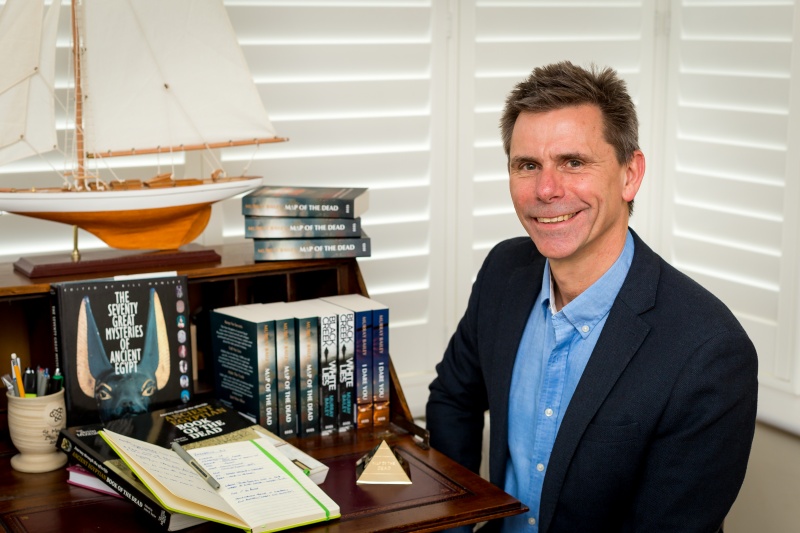 Hello Murray, thank you so much for joining me today. What was the inspiration for Singapore Killer?
The whole series was inspired by my father who was a military policeman in Singapore during the 1950s.
What prompted you to start writing the Singapore Series?
I read a Lee Child novel and thought: I can do that. I have a character and an exotic setting – plus the seeds for a plot. However I subsequently found it harder than I expected.
How much research did you do before starting?
I took my dad to Singapore for his 75th birthday. He thought it was a holiday but I never stopped asking questions. I’ve been again since. I’ve and also been to Kuala Lumpur and Penang, both of which feature in the series.
So no further research as you work?
Lots of research! I have a number of good reference books for the period including a fabulous one full of photographs. Of course I use the internet, but I also have a few readers who can also be called upon to help.
Singapore Killer is book 5. Can it be read as a stand-alone?
I hope so. It’ll help to read them in order, but it really shouldn’t matter.
Will there be a sixth book?
Yes, it’s called Singapore Fire, and it will be the last of the series. However Ash Carter may well appear in Hong Kong if he does resurface.
Map of the Dead which had flashbacks to ancient Egypt, was an Amazon best seller. Your dad didn’t inspire that one?

 by
NK Chats To… Derwin Hope
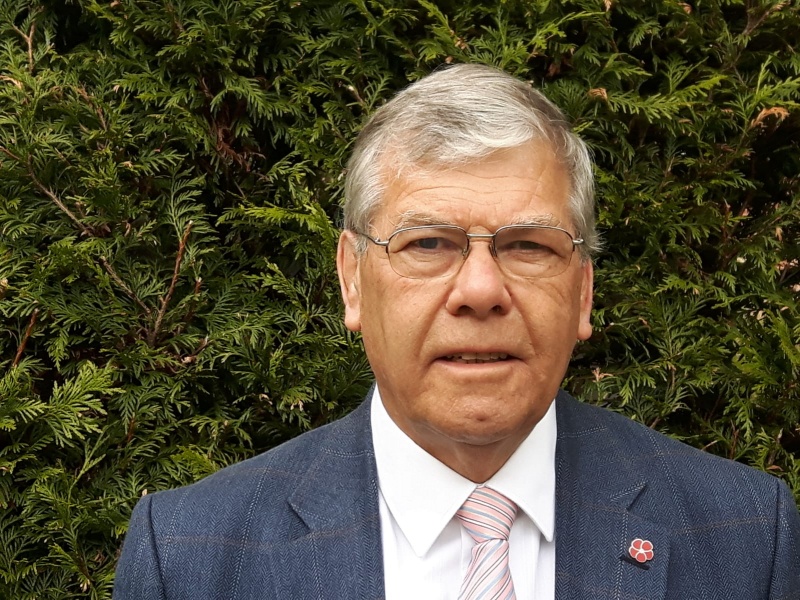 Thank you so much for joining me today, Derwin. Can you tell me a little about your book, Charles Dickens: My Life?
It is the life story of Charles Dickens using his own words to tell his story. On a number of occasions Dickens expressed the wish to write his own life story, but he died prematurely in 1870 at the age of 58 without doing it.
Now 150 years later and for the first time I have collected up all the various pieces of that jigsaw of things that he said about his life and put them into the narrative. It produces the nearest thing to an autobiography that is now possible.
Details of me, what I have done, and the written comments of people who have read my proofs can be seen on my official website at www.dickensmylife.com.
What challenges did you face when writing this novel?
The overwhelming challenge of hunting out things he actually said and did, as distinct from what other people have said about him in the last 150 years.
 How did you approach the writing process for this novel?
I began my research about 25 years ago, became more focussed about collecting up the relevant pieces after I became a Judge in Portsmouth (his birthplace) in 2004 and visited the bedroom of his birth, and once I had retired in 2014 spent nearly 4 years putting all the pieces I had found together into a continuous narrative.
What do you think Charles Dickens would feel about the current state of the world?
I suspect he would be highly critical about it, as he was in his own day. He never trusted most politicians, having seen them at work in Parliament in his early career as a Parliamentary reporter. He later referred to Parliament as “The Dustheap of Westminster”. He was equally damming on the politicians he saw in America, as well as the way the press reported things over there.
He said many of the newspapers were only fit to be used as a water closet doormat. He was a Radical by nature and had a huge social conscience and whenever he saw anything that he felt was socially wrong he spoke out strongly against it. He became the people’s champion and that is why he was so loved in his time, apart from the brilliant fictional novels he also wrote. I think he would have taken the same approach to the social issues of today if he was alive now.
Which Charles Dickens character would you like to meet and why?

 by
NK Chats To… Tracy Baines
 Hi Tracy. It’s a pleasure to welcome you to Novel Kicks. Tell me a little about The Variety Girls and what interested you most about this idea?
When I was a teenager I lived and breathed variety theatre – in fact, any kind of live entertainment. Before and during the war was a golden age of variety and there was so much to draw on – all the wonderful theatre, and the end of the pier shows. When I was sixteen I got a job working backstage at the local theatre on Cleethorpes pier and from that time I was hooked. It was an absolute joy to revisit variety when it meant so much to morale during WW2.
What were the challenges when writing The Variety Girls?
A deadline, although that was really a God send as it turned out. It kept me at my desk, so I had to learn to overcome the distractions and self-doubt that normally plague me. Sometimes what you fear most is the driving force to success.
What’s your writing day like? Do you have any writing rituals?
I write for about three or four hours a day, but I’ll be thinking about the book all the time and I’ll have thought a lot about it before I start writing at all. There’s always research to do, but it has to be balanced with spending time with family and friends. It would be no joy to spend all day writing, not to me.
I don’t have any rituals other than playing music in the background and sometimes lighting a scented candle. Anything that helps me relax and settle to work.
 What was your route to publication like?
I started with articles and then short stories. I wanted to write a novel but our life was very unsettled and so I never had the mental headspace to invest in a longer work. I went to classes and conferences and kept myself connected with other writers – and the short stories were excellent for learning to write tightly. A couple of years ago I decided that it was now or never and got stuck into a novel. It was the right time for me.
What’s your favourite word and why?

 by
Book Club