Novel Kicks Book Club: The Last by Hanna Jameson

Viking, 2019
Hello March and greetings to a brand new book to discuss.
I personally am very excited by this month’s pick which, if you’ve not already guessed is The Last by Hanna Jameson.
When I read this one, I couldn’t put it down and I am looking forward to talking about it. I do at any opportunity. As normal, I have added a question below to kick off the discussion.
Remember, anyone can take part in our book club and it can be from the comfort of your sofa, bed, whatever.
About The Last:
Historian Jon Keller is on a trip to Switzerland when the world ends. As the lights go out on civilisation, he wishes he had a way of knowing whether his wife, Nadia, and their two daughters are still alive. More than anything, Jon wishes he hadn’t ignored Nadia’s last message.
Twenty people remain in Jon’s hotel. Far from the nearest city and walled in by towering trees, they wait, they survive.
Then one day, the body of a young girl is found. It’s clear she has been murdered. Which means that someone in the hotel is a killer.


 by

NK Chats To: N. Lombardi Jr
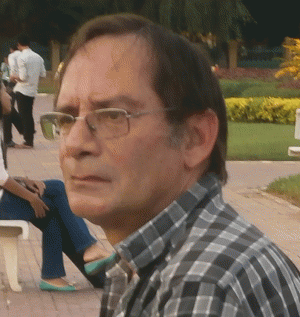 Hello Nicholas. It’s great to welcome you to the blog today. Please tell me a little about your new book, Justice Gone and what inspired it?
Justice Gone was inspired by a true event, the fatal beating of a homeless man in a small Californian town. This was such an extreme case, and one which did not include any racial elements, that it exposed the utter abuse of authority in which an outraged public reaction was inevitable. The town was Fullerton, the man’s name was Kelly Thomas, and the year was 2011. Although the police officers were indicted by a grand jury, they were acquitted in their trial. So I asked myself a question: if someone felt that justice was denied the deceased, would they take it in their own hands? This became the seed for the story.
What elements do you feel need to be present in a thriller novel? What are the challenges?
Suspense, that is, the anticipation of what is going to come next, and this is usually accompanied by actions to some degree, although if you have enough skill, words alone can create this tension. Whichever way you accomplish this, the challenge is to persuade the reader to invest their interest in what is going on, and this includes sympathy for the protagonists.
This is the first part of a series featuring Dr Tessa Thorpe. What advice do you have for someone trying to develop a series and a strong character that will keep them coming back to read their story?
You need to become friends, or even love the character, knowing their faults as well as their admirable traits. In this way you know what they will say and can predict what they’ll do in any situation.
Actually Tessa first appeared in Journey Towards a Falling Sun, a story I wrote over 30 years ago, but eventually got published in 2014. It was a minor role, but one in which she was born, so to speak.
What’s your typical writing day like, where do you like to write and do you prefer silence?
I can write in the early mornings when I’m fresh, or in the evenings when I’m relaxed. usually the time between is non-productive. Silence is mandatory.
What’s your favourite word and why?
I don’t have a favourite word. I have a favourite colour, blue. Can I then say that “blue” is my favourite word?

 by
Book Extract: The Dressmaker of Draper’s Lane by Liz Trenow
 Hello to Liz Trenow and the blog tour for her new novel, The Dressmaker of Draper’s Lane.
1768, London.
As a foundling who rose from poverty and now runs her own successful dressmaking business in the heart of society London, Miss Charlotte is a remarkable woman, admired by many. She has no need, nor desire, to marry. The people she values most are her friend Anna, her recently-found sister Louisa and nephew Peter.
She feels herself fortunate, and should be content with what she has. But something is missing.
A small piece of rare silk discovered in a bundle of scraps at auction triggers a curious sense of familiarity, and prompts her to unpick a past filled with extraordinary secrets and revelations . . .
To celebrate publication day, Liz has shared an extract with us today.
***** beginning of extract*****
Prologue
She is unaware of her legs moving beneath her, of one foot taking a step and then another, except for the fact that the great gates in the distance seem to be drawing ever closer.
Her mind is blank. She keeps her eyes lowered to the ground, passing silently through the crowds on Gray’s Inn Road like a spectre. No one notices her and she dares not allow herself to look at her surroundings nor even to think, for if she did she would surely turn and flee. The only notion in her head is that where she is going offers the sole hope of saving her child’s life.
The bundle in her arms is still and silent now, having ceased whimpering some hours ago. The baby is too feeble to cry any more. It is of no matter to her that she has not eaten for several days except that it has caused her milk to become thin and weak.
This child is the single most precious thing she has ever known. How can she bear to give her up? Yet how can she bear to let her die?
At first the solution seemed simple. She would end both of their lives together, so they could never be parted. Sev¬eral times she has returned to Blackfriars Bridge, watching the dark, cold waters swirling below and trying to summon the courage to jump. But first she must climb onto the parapet, which means freeing her hands by laying down the bundle on the edge of the bridge, and even this momentary separation seems too dangerous to contemplate. What if the child should slip into the river without her?
Who would hold her tight as she fell, whispering reassurances that although the water would be cold and the journey difficult, everything would be fine when they reached the other side? Would she even have the courage to follow her?

 by
NK Chats To… Susan Lewis
 Hello Susan. Thank you for joining me today. What inspired One Minute Later?
It was meeting twenty-one-year-old Jim Lynskey who is waiting for a new heart.
How has your approach to the writing process changed since your first novel?
I think it’s more or less the same. I explore ideas, let my gut instinct decide which is the right one to go with and then I devise the characters I think will be best to tell the story.
Is there a particular place you like to write? Do you need coffee to write? Music?
I always write in my study at home – I can’t seem to do it anywhere else – I tend to drink tea more than coffee, and I work in silence apart from the comforting snores of my little dogs. I also have a lovely view of the countryside through the French windows which can be very nourishing.
Which three characters from fiction would you invite to dinner and why?
I’d invite Thorfinn from King Hereafter because he could tell us the true story of Macbeth. Any hero from Georgette Heyer because they’re so dashing and romantic and probably Elizabeth Bennett because she’s so sharp and witty.

 by
Novel Kicks Writing Room: Connecting Memories
 Today, I thought we could try and connect three seemingly unrelated memories.
Write about three separate memories. These can be yours or they could belong to someone else.
Each one should be about fifty words.
Once you’ve done that, try and connect these three unrelated memories into one coherent story.
Three memories I have thought of off the top of my head are my Mum and Grandfather teaching me to ride my bike, My Grandmother’s first day of senior school and the day I got married.
Is what you’ve written something that could be used for a bigger project?

 by
Book Club