Blog Tour: Tracer by Rob Boffard
 A huge space station orbits the Earth, holding the last of humanity. It’s broken, rusted, falling apart. We’ve wrecked our planet, and now we have to live with the consequences: a new home that’s dirty, overcrowded and inescapable.
What’s more, there’s a madman hiding on the station. He’s about to unleash chaos. And when he does, there’ll be nowhere left to run.
In space, every second counts. Who said nobody could hear you scream?
(Orbit, 16th July 2015.)
We are happy to be welcoming Rob Boffard to Novel Kicks today. We review Tracer but first, we asked Rob a few questions about his new novel and his writing process.
Hello Rob, thank you so much for joining us. Can you tell us about your novel, Tracer?
Thanks for having me. Love what you’ve done with the place. Anyway, Tracer is a sequel to Breaking Bad, and it’s the story of how Walter White faked his death and found another stoner meth cook to… oh no, wait, I wasn’t supposed to tell you about that. Forget I said anything. What Tracer is really about is a courier named Riley, ferrying packages across a city-sized space station that holds the last of humanity. She gets ambushed, and discovers that she’s carrying evidence of a deadly conspiracy.


 by

Competitions: Red Queen Winners

 As part of the blog tour for Red Queen and to celebrate the books release, Orion and Victoria gave us THREE copies of Red Queen to give away. To read our review and an interview with Victoria, click here.
Well done to Debbie Patrick, Susan Carruthers and Karis who have all won a copy of Red Queen.
About the book:
This is a world divided by blood – red or silver.
The Reds are commoners, ruled by a Silver elite in possession of god-like superpowers. And to Mare Barrow, a seventeen-year-old Red girl from the poverty-stricken Stilts, it seems like nothing will ever change.
That is, until she finds herself working in the Silver Palace. Here, surrounded by the people she hates the most, Mare discovers that, despite her red blood, she possesses a deadly power of her own. One that threatens to destroy the balance of power.
Fearful of Mare’s potential, the Silvers hide her in plain view, declaring her a long-lost Silver princess, now engaged to a Silver prince. Despite knowing that one misstep would mean her death, Mare works silently to help the Red Guard, a militant resistance group, and bring down the Silver regime.

 by
Novel Kicks Fiction Friday: Solving Problems
 Friday 17th July 2015.
Fiction Friday is our weekly writing prompt. The aim is to write for a minimum of five minutes and then keep going for as long as you can. Once you’ve finished, don’t edit, just post in the comments box below.
Today’s Prompt: Whilst on a second honeymoon, a devoted family man solves a ten year cold case.

 by
A Moment With Hannah Vincent

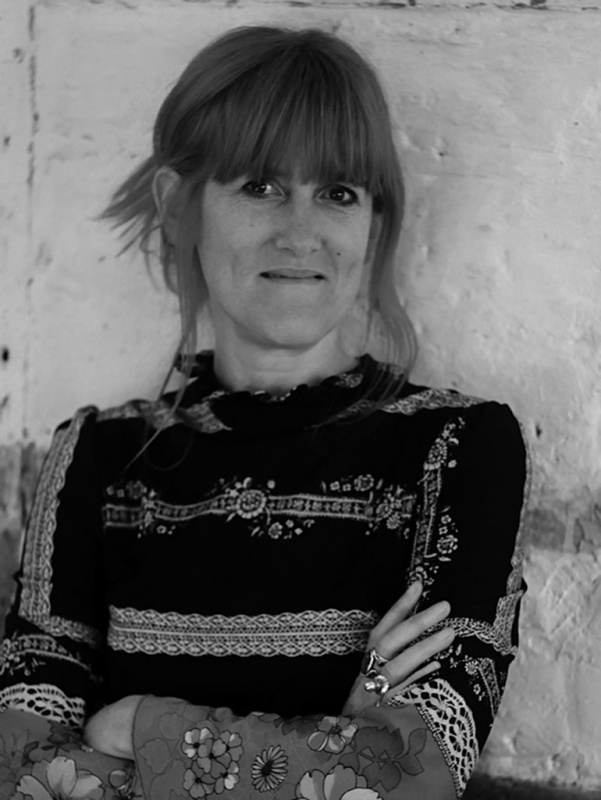 Hannah Vincent, whose debut novel, Alarm Girl was released by Myriad Editions in August last year tells us about her writing room.
I write in bed. I could justify this with the excuse that this way I am closer to the dream state and an unconscious mode in which words and feeling flow but the truth is, my bed is comfy, smells nice and my cat likes it when I write there. It is highly un-ergonomic: I lie with my neck crooked on cushions, typing straight onto an ancient laptop with Twiggy the Siamese pinning down one arm.
I once read that humans crave greenery because of our outdoor ancestry. The view from my bedroom window is bland and grey, which is useful in that it’s not a distraction but sometimes I move to the kitchen table to work. Ours is a topsy-turvy house with an upstairs kitchen that is slightly above the level of the garden, so when I look out of the windows I feel as if I am in the trees with the squabbling sparrows and busy blue-tits. Continue reading

 by
Author Interview: Anna North
 Anna North, author of The Life and Death of Sophie Stark joins us today. Thank you for joining us Anna. First, Do you have any writing rituals/habits?
I like to write either in a chair by the window in my apartment, ideally with a cup of tea and maybe a candle burning, or at a coffee shop in my neighborhood, again with a cup of tea or maybe a cappuccino. I write all my first drafts long-hand in a journal; I feel like I’m much more imaginative writing this way than at a computer. I try to write for about an hour in the early morning each weekday, and again for an hour or a little more on Saturday or Sunday (depending on the week, though, I might write a little more or a little less).
Which fictional character would you like to swap places with for a day and what would you do?
Maybe this is cheating because it’s TV and not books, but I’d trade places with the Doctor and travel through time and space. I’d go back in time and visit Queen Elizabeth I and Shakespeare, and then go to Gallifrey and hang out with the Time Lords.
 Your book is called, The Life and Death of Sophie Stark. Can you tell us a little about it and how the idea originated?
The Life and Death of Sophie Stark is the story of a brilliant and enigmatic filmmaker, told by the people who loved her most. I had wanted to write about a filmmaker named Sophie Stark for years before I started the book; I even wrote a few pages, but then put them aside. After I finished my first book, America Pacifica, I started trying to write about Sophie again in earnest, and that’s when I got the idea of writing the book from multiple perspectives. Once I realized I could tell Sophie’s story through multiple points of view, the book started to come together.
What’s your favourite word?
I don’t know if I have a favorite word, exactly, but I have some words I use a lot (maybe too much). In America Pacifica I used the word “filthy” a lot — in my defense, the post-apocalyptic world I was describing was really filthy. In The Life and Death of Sophie Stark, my editor pointed out I used the words “mad,” “sad,” “bad,” and “whiskey” more than was strictly necessary, which I guess says something about the mood of the book. I ended up replacing some of them; now the characters occasionally drink wine instead of whiskey, and get angry instead of mad.

 by
Book Club