Review: The Turning Point by Freya North
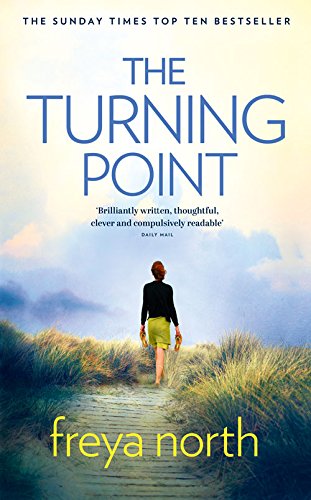
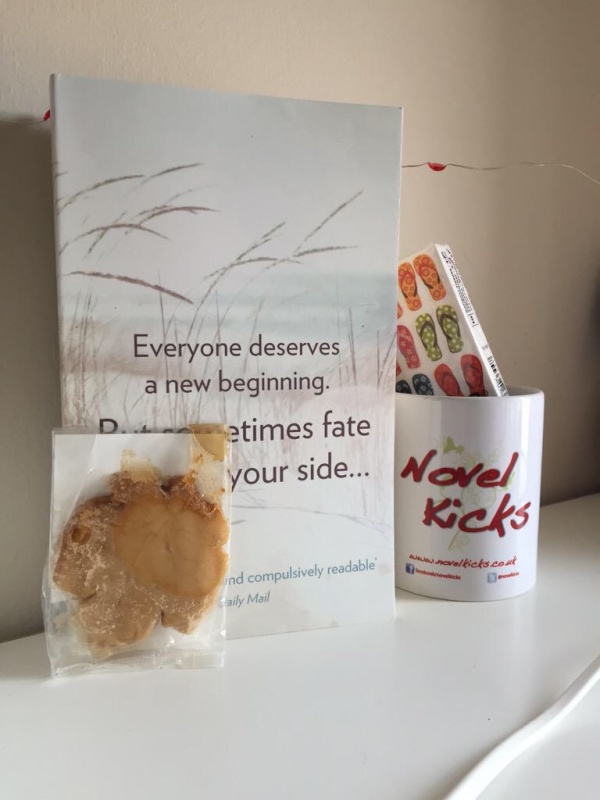 The Turning Point by Freya North is released by HarperCollins and is available to buy from today (4th June 2015.)
Everyone deserves a new beginning. But sometimes fate isn’t on your side…
Over one short weekend, when Canadian musician Scott Emerson and British children’s author Frankie Shaw meet by chance, a profound connection is made. Their homes are thousands of miles apart: Frankie and her children live by the coast of North Norfolk while Scott’s roots lie deep in the mountains of British Columbia. Against all advice, they decide to see where this might go.
Over oceans and time zones, they make sacrifices and take risks, discovering along the way new truths about love and family. For the first time in a long while, it seems life could be very good. But fate has a tragic twist in store, one that could destroy all that was hoped for.
I was excited when I received a review copy of The Turning Point from HarperCollins. I knew little about the plot when I started the book but from the first few pages, I was hooked. I wasn’t sure where the story was going to go at first but I quickly became invested in the characters and wanted to know what was going to happen to them.


 by

Winner of May’s Which Book is This Anyway?
 It’s time to announce the winner of May’s Which Book is This Anyway? Did you guess which book it was? (April’s book was The Rosie Project.’)
All we said about it was that ‘this book has been a part of Richard & Judy’s book club. A story that asks us how well do we know our children?’
Well done to Leila Benhamida,who is our winner this month. The competition for June will be open soon.
About ‘Which Book is This Anyway?’
Many of us judge books by their covers and make our choices based on that and the accompanying blurb. Our competition adds a little mystery.
The prize for this competition is a book but the identity of that book will not be revealed until the lucky winner receives it. It could be a recent new release or a well-known classic. Who knows? We won’t even reveal the genre.

 by
Novel Kicks Fiction Friday: Randomness
 Friday 29th May 2015:
Fiction Friday is our weekly writing prompt. The aim is to write for a minimum of five minutes and then keep going for as long as you can. Once you’ve finished, don’t edit, just post in the comments box below.
Today’s prompt: Randomness. Place all of these random things into a story where your main character is a man named Mike. The items you need to put into your story are: A set of scales, eyes, a magnet, a house, a tent, insects, a compass, a magic wand and happiness (or lack off.)

 by
Bella’s Scribblings: Research
 “Are you busy?” asks my husband.
“I’m doing research,” I reply.
Dictionary definition of ‘research’ – investigation esp scientific study to discover facts.
Reality of my ‘research’ –
• Type in key words to Google
• Follow first link
• Read and jot down a couple of interesting and informative facts on subject for novel
• See link to something unrelated but interesting – click
• An hour later realise you are watching funny cat videos again
• Try to find original Google search results on one of ridiculous number of open tabs
• Get distracted by Facebook update from friend, follow link to quiz…
• Notice another hour has disappeared
• Get a cup of tea and give self a good talking to about time-wasting
• Close down distracting tabs and stare at Google page – what was I researching again?
Whilst watching cats on the internet is highly entertaining it really is not moving my novel forward. I am particularly liking animal photo bombs at the moment. However, the reality is that even with all the distractions I know I can find out what I need to know and a million other things in a nanosecond (assuming I can stay focused for that long!)

 by
Blog Tour: The Invisible Man From Salem by Christoffer Carlsson

Photo Credit: Anna-Lena Ahlström, 2013
I’m very pleased to be welcoming Christoffer Carlsson to Novel Kicks. To celebrate the release of his novel, The Invisible Man from Salem (published in the UK by Scribe Books and translated by Michael Gallagher,) we will be taking part in the blog tour by reviewing the book but first, we had a chat with Christoffer about his novel, his favourite word and the three books he couldn’t live without…
Hi Christoffer. Can you tell us a little about The Invisible Man from Salem and it’s main character, Leo Junker. How did the idea originate?
The Invisible Man From Salem is part crime noir, part coming-of-age drama. It’s about two friends who come from the same place but grow to be very different people, and a story about the mysteries of friendship, love, guilt, and betrayal.
The idea really came from the work I was doing in criminology at the time. I was hired to write a PhD, based on life history interviews with a sample of juvenile delinquents born in Stockholm during the 1940s and 50s. As I began doing interviews with then in 2010, they were around 60 and had lived long and interesting lives. My interest was the field we call continuity and change in crime, that is, why did some of these juvenile offenders cease to do crime whereas others continued to offend well beyond the transition to adulthood? In other words, me interest was why some fare better than do others. As it turned out, some of the people who we – based on childhood risk factors – predicted would do bad, they did bad. But many of those we thought would do bad, actually turned out to live quite good lives. And, reversely, several of the people who we predicted would do good, actually lived quite crime-intensive lives. So, doing that work, it just got me thinking about what shapes a person’s life and, of course, the answer to that is very basic: it’s the relations we have to people and places, our location in the various dimensions of our social structure, and it is our own dreams and fears and aspirations.
I’m not claiming that I have written a criminological, fictionalized account of real lives or anything like that. I just wanted to write a crime drama based on the idea of what shapes people’s lives, and it was from it that the idea of the Leo Junker series grew.
What drew you to this genre?
Oh man, you know, I was born and bred on crime fiction. I’ve always loved it. The beauty in crime fiction is that it, when it’s done good, is much more than just a story about a crime. You know, much crime is the result of very basic dimensions of human existence. Love, friendship, greed, sex, guilt, betrayal, and various forms of drug use – all these things are very human things. But when they are taken to their extreme, the end result is sometimes crime. So when crime fiction is at its very best, it shows us what can happen when the most human elements in us go wrong. It tells us, in a sense, who we are and what we are capable of. I’m, by the way, not claiming that we are all equally prone to do murder or armed robberies; clearly, we’re not. But crime fiction can make us understand what is actually going on when such things do happen.

 by
Book Club