Novel Kicks Writing Room: Twenty Questions
 Today, the writing room will be looking at getting to know your character by having a game of twenty questions with them using the questions below. Not everything you write has to end up in your novel but it will give you a better overall knowledge of them and how they would feel and react to things.
1. What do they look like?
2. What do they like to do to socialize?
3. How was their childhood?
4. One thing that really embarrasses them?
5. What group did they belong to at school?
6. What did they want to do when they grew up and what do they actually do for a job as an adult?
7. Name ten songs that are currently on their playlist?
8. Do they drink, smoke, take drugs?


 by

A Moment With… Julie C. Gardner
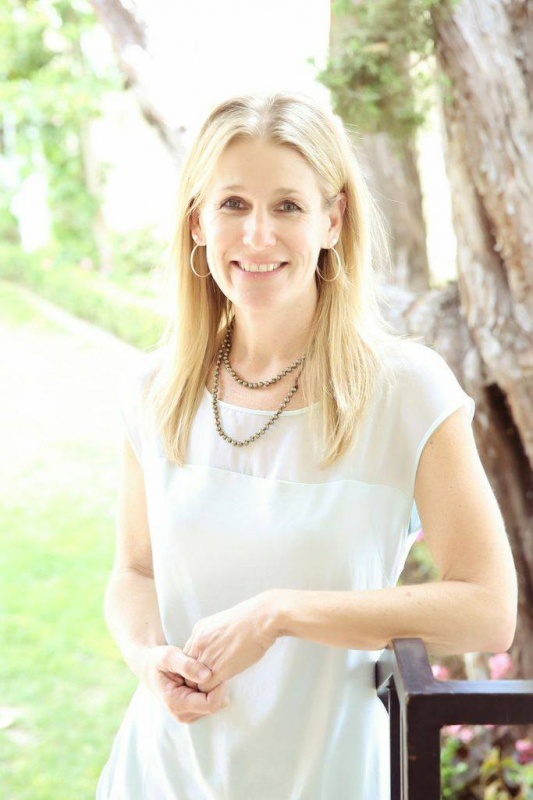 Forgetting Ophelia is the new novel from Julie C. Gardner (released today by Velvet Morning Press.) She’s joined me today to talk about her life in books. Over to you, Julie.
I owe my obsession with reading, at least in part, to my sister Nancy. More specifically to her tonsils. I was seven and my sister was six the year my family drove from California to Texas to spend Christmas with our cousins. On the way, Nancy broke out in yet another of her fevers, her throat swelling up, her tonsils the size of tennis balls. It was a truly miserable situation.
For me.
Why? Because Nancy, who was my only playmate on this road trip, was suddenly quarantined. No more alphabet games in the backseat of our car. No songs or hand-slapping routines.
On a pit stop at my Aunt Elaine’s house in Arizona, my aunt took pity on me and my loneliness, whisking me away to a local bookstore where she bought me The Secret of the Old Clock.
I curled up with my new mystery, gobbling the adventures of this titian blonde named…Nancy.
The love was instantaneous. I wanted to be a titian blonde. I wanted to BE Nancy Drew.
I read every book of hers I could get my hands on. Then the Trixie Belden series. Harriet the Spy. A Wrinkle in Time. Island of the Blue Dolphins. By the time I was ten, I decided to be Judy Blume, not merely devour all her books.
When I was in fifth grade, my parents took me to a bank where they were handing out free copies of James A. Michener’s Hawaii. The book was roughly the size of a toaster. As I announced my plan to read all 1,000 pages of this sprawling saga, my parents chuckled. “Go ahead!” (Of particular interest were the sexy scenes, since I’d recently watched my school’s puberty films.)
By then my sister had had her tonsils removed, and I’d moved on to Little Women, Jane Eyre, Pride and Prejudice, A Tale of Two Cities. A bevy of classics littered my nightstand and saved me from being completely boy-crazy. (Rest assured, I was still plenty boy-crazy. Just ask Nancy and my parents.)

 by
A Moment With: Rhiannon Navin
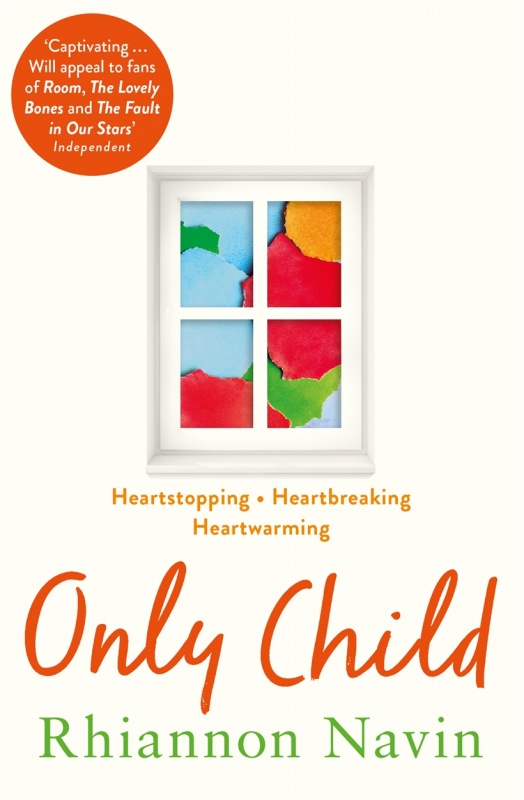 Only Child by Rhiannon Navin has been released today in paperback and I am so pleased to welcome her back to Novel Kicks. Thank you for joining me today, Rhiannon. What’s your writing day/space like?
The short answer is: never the same. I’m a stay at home mum of three, so I always have to squeeze in time and space for writing between a million other things. I used to think that I needed to create this perfect scenario to get some writing done, hours of uninterrupted time and no distractions. But I’ve found that I actually need a lot of movement while I write. I can’t sit in one place for too long and I have to allow my mind to wander. So, it’s not unusual for me to have multiple writing “windows” throughout the day and each in a different location around the house.
What advice about writing would you give to your younger self?
To start sooner! My whole life, people have suggested that I try my hand at writing, but I never thought that would be something I could do or be good at until I sat down to write Only Child. And then I fell in love with writing so quickly. It’s become such an essential part of my life, basically from one day to the next, and it sometimes feels like wasted time that I spent almost 40 years not writing. But maybe I had to be in the right place in my life to be receptive. And maybe it took the right story to get me hooked.
What elements are needed for a good novel?
A good novel to me is one that makes me miss it when I’m not with it. I have to want to carry it around with me even if I know I won’t have time to read it. And I have to think about it long after I’ve finished it. It’s hard to say which elements in a novel have that effect on me. A different voice certainly, one that I haven’t heard before, or a perspective I haven’t considered before. The characters have to be real and imperfect; they have to be people I’d like to meet in real life. I like to walk away from a story having learned something. And if the story made me laugh—or cry!— bonus points.
About Only Child:
We went to school that Tuesday like normal.
Not all of us came home . . .

 by
Novel Kicks Writing Room: Free Write Exercise
For today’s writing room, I thought it was about time we did a free writing exercise/short story
If you have a subject and character in mind, feel free to write about that or you can use the prompt I’ve included below.
The story just needs to include dialogue, a proper conclusion and be no more than 1,500 words.
The prompt…
Your main character is in his sixties. He has been in the circus since he was sixteen making his way up the ranks to being the boss.
The circus has just arrived in a new town.
One of the younger staff members gets ill and needs to go to the hospital. A routine blood test reveals something that your character has wanted to keep secret.

 by
A Moment With…Lynne Shelby
 Hello and welcome to author Lynne Shelby, whose latest novel is called The One That I Want. She joins me today to talk about her writing process, from idea to editing. Over to you, Lynne.
An idea for a novel usually comes to me when I’m least expecting it. A sepia photo in an old family album, an overheard conversation on a train, a visit to a museum, have all inspired a story. Once I have that initial idea, I find that sooner or later my main characters appear in my head, demanding that their story be told. I only know the beginning and ending of my novel at this stage, so I make a few notes or at most a rough outline and then sit down at my laptop and start typing, introducing my hero to my heroine and seeing what happens – hopefully sparks will fly! There seems to be a moment when the main characters take over the plot, while minor characters have a habit of insisting on their own sub-plot – or even their own novel!
On a typical writing day, I aim to be at my desk in my writing room by 9.30. Before I begin writing, I read back over everything I wrote the day before to get back into the world of my story, and then, ideally, I write for about three hours, or maybe more, usually producing between 800 to 1,000 words – a couple of hundred of which will probably get deleted in the next draft!
In many ways, my actual writing process hasn’t changed a great deal since I started writing – it’s been more a case of my discovering which ‘tools of the trade’ work best for me as I write. When I was about three-quarters of the way through writing the book that was to become my first published novel, I went back and read it through from the beginning, making brief notes about the plot so far and a rough timescale over which the action was taking place. By then I had a clearer idea of where the story was going, and it was at that stage that I planned future chapters to make sure that the plot and sub-plots were tied up before the end of the book. When I wrote my second novel, The One That I Want, which was published in July 2018, I did much the same, except when I came to read through the manuscript, I decided to make a chart for each chapter with more notes about the events of the plot and each stage of my characters’ emotional journeys, and a detailed timeline. I found this made keeping the plot on track much easier when I came to the next draft, and I now do the same for each book I write.
The other way my writing process has evolved is that I edited my first novel as I wrote it, and also wrote the story in the order it would appear on the page. With my second novel, I edited far less while I was writing the first draft, and when I came to a scene that wasn’t working, I made bullet points for the main events that needed to happen, and went on to the next chapter – which meant I could see where the story was going far sooner.

 by
Book Club