Competitions: Which Book is This Anyway February Winner
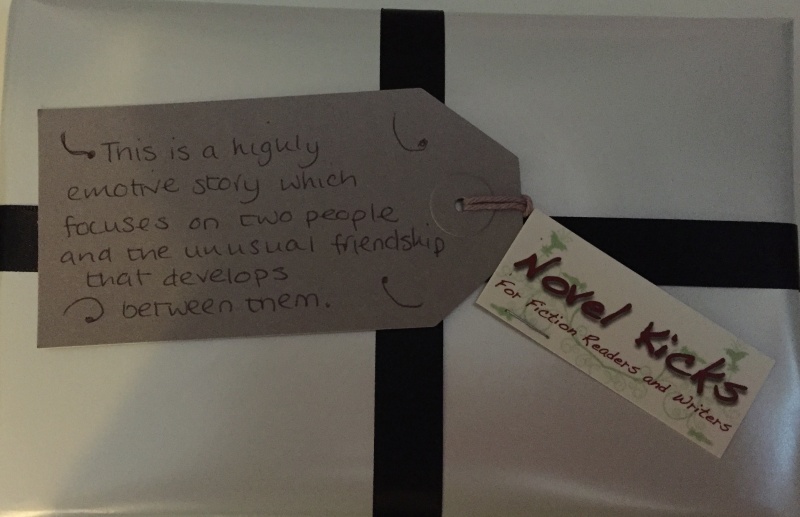 This month, we launched our new competition, Which Book is This Anyway?
The prize is a book but we’ve not revealed the title and won’t until the winner receives it.
Many of us judge books by their covers and make our choices based on that and the accompanying blurb. Our new competition adds a little mystery.
It could be a recent new release or a well-known classic. Who knows? We’ve not even revealed the genre. It’s a surprise.
All we did say about this book is that ‘It is a highly emotive story which focuses on two people and the unusual friendship that develops between them.’


 by

Guy Mankowski on Writing How I Left The National Grid
 The writing process for How I Left The National was so distinct from that of my two previous novels, that it was almost like learning to play the keyboard after you’ve been playing guitar. This seems an apt, if somewhat pretentious description, given that this novel follows the story of an eighties post-punk musician, Robert Wardner. Wardner vanishes after a particularly controversial appearance on Top Of The Pops. During this performance he commits a shocking act which, during the more buttoned-up era of 80s Britain, causes enough of an impact that he never recovers.
My first novel, The Intimates, was mostly written over an intense eight-week period when I was 21. I lived and breathed the novel every single day almost in a hallucinogenic way. My second novel, Letters from Yelena, was written over a year and a half, and its writing coincided with a research trip to Russia in which a great deal of information about the world of Russian ballet was absorbed. This novel was set mainly in 80s Manchester, only a few hours away from me.
Somehow, it took over three years.

 by
Bella’s Scribblings: Marketing Plans
 Apparently I have a marketing plan for my book! I’m very pleased because I was starting to panic when I got asked for the third time what my marketing strategy had been for my book and my answer had been to do a very convincing impression of a retarded goldfish.
I then scurried off to investigate whereupon (that’s a very good and much underused word by the way…) whereupon I discovered lots of wonderful advice about marketing your debut novel. Off the page jumped a very scary piece of advice that said you need to start marketing three years in advance.
So I went to check on the progress of the time travel machine the child is working on and sadly it’s not quite ready for use yet. Cue lots of nail-biting and hair pulling (all my own I’m not that strange).
After a large glass of Baileys (I’m still ‘tidying up’ after Christmas) I had another look at the amassed advice. All of it was very helpful and logical:

 by
Novel Kicks Fiction Friday: Fly on The Wall
 Friday 27th February 2015: Fly on the Wall.
Fiction Friday is our weekly prompt. The aim is to write for a minimum of five minutes and then keep going for as long as you can. Once you’ve finished, don’t edit, just post in the comments box below.
Today’s prompt: Have you ever wanted to be a fly on the wall for a conversation you want to hear? Well, you are. Who do you hear? What do you hear?

 by
 Hello Jen. Thank you for joining us. Firstly, congratulations on The Bookshop Book becoming the official book for the 2014 Books are my Bag campaign. Can you tell us a little about it and how you developed the idea for the book?
Thank you! Well, I’ve always loved bookshops; they’re magical places full of nostalgia and possibility. They’re places to get lost in, and discover different worlds. I’ve worked in bookselling for the past seven years (since working part-time whilst completing my degree), and I’ve written a couple of books about the weird things that customers say in bookshops (because lots of weird things are said!). However, I also wanted to showcase the other side of the bookselling world: the bizarre but wonderful stories hidden behind the shelves; the history of the bookshop; the idea of the travelling bookshop, and bookshops in remote places… Book touring with Weird Things Customers Say in Bookshops led me to places such as Wigtown, a fantastic town with a dozen bookshops on the west coast of Scotland, which led me to discover that there’s an International Organisation of Book Towns – with several Book Towns across Europe and one in Australia in an old gold mining town. There are so many wonderful places out there that I thought needed to be shouted about: such as a bookshop in Africa that also sells cows, and a man in America called Walter Swan who opened up a bookshop that only stocked his book and nothing else… So, I asked my editor if I could write a book about weirdly wonderful bookshops around the world… and he said yes!
Did you visit all of the shops mentioned in The Bookshop Book?
The Bookshop Book looks at over 300 bookshops across six continents, so sadly I didn’t get to visit them all – though I spoke to people who had. I got to most of the bookshops in the UK, Paris, Berlin and Amsterdam (where I lived on a houseboat for a few days). When I was writing the book, I’d get up early and Skype with booksellers in Asia (like Ayuko, who runs a sushi-making class inside a bookshop), and Australia/NZ; then I’d go to work in my own bookshop, before skyping with booksellers in North America in the evening. So, I felt as though I was living in several different time zones – it was a bizarre, but wonderful, time. Continue reading

 by
Book Club
Recent Comments