NK Chats To… Catherine Ferguson
 Hi Catherine, it’s lovely to welcome you and the blog tour for your new book Love Among The Treetops to Novel Kicks today. What is your typical day as a writer?
I work best in the early mornings, so I like to reach for my laptop (and lots of tea) almost as soon as I wake up. On a good day, I’ll write five hundred words before breakfast, and to make it easier to face that blank page every day, I like to make rough notes on the next part of my story the night before. I usually write between 500 – 1500 words a day and I aim to finish by ‘lunch-time’, which can be anything from midday to mid-afternoon! By then, I find all the emotion of living the story with my characters has taken a bit of a toll on my energy levels. (I’m always amazed by how exhausting it can be, writing on emotional subjects – particularly when your main character has hit rock bottom. You feel all the see-saw emotions she’s going through and it’s almost as if you’ve been through it yourself.)
What inspired Love Among the Treetops?
I live near a place called Alnwick Garden in Northumberland. It’s incredibly magical and they have a beautiful restaurant in a fairytale tree house. I wanted an unusual setting for my café in this book, and I suddenly thought what a romantic setting a tree house would be!
How do you pick your names in a novel?
For my heroine, I like to choose a name that really appeals to me – and if it can be that little bit different (therefore memorable), then so much the better. Sometimes the name just slots into my head when I’m dreaming up the character. It just seems to fit. And that’s what happened when I was imagining my main character in Love Among the Treetops. The name ‘Twilight’ came to me and it was perfect!
Is plot or character more important?
With me, what tends to happen is I have a basic idea at the start of what’s going to happen in my book and a rough idea of my main character’s personality. So at that point they’re equally important. But then I think character takes over and to some extent dictates the way the story progresses. Once I’m immersed in seeing things through the eyes of my heroine, surprising plot twists seem to happen. That’s why I never start out with a plot that’s set in stone because it always changes – I have to obey my main character!


 by

NK Chats to… Jean McNeil
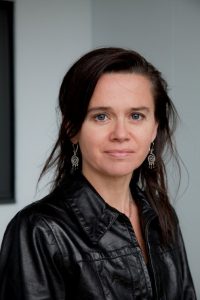 Welcome to Jean McNeil and the blog tour for her novel, Fire on the Mountain which was released on 15th February by Legend Press.
Hello Jean. Thank you so much for joining me on Novel Kicks today. Your latest book is called Fire on the Mountain. Can you tell me a bit about it and what inspired the story?
Hi Laura, thanks very much for your interest in the novel and for your questions.
Fire on the Mountain is a contained and intense story about masculinity and desire. It focuses on three men: Pieter Lisson, a celebrated writer in an unnamed post-colonial country who has never quite found the fame and acceptance he might have experienced had he been a more ‘serious’, political writer; his son, Riaan, who lives in the desertified north of the country, and Nick, a British (although he has grown up all over the world) NGO worker, who comes to stay with Pieter and his wife for a few days and ends up staying for four months. He and Riaan develop a wary friendship, then a much closer mutuality, and finally their relationship is transformed into something neither of them every would have expected.
The inspiration for the story is the landscapes of southern Africa, in particular Cape Town, where I lived on and off for years, and Namaqualand, the Kalahari and the Namib deserts. Another inspiration was the years I spent gaining professional safari guide qualifications. This wasn’t a completely masculine environment, but the sort of masculine consciousness I encountered in men in southern Africa fascinated me. Strength and an awareness of vulnerability are both needed to survive in the bush. You have to be intuitive and attuned to other creatures. It’s a way of life that creates a different kind of man than I had encountered elsewhere. I wanted to try to capture that in the novel.
If you could drop into the life of any fictional character which one would it be and why?
My characters are me and I am them, so I do live their lives. Like Pieter I am a writer, and like Riaan I know the African bush. Like Nick I’ve worked in NGOs and international development. I consider that I live all their lives, simultaneously.
What’s your writing process like – from planning to edit.
I write quite quickly, meaning I can write a novel within a couple of months if I really put my mind to it, as well as working. But then I tend to rewrite very extensively, doing at least 12 drafts, adding and subtracting and crucially getting the structure right. Because I’m a fast and intuitive writer I rely on sane, intelligent people called editors to help smooth out contradictions and fill gaps. I wish I could be more methodical, punctilious, perfectionist, but I’m just not. Thank god for good editors…
Do you have an writing rituals or routines?
No, I can write anywhere and at any time. I do like to be able to see the sky as I’m writing. My flat in London has a good view so I can stare at seagulls and the Shard.
What’s your favourite word and why?
Aha, tough one. There are so many choices… Orphic, probably, as in musical, but also a tinge of the quality of underworld, or submerged – from Orpheus. Closely followed by heliotrope.

 by
NK Chats To… Rhiannon Navin
 Only Child is the debut novel from Rhiannon Navin (released by Mantle on 8th February,) and I am so pleased to welcome her blog tour to Novel Kicks today. Rhiannon, your novel sounds like such a powerful read. Can you tell me about Only Child and what inspired it?
ONLY CHILD is the story of six-year old Zach, told from his perspective, who lives through the terrifying trauma of a shooting at his school. During his rampage, the gunman takes nineteen lives and Zach’s formerly tight-knit community is left shattered. While the adults in Zach’s life, especially his parents, deal with their grief in all-consuming ways, Zach is mostly left to his own devices to confront the after effects of the trauma he’s had to endure and his feelings of grief and fear. I found the inspiration for ONLY CHILD in a personal experience that occurred in my life a couple of years ago, when my twins were five years old. They had just started Kindergarten when they had to participate in their first “lockdown drill” at school. Lockdown drills are a common practice here in the U.S. where, unfortunately, mass shootings happen on an almost daily basis. Children as young as five years old, or even younger, have to practice how to take cover in the event that a shooter might come to their school and try to kill them. On the day of my twins’ first drill I found my little Garrett hiding underneath our dining room table. He said he was “hiding from the bad guy,” and he was petrified. That really hit me incredibly hard and led me to want to explore what living through an actual horrifying event like a school shooting and its aftermath would look and feel like through the eyes of a child.
Can you describe your writing process from idea, planning, writing and editing.
ONLY CHILD was my first writing experience, so I really made up my writing “process” as I went along. The idea for the story came to me in a flash and I scribbled down the first few scenes rather furiously in one of my children’s school notebooks. A few chapters in I realized that I should probably take a step back and plan out my story a little; get to know my characters and picture where they might be headed. I read a few books on writing (Stephen King, Anne Lamott!) and a few more technical books on outlining a novel and I went to work creating a loose game plan for the book. I found that, at times, the game plan helped me navigate my way through the story and other times, the story itself took me down a totally unexpected path. I was incredibly fortunate to find a fantastic writing coach who helped guide me throughout the entire journey of writing my first, second, third…I don’t quite remember how many drafts exactly. I wrote ONLY CHILD in about a year, give or take, and when my writing coach and I thought I was in a good place with it, she also helped guide me through the querying process.
Do you have any writing rituals – coffee? Writing in silence?
No real rituals, but I try to set myself up in a situation that (theoretically) eliminates any excuses to get up for at least a couple of hours. That begins with having walked the dog, checked and responded to all urgent emails, having gone to the bathroom, and prepared a cup of tea (to be sipped slowly in order to not repeat the previous step too soon.) It also includes placing my phone clearly out of my reach—that’s one of the toughies. It’s incredible, the kind of pull your phone has on you, especially on the days when your mind wanders and you’re looking for an excuse to do anything BUT write. I need to know that I have a long, interruption-free window ahead of me; otherwise I can’t relax enough to dive in.
What are the most challenging things about being a writer?
When I first started writing ONLY CHILD, I wrote without any expectations. I didn’t expect anyone to necessarily even read it, let alone to find an agent, or a publisher. It was a wonderful first writing experience for me because I had found this story that grabbed me and pulled me in, and I only focused on that. If anything was challenging for me at the time, it was allowing myself to take the time to write the story, and to justify putting writing ahead of other things in my life—the laundry, the dirty dishes in the sink. Now, the most challenging thing about being a writer is the question: “How is book number two coming?”
 Which authors do you admire and why?
Wow—there are so many authors I admire. I don’t even know where to begin. Anne Lamott pops into my head immediately. I just love how authentic she is and unapologetic about how messy and unglamorous and hard writing is. And she is absolutely hilarious. I love any writer who can make me laugh out loud. Amor Towles falls into that same category. I’m currently reading “A Gentleman in Moscow” (yes, I know I’m very late to the party) and this story makes me laugh all the time. His writing is absolutely beautiful, every word is placed just so. I admire J.K. Rowling so very much. Her personal story of overcoming adversity is very inspiring and I’m in awe of how she’s managed to turn a whole generation—and many more generations to come—of children into lovers of books. And adults, too! I’ve seen it happen first-hand with my older son. He read the whole series when he was quite young, in first grade, and he’s been hooked on books ever since. J.K. Rowling literally helped my son discover his love for reading.
What’s your favourite word and why?
If I really have to choose one (!) favourite word, it will have to be “Wanderlust.” Which is a German word that doesn’t really have an English equivalent or literal translation. It means “a strong desire to travel;” and I do love to travel more than anything. But beyond just the literal sense of feeling the urge to travel, I like to use the word “Wanderlust” to describe the desire, or the bravery, to step outside of your comfort zone, to explore and try out new things, to expand your horizon. So, I hope to always have “Wanderlust,” in all aspects of my life. My second favourite word is champagne.
Are you working on anything at the moment? Are you able to tell me a little about it?
Yes, I am and I’m beginning to feel it pulling me in the way ONLY CHILD did at the beginning. But I’m going to wait a while longer to talk about it if that’s OK.

 by
NK Chats To… Daniela Tully
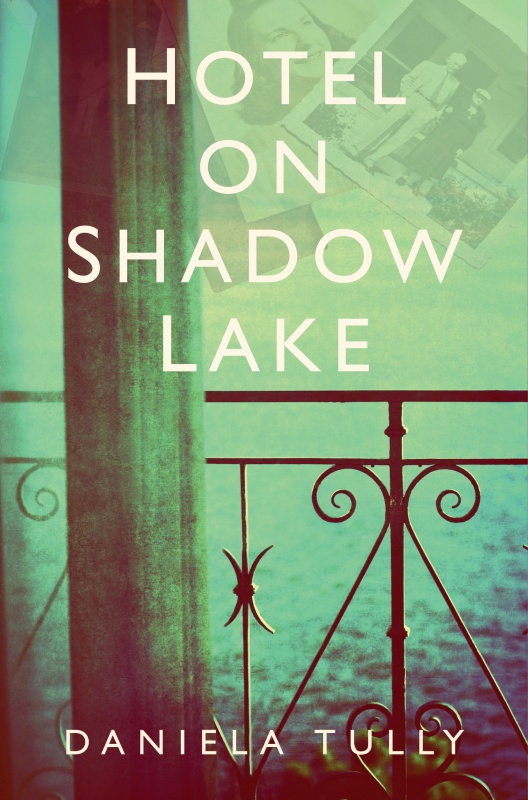
 Daniela Tully’s debut novel, Hotel on Shadow Lake was released by Legend Press on 1st February. It’s lovely to welcome you and the blog tour to Novel Kicks today, Daniela. What’s your book about and what inspired the story?
Thank you for having me! Let me start with what inspired the story: my grandmother had a twin brother, a German fighter plane pilot, who died during WWII. As he felt his death nearing, he wrote a farewell letter to my grandmother and their mother, at the end of 1944. That letter, however, was held up in the East, when the Berlin Wall was erected, and only reached my grandmother in 1990, after the Wall had come down. The letter in my novel contains much more than a “simple” good bye (the reader doesn’t learn the content until the end). In my novel, the recipient disappears without a trace after receiving the letter. Twenty-seven years later, a landslide in upstate New York uncovers her remains. Her granddaughter back in Germany thought she had come to terms with the disappearance of her grandmother, who was her surrogate mother, her best friend, and a storyteller of spellbinding, mystical fairy tales. But when her grandmother’s body is found in a country her grandmother had no connections with, the granddaughter begins to question everything. Who was this woman? What made her leave Germany? What were her ties to the captivating yet chilling Montgomery Hotel, located near the site of her death? As Maya seeks answers in the States, she finds herself sidetracked by her own assumed identity—and how much it enchants the charming heir of the Montgomery dynasty. She soon discovers that the best way to the truth about her grandmother might be through surrendering herself to the majestic Montgomery Hotel, the strange family that owns it, and the spirits that live on in the dark surrounding wilderness…
In the plot strand set in the past, the reader travels with Maya’s grandmother, Martha Wiesberg (Martha was also my grandmother’s Christian name) to a Germany on the cusp of World War II. And later in the novel we return there again, but for reasons that I cannot disclose here, as they are not only connected to the twist in my story, but also deliver some of the reasons why Martha Wiesberg disappeared in 1990 – and why she had to die. It also sheds light on a historical aspect of the Second World War that hasn’t received too much attention yet, but one I find a fascinating angle.
What’s your typical writing day like? Do you have any writing rituals?
I often made attempts to write from home, but they have never been as fruitful as those times when I leave the house to write. I write best on the move (road trips, planes, trains) and second best in a public setting like a coffee shop.
 What planning did you do prior to beginning the novel? Do you have any planning tips to share?
I don’t know the entire plot before I start writing. With Hotel on Shadow Lake, I knew the first scene and the final one, but not every plot point in between. And my writing process got hung up on that at first. My husband, who is a screenwriter himself, suggested to me to just start writing those scenes I already had in my head, a wise piece of advice, because from then on the flow became natural; the characters, as clichéd as this might sound, did start talking to me at some point, telling me what to do.
Did you prefer to have a complete first draft before editing and how do you think is the best way to approach the editing process?
Yes, I do prefer to have a complete draft before digging into changes. As this is my debut novel, I was probably more protective of my words than other more seasoned writers, so at first I was always on the defensive, instead of embracing those changes that improved the pacing.

 by
NK Chats To…Thomas Leslie McRae
 Hi Thomas, thank you for joining me today. Your book is called Pimp in the Pulpit. Can you tell me a little about it and what inspired the story?
First please accept my gratitude for granting me the honour and privilege to be doing this interview with you. Secondly Pimp in the Pulpit is a book based on a dysfunctional family that has very limited spiritual and moral foundation. This book has some person experiences of my life along with other people I know and even quite a bit of fiction to give the story a little more flair.
What’s your typical writing day like? Do you have any writing rituals?
I don’t have any rituals. I just write whenever I’m feeling in the mood or inspiration instantly hits me. I write about life, family and friends some personal experiences of my own and even scenarios that may have happened in the past that I wish I had handled differently.
Can you tell me a little about your route to publication.
I’ve been trying for some time to get published with no success in the traditional sense. So I decided to go the self-publishing route and it was challenging at times and it even took me a while to get my confidence all the way up. But with this book I feel great and determine to officially make a name for myself in the publishing industry and hopefully all around the world.
Which authors do you admire and why?
I admire Nikki Giovanni, Langston Hughes, Maya Angela and W E B Dubois. Because they are some of the unforgotten heroes in today’s and modern literature. People like them help paved the way for individuals such as myself and that is why I will always honour our unforgettable heroes.

 by
Book Club