Blog Tour: NK Chats To Liv Constantine
 I am pleased to be welcoming Liv Constantine (the writing duo of Lynne and Valerie) to Novel Kicks and the blog tour for their latest novel, The Last Mrs Parrish.
What’s your typical writing day like and as a duo, how do you approach the writing process?
We are in touch everyday via email and FaceTime. We both write in the mornings and email that day’s work to each other. Late afternoon, we jump on FaceTime and give each other feedback on the pages we’ve each read. During these talks, we’ll also bring up any issues either of us is having with character or plot, and brainstorm solutions. Then we assign scenes for the next day. This goes on every day, usually even Saturdays, and occasional Sundays depending on our deadline.
What are the advantages of writing together and also, what are the challenges?
The advantages are numerous. Firstly, we get along great and enjoy each other’s company so we have a wonderful time coming up with the story, the characters, and twists and turns along the way. Our sessions are infused with a great deal of laughter and fun. When we get stuck writing a scene, a simple MORE HERE in the middle of a paragraph and an email to the other results in it coming back all filled in! It’s also great to be able to bounce ideas off your co-writer and to get input when you’re at a loss for where to go next. The biggest challenge is making sure our scenes mesh, both contextually and emotionally. A lesser challenge for us (fortunately) is the need to be open to hearing criticism and the other’s point of view.
The Last Mrs Parrish is your debut thriller. Can you tell me a little about it?
It’s a story of two women: one who has “everything”, the other who has “nothing”. The story was born of a conversation we were having concerning the phenomenon of the “trophy wife”. We began to imagine how this trope might be turned on its head, and the more we talked, the more intriguing the idea sounded. It was then that we decided to write the story of a woman who befriends a wealthy woman with the intent of stealing her life and giving it a big twist.
How do you approach the editing process? What are the challenges of this with the physical distance between you?
There’s no question that editing is the most time consuming and tedious process for us. This is often a four or five-hour exercise as we facetime, both of us with the document open on our computers, and go through the manuscript line by line. More than once!
What elements do you think make up a good thriller?
Suspense is critical– keeping the reader wanting answers to questions and turning those pages; but it’s vital that you play fair with the reader. Authenticity in character and action is a must. Nothing pulls the reader out of a story more quickly than a cheap plot device that doesn’t ring true, or when a character does something totally contrary to her nature. Pacing is also a key element in a good thriller.
What do you think is the most important – Plot or Character?
This is such a tough question and one that is debated over and over. The two are so intertwined that it’s almost impossible to choose, for without a good plot you have no story and without believable characters the story doesn’t matter. We begin with an overall plot, however, we let the characters drive the story. We’re always asking the question “Would she do this, say this, believe this.” And if the answer is no, then the plot has to change. If you think about the stories that move us, it’s usually the character that’s most memorable. Elizabeth Bennet, Scarlett O’Hara, Katniss Everdeen, Eliza Doolittle, Michael Corleone, Hannibal Lecter, Atticus Finch, James Bond, and Jay Gatsby are all examples of characters that live on. Does that mean that character is more important than plot? We go back and forth on this one.


 by

NK Chats To… Georgia Hunter
 Hi Georgia. Thank you for joining me today to talk about your book, We Were The Lucky Ones. What was the writing experience like for you considering this book was based on family history? Did you feel a certain responsibility toward the story?
I felt a huge sense of responsibility! It was important to me to do everything I could to capture my family’s experience in a way that did them—along with the time period—justice. I tried not to leave any stone unturned in my research, and I thought long and hard once the research was complete about how best to bring the story to life. I was nervous, to be honest, to share the finished product with my relatives, as there was no audience whose feedback mattered more to me! Luckily, the family has been incredibly supportive, and has responded to the book with nothing but love and appreciation.
What is your writing process like – are you a planner and how do you approach the editing of your novel?
With a story of such broad scope (the Kurcs’ paths spanned seven years and five continents), I knew I’d need to take a methodical approach to my writing process. I began by dropping my research findings into a timeline, which I color-coded by relative so I could track who was where/when. From there I created an outline for the book, then chapter summaries, then finally began the process of putting the story to paper. I kept the manuscript close for years as I edited and polished before finally gathering up the courage to pass it along to a few close acquaintances, then to a freelance editor, and finally to an agent.
Do you have any writing rituals?
I love to write in the mornings, once my son is off to school. I also enjoy wearing headphones while I work. Even when I’m alone in my office I’ll slip on a pair, as I find the extra bit of quiet puts me in the proper headspace to write, and helps to drown out the annoying little voice in the back of my mind that likes to remind of the (non-writing) to-do’s I’ve chosen to ignore. If I’m in a writing rut, I’ll try working at a coffee shop, or on my sofa (if I have the house to myself), or in the library—often a change of scenery is just what I need to boost my creativity.
If you were only allowed to own three novels, which three would you pick and why?
That’s a tough one! If I had to pick, I suppose I’d choose City of Thieves by David Benioff—a fast-paced and brilliantly-told story of the author’s Holocaust-era family history that inspired me years ago to tackle my own book. I’d also pick Wonder, a Y/A novel (although I’d argue one equally suited for adults) about a young 5th grade boy with a facial deformity, struggling to fit in. And finally, at the risk of sounding self-centered, I suppose I’d pick my book, so I could share it someday with my children (and their kids, and so on). I’ve read We Were the Lucky Ones more times than I can count, but I find with each pass, my own everyday “problems” seem a whole lot less daunting, and I’m reminded of just how lucky I am to be here. I hope someday my children (and future generations) will take away a similar perspective and sense of gratitude.

 by
NK Chats To: Isabella Davidson
 Hi Isabella, thank you for joining me today. Can you tell me about what your typical writing day is like?
Thank you for having me on your blog! My typical writing day consists of waking up to my children’s chatting and playing, getting them dressed, preparing breakfast and taking them to school. Then, when I get back home, I sit in my office and start writing. I am most productive in the morning, when I have a clear mind, and feel the most motivation. After my children come back from nursery and school, I have to find any moment I can to continue writing; after putting them to bed, when they are at activities, and any other moment I can find – which isn’t always easy.
What’s the best and most challenging thing about writing your first novel?
The best part of writing The Beta Mum, Adventures in Alpha Land, was when I felt like I had written a really good passage, and thought people would enjoy it. I once laughed at what I wrote, which is usually a good sign. They say that if you are bored writing then your reader will be bored. You have to keep the writing alive and fun if you want your reader to continue reading. If I can move someone to feel something when they read my novel, that is success to me.
The most challenging? The entire process is challenging! Writing the book, word after word, until you finish typing the last word. Then the editing. And more editing. Then sending it off to agents and publishers. Then, once it has been published, promoting your book and trying to get sales. It is like an intense obstacle course over years.
What’s your favourite word and why?
That’s difficult for me to answer! I don’t have a favourite, I like all words, whether simple or complicated. To me, each word has a purpose, a meaning and a place, so all of them are important in their own way.
What was your writing process like from your idea to final draft? Did you plan? How did you approach the first sentence?
When I first started writing my novel, The Beta Mum, the story line was completely different than this one and it also had a completely different title. I had a general idea of what subject I wanted to write about – the Alpha mums in a nursery setting in west London – but the plot changed completely after I started the Faber Academy novel writing course. There, I received a lot of input, both positive and negative, and I found a new story to tell. I also learned about writing an outline and now in the future, I will always work with a basic outline. We also learned about writing our first line and our last line and how to make them count. It was an invaluable experience and I learned so much.
What advice do you have to keep motivated?
Sit on that chair and write. Word after word. Even if it is ‘bad’ writing, it can be edited in the future, but it gets the creative juices flowing and helps you re-enter your world. The worst you can do is not write at all. Even if on some days you don’t feel like writing, you have to push yourself to write. And your first draft is meant to be bad! So don’t worry about writing ‘badly.’
Which three fictional characters would you want round for dinner and why?
Daimyo Toranaga and John Blackthorne from the novel Shogun. It was one of my favourite novels growing up and is an encyclopedia of knowledge about Japan. It is exotic and beautiful and so foreign, I would have loved to be a part of it. I tried to learn Japanese from that book! And one final character on a completely different note, Carrie Bradshaw (from the book Sex and the City by Candace Bushnell), because I think we would be good friends!

 by
NK Chats To… Emily Harvale
I’m happy to be welcoming Emily Harvale to Novel Kicks today and the blog tour for her new Christmas themed novel, Christmas Secrets in Snowflake Cove.
Christmas is a time for family and friends, miracles and magic, falling snow and roaring fires, fun, laughter and festive feasts. In Snowflake Cove, it’s also a time for secrets to be revealed…
Evie Starr is hoping for more than a sprinkling of magic this Christmas. The family-run Snowflake Inn is virtually empty and the Starr’s financial future isn’t looking bright. But Evie’s gran, Jessie has a secret that might help.
Enigmatic, Zachary Thorn is every woman’s dream. He’s also ex-SAS, so his secrets are classified. The Christmas Special of his feel-good, TV show is set in Michaelmas Bay – until a phone call means he’s spending Christmas in nearby Snowflake Cove.
Evie’s best friend, Juniper thinks boyfriend Darren has a secret. Evie knows he does. And Evie’s niece, Raven is hiding feelings for Juniper’s brother – who has a secret crush of his own.
But the biggest secret in Snowflake Cove is the identity of Raven’s dad.
With snow falling thick and fast and secrets being revealed one after another, will everyone be snuggling up by the fire on Christmas Eve, or are some secrets best kept hidden…?
Hello Emily, it’s lovely to welcome you to Novel Kicks today. Your book is called Christmas Secrets in Snowflake Cove. Can you tell me a bit about it and what inspired the story.
Hello Laura, it’s great to be here. Yes, my new book, Christmas Secrets in Snowflake Cove is about 34-year-old Evie Starr and her family. Evie is single and lives in the family-run, Snowflake Inn with her parents and her gran. The book is set during the week leading up to Christmas Day and Evie’s 15-year-old niece, Raven is also staying for the holidays. The Starrs are struggling financially and Evie is hoping to persuade TV show host, Zachary Thorn to give the inn a plug during his live, Christmas Special. His show is being filmed nearby, but what Evie doesn’t know is that her gran, Jessie has a secret and when Jessie makes a phone call, it changes everyone’s plans. There are also several others with secrets in the tiny village of Snowflake Cove and one of the biggest secrets is the identity of Raven’s dad. With snow blanketing the village and secrets being revealed, it’s not going to be the quiet, family Christmas the Starrs were expecting, but it’s going to be one that changes people’s lives. And Evie may just get what she was hoping for this Christmas.
As to what inspired the story, I’m not really sure. I write a Christmas book each year and when it came time to write, Evie appeared and told me her story.
 Did you plan much before writing this novel? How much planning do you feel is needed?
I never plan my novels. Lots of people do, I know, but that simply doesn’t work for me. I firmly believe there is no right or wrong way to write a novel. I do what feels right for me. A character pops up with an idea and I sit and type it. By the end of the first draft I know my characters well, and I do make notes about them along the way. Then I write a second draft. Sometimes I ‘plan’ an event or the ending – but that doesn’t always work out as I expect.
What elements do you feel make up good characters?
Characters need to be believable. No one is perfect, so, like us, characters can have foibles. They should have a ‘strong voice’ – but that doesn’t mean they need to be strong. Sometimes the character with the biggest weakness is the most memorable. They need to be true to themselves. Doing something completely out of character should be as much of a shock to them, as it is to the reader.
When you came to edit, did you wait to have a full draft. How did you approach the editing (a chapter at a time?)
I always edit as I write. I’ll finish a few chapters then the following day I’ll read them through and edit them before continuing. I like doing that because it gets me back into the flow of the story. Once I’ve finished the first draft, half my edits are done. I then read it through. Leave it. Read it again and edit it however many times I need to before it goes off to my editor. Then together, we may do more. I edited this book in the same way I edit all my books.
Do you believe plot or character is more important when writing a novel?
I believe they are equally important – but it depends on the novel. Some stories are plot driven, some are character driven.
Are you working on anything at the moment that you can tell me about?
I’m working on book two in this Michaelmas Bay series. It introduces new characters but we still get to spend some time with Evie and her family. All of my books can be read as standalones even if they are part of a series.

 by
NK Chats To… Jane Sanderson
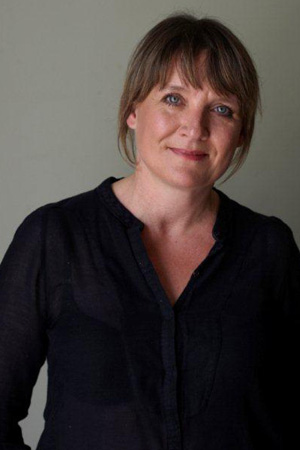 Jane Sanderson is the author of This Much is True which was released in June 2017.
After decades in a deeply unhappy marriage, Annie Doyle can barely bring herself to care that her husband Vince is finally about to die.
But as the family gathers to see out his final days, Vince utters a single word that will change everyone’s lives completely:
‘Martha.’
Who is Martha? And why is Annie so quick to dismiss the mention of her name?
As Annie’s long-held secrets start to emerge, the lives of everyone she holds dear will be changed forever…
Hello Jane, thank you so much for joining me today and congratulations on the release of your book, This Much is True. What was your typical writing day like when writing this book?
Ah, if only there was any such thing. Every day seems to be different, depending on what other demands there are on my time. I work at a desk in my bedroom at home, and am easily distracted by almost everything that happens around me: dogs barking downstairs, postman knocking at the door, phone ringing, washing to be done, drying to be folded, dogs to be walked, dinner to cook … do you get the picture?! I write between all those other activities – half an hour here, an hour there – until the book gets more than halfway finished, and then I always make a priority of it, find the discipline to turn a blind eye to other things, and forge ahead to the end. On the whole, I’m probably most productive either very early in the morning, or late in the evening.
Can you tell me a little about This Much is True and what inspired the novel?
It was actually inspired by walking my dogs, here where I live, in Herefordshire. But that really was just a starting point for a story about secrets, lies, and the redemptive powers of friendship. Annie Doyle is a deceptively complex woman, whose ordinary existence hides some extraordinary truths, and who can only deal with the miseries of her past by ignoring them. I wanted Annie’s fledgling friendship with Josie and Sandra to be a catalyst for change; through their example she begins to see another way of being. Of course, I also wanted to explore the idea of secrecy in friendships too – the lines we don’t cross, the things we never tell. Annie has more to hide than most of us, but I believe we all protect our secret selves, to one extent or another.
Do you have many pages of planning and research for this book or did you just see where it took you?
I have a notebook with random memos to myself about things I mustn’t forget, but that’s all. I research as I go, and I don’t really plan at all. It sounds like a recipe for disaster, but it works.
What’s the editing process like for you – how do you approach it?
It’s a fluid process, and I edit (that is, rewrite, correct, add material) as I write, rather than at the end. I don’t do drafts – my first draft tends to be my only draft, but it will have undergone an awful lot of tweaking as it took shape. Then, of course, the manuscript goes to the editor for their input, and the copyediting stage is equally crucial to weed out the continuity errors and grammatical blunders, but on the whole I try to be as efficient as possible during the actual writing of the story. It’s my journalist’s training, I reckon – it dinned into me the importance of producing ‘clean copy’.
What elements do you feel make a good novel?
Great characters and believable dialogue. If those elements are in place, I’m happy. Plot matters – of course it does – but sometimes a great novel can actually be about very little; if the reader cares about the characters, and can hear them when they speak, then that’s the basis of a truly good read, in my view.
Do you have any writing rituals – coffee, music, silence, a specific place you need to write?
Silence, generally, and I always write at a small desk at my bedroom window, which has a beautiful view of the Brecon Beacons in the distance, but I have to keep the shutters closed because the light bleaches out my screen! Coffee and tea are essential to my day, whether I’m writing or not.

 by
Book Club