Author Interview & Review: Copycat by Alex Lake
 Copycat is the latest novel from author, Alex Lake and I am pleased to be welcoming her blog tour to Novel Kicks today.
Imitation is the most terrifying form of flattery…
Which Sarah Havenant is you?
When an old friend gets in touch, Sarah Havenant discovers that there are two Facebook profiles in her name. One is hers. The other, she has never seen.
But everything in it is accurate. Photos of her friends, her husband, her kids. Photos from the day before. Photos of her new kitchen. Photos taken inside her house.
And this is just the beginning. Because whoever has set up the second profile has been waiting for Sarah to find it. And now that she has, her life will no longer be her own…
Thank you for joining me today, Alex. Your book is called Copycat. Can you tell me a little about it and the inspiration behind it?
It’s about a woman, a doctor with three young kids, who discovers that there’s a Facebook account in her name. When she looks at it, she’s shocked – the most recent post is a photo , from the day before, of her kids on the beach. And there are others: photos of her out with her friends, of her on a date night with her husband, of her kids’ school plays. It is an entirely accurate representation of her life.
But she had nothing to do with it, and, as she will soon discover, it is just the beginning of her problems.
The inspiration came from some conversations I’d with friends about the way we treat our digital lives. Social media is very public, and yet we seem happy to put all kinds of information out there which would once have been considered private – birthdays, middle names, current location – that leaves us vulnerable to hackers and the like. But what if someone didn’t want to just steal your money or your identity – what if they wanted to destroy your entire life, and the information you left online was just the means they used to do it?
What’s your writing day like and do you have any writing rituals?
I write early in the morning, before my three young kids are up and about. When I sit down I know what I’m going to write – what the scene is and how it fits into the rest of the book, and so I can really use the time. I normally plan it the evening before (in the bath, or on a walk).
I only write for about an hour and a half each day, which is normally around 1500 words – after that I start to lose the flow and it becomes a struggle. Then for the rest of the day I do all the other things I have to get done.
What’s the best and most challenging thing about being a writer?
The best is getting the first copy of your book. Each book starts as a vague idea in your head, then gets turned into notes, then conversations with friends over a drink, then a draft, another draft and then one day a parcel comes and it’s your book. It’s just thrilling.
I think the most challenging thing is the constant worry that whatever you’re working on isn’t good enough. I always have that feeling – I’ll be halfway through a first draft, and I find myself thinking that what I’m working on is no good, that the characters are flat and boring, that the plot is full of holes, that I need to scrap it and come up with a better idea. And there’s no one you can talk to – the book’s not done, so they can’t read it – so all you can do it carry on, convinced you’re going to end up with a disaster on your hands….
What elements, in your opinion, make a good thriller?
I think there are three broad areas: characters, plot and The Villain.
The characters need certain characteristics – they need to feel real, so readers can identify with them and care about them, they need to be in genuine peril, and the solution needs to be in their grasp. They can’t just be waiting for the end to resolve itself. They need to be fighting and struggling and helping themselves.
As for the plot – the thrillers I enjoy the most are the ones I could imagine happening to me. It’s that sense that the structure of our lives is just one step away from falling apart, that, hidden behind the closed curtains of a nearby house unspeakable things are going on, and they might spill over into all of our lives…
And then there’s the villain. What makes a good villain would need an entire blog post of its own, but the villain too needs to be real.
And the more real they are, the more terrifying they become…


 by

NK Chats To… Jon Rance
 I am very happy to be welcoming Jon Rance to Novel Kicks today and the blog tour for his new novel, About Us.
Rosie Willis isn’t happy. Her once perfect marriage to husband, Pete, is falling apart, her mother is dying, and her three children are starting to feel like strangers.
At forty she feels like she’s stuck, but then she meets handsome widower, Mark Hornby, at the school gates and he makes her feel alive again. As she drifts further from Pete, she gets closer to Mark, but approaching Christmas she realises she needs to try to save her marriage and keep her family together.
Despite her feelings, she can’t have an affair. Unfortunately, Pete has news of his own that throws everything into doubt. Rosie must choose a new life.
There’s Pete, Mark, or going it alone. It isn’t easy when you’re forty, when you have three kids, when you feel past it, when your mother is dying, but life isn’t meant to be easy.
Hi Jon, thank you very much for joining me today. Congratulations on your new book, About Us. Can you tell me a little about it and how the idea originated?
Hello! It’s a pleasure to be here and yes, of course, I’d love to tell you all about my new novel, About Us. About Us, is the story of Rosie Willis and her husband, Pete. It’s the story of they meet, fall in love, get married, have children, and then how it all falls apart. It’s set over twenty years from university until their early forties. It’s a dramatic romantic comedy.
The idea evolved over time – as they tend to do. After my last novel, Dan And Nat Got Married, I knew I wanted to write something a big different and I had this idea for a novel. Originally it was going to be a story of a marriage from both sides, but then I decided to write the whole thing from Rosie’s perspective and that’s when it really took off.
 What’s your writing routine like (where do you like to write, do you need silence etc.) How has your routine changed since writing your first book?
Well now I have both children in school full-time I actually have a routine! When I wrote, This Thirtysomething Life, I was a stay at home dad so writing was done around that. I squeezed it in when I could. Now I sit at my desk at around 8:30-9am and work in silence until about 1-2pm and just write. Sometimes I listen to music and sometimes I don’t. I drink tea, coffee, try and eat healthy snacks and always have a break for lunch!
How do you approach writing a novel? Planner or a Panster?
I was thinking about this the other day. I always thought of myself as a bad planner, but I realised that I do plan, but generally over long periods of time. I usually start the ideas process maybe a year before I start writing a novel. I jot down ideas, characters, plotlines etc. so usually by the time I start writing, I have a decent idea what I’m doing. I don’t write extensive notes, but I do have whole pages on characters, storylines etc.

 by
Author Interview: Meg Howrey Talks About Her Book, The Wanderers
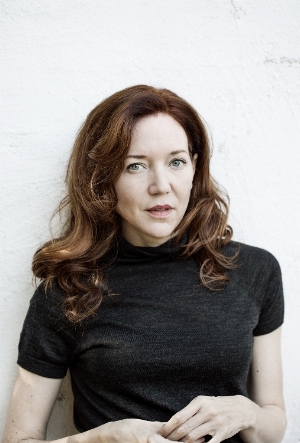
Meg Howrey (photo credit: Mark Hanauer.)
Hello Meg, it’s so lovely to welcome you to Novel Kicks today. Your book is called The Wanderers (released yesterday and has, in my opinion one of the prettiest book covers.) Can you tell me about the novel and how the idea originated?
Thank you! (And I love that cover too.)
“The Wanderers” imagines that a private space company is four years away from sending the first crew of humans to Mars. Three astronauts have been selected, and as part of their training they are asked to undergo a seventeen-month simulation of the mission. The story is told from the point of view of the crewmembers, and also from some of the people they’ll be leaving behind: a wife, a daughter, and a son. We also hear from of one of the people tasked with observing and evaluating the astronauts. It’s a story about ambition, isolation, inner space, the problem of knowing what is “real” or even what “real” means, and the different kinds of personal simulations human beings find themselves in. (I hope it’s also a little bit funnier than my description!)
The idea for the book was inspired by a newspaper article I read concerning a simulated Mars mission: six volunteers spent 520 days in a module, being tested for the kind of psychological and physiological stresses a crew might experience in a long-duration space expedition. I thought it sounded like an incredibly cool setting for a novel.
What was your approach to the writing process with this novel – did you plan a lot, wait until you had a whole draft before editing?
I spent over a year researching before I wrote anything at all. The research continued for the length of writing: about four years. I don’t outline, but I spent months writing the first chapter and thinking through the general shape of the book. I revise CONSTANTLY.
Once you’d written your first novel, could you tell me a bit about the route you had to publication and how the process was different with this novel?
The first novel I wrote didn’t sell—just got very lovely rejection letters. So I put it away and tried again. The second book sold, and the editor who acquired it was interested in that first book, and told me to take it out and work on it a bit. I did, and it became my second published novel. (Lesson: you never know.) I don’t usually show anyone what I’m working on until it’s finished, so with “The Wanderers” my literary agent only knew that I was working on “something with astronauts in it.” It’s my first book to be published in the U.K, which is tremendously exciting for me.
Do you have any writing rituals – coffee before you start? No noise etc.
I avoid all rituals or rules involving writing other than Work Hard and Care About Everything.
Do you have any advice for anyone who might be suffering from writers block?
Well, I’m reluctant to give advice but I can say what I think it true. It’s this: writing isn’t about word count or how many hours a day you spend typing. (It’s also not about publishing.) Writing is a way of confronting the world. When I’m stuck, it’s because I’m not confronting the world, I’m confronting the “idea of being a writer.” That’s a closed-loop system. So, I go to museums, art galleries, concerts, plays, and read poetry and non-fiction. I stop being “person who is trying to write” and let myself be a reader, an audience member, a student. At a certain point, it becomes clear that being a writer MEANS being a reader, an audience member, a student. I get excited about what I’m observing, learning, confronting, and I want to talk about it, figure it out, and make something of my own.

 by
Author Interview: Dani Atkins Talks About Her New Book, This Love
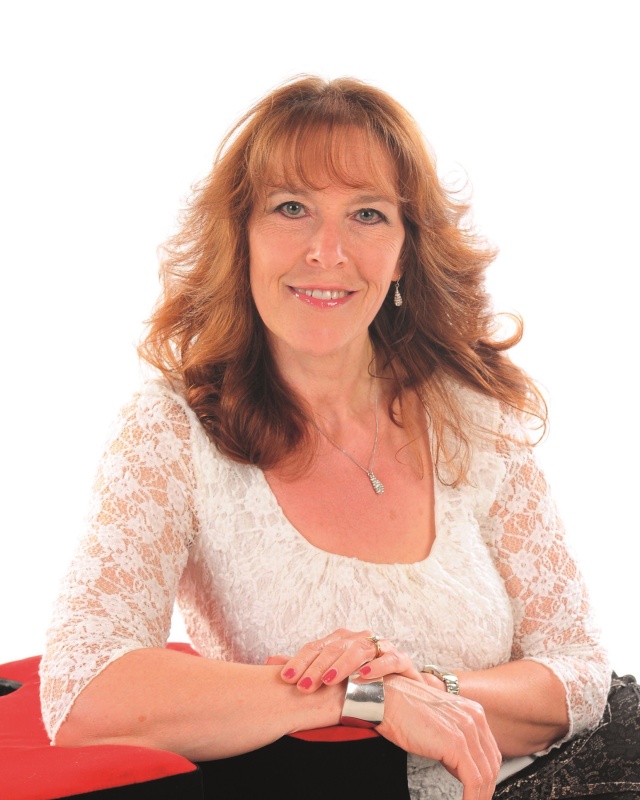 Hi Dani, thank you for joining me today. Congratulations on the release of This Love. To begin, could you describe what was your route to publication like?
If it was a journey, I would have to say it was one that took a scenic route, rather than the fast track. Like many unpublished authors, I was largely fumbling around in the dark, trying to get my first book noticed. I did send it out to literary agents, but sadly without success. Eventually I had to accept that, for whatever reason, this was not the right time for me or my book, and sadly relegated it to a memory stick in my desk drawer. Then four years later in 2013 my daughter offered to help me self-publish. Very soon, after a lifetime of thinking it was never going to happen, I was lucky enough to have both an agent and a publishing deal. But best of all, I finally had the opportunity to share a story that very nearly never got to be told at all.
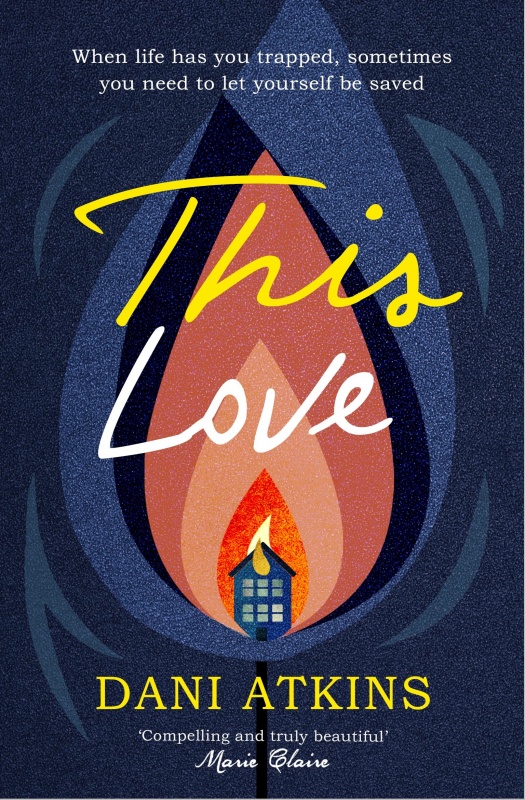
Your new book is called This Love. What’s it about?
THIS LOVE is an emotional drama, but – as its title would suggest – at its core it’s very much a love story. It’s a book about falling in love with possibly the one person you should never become involved with, for a great many reasons. But it’s also a story about the heart ruling the head.
The main character is Sophie who, because of a past tragedy, has chosen to live a very contained and limited life, until a dramatic event occurs, and she meets Ben. After that the prison walls she had built around her come crashing down and the path to her future is rewritten. Although it’s about being rescued, THIS LOVE is also about finding the courage to rescue yourself. And, of course, it wouldn’t be one of my books if there weren’t some fairly major obstacles standing in the way as well.
 What’s the best and hardest part of being a writer?
The best part of this job is doing something for a living that you would choose to do as a hobby anyway. I don’t think you can – or should – ever consider writing a book to earn a great deal of money, because that literary jackpot only happens to a very small select group of authors – which is probably why those jaw-dropping six figure deals make the headlines. Most of us are just happy to earn enough to cover the mortgage. I believe the only reason to do this job is because you have a passion for storytelling. And if you’re fortunate enough to find someone who wants to pay you for the privilege of doing something you love, then that is the most incredible bonus.
The hardest part of being a writer is probably the isolation and the potential loneliness. There’s no one around for the famous ‘water cooler chats’ anymore. Also there is a very slippery slope you could easily slither down: unwashed; not even brushed your hair; working all day in your pyjamas; not wearing a scrap of makeup. Funnily enough, however scruffy you look, the people in your book don’t seem to care a bit!
When writing This Love, what was your writing process like? Did you plan much? Do you tend to complete a first draft before editing?

 by
Blog Tour: Dinah Jefferies Talks About Her New Book, Before The Rains

 A big welcome today to Dinah Jefferies. Her new novel, Before The Rains was released by Viking in February (2017.)
1930, Rajputana, India. Since her husband’s death, 28-year-old photojournalist Eliza’s only companion has been her camera. When the British Government send her to an Indian princely state to photograph the royal family, she’s determined to make a name for herself.
But when Eliza arrives at the palace she meets Jay, the Prince’s handsome, brooding brother. While Eliza awakens Jay to the poverty of his people, he awakens her to the injustices of British rule. Soon Jay and Eliza find they have more in common than they think. But their families – and society – think otherwise. Eventually they will have to make a choice between doing what’s expected, or following their hearts. . .
Hello Dinah, thank you so much for joining me today. Your new novel, Before The Rains sounds great. Can you tell me about it and where the idea originated?
I read about and then visited a small palace where, in the past, the royal family had mortgaged the family jewels to pay for an irrigation project. That gave me the idea for the title and one of the themes of the book. I fell in love with Rajasthan and wanted the pages of Before The Rains to shimmer with spice and silk so that the beauty of India would shine through. It’s about an independent female character with an interesting job as a photo-journalist. But above all it’s a story of forbidden love, with an edge to it, and plenty of opposition from either side. I wanted the story to be life-enhancing, despite the mystery of what’s going in the dark recesses of the palace. And so I tried to bring to life the colour and immense luxury of a Rajasthan palace and contrast that with the raw emptiness of the desert that surrounds it. It’s a romantic story that offers something more.
What elements do you need in place prior to writing a novel? Do you need a comprehensive plan, do you edit as you go etc?
I usually prepare a fifteen-page synopsis and stick to it as much as I can as I write. Having said that, there will inevitably be changes, edits and shifts as I go along. Sometimes a new idea will come to me, sometimes I’ll need to take the story in a different direction, sometimes something doesn’t work, so I try to remain flexible throughout. I do loads of revisions and love the editing process once the first draft is done.
What writing rituals do you have?
I’m not really a ritual kind of a person, but I try to write in the mornings while my mind is still fresh. A cup of coffee is a must, as is a warm room. I have a lovely new garden room where I write now and that has made all the difference. I was in a cramped back bedroom before. I now have my den and I love it.
What’s your favourite word and why?
My favourite word at the moment is ‘cinnamon’ because it figures widely in the book I am currently writing. I also like the sound of the word and the smell of cinnamon, especially on a cake or pudding. Mmmm! Cinnamon buns and coffee. Now there’s a thought.
Best and hardest thing about being a writer?
The best thing is when you hold a finished book in your hand for the first time. I absolutely love that moment. It has usually taken a long process to reach that point and some of the hardest things happen on the way. The very worst thing is when a manuscript isn’t working as it should but you can’t figure out what’s wrong. Then it feels like you’re grappling with a wild beast intent on devouring you. That’s when your editor is fantastically useful.
Out of all your books, do you have a favourite passage/section?
I love the section on page 20 of The Tea Planter’s Wife when Gwen sees the tea plantation for the first time and describes the tea bushes as a tapestry of green velvet, where women tea pickers looked like tiny embroidered birds.

 by
Book Club