Author Interview: Guy Mankowski Talks About His New Novel, An Honest Deceit
 Guy Mankowski wrote his first novel, The Intimates when he was 21. His other novels include the fantastic Letters From Yelena and How I Left The National Grid. His new novel, An Honest Deceit was released by Urbane Publications on 20th October.
When Ben and Juliette’s young daughter dies in a tragic accident on a school trip, they begin searching for answers. But will they ever know the truth? What was the role of the teacher on the trip – and are the rumours about his past true? As Ben and Juliette search for the truth and the pressure rises, their own secrets and motivations are revealed…. An Honest Deceit is an intelligent and gripping contemporary psychological thriller that questions not just the motives of others, but the real reasons for discovering the truth.
Hi Guy, welcome back to Novel Kicks. Can you tell me a bit about your new novel, An Honest Deceit? What inspired you to write it?
Hi Laura, thanks for having me. An Honest Deceit is inspired in the main by an anger at the way our institutions often treat individuals who ask them uncomfortable questions. There are hundreds of people in this country who are sitting pretty in extremely well-paid jobs that they’ve only kept hold of because they’ve used the power institutions offer them to manipulate the truth. They use this power to hurt others and look after themselves. This book looks at the impact of that through the plot of a man investigating how his daughter was killed on a school trip.
What’s your typical writing day like? How has your writing approach changed since writing your first novel?
For my first novel, The Intimates, I edited the manuscript about three times. For my second novel, about eight times. For my third about 35 times and I couldn’t begin to count how many times I edited An Honest Deceit. Every word has been changed at least once so is it even the same novel? If someone looked at a draft I had of a novel called ‘Marine’, in 2011, I think they would barely recognise that it would become ‘An Honest Deceit.’ So my typical writing day has changed in that it is much more about editing and rarely about just writing.
What are the challenges of writing a psychological thriller?
It’s hard to know how deep you should go into a characters psyche because you don’t want to lose the narrative too much. The way I ended up handling it was to go very deep into their darkest thoughts and feelings and then in later drafts ensure that there were questions the reader had at every point to keep them going. It is hard to resolving everything, within your made-up world, so it doesn’t all seem too pat.


 by

A Moment With Laura Briggs: Self Publishing Vs. Traditional Publishing
 I’m happy to be welcoming a fellow Laura to Novel Kicks today. Author, Laura Briggs talks about Self Publishing vs. Traditional Publishing and the pros and cons of each. Over to you, Laura.
First of all, thanks to Laura for inviting me to appear on Novel Kicks with a post on self-publishing vs. traditional publishing. I’ve learned a little about both in recent years and hope my experiences may prove useful to some of you reading this.
Let me start by saying that my publisher, Pelican Book Group, is nothing less than excellent. I love working with them and plan to submit more manuscripts to their company in the future. I also love self-publishing and am grateful to have the opportunity for both.
Now—let’s get to some pros and cons on publishing!
The Pros of Traditional Publishing:
•Professional Editing: This is an obvious one, but I can’t stress it enough. Freelance editors cost a few hundred on average, so yes, professional editing gives traditional publishing an edge.
•Professional Cover Design: Another obvious one, I know, but important. Not everyone has the software, or the know-how to make a good cover, even with so many high quality images available via sites like Dreamstime. The cover often serves as your book’s first impression, so it needs to be good.
•Professional Marketing: Let’s face it—marketing is tough. And hugely competitive. Book review bloggers are swamped with requests and even buying ad space from a popular service like Bookbub is difficult to achieve. Some publishing companies have better methods of getting your book out there. Some don’t. It depends on the publisher, and of course, even authors with a traditional publisher must still do some of their own marketing.
•It Has More Options Than Before: There are many small and up-and-coming publishers who will take unagented submissions from writers these days. There are even divisions of bigger publishing houses, like HarperCollins, I believe, that welcome unagented submissions. They may not pay author advances like big companies do, but some are quite generous on the royalties.

 by
Author Interview: Vicki Wakefield Talks About Her Novel, Inbetween Days
 I’m pleased to be welcoming Vicki Wakefield to Novel Kicks today. Vicki is the author of the YA novel, Inbetween Days which was released by Text Publishing on 26th August.
Jacklin Bates has life figured out – dropped out of school, moved in with her runaway sister, in love with an older boy. But why does she have a sinking feeling that she still needs her mum? Perhaps because she’s stuck in Mobius – a dying town with the macabre suicide forest its only attraction – stuck working in the roadhouse and babysitting her boss’s demented father.
Vicki, thank you for joining me today. Can you tell me about your typical writing day?
There are no typical days. I write when I feel like it, or when a deadline forces me knuckle down. It’s not that I don’t love writing, it’s just that I focus best when my slate is clean. I tend to deal with family, housework, bills, pets and life first, and then I breathe out. I can be epically productive or utterly paralysed. There’s no middle ground.
Do you have any writing rituals (coffee, silence?)
I’m terribly provincial. I can’t do cities, hotel rooms, libraries or cafes (I wish I could, but I either get distracted or lonely). I like to be outside; I like my dog under my feet. I prefer to write at night when everyone else is asleep, and I need tea, wine, chocolate or biscuits (not necessarily at the same time, but I’ve been known to go on a bender). I keep only one working file, so any changes are lost forever (I’m told this is the equivalent of base-jumping, but to me it’s a superstition, like wearing your lucky stinky socks for every game).
Do you edit as you go and plan much prior to beginning a book?
I’m always thinking about a new book long before I finish working on my current one, so the planning can take place years before I write a single word. I keep notebooks filled with random ideas and drawings to help me get to know the world and the characters, and I’ll usually have my opening paragraph perfected before I open a new document (the blank page scares me). Planning in advance helps me to decide whether a story has legs, and drawing helps me to refine my characters before I begin. That said, I’m not a plotter. I trust that the story will take me where it needs to go. I do edit as I write the first draft (against most advice on writing first drafts). It’s my way of feeling out the story. My ideas change so often and so unexpectedly that I worry the novel would be unfixable if I ignored my instincts and tried to write through.

 by
Author Interview: Emma Bennet
 Emma Bennet is the author of I Need A Hero, His Secret Daughter and Snowed in for her Wedding. Emma joins me today to chat about writing, planning her novels and her dinner party guests.
Hi Emma, thank you for joining me. Do you have a favourite word?
I have several: pudding, serendipity and natty stand out as particularly wonderful to say. Actually, I managed to get ‘natty’ into my latest manuscript, a great moment!
How much planning do you do before beginning a book? What elements need to be in place?
I use an A4 notebook and write a basic outline over a page. I then expand on this over about three pages, and write short character profiles for my hero and heroine. I add to and refer to these sheets regularly! Once these are in place, I’m off!
Which novel would you like to live in for a day and why?
I think it’s got to be ‘Pride and Prejudice’: I’d love to chat with Lizzy, advise her mum on her nerves and dance with Mr Darcy!
Out of all the books you’ve read, which three have stayed with you?
It tends to be children’s books which stay with me the most. I absolutely love being able to share my favourites with my children. The top three would probably be Enid Blyton’s The Enchanted Wood, Noel Streatfeild’s Ballet Shoes and Catherine Cookson’s Nancy Nutall and the Mongrel (which never fails to make me cry!).

 by
Author Interview: Lesley Thomson Talks About The House With No Rooms
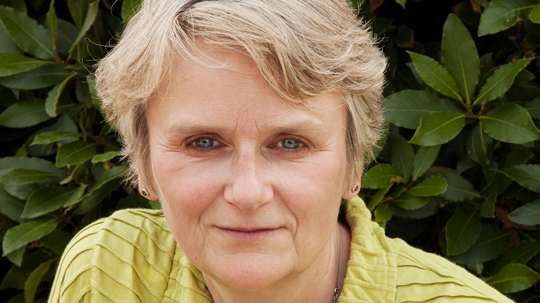
Lesley Thomson
I’m pleased to be welcoming author Lesley Thomson to Novel Kicks today. Hi Lesley. Could you tell me a little about your typical writing day?
Hi Laura, great to be here.
My day starts at 6.45am when I walk the dog. In summer this is a lovely part of the day, with the sun shining on the ruins of the Priory behind our house and the grass lush and green. I know the other walkers who are out at that time and feel lucky to have such interesting conversations before breakfast. In the winter in the wet and dark, togged in waterproofs from head to foot with a torch strapped to my forehead, it’s more of an expedition.
I start work at 8.30 and break for coffee at 11am. I work until 1pm. If it’s a first draft then – after lunch and a longer walk with my dog – I do research. This is reading books and articles and taking notes. Perhaps setting up interviews. If I’m further on in the novel, I’ll continue redrafting until about 5pm.
Can you tell me a little about your book, The House with no Rooms and how the idea originated?
The House with no Rooms is a murder story set in Kew Gardens in the hot summer of 1976 and in 2014. Jack and Stella follow a series of clues to uncover a terrible secret that is forty year old.
I visited the Marianne North gallery in Kew Gardens. A 19th Century botanical artist, North painted plants and flowers on her solo expeditions around the world. There are 833 numbered pictures hanging in what looks like a house. My character Jack sees numbers as signs that dictate his actions and hold clues he must decipher. The story features the Palm House, the Queen’s Beasts and the Herbarium that stores thousands of dried specimens collected over two centuries. They are called ‘dead materials’. Add to this that the botanist’s chief tool of trade is the scalpel and I realised that the Botanical Gardens was the perfect place to set a scary crime novel.
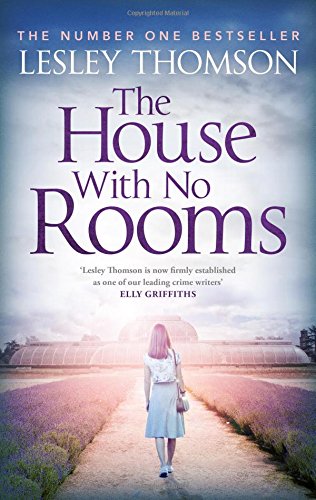
Head of Zeus, April 2016
Do you have any writing rituals (needing coffee before you begin? Writing in silence etc.)
Yes, as I mentioned earlier, I have coffee at 11am. I drink out of a particular mug that I only use for work. I take the dog for walks at about the same time every day. While I work, I play Radio 3 although I like silence too. All this is less about superstition, I have found that a combination of ritual and routine gets me get into story and keeps me writing.
If you were only allowed to own three books, which three would you pick?
These would keep me going. I would need nothing else,
Our Mutual Friend by Charles Dickens
Excellent Women by Barbara Pym
The Moonstone by Wilkie Collins.
Is there a fictional character you’d like to meet and why?
There are two. As an adult, I’d like an introduction to Sergeant Cuff in The Moonstone. He has a quiet ego, he knows he’s good at his work, but is prepared to be wrong. But of course he isn’t. He’s professional, honest, unflurried and gives people careful attention. He has a great sense of priority. What matters most to him is to grow roses. I’d love to have tea with him in the garden in Dorking that he moved to after he retired. I’m sure I’d come away wiser.
As a child, I wanted to meet Lucy in The Lion, The Witch and the Wardrobe. She is passionate, honest and brave. Actually I’d still like to meet her.
What advice do you have for someone who is thinking of or in the processes of writing a book?
A writer is privileged to live in more than one world, their fictional world and the ‘real’ one. Sometimes I find the former more real. Two bits of advice, if you’re writing a novel, keep going until the end. Then you’ve got something to work with. If you’re contemplating writing, stop contemplating and start! Never wait for the muse to strike because it tends to strike when words are already on the page, not when the page is blank. And as I said earlier, you might see if it helps you to establish a routine. Above all, keep going.
How do you approach the writing process? Do you plan much, edit as you go?
I have the idea and write a synopsis. Then I plan out the novel chapter by chapter. I consider what research will be needed. This might be interviewing experts in their field. For The House With No Rooms I talked to botanists, a botanical illustrator and the ex Met Detective Superintendent and District line driver who have helped me with the Detective’s Daughter series. I walk the places in my novels. The House with no Rooms demanded lots of visits to Kew Gardens, poor me… I start the research after I’m half way through a draft when I know what questions to ask.
I write a first draft, ploughing on without editing even if I’m not happy with it. Then I do another draft, editing, refining and rearranging scenes to ensure they work. By the time the novel is published I have completed at least six drafts.
What’s your favourite word and why?
Contentment. It is suggests satisfaction with one’s life and in the moment. I imagine I would feel contentment sipping tea in Sergeant Cuff’s country garden with the scent of roses on the summer air.
 More about Lesley:
Lesley Thomson grew up in London. Her first crime novel A Kind of Vanishing won The People’s Book Prize in 2010. The Detective’s Daughter is a number one bestseller and Sainsbury’s ebook for 2014. Ghost Girl, the second in the The Detective’s Daughter series (2014) went to number one in Sainsbury’s e-chart and is another bestseller. The Detective’s Secret was published in 2015. The Runaway, an eBook short about Stella Darnell (the detective’s daughter) came out in July 2015 and the fourth in the series, The House with No Rooms in 2016.
For more information about Lesley, visit http://lesleythomson.co.uk

 by
Book Club