Book Corner : August’s Book
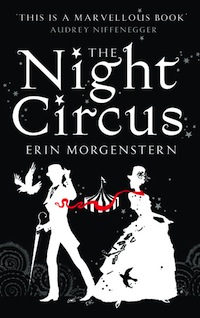 The Night Circus byErin Morgenstern
The circus arrives without warning. No announcements precede it. It is simply there, when yesterday it was not.
The black sign, painted in white letters that hangs upon the gates, reads:
Opens at Nightfall
Closes at Dawn
As the sun disappears beyond the horizon, all over the tents small lights begin to flicker, as though the entirety of the circus is covered in particularly bright fireflies. When the tents are all aglow, sparkling against the night sky, the sign appears.
Le Cirque des Rêves
The Circus of Dreams.
Now the circus is open.
Now you may enter.


 by
by 
Book Reviews : The Patchwork Marriage by Jane Green.
The Patchwork Marriage by Jane Green. 
(Penguin, 2012.)
Are love and devotion enough to create a happy family? When Andi married Ethan she not only got the man she loved but also the chance to be a mother, to his daughters Emily and Sophia. Unable to have a child of her own, Andi saw this opportunity at motherhood as a precious gift. If only it were that simple. For this is not a happy family, and the trouble lies with Emily. Her conflicted feelings towards her stepmother leave Andi feeling hated in her own home despite years of trying to reach out to her stepdaughter. And with each new drama, Emily drives Andi and Ethan further apart. Just as Andi starts to contemplate a life without Ethan and the girls, Emily comes home with some shocking news. News that will change their lives for ever.

 by
by Gillian Bagwell: Jane Lane and the Royal Miracle.
The defeat of Charles II by Cromwell’s forces at the Battle of Worcester on September 3, 1651 set off one of the most astonishing episodes in British history—Charles’s desperate six-week odyssey to reach safety in
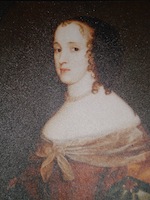
Portrait of Lady Jane which is hung at Mosely Old Hall.
France. It came to be known as the Royal Miracle because he narrowly eluded discovery and capture so many times.
One of the players in the astonishing tale was Jane Lane, an ordinary Staffordshire girl who risked her life to help the 21-year-old king escape. She had a pass allowing her and a manservant to travel the hundred miles to visit a friend near Bristol—a major port where the king might board a ship.
In a story that sounds like something out of fiction, Charles disguised himself as Jane’s servant, and she rode pillion (sitting side-saddle behind him while he rode astride) along roads traveled by cavalry patrols searching for him, through villages where the proclamation describing him and offering a reward for his capture was posted, and among hundreds of people who, if they had recognized him, had every reason to turn him in and none—but loyalty to the outlawed monarchy—to help him.
It was an improbable scheme. Charles was six feet two inches tall and very dark complexioned, not at all common looking for an Englishman of that time. But time after time he rode right under the noses of Roundhead soldiers without being recognized.
If he had been caught, he would certainly have been executed, and it is an open question whether the monarchy would have been restored as it eventually was after the death of Oliver Cromwell. What Jane did took great bravery, and she risked not only her life but the lives and lands of her family, as the fugitive king had been proclaimed a traitor, and anyone who helped him would be executed for treason. Continue reading

 by
by Book Corner : July’s Book
 Me Before You by JoJo Moyes
Lou Clark knows lots of things. She knows how many footsteps there are between the bus stop and home. She knows she likes working in The Buttered Bun tea shop and she knows she might not love her boyfriend Patrick. What Lou doesn’t know is she’s about to lose her job or that knowing what’s coming is what keeps her sane. Will Traynor knows his motorcycle accident took away his desire to live. He knows everything feels very small and rather joyless now and he knows exactly how he’s going to put a stop to that. What Will doesn’t know is that Lou is about to burst into his world in a riot of colour. And neither of them knows they’re going to change the other for all time.
To join the discussion, click here

 by
by Book Reviews : The Chaperone by Laura Moriarty.
The Chaperone by Laura Moriarty.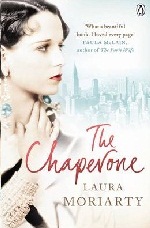
Penguin, 2012.
Review by Laura Parish.
About the book:
On a summer’s day in 1922 Cora Carlisle boards a train from Wichita, Kansas, to New York City, leaving behind a marriage that’s not as perfect as it seems and a past that she buried long ago. She is charged with the care of a stunning young girl with a jet-black fringe and eyes wild and wise beyond her fifteen years. This girl is hungry for stardom and Cora for something she doesn’t yet know. Cora will be many things in her lifetime – an orphan, a mother, a wife, a mistress – but in New York she is a chaperone and her life is about to change. It is here under the bright lights of Broadway, in a time when prohibition reigns and speakeasies with their forbidden whispers behind closed doors thrive, that Cora finds what she has been searching for. It is here, in a time when illicit thrills and daring glamour sizzle beneath the laws of propriety that her life truly begins. It is here that Cora and her charge, Louise Brooks, take their first steps towards their dreams.

 by
by Book Reviews : Vs Journal.
Vs. Journal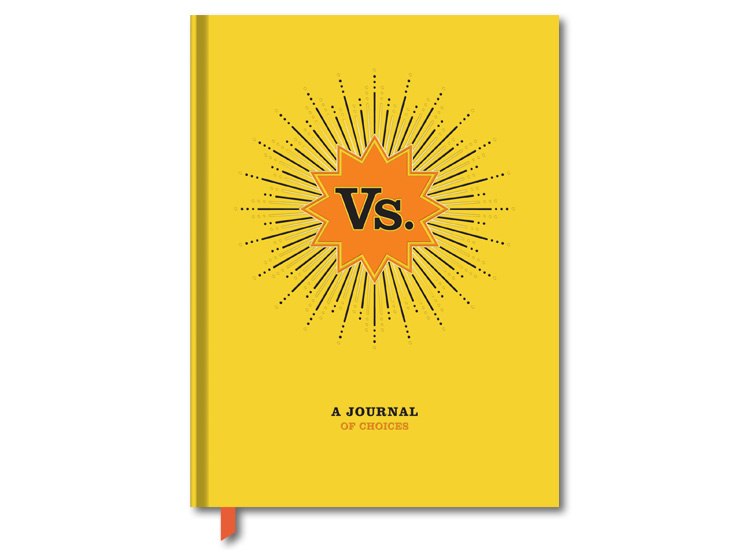
Published by Knock Knock, 2011 (via Abrams & Chronicle Books.)
Review by Laura Parish.
Life is full of decisions. The Vs. Journal provides over two hundred illustrated face-offs of psychological import, insightful interpretations and writing room for contemplation – including reason vs. emotion, pancakes vs. waffles or The Beatles vs. The Rolling Stones. Continue reading

 by
by Bob Harvey: My Writing Process.
The thriller genre has always been a personal favourite, whether by way of novels or films, since intrigue and deceit, sprinkled with a generous helping of twists and turns, hold my interest and are heaven made for  strong subtext. Because I believe it’s vital to stimulate the reader and maintain strong story momentum I tend to write in short chapters, which gives me an opportunity to break up the narrative and insert cliff-hangers in order to build tension and elements of mystery.
I think it’s important not to be didactic or preachy in any way, whatever points are relevant to the story with regard to human interaction, politics, greed, and so on. Whilst storytellers often feel it is part of their responsibility or even purpose to offer the benefit of personal insight and enlightenment to their readers, I tend to focus on creating a strong plot with interesting, credible, characters written in humorous vein. Snapback is a comedy-thriller created for entertainment value rather than anything of deeper significance, with a sting in the tail that involves invasion of privacy and our obsession with celebrity, these personal concerns being worked into the story without the need to bash the reader over the head with a metaphorical sledgehammer. Whatever serious situations occur within a story, the overall effect for me has to be a combination of mystery and fun, the prime objective being to sustain interest and be thought-provoking, but never to tread water, and always to entertain.
For this reason the hook, or set-up, is critical and after the first draft is completed I often rework the opening chapter, or write a completely new one, to ensure that the reader is swept immediately into the unfolding narrative. Tying up the plot lines is also essential. Readers should never be left to imagine their own endings (unless that is a specific intention) or be confused about any elements within the story. To that end, covering my tracks is part and parcel of the writing process. Continue reading

 by
by NK Chats To.... : Anna Stothard
Anna is the author of the novel, Isabel and Rocco. Her latest book, The Pink Hotel, was nominated for the Orange Prize for Fiction.
Your latest release, The Pink Hotel was nominated for the Orange Prize. Can you give us a plot summary?
The Pink Hotel is about a androgynous, violent, nameless seventeen-year-old London girl who flies to LA to attend the wake of her estranged mother. She steals a suitcase of letters, clothes and photographs from her mother’s bedroom at the top of a huge pink hotel on Venice Beach, and spends her summer travelling around LA returning love letters and photographs to the men who knew her mother.
Where do you find your inspiration?
The Pink Hotel was inspired by living in Los Angeles for two years. When I first arrived in the city at the end of a road trip around California and Nevada, I stayed in this giant art-deco pink hotel on Venice Beach. Outside my window were children on rollerblades and cartoonish men and doll-shaped women and an old man playing the piano on the sidewalk. Like the protagonist of The Pink Hotel, I meant to stay for a week but ended up living in an apartment on the cusp of Thai Town and Little Armenia in East Hollywood, for much longer than expected.

 by
by Book Corner : June’s Book
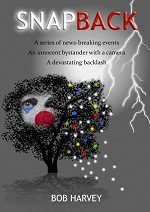 Snapback by Bob Harvey
A series of news-breaking events. An innocent bystander with a camera. A devastating backlash. Invading people’s privacy can have serious repercussions, as amateur photographer Matt Holmes is about to find out. Within a few days of acquiring a new camera, Matt becomes a key witness to a string of news-breaking events, including an attempted suicide by a well-known comedian from Richmond Bridge, a warehouse fire, a jewel robbery and a kidnap, his dramatic photographs suddenly given prominence in the national press. But Matt’s moment of fame takes a sinister turn as suspicions are aroused by his prolific scoops and his accidental intrusions make him a target for revenge.
As Matt looks back over his collection of photographs he makes discoveries that put everything into focus and he realises that his ultimate fate rests on the simple truth that nothing is ever quite what it seems.

 by
by NK Chats To.... : Phillipa Ashley
Phillipa’s first novel, Decent Exposure, won the RNA New Writers Award. Her other novels include, It Should Have Been Me, Just Say Yes and Wish You Were Here. Her latest novel, Fever Cure is about to be released.
What was your route to publication?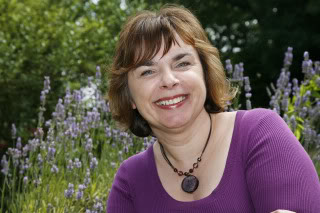
A short one! I was inspired to start writing fiction by a TV costume drama called North & South in 2004. I wrote a modern fanfic version and plunged straight into my first novel Decent Exposure which was published by Little Black Dress in 2006.
Your first novel won the RNA New Writers award – what made you choose the RNA and how valuable was the experience?
I was advised to join the RNA by just about every romantic fiction writer I met online. My critique from the New Writers Scheme was very insightful and the support I received ever since from many RNA members has been invaluable.

 by
by NK Chats To.... : Matt Lynn
Matt Lynn is the author of Shadow Force, Fire Force, Death Force and most recently, Ice Force. He’s also a Journalist and the CEO of Endeavour Press.
Describe your typical writing day.
Writing is a job like any other and you have to treat it like that. After helping get the kids ready for school, I start up my computer and start writing. It’s always easier first thing in the morning because your mind is fresh, and you have been thinking about it overnight. I read an interview with Wilbur Smith once where he said he left a sentence half-finished so it was easy to get started again the next day.
I set myself a target of 1,000 words a day. Once I’ve done that, I can start dealing with e-mail and all the other things that need to be done.
How do you approach planning before beginning a book?
I do an incredibly detailed plan. I did quite a bit of ghost-writing, and when you do that you have to have a plan to show the publisher and ‘author’. But it is a good discipline. It is much easier to throw stuff out of plan that isn’t good enough – and, as I think Beethoven pointed out, it’s the notes you don’t write that really count.

 by
by Book Reviews : Chocolate Shoes and Wedding Blues & The Magic of Christmas by Trisha Ashley.
Chocolate Shoes and Wedding Blues.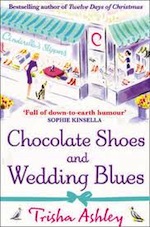
Trisha Ashley.
(Avon, May 2012.)
Tansy Poole inherits a run –down shoe shop in the village of Sticklepond – Cinderella’s Slippers is soon established, stocking the footwear to make any fairy-tale wedding come true.
If only Tansy’s personal life was as heavenly. With a fiancé trying to make her fit into a size eight wedding dress as well as the discovery of shocking family revelations, Tansy soon takes shelter in the shops success.
A link to her past also moves in next door, in the shape of ex fling, the actor Ivo Hawksley who is there to nurse his own broken heart.
Soon they discover that secrets shared begin to forge a special bond between them. Continue reading

 by
by Trisha Ashley – Process between the first draft and finished manuscript.
Trisha Ashley, the author of Chocolate Shoes and Wedding Blues, The Magic Of Christmas and Wedding Tiers takes over our blog and tells us about her process between the first draft and finished manuscript.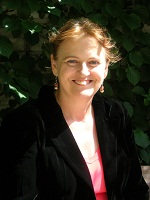
I write directly onto the computer, touch-typing, though I need to see my words in print on paper before the world I am writing about becomes real to me, so I print everything out. This can also be useful if your computer loses the chapter and you forgot to back up onto a memory stick or whatever.
My first drafts are usually somewhere between eighty and a hundred thousand words long and written in the stream-of-consciousness style made popular by James Joyce, since I just pour the words out onto the page and don’t always bother with the punctuation or typos. If I’m too tired to think creatively in the afternoon, though, I will often go back and tidy up the work I did in the morning. Continue reading

 by
by Book Corner : May’s Book
 The Chaperone by Laura Moriarty
On a summer’s day in 1922 Cora Carlisle boards a train from Wichita, Kansas, to New York City, leaving behind a marriage that’s not as perfect as it seems and a past that she buried long ago. She is charged with the care of a stunning young girl with a jet-black fringe and eyes wild and wise beyond her fifteen years. This girl is hungry for stardom and Cora for something she doesn’t yet know. Cora will be many things in her lifetime – an orphan, a mother, a wife, a mistress – but in New York she is a chaperone and her life is about to change. It is here under the bright lights of Broadway, in a time when prohibition reigns and speakeasies with their forbidden whispers behind closed doors thrive, that Cora finds what she has been searching for. It is here, in a time when illicit thrills and daring glamour sizzle beneath the laws of propriety that her life truly begins. It is here that Cora and her charge, Louise Brooks, take their first steps towards their dreams.

 by
by NK Chats To.... : Elle Amberley
Elle is the author of the novel Nowhere Left To Hide and her latest novel, Lost In Your Time has just been released in e-book format by Indio Press and is available via the amazon kindle store. Read our interview with Elle here.
Describe your typical writing day.
Oh, I’m a messy writer, and a very busy one with that. No day is the same. If however I’m in the middle of writing a first draft, the world could collapse around me and I’d still be typing away furiously. This is when my husband brings me little treats, as I forget to eat, along with cups of coffee.
When I’m revising and editing I need more peace and have to work in chunks, carefully crafted around my children.
Any other day will see me scribbling away on bits of paper, notebooks, anything. I’ve been known to stop the car so I could jot something down. Other times I might spend all night on my laptop.
How do you approach planning before beginning a book?
Ah, this is interesting because a while ago I would have told I don’t really plan. However I’ve realised that’s not so true. The planning takes place in my head, hence the very fast first draft, I only have to sit down and type. It’s like a film in my head.
That said, very often I get more ideas for other projects and file them until I can go back to them.

 by
by NK Chats To.... : Carmen Reid
Carmen is the author of the Annie Valentine series. Her other titles include The Jewels of Manhattan which was released in March. Carmen dropped by for a chat.
Tell us about your route to publication.
I’d been working as a news journalist for about six years and aged 28, on maternity leave, I decided it was time to start that novel I’d promised myself I would write. I found my agent, Darley Anderson, quite quickly and he gave me the encouragement needed to finish and edit and re-edit that first manuscript. Three in A Bed was published four years after I first set pen to paper – well… fingers to keyboard.
Your latest novel, The Jewels of Manhattan has recently been released. Can you tell us a little about it?
The Jewels was inspired by a line in a story written by my daughter: ‘Three girls decided to rob a jewellery shop.’ Why? I wondered, How? And: did they get away with it? My book about three Texan sisters living in Manhattan and getting drawn into a high stakes glamorous jewel theft grew from those urgent questions.
Where do you find inspiration?
Everywhere! From conversations with friends, from listening to other people’s experiences, from reading novels, newspapers, magazines… in art galleries, department stores (Annie Valentine was born on a shopping trip with an old friend). The more open you are to ideas, the more they seem to come at you. The other day I was walking the dog and I saw a bunch of mistletoe hanging from a bridge so that it dangled over our path. Now there is a story just waiting to be written!

 by
by Book Corner : April’s Book
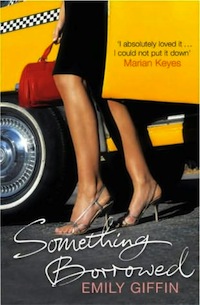 Something Borrowed by Emily Griffin
Rachel has always played by the rules and is the “Good Girl.”
She’s a hard working attorney at a Manhattan law firm and a diligent Maid of Honour to her best friend Darcy, who seems to live a charmed life. Since school, Rachel has been happy to sit on the sidelines and watch Darcy shine, quietly accepting her role.
That is until her thirtieth birthday, when Rachel confesses her feelings to Darcy’s fiancé and is both horrified and thrilled when he tells her that he feels the same way.
As the wedding gets nearer, events spiral out of control and Rachel finds that she must make a choice between right and wrong and that the lines between the two are sometimes blurry. She discovers that sometimes you have to risk everything to be true to yourself.

 by
by Book Reviews : Brilliance by Anthony McCarten.
Brilliance by Anthony McCarten.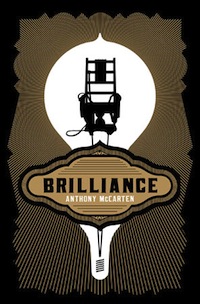
(Alma Books, 21th March 2012.)
Short of money, the inventor Thomas Edison is captivated by the charismatic figure of J.P. Morgan, the “world’s banker”. Accepting Morgan’s glittering offer of almost unlimited cash in return for helping the man change the way the world does business, Edison sees himself descend from being the godlike inventor of electric light to being complicit in the invention of the electric chair. Ever more enmeshed in Morgan’s personal life, he becomes infatuated by a world of privilege and power, where duty and desire, faith and immorality are thrown into conflict, ultimately threatening his own spiritual and creative survival. Continue reading

 by
by Book Reviews : 642 Things to Draw and 642 Things to Write About.
642 Things to Draw.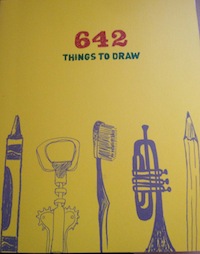
(Chronicle Books, Oct, 2010. 978-0811876445. Available from Amazon. Currently £8.15.)
‘This is a simple and addictive sketchbook with content. It includes many hip and entertaining things to draw including a bike, a waffle and RUN DMC.’ Continue reading

 by
by NK Chats To.... : Morgan St James
Morgan St. James is the author of Writers’ Tricks of The Trade: 39 Things You Need To Know About The ABC’s Of Writing Fiction and the Editor of the monthly Writers’ Tricks of The Trade newsletter/magazine.
What was your route to publication?
My writing career was launched when Designer’s West Magazine, a slick interior design magazine of the era, approached me and my partner during the time we owned an interior design studio in Southern California. The editor wanted us to write an article for them, and instead of a typical how-to technical article, we submitted a tongue-in-cheek spoof on a noir mystery. It detailed everything in a fun way and the editor loved it. More important, I discovered that I loved writing. The article was so well received, the magazine continued to publish many more of my articles. From there, I expanded to diverse subjects like human interest, dementia, travel and barter, and finally to fiction with the first Silver Sisters Mystery, A Corpse in the Soup.
Your latest book, Writers tricks of the trade: 39 things you need to know about the ABCs of writing fiction. Can you tell us about it and how it came about?
After writing over 200 articles about writing and “Spotlighting” people in the publishing industry for two editions of the online newspaper examiner.com, and constantly being asked if I had a book about writing when I gave talks or workshops, I realized that I had material for one or more great handbooks for writers at any stage in their careers. The book is written in easy-to-read prose like my columns, spiced with humor and examples and covers tips and techniques for 39 important things fiction writers need to know. A bibliography at the back recommends in-depth books about single topics touched upon in the various chapters.

 by
by Book Corner : March’s Book
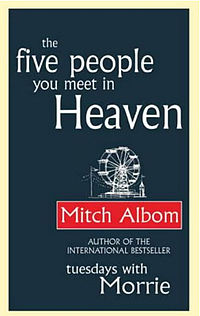 The Five People You Meet In Heaven by Mitch Albom
Eddie, a war veteran, thinks he has lived an uninspired life. When an accident kills him on his 83rd birthday, he wakes in the afterlife to find that Heaven is not a destination but a place where your life is explained by five people, some you knew and some who may be strangers. One by one, Eddie’s five people revisit their connections and the mystery of Eddie’s ‘meaningless’ life and reveal the haunting secret behind the question, ‘why was I here?’

 by
by Book Reviews : Breakfast At Darcy’s by Ali McNamara.
Breakfast At Darcy’s by Ali McNamara. 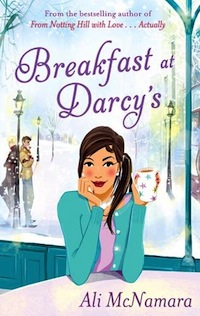
Sphere, 2011.
About the book:
When Darcy McCall loses her aunt, she doesn’t expect to inherit a small island. Tara is located off the west coat of Ireland and hasn’t been inhabited for years, but according to her aunt’s will, Darcy must stay there for twelve months before she can fully inherit. She will also need to persuade a village full of people to settle there with her.
Darcy will have to leave her independent life behind and swop heels for wellies, a magazine job for dealing with plumbing and pubs. Also, Darcy meets Connor and grumpy Dermot. Who will make her feel totally at home?

 by
by NK Chats To.... : Heath Samples
Heath Samples, along with Claire Hooper, is the author of the book, Princess Diana: The Day She Didn’t Die. Novel Kicks had a chat with Heath and asked him about his route to publication and his tips for new writers.
Tell us about your route to publication.
It was more of a maze than a route! The first part was researching other authors’ routes to understand their experiences. Second part was to contact some agents and publishers through the Writers & Artists Yearbook to see if there was anybody with the courage to take it on but the publishing world is not the place it used to be.
Finally, I spoke with New York Times Bestselling Author GP Taylor and he introduced me to Grosvenor House Publishing.
Your debut novel is called Princess Diana – The Day She Didn’t Die. Diana is still a topical and controversial subject. Can you tell us about the book and how it came about?
The book came about on the New Years Eve of 1999. I am a big fan of the Royal Family and I started to think about what Diana would have been doing that night, on the eve of a new millennium. The next day I sat down and laid out the chapters of how her life may have been, had she lived. A classic “What If” novel. It sat there for a decade before I had the time to write it.
Where do you find inspiration?
Inspiration is one ingredient I am not short of. I am a pilot, commercial boat Skipper, scuba diver, skier, canoeist and those are the only ones I can remember! However, this does not just inspire me. Some of the most mundane experiences in life give me the best influences to work with.

 by
by Book Reviews : I’ve Got Your Number by Sophie Kinsella.
I’ve Got Your Number by Sophie Kinsella. 
(Bantam Press, 16th February 2012.)
A couple of glasses of champagne at a charity event means Poppy loses the one thing she wasn’t meant to lose – an antique engagement ring that’s been in Magnus’s family for three generations. Also, in the panic that followed, Poppy also loses her mobile phone.
Disconnected from everyone who may find her ring, Poppy feels as if her life is about to go into meltdown. That is, until she finds an abandoned mobile phone in a bin. Finders Keepers right? The owner, businessman Sam Roxton doesn’t’ think so and he doesn’t appreciate Poppy’s suggestion to share the phone and her prying into his personal affairs.
As Poppy tries to juggle her wedding plans, Sam’s e-mails and hiding her hand from Magnus and her future in-laws, she wonders if life could get any more complicated. Continue reading

 by
by Valentine’s Day with Marian Keyes.
Saved by Cake: Over 80 ways to Bake yourself Happy by Marian Keyes. 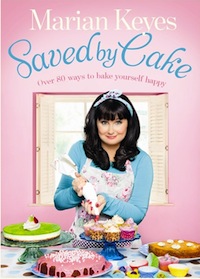
(Michael Joseph, 2012.)
Marian Keyes’ new baking book Saved by Cake: Over 80 Ways to Bake yourself Happy is published on 16th February.
With chapters on cupcakes, cheesecakes, meringues and macaroons, chocolate cakes, fruit cakes and favourite classics, Marian’s recipes are for beginner bakers and for anyone who just loves to bake, offering hints and tips to help along the way. Never patronizing, always honest and witty, accessible and full of fun, the bakes and cakes that she serves up are all laid out in her inimitable Marian style. This is a baking book like no other and will put a smile on your face and make you happy.
For more information on Marian, visit her website.
Novel Kicks had a sneak preview of one of Marian’s yummy recipes. Over to you Marian… Continue reading

 by
by Book Corner : February’s Book
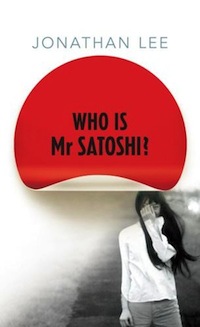 Who is Mr Satoshi by Jonathan Lee
On the day his mother dies, reclusive photographer Rob Fossick – forty-one and already in the twilight of his career – finds among her belongings an unexplained package addressed to a ‘Mr Satoshi.’
So begins a quest that will propel Rob, anxious and unprepared, into the urban maelstrom of Tokyo. With the help of a colourful group of new acquaintances – a vigilant octogenarian; a beautiful ‘love hotel’ receptionist; an ex-sumo wrestler obsessed with Dolly Parton – the scene seems set for him to unravel the secrets surrounding Mr Satoshi’s identity. But until he has faced his own demons, and begun to reconnect with the world around him, the answers Rob craves will remain tantalisingly beyond his reach.

 by
by Blog : World Book Night – April 2012.
World Book Night is taking place on the 23rd April 2012. Hurry, closing date for applications is 31st January 2012. 
Members of the public are invited to apply by 31st January 2012 to be one of 20,000 World Book Night ‘Givers’ by choosing their favourite book from a list of 25 carefully selected titles: The list was chosen by a panel of industry experts, who were guided by the results of an online ballot inviting the public to nominate their favourite books. The World Book Night editions have been specially printed and are identifiable by their branded covers.
The second official World Book Night takes place on the 23rd April and will see 1 million books given out for free across the UK and Ireland. The World Book Night ‘Givers’ will go forth on the night to hand out 500,000 copies of the total amount and in a new departure for 2012, the remaining 500,000 copies of the books will be distributed directly to prisons, hospitals and disadvantaged communities. There will also be events, giveaways and other fun activities for adults and children of all ages to get involved with. Bookshops, libraries and other venues across the UK and Ireland will be setting up special events to celebrate, so log on to the World Book Night website to see what’s happening in your area!
Find out more about World Book Night here: http://www.worldbooknight.org

 by
by NK Chats To.... : Sophie Duffy
Sophie is a novelist and short story writer. Prior to winning the 2011 Luke Bitmead Bursary, Sophie was also the winner of the Yeovil Literary Prize. Novel Kicks was so pleased to catch up with Sophie to find out about her writing day and who she would invite to dinner..
Tell us about your route to publication.
It’s been a very long route, starting about ten years ago when my children were small and I decided to do an evening class. I chose creative writing and struck gold with my teacher, Jan Henley who encouraged me from the first lesson. I went on to do an MA in Creative Writing by distance learning at Lancaster which really pushed me and helped me find that voice. My breakthrough moment was winning the Yeovil Literary Prize in 2006 with the opening of The Generation Game. I got an agent and finished the novel. However the novel wasn’t sold and so I wrote another which was runner up in the Harry Bowling Prize. I decided to go it alone and rewrote The Generation Game, entered it for the Luke Bitmead Bursary and it won in January this year. It was amazing to finally see my novel published this summer. I have just signed with a new agent and we are very excited about working together on This Holey Life.
Your latest novel, The Generation Game has recently been released. Can you tell us a little about it?
It’s set largely between in a sweet shop in Torquay and spans four decades from 1965 to 2005. Philippa is 40 and gives birth to a daughter. She has had a quirky and at times traumatic life and is worried she will be a bad mother. So she tells her baby the story of her life to help make sense of it. The novel should particularly appeal to those who grew up in that period as the story is set against a backdrop of national events like the Silver Jubilee and the miners’ strike, with references to popular culture, especially Saturday night telly.

 by
by NK Chats To.... : Naina Gupta
Naina Gupta is the author of The Bollywood Break-up Agency.
Your debut novel is called The Bollywood Breakup Agency. Can you tell us a little about it?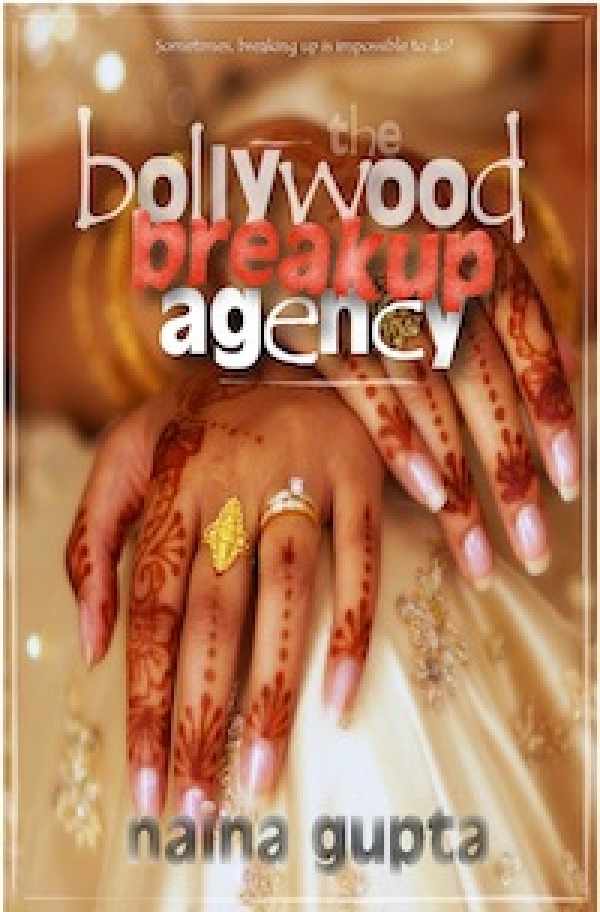
Well the Bollywood Breakup Agency is about Neela, who sets up a breakup service for those who are having second thoughts about the people they have chosen as part of an arranged marriage.
She starts up her business after her parents cut off her money tap because she refuses to marry any of the potential suitors that they keep inviting to the house.
Where do you find inspiration?
I am at that time of life where everyone I know is getting married, about to get married, or thinking about getting married. I have learned a lot about the arranged marriage process over the last three years and the kinds of people my friends and family were meeting, so I thought, there is a book in here somewhere.
Describe your typical writing day.
When I write, it is usually behind closed doors, when everyone has gone to work or gone to sleep. I wrote this book in secret because I was pretty sure my friends and family wouldn’t appreciate someone writing about arranged marriages in this way. I don’t have a typical day, I write whenever there is the opportunity to do so.

 by
by Book Corner : January’s Book
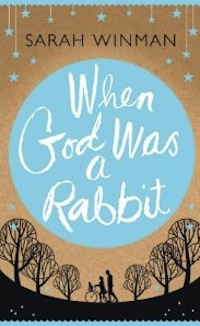 When God was a Rabbit by Sarah Winman
For Elly and her brother Joe, one earth-shattering event threatens to break their bond forever.
This is a book about a brother and a sister. It’s a book about growing up, friendship and families, triumph and tragedy and everything in between. More than anything, it’s a book about love in all its forms.

 by
by NK Chats To.... : Heather Peace
Heather Peace has worked in theatre, commissioning and directing new plays before joining the BBC Script Unit in 1989, later script editing productions in Drama and Comedy. Other career credits include being the Head of Comedy Development at Witzend Productions. She is now a freelance editor and writer. Her novel, All To Play For was released in October 2011.
Describe your typical writing day?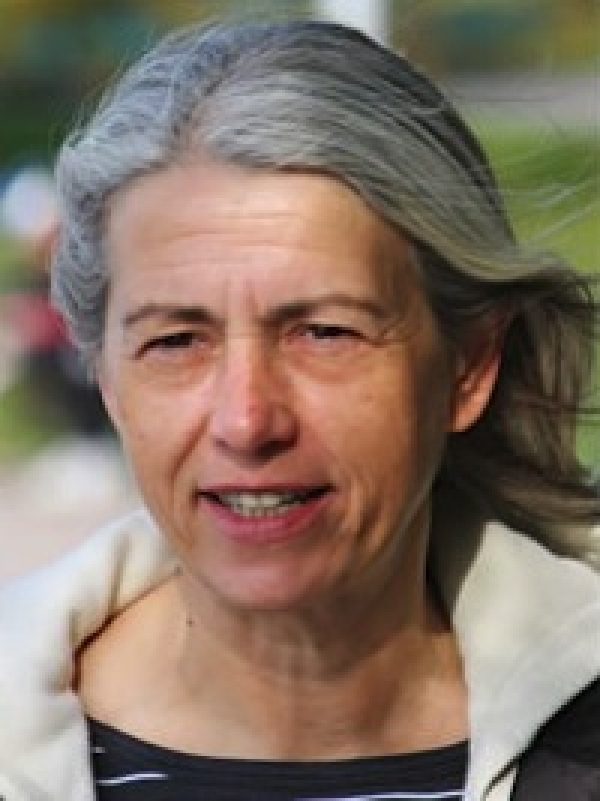
Breakfast, and meditation for up to half an hour. That puts me in the right frame of mind. Then straight to it without checking emails until the afternoon. Later on I’ll read over what I’ve written and fiddle with it, but I won’t usually write any more that day.
Your latest novel, All To Play For was released in October 2011. Tell us about it and how it came about.
It’s a novel about working in television between 1985-2000, which I did more or less, mainly at the BBC. It’s entirely fictitious but true in spirit and in some of the detail. I started writing a story about one of the characters after I left, and I’ve been re-working it ever since, on and off. I don’t know whether to call it a comic novel – it’s funny and but serious too.
Where do you find inspiration?
That’s the easy part, it’s all around. People and the weird way they behave.

 by
by Book Reviews : All To Play For by Heather Peace.
All To Play For by Heather Peace.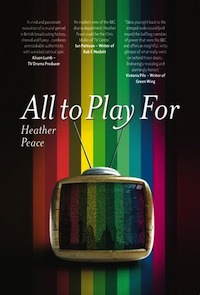
(Legend Press, October 2011.)
Rhiannon has dreams of working at the world’s largest broadcaster: the BBC. This is the story of Rhiannon and four other ambitious people who are all keen to make it in the world of Television – set in the background of Television Centre. Continue reading

 by
by Book Reviews : Villa Pacifica by Kapka Kassabova.
Villa Pacifica by Kapka Kassabova.
Alma Books, 2011.
Review by Laura Parish.
When Ute (a travel writer) and her husband Jerry arrive in a remote area of South America, they visit Villa Pacifica (a recently established Eco-retreat.)
The resort is run by a group of interesting and mysterious people and is the home to animals that have been rescued from traffickers.
It’s a place where nothing is as it seems and when a storm arrives in the region, travellers and locals are left to fend for themselves. It’s not long before madness descends and everyone begins to question their own sanity. Continue reading

 by
by Book Corner : December’s Book
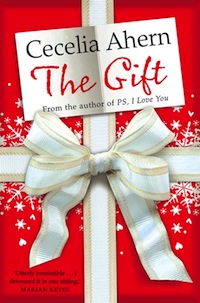 The Gift by Cecelia Ahern
Lou Suffern wishes he could be in two places at once. His constant battle with the clock is a sensitive issue with his wife and family.
Gabe is the homeless man who sits outside Lou’s office. When Lou invites Gabe into the building and into his life, Lou’s world is changed beyond all measure.
A Christmas story that speaks to all of us about the value of time and what is truly important in life.

 by
by NK Chats To.... : Talli Roland
Talli Roland is the author of The Hating Game, Watching Willow Watts (the paperback is out now) and her latest, Build a Man is out now in e-book format. I was very excited to catch up with Talli, to ask her about her route to publication and who she would have to dinner…
What was your route to publication?
I’ve always enjoyed writing – it was the reason I trained as a journalist and I’d thought about trying to get a novel published, but it wasn’t until my thirties that I seriously started writing fiction. Over the next couple years, I wrote four novels and learnt a lot! When the opportunity came to publish non-fiction travel guides, I jumped. Even though non-fiction wasn’t really what I wanted to do, I knew it could teach me a lot about the publishing process and maybe even help me get a foot in the door for my fiction. And it did! Prospera Publishing -– the same company that publishes my non-fiction -– published my debut novel ‘The Hating Game’ and has also published my next novel, ‘Watching Willow Watts’, out now.
Describe your typical writing day?
Coffee. Writing. Wine! I’m at my desk around 7:30 a.m. or 8, because if I don’t sit down early, I can procrastinate for hours. I write until lunch, take a break, then spend the afternoon answering emails and doing social media.

 by
by Talli Roland – To Plot or Not to Plot?
To Plot… Or Not?
Plotting has always been a source of great debate amongst writers. Should you, or should you not? Many authors dive right in to their manuscripts, content to ‘write into the mist’. Personally, I am not a ‘writing into the mist’ kinda gal – I’m always afraid I may never emerge! I need something to drive toward, and I have to know where my character will end up, when everything is said and done.
But how much plotting is too much? After all, you don’t want to stifle any creativity that might occur. New characters could pop their heads in, just begging to be written. Events might not always happen according to plan – in life and in fiction.
I always start with a few key questions. What does my character want? Who or what will stop her from getting it? And by the end, how will she have grown and changed? In Watching Willow Watts, my most recent novel, Willow begins her journey as a person who’s keen to keep everyone happy. By the end of the book, she’s learned that her own happiness is important, too, and she needn’t lose herself to please others. Continue reading

 by
by NK Chats To.... : Lucinda Riley
Lucinda is the author of Hothouse Flower and her latest, The Girl On The Cliff was released in October 2011. Lucinda very kindly answered some writing related questions including what her route to publication was like and the best thing about being a writer.
What was your route to publication?
I wrote eight books before under a different name, had too many kids to continue writing. When the ‘baby’ had started school, I felt the ‘urge’ again. I showed no-one until I’d finished, gave it to my old agent under my ‘real’ name and prayed. Luckily, Penguin bought it very quickly.
Describe your typical writing day.
I strap on my trusty, ancient dictaphone and vomit into it until I’m so exhausted I’m falling over.

 by
by NK Chats To.... : Sally Gardner
Sally Gardner is an award-winning novelist who’s sold over 1.5 million books in the UK. Her fourth novel, The Double Shadow is realised on 3rd November 2011. Novel Kicks had a chat with Sally and asked her about her typical writing day and the novel she wished she’d written.
What was your route to publication?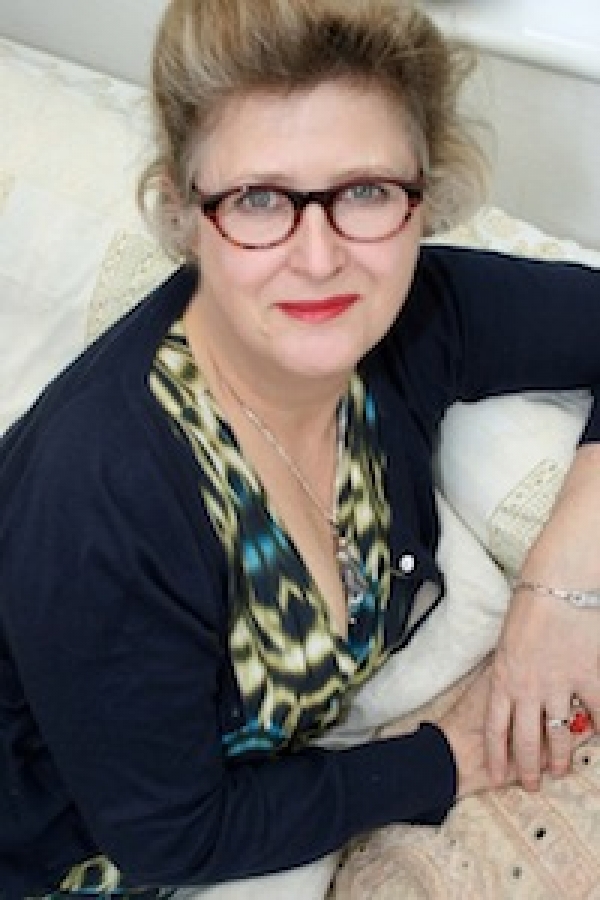
I started writing illustrated books for 5 to 8 year olds and I have to thank my then editor at Orion, Judith Elliot, for seeing I had potential. I had worked in the theatre before where my dyslexia had proved to be a problem, and I was quite convinced when I wrote my first book for small children that again it would be seen as a huge hurdle. It was a complete surprise to me to find that it was no bar to being writer. In fact, Judith believed it’s what gave me my voice.
Describe your typical writing day.
I usually work in the mornings in my dressing-gown in the hope that I can hold back the day – I’m always shocked to discover that it’s 12.30pm. In the afternoon I find myself to be slightly sleepy so I tend to go for a walk and then I usually work until about 1am.

 by
by Book Corner : November’s Book
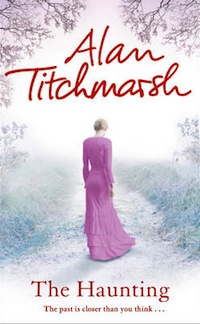 The Haunting by Alan Titchmarsh
How can the mysterious disappearance of Anne Flint in 1816 and the drowning of a young girl in a chalk stream so long ago possibly affect the life of schoolteacher Harry Flint some two centuries later?
Having left his job and a failed marriage behind him, Harry begins to research his ancestors. The deeper he digs, the more he realises that the past is closer than he had ever imagined.
The Haunting is a story of love and betrayal, intrigue and murder. Where people are not what they seem, and the past is no more predictable than the future….

 by
by NK Chats To.... : Pauline Barclay
Pauline Barclay is the author of three novels, Magnolia House, Satchfield Hall and her latest Sometimes it Happens.
Novel Kicks were very happy to be able to catch up with Pauline and see what was happening since we last spoke to her.
You’ve recently got involved with loveahappyending.com. Can you tell us what the website does, what it means to you and how important you think Associate Readers are?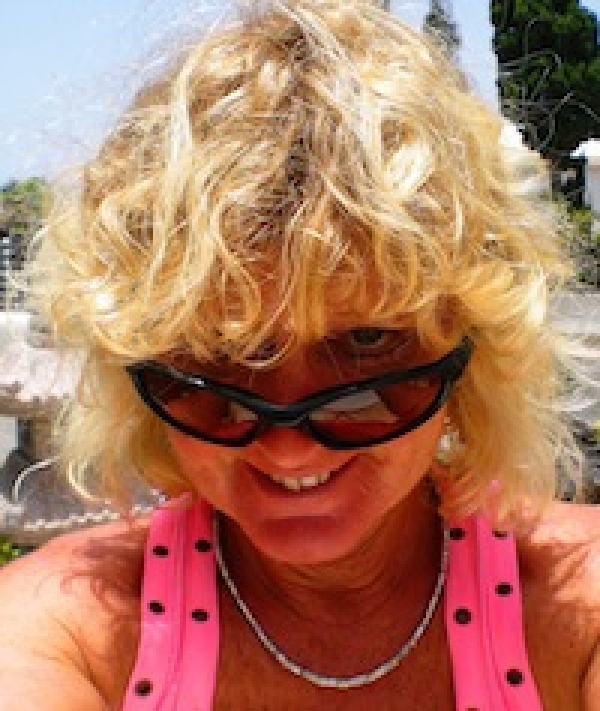
I am one of just 30 authors invited to show case their writing. Loveahappyending.com is a new and exciting web site that concentrates on two main areas: reader power and helping new authors to the market place. It is through the activities and involvement of each member and particularly the Associate Readers that a wider audience is getting to know about all of the authors. Being part of group creates more opportunities to spread the word rather just a single voice. Since being invited to join, I have seen more reviews on my books and *blushing* several more 5 star ratings.
Loveahappyending.com is international there are Associate Readers and authors from the UK, USA, Canada and even me from the Canary Isles! If anyone is interested in becoming an Associate Reader, please visit http://www.loveahappyending.com There is so much going on. In fact, I am the editor for the online chatty magazine The Fizz and also Head of Communications. Everyone in the group gets involved giving some of their time to helping other members.
Where do you find your inspiration?
Anywhere and everywhere! I find inspiration and ideas from sometimes just a word or a phrase, listening to music, reading, watching people, talking to people, out walking the dog. Just being aware of others. Life is so interesting and fascinating.

 by
by Book Corner : October’s Book
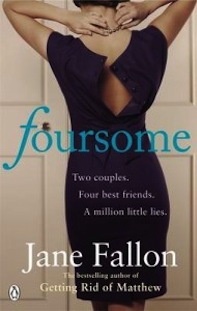 Foursome by Jane Fallon
Rebecca, Daniel, Alex and Isabel have been best friends since university. Rebecca married Daniel, Alex married Isabel and, for twenty years, they have been inseparable. But all that is about to change. When Alex walks out on Isabel, Rebecca thinks things can’t get any worse. But then she finds out the reason why and she’s left harbouring a secret she’d rather forget. And there’s more upheaval to come in Rebecca’s life as her emaciated, neurotic, self-obsessed colleague, Lorna – her arch nemesis at work – suddenly becomes a regular feature in her social life.
Rebecca’s once-happy foursome is now a distant memory and with hearts broken and friendships fractured, it seems that change is never a good thing. Or is it?

 by
by Jane Fallon Bloggers Event – The Club at the Ivy, Monday 26th September 2011.
What do you do when you get invited to meet Jane Fallon at the Ivy? You get yourself down there as quickly as possible.
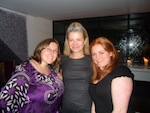
Jane, Helen and Laura
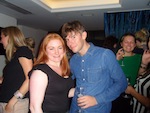
Joe from Penguin and Helen.
Novel Kicks got to go to the Club at the Ivy to meet the lovely Jane Fallon, author of Getting Rid of Matthew, Got You Back, Foursome and her latest, The Ugly Sister which is due out on 29th September 2011. Thank you to the guys and girls at Penguin for a wonderful night.
Helen and I arrived and we were immediately taken aback by the Ivy. I’d never been to anywhere like that before and I was so excited to go in and have a nosy around (and not actually be thrown out again.)

 by
by Book Reviews : Notes on a Scandal by Zoe Heller.
Notes on a Scandal by Zoe Heller.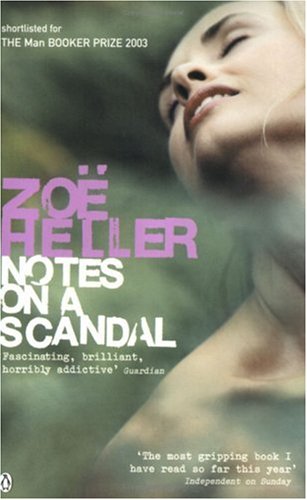
Penguin (2004)
Review by Laura Parish.
From the first day that the beguiling Sheba Hart joins the staff of St George’s, history teacher Barbara Covett is convinced that she’s found a kindred spirit.
Barbara’s loyalty to her new friend is passionate and unstinting and when Sheba is discovered to be having an illicit affair with one of her young pupils, Barbara quickly elects herself as Sheba’s chief defender. But all is not as it first seems in this dark story and, as Sheba will soon discover, a friend can be as treacherous as any lover. Continue reading

 by
by Book Reviews : Love, Lies & Promises by Joanna Lambert.
Love Lies and Promises by Joanna Lambert.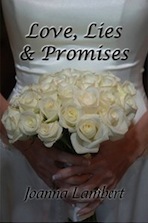
(Authors online, 2010.)
Review by Laura Parish.
Love Lies and Promises follows on from where When Tomorrow Comes concludes.
When her romance with Matt Benedict doesn’t go as planned, Ella and Matt aren’t reunited until 1969. Things seem to be going well until Ella finds out he’s to marry someone else. Trying to put the heartache Matt causes behind her, Ella marries rich bad boy, Andy Macayne. Thinking she has it all, it’s not long before Ella’s past comes crashing back. Continue reading

 by
by Book Reviews : Grace Williams Says It Loud by Emma Henderson.
Grace Williams Says it Loud by Emma Henderson. 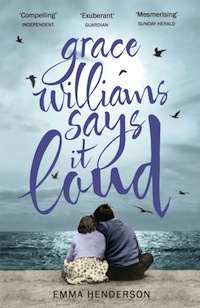
(Sceptre, March 2011.)
Review by Laura Parish.
Grace Williams Says It Loud tells the story of Grace, who, when the doctors tell her parents that nothing else can be done for her, is sent to The Briar Mental Institute. Seen by the doctors as nothing more than an object, on her first day, at aged eleven, Grace meets Daniel who is a fellow patient. Daniel befriends Grace. He sees beyond the disabilities. He sees someone to be friends with, to share secrets with and someone to love.

 by
by Book Corner : September’s Book
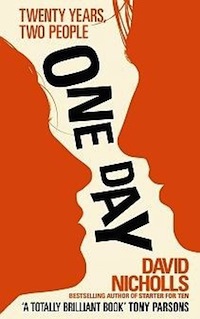 One Day by David Nicholls
15th July 1988. Emma and Dexter meet on the night of their graduation. Tomorrow they must go their separate ways. So where will they be on day next year? And the year after that? And every year that follows?

 by
by NK Chats To.... : Jaishree Misra
Jaishree Misra is the author of Ancient Promises, Secrets and Lies, Secrets and Sins and her most recent novel, A Scandalous Secret. Novel Kicks had a chat with Jaishree and asked her about her route to publication and who’d she’d have to dinner…
What was your route to publication?

I’d had to give up my radio journalist’s job at the BBC because of childcare commitments (my daughter has special needs) and I found myself sitting at home at a loose end, feeling terribly downcast. We’d bought a new computer at the time and I’d promised my husband I’d write four pages of text so he could teach me Word functions. It sounds a bit crazy but, once I started writing, I couldn’t stop and, very soon, my planned four pages had grown into a 300 page memoir! That went on to become my first novel, ‘Ancient Promises’ (and, yes, by then I had learnt to use Word to do all that nifty spell-check stuff). I was one of those lucky few who didn’t have to search too hard for an agent, even though I did get my share of rejections at first. It seemed to make sense to look for an agent who had already had success with a book set in India so I located David Godwin, Arundhati Roy’s agent, and sent three sample chapters to him. You can imagine how chuffed I was to get a call from him a few weeks later asking to see the rest.
Where do you find inspiration for your novels?
From all over the place – chance conversations, overheard remarks, a story in the newspaper. The latter was the genesis of my most recent book, actually – ‘A Scandalous Secret’ – which sort of emerged from a picture I once saw in the newspapers of Claire Short with the long-lost son she’d given away at birth. Sometimes ideas implant themselves and quietly germinate away and then quite suddenly spring to life when you’re least expecting it. Essentially a novelist has to be deeply interested in life and in people and enjoy a bit of amateur psychology to figure out what makes them do the things they do.

 by
by Book Corner : August’s Book
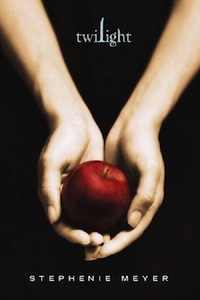 Twilight by Stephenie Meyer
Isabella Swan expects her new life in Forks to be as dull as the town itself. But her new classmates don’t seem to mind her awkward manner and low expectations. They seem to like her – with the expectation, that is, of Edward Cullen. The problem is that Bella finds herself fascinated by him. What she doesn’t realise is that the closer she gets, the more she is at risk. And it might be too late to turn back.

 by
by Blog : A book for a good cause.
The Cat Profiles by Chris Wade and Linzi Napier. 
Foreword by Jethro Tull’s Ian Anderson.
(Wisdom Twins Books, 2011.)
Are you a cat lover? This is a cause we’d like to support here at Novel Kicks. Continue reading

 by
by Book Reviews : Meet Me At The Cupcake Cafe by Jenny Colgan.
Meet Me At The Cupcake Cafe by Jenny Colgan.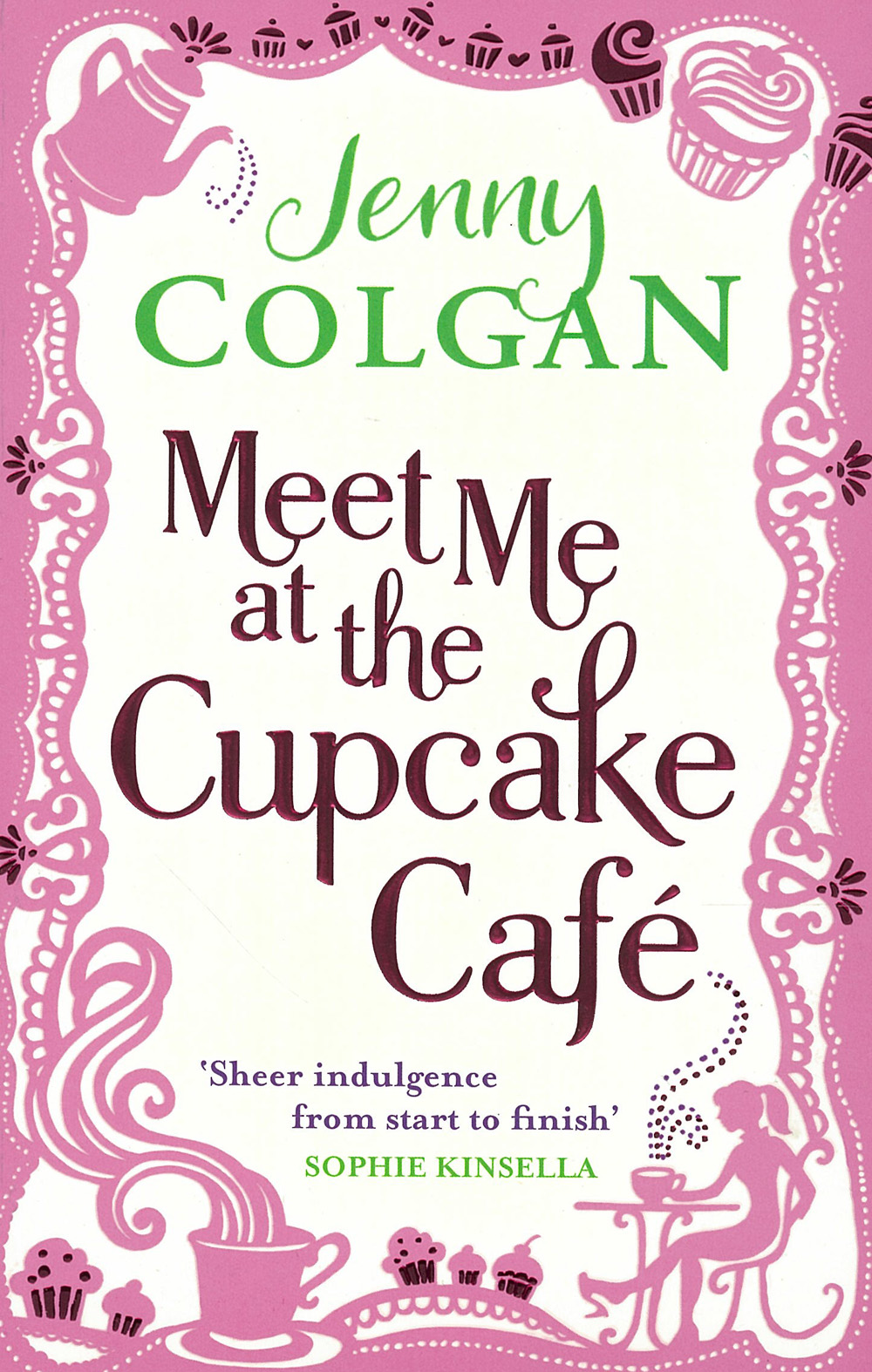
Sphere, April 2011.
Review by Laura Parish.
Izzy can bake. When she loses her job and her boyfriend, she decides to pursue her dream and open a bakery. With her best friend and bank manager behind her she whole heartedly jumps into her new venture but not without facing challenges along the way. Continue reading

 by
by NK Chats To.... : Chris Wade
Chris Wade is the author of the surreal love story ‘Cutey and The Sofaguard.’ He also runs Wisdom Twins Books (his publishing house based in Leeds.) Novel Kicks were very excited to be having a chat with Chris about his typical writing day and who’d he’d invite to dinner…
What was your route to publication?
I never even considered sending my book to a “proper” publishing house. My instinct was to release it myself via the net. My first one published was a book on the actor Malcolm McDowell.
You’re also head of Wisdom Twins Books, which is based in Leeds. Can you briefly explain the history of Wisdom Twins Books?
I started it in about October 2009. Just before that I had the Malcolm McDowell book out via a publishing service which was instantly, as I learned, a mistake. But after that I had the permission to write this book about the ex Stranglers’ singer Hugh Cornwell and his latest album. It was really exciting putting it together, interviewing the band and producer and getting exclusive unseen pictures for it. I was a big fan at the time. But I couldn’t even think which publisher could get it out and printed in a month, because his tour was coming up in November and they wanted to sell it at his concerts. So when I had finished it in late October I started up the site “Wisdom Twins Books.” I got the name from two characters in a book of mine called Cutey and the Sofaguard. From then, it just made sense to release things via that site. At first it was the free magazine Hound Dawg, then the audiobook read by Rik Mayall of Cutey and the Sofaguard. So for me starting it was a great thing and it all was really exciting and satisfying from the beginning.

 by
by Book Reviews : Lessons in Laughing Out Loud by Rowan Coleman.
Lessons in Laughing Out Loud by Rowan Coleman.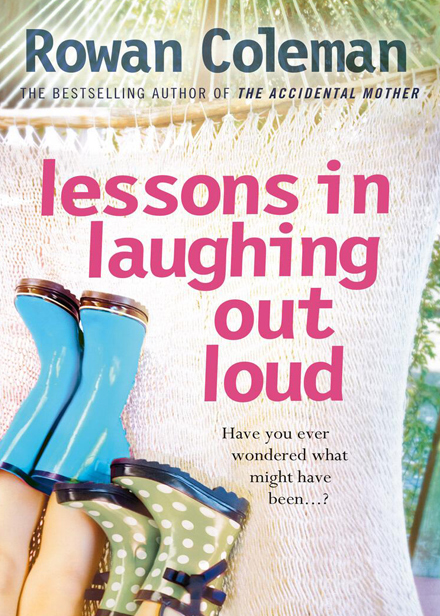
(Arrow, July 2011.)
Review by Laura Parish.
Willow and Holly are identical twins and are everything to each other. They are alike in every way but one. Willow harbours a secret, one that makes her very afraid. It’s a secret that binds the sisters together but has meant that their adult lives have taken very different paths.
Willow feels that large parts of herself are missing – qualities she knows exist because she sees them in Holly.
One event, one moment in time has separated Willow and Holly and when it’s time to face her past, can Willow learn how to laugh out loud once more. Continue reading

 by
by Book Corner : July’s Book
 e. by Matt Beaumont
e is a tale of everyday sleaze, dishonesty and incompetence in Adland. It tells the story of the Miller Shanks agency’s desperate chase for the Coca-Cola account and it tells it entirely in emails.

 by
by NK Chats To.... : Isabel Ashdown
Isabel’s debut novel, Glasshopper (Myriad Editions 2009) helped win her the Mail on Sunday Novel Competition and was then published to critical acclaim. Her second novel, Hurry Up and Wait (Myriad Editions, 2011) has just been published and is available to buy now. Novel Kicks was very happy to have a chat with Isabel about all things writing…
What was your route to publication?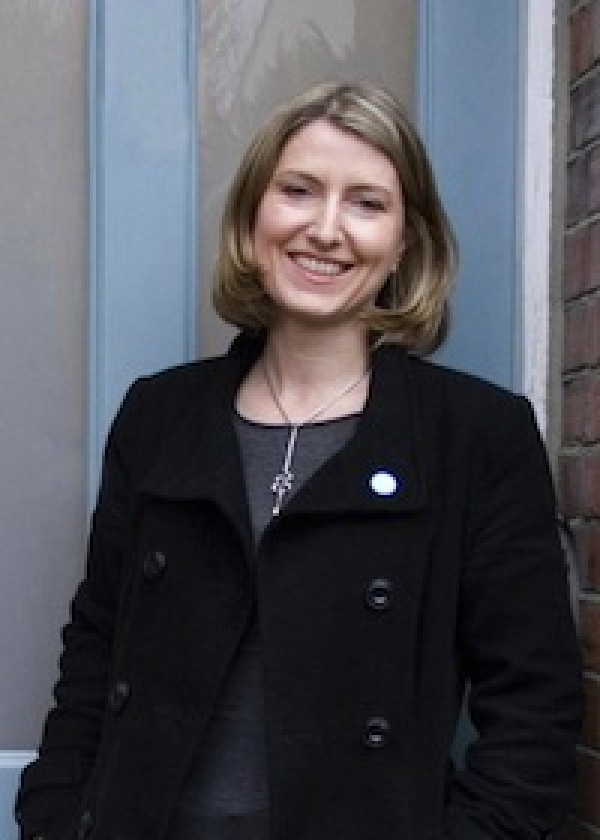
In my mid thirties I gave up my career to study English & Creative Writing at university. In the five years that followed, I worked on my first novel, and at the advice of my tutors, entered lots of writing competitions in the hope of publication. My first prize was for a shortlisted poem in the Bridport Prize, and after a couple more small awards, my big break came when an extract from Glasshopper won the Mail on Sunday Novel Competition in 2008. My novel was quickly picked up by an agent, Adrian Weston, and went on to be published by Myriad Editions in September 2009.
Where do you find inspiration for your novels?
So far, the stories have always started with a clear character and the idea of one specific drama. For example, in Glasshopper, Jake came along pretty fully formed, and the initial drama was the idea of ambiguous parentage, sparked by watching some terrible reality show on TV. This didn’t remain the vital point of drama in the story, but it was the seed that grew. In Hurry Up and Wait, the starting point was the idea of vulnerability, and it developed into a story about the treachery of friends and inappropriate relationships.
For someone new to your novels, can you briefly describe your writing style.
That’s a hard one! I like to write in real, accessible language – but about the complex emotions in everyday situations. I’m fascinated by family and by the cultural world around us, which is probably why my first two novels are set in the 1980s. It was a decade of enormous social change, impacting on the family and the individual – which makes it ripe for storytelling. I love Maggie O’Farrell’s writing for that reason – she writes about the extraordinary within the ordinary.

 by
by Book Reviews : Sing You Home by Jodi Picoult.
Sing You Home by Jodi Picoult.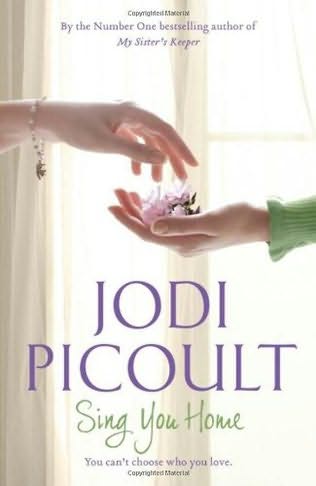
Hodder and Stoughton, April 2011.
Review by Laura Parish.
Zoe and Max have been trying to have a baby for ten years and, just as it looks as if their dream will come true, tragedy strikes. After heartbreak and divorce, Zoe meets Vanessa when working as a Music Therapist. When a business relationship between Zoe and Vanessa turns into something more, Zoe eventually lets herself begin to think about children and remembers that there are still frozen embryos that she and Max never used.
However, after finding solace in alcohol and then redemption in a church, Max has other ideas and Zoe isn’t going to find it so easy to get Max’s permission to take his unborn child. Continue reading

 by
by Book Corner : June’s Book
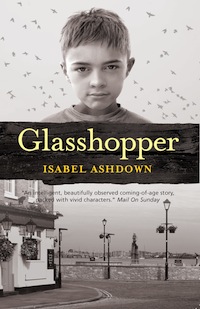 Glasshopper by Isabel Ashdown
Portsmouth, 1984. Thirteen-year-old Jake’s world is unravelling as his father and older brother leave home, and his mother plunges into alcoholic freefall.
Despite his turbulent home life, Jake is an irrepressible teenager and his troubled mother is not the only thing on his mind: there’s the hi-fi he’s saving up for, his growing passion for Greek mythology (and his pretty classics teacher), and the anticipation of brief visits to see his dad. When his parents reconcile, life finally seems to be looking up. Their first family holiday, announced over scampi and chips in the Royal Oak, promises to be the icing on the cake – until long-unspoken family secrets begin to surface.

 by
by Pauline Barclay talks about self publishing.
 Laura has asked me to write a few words about Indie publishing as my latest book, Sometimes It Happens… is published on Amazon Kindle. The ease in which you can publish your own book has changed dramatically over the last year. E-book publishing is now extremely fashionable with sales souring and in some cases outselling conventional paperback / hardback books. Adding to this, the launch of the Kindle and iPad has created a whole new experience in reading.
I choose the route to Indie publish for several reasons, but one main reason is that I don’t live in the UK. I live on the beautiful island of Lanzarote in the Canary isles. There are many good reasons to live here, but it does distance me from agents and publishers who like their clients to be closer at hand. So in light of my location, I decided to publish my books independently.
Independent publishing does mean you do everything; from publishing to marketing, and you can do much of the necessary steps yourself, but there are stages in your writing when you do need to use a professional. For my third book, Sometimes It Happens… I was fortunate enough to work with the brilliant author, Helen Hollick. www.helenhollick.net
Helen has been my writing guide and editor and saw me through the entire manuscript of Sometimes It Happens… Her expert eye checked for continuity, believability, repetition and so much more. These are areas that as a writer you cannot always see yourself and a fresh, experienced set of eyes can. My published book as to compete with all the other well written books in this highly competitive market, therefore it not only must be a good read, but a professionally polished publication. I cannot stress enough the importance of having an editor to check your writing. Helen’s help has been invaluable and her knowledge and experience has taught me so much more. Continue reading

 by
by Book Reviews : The Making Of Us by Lisa Jewell.
The Making of Us by Lisa Jewell.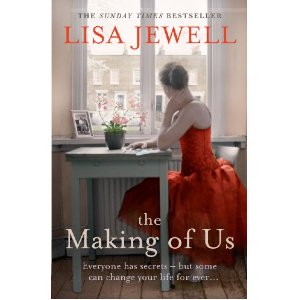
Century, 2011.
Review by Laura Parish.
The Making Of Us is a wonderful, heartwarming story that had a original plot and likeable characters.
Maggie sits at the bedside of her friend Daniel, a dying man with a secret he’s kept most of his life.
Lydia is a self made woman but not before she escaped the small town she grew up in and the bad memories within.
Dean’s life falls apart in just one night. He’s lost and he doesn’t know what to do next.
Robyn has the life she has always wanted but when her mother hands her a file on her eighteenth birthday, something in her life shifts and she then has to search to find what’s missing.
Dean, Lydia and Robyn don’t know each other but they are all facing different challenges in their lives. When they find each other, everything starts to change and secrets are revealed. Continue reading

 by
by Ghosting Austen
This is a post from Lynn Shepherd (taken from her blog) about how she went about ‘Ghosting Austen’
I was writing Murder at Mansfield Park when The Duchess came out on film, and I heard it being reviewed on BBC Radio 4. The critic said she loved the authentic settings and costumes, but felt it was let down by the script – especially the reference to Georgiana offering to ‘make a deal’ with her husband, when what she would actually have said was ‘make a bargain’.
It was a salutary reminder of what I already knew – even relatively small things like this will cumulatively detract from the authenticity of your prose. Right from the start, I’d always been determined to get this aspect of the book right – perhaps it’s the academic in me – but I knew my novel would never pass muster with the true Austen fan if it didn’t pass the accuracy test.
In practice this meant downloading all the novels, and checking pretty much every word as I went along. It sounds time-consuming – and it was – but imagine trying to do that before computers and wordsearch! The other key aspect of this process was to check not just if a word was used, but the context in which it appears. For example, my copy-editor came back to me after her first reading, and asked if we could change ‘the mood in the room’ to ‘the atmosphere in the room’ in one scene. I said I wished I could, but Austen never used the word ‘atmosphere’ except in the context of the weather. Again, it’s the little things. Continue reading

 by
by Book Corner : May’s Book
 Notes on a Scandal – Zoe Heller
From the first day that the beguiling Sheba Hart joins the staff of St George’s, history teacher Barbara Covett is convinced that she’s found a kindred spirit.
Barbara’s loyalty to her new friend is passionate and unstinting and when Sheba is discovered to be having an illicit affair with one of her young pupils, Barbara quickly elects herself as Sheba’s chief defender. But all is not as it first seems in this dark story and, as Sheba will soon discover, a friend can be as treacherous as any lover.

 by
by Book Club
Recent Comments