Book Extract: This Ruined Place by Michael Lawrence
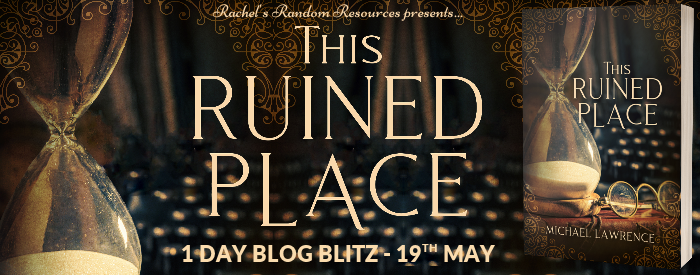
 I’m pleased to be welcoming Michael Lawrence to Novel Kicks as we shine a light on his book, This Ruined Place.
Evy Miller thinks a summer with her grandparents in sleepy Dorset will be painfully dull. Her suspicions are confirmed when Juby, a wild-haired, lanky old man, strolls through her grandparents’ doorway. At first, she thinks he’s nothing more than an odd duck who charms her grandmother and annoys her grandfather. The last thing she expects is to become his companion on visits to the small village of Rouklye, whose entire population was evicted during WWII.
She has no idea that the reason for Juby’s visits will become a defining moment in her life and change her understanding of history and her own family forever.
Michael has shared an extract with us today. We hope you enjoy.
*****beginning of extract*****
The following excerpt is from This Ruined Place by Michael Lawrence. The teenaged main character, Midge, is visiting the ruined village of Rouklye with her elderly companion, Juby.
*****
There were several adjoining cottages beyond the wall. A much smaller building at the near end of them, a shed of sorts, was the only one with a door and roof. The roof was topped with crudely-cut gray slate, and on the equally rustic door, which was padlocked, a notice asked visitors not to pick the wild flowers, a request that might have amused Midge if she’d been in an easily-amused mood because there were no flowers in the immediate vicinity, wild or tame.
Juby had gone straight to the second cottage along, where he stooped to look in the doorway. ‘Post office and village shop,’ he informed her as she drew near.
He ducked inside. Following with a long-suffering sigh, she found a crumbling interior open to the skies, ivy reaching across exposed walls to which ragged portions of ancient plaster clung, an iron fire-grate teetering on a ledge where a ceiling and upper floor had once been, and beneath their feet ailing weeds between uneven gray paving slabs, while year-old leaves crunched underfoot. The place smelt of nettles and moss, the dust of an overheated summer.
‘Looks bigger empty,’ Juby said. ‘When the counter was in, shelves stocked, customer or two chatting, it was a right jam in here.’
Sunlight entered the broken building in tall bright spirals, picking out hovering dust motes. Watching the dust’s leisurely dance, Midge’s mind wandered. Her thoughts were still adrift when the whispers started. Whispers so indistinct that they registered only gradually; but once her attention was caught she glanced about for whoever it was that had followed them in.
There was no one, no one else, just the two of them. The whispers faded.
‘ – get anything here,’ Juby was saying. ‘The women bought their wool here, their needles and thread, cleaning materials, candles, matches. Men bought their baccy and bootlaces. There were sweets behind the counter in big glass jars, sides of bacon on hooks, cheese and butter in slabs to be sliced up as you pleased. You don’t get shops like that today.’
No, Midge thought, shrugging off the whispers and the shivers they’d induced, you get supermarkets. She retreated to the doorway, waited there, hoping he would notice that he was talking to himself and take the hint. He didn’t. He was facing the other way, still reminiscing.
‘ – so many parcels and packages on the counter you could barely glimpse the postmistress. Mrs. Ritter, her name was. Little lady, but tough. The lads used to see what they could get away with and if she was in a good mood she might give them a quarter of boiled sweets or some licorice, but she’d clip ’em round the ear if she – ’
 Midge switched off. If he was going to give a detailed account of who once did what in every building in the village, even the ruined ones, she’d end up screaming, she knew she would. She heard him chuckle at another memory, groaned as he described the post coming on a cart from Wareham, wherever that was, and the postman passing the day before the afternoon collection on his allotment, or fishing.
Well, let him fish.
She stepped outside and watched people stroll by in small groups, pairs, singly. The singles passed by in worlds of their own. Lucky them, she thought, setting her back against the wall. Behind her the old man’s voice continued to rumble along like the postman’s cart. Closing her eyes against the day, the light, the people, her mind drifted, and almost at once she might have been anywhere, any other place or time, where parents stayed home, people took notice of her, and she was beautiful. The daydream was shattered by the sound of giant feet crushing brittle leaves in the shell of a building that she leant against. Juby’s voice had ceased to rumble; he was on his way out. Rather than fall in with him again so soon, she pushed herself from the wall and darted away, weaving around and between camera-toting strollers.
At the end of the row, a short path through a shady dell delivered her to a dirt roadway that swung between the last cottage and the elevated churchyard opposite. A little way along, to her left, stood a small gabled building with a recently-tiled roof and red-painted window frames, but some distance beyond this, amid trees, she spotted a collapsed house, then another, and then half a wall of one more. What’s with all the ruins? she wondered, while telling herself that it was nothing to her.
*****end of extract*****
About Michael Lawrence –
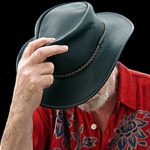 Michael Lawrence has written and published a great many books, but he’s done a few other too. For instance, after leaving art school he began training as a graphic designer in a London studio before morphing into a photographer. As a photographer he took pictures for advertising agencies, publishers and newspapers, of pop stars and politicians, of fashion models and underwear, and many other kinds of people and things besides.
He also worked in a travelling circus for a little while, and has been an antiques dealer, co-owned two art galleries, and made hundreds of paintings, drawings and experimental digital images. One of his private joys is recording songs (many of which he’s written) under the alias Aldous U.
As a writer he’s won the odd award, had books translated into twenty or so languages (one of which – ‘Young Dracula’ – was the inspiration for five BBC-TV series), has shuffled onto stages at literary festivals, and been interviewed on TV and radio. ‘There’s more,’ he says, ‘but I don’t want to bore you. There’s a lot of me in the Rainey novels, but I’m not saying which bits.’
Say hello on YouTube.
Click on this link to buy This Ruined Place.





 by
by 

I'm Laura. I started Novel Kicks back in 2009 as I wanted a place to discuss books and writing - two loves of my life. As someone who has anxiety, these two things give me, and I am sure countless others, a much needed escape.
There is a monthly book club, writing exercises, prompts, reviews, author interviews, competitions and guest posts. I cover many genres and I hope there is something for everyone.
I grew up by the sea in Dorset and currently live in Poole with my husband, Chris and three cats. I love writing and have a BA (Hons) in Creative Writing from Falmouth University. I am writing my first book. If only I could stop pressing delete. Chris has threatened to stop it from working. Haha.
I have always loved creative writing since I was in first school and would very much like to meet my teacher, Miss Sayers, to say thank you for all the encouragement she gave me then.
When not writing, I love reading, cats, Disney, singing (I can't sing but this doesn't stop me,) and falling into a good TV show or film. If I could step into any fictional world, it would be amongst the characters in ABC's Once Upon a Time.
I love reading many genres and discovering new authors.
There is a monthly book club, writing exercises, prompts, reviews, author interviews, competitions and guest posts. I cover many genres and I hope there is something for everyone.
I grew up by the sea in Dorset and currently live in Poole with my husband, Chris and three cats. I love writing and have a BA (Hons) in Creative Writing from Falmouth University. I am writing my first book. If only I could stop pressing delete. Chris has threatened to stop it from working. Haha.
I have always loved creative writing since I was in first school and would very much like to meet my teacher, Miss Sayers, to say thank you for all the encouragement she gave me then.
When not writing, I love reading, cats, Disney, singing (I can't sing but this doesn't stop me,) and falling into a good TV show or film. If I could step into any fictional world, it would be amongst the characters in ABC's Once Upon a Time.
I love reading many genres and discovering new authors.
Book Club
Leave a Reply