NK Chats To….
Our Author Interviews and Guest Posts.
Our Author Interviews and Guest Posts.
I find that writing comes in waves, so any period when the words are flowing easily counts as one of my favourite writing moments. There was a period, though, that is pretty unrivalled in my memory of the times I have enjoyed my work the most. When Penguin bought Getting Rid of Matthew, my first book, I had written 30,000 words of an eventual 100,000.
 Jane Fallon |
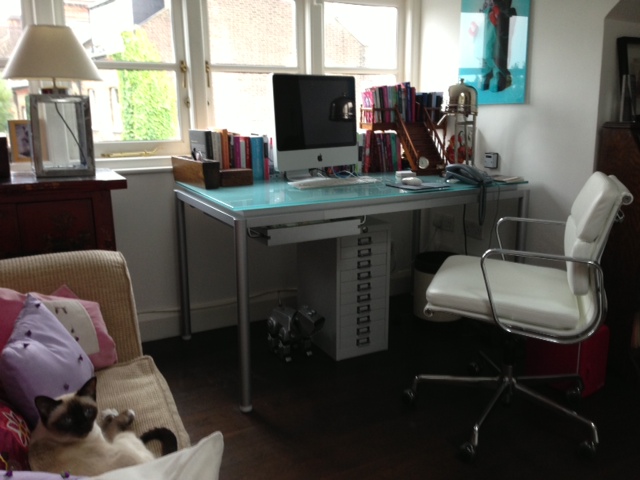 I love my little office up in the attic. I’m surrounded by my favourite things. Notice my small furry assistant in the bottom left hand corner. |
The few months after were blissful. Someone – and not just someone, but Penguin, the publishers I had always dreamed of being associated with – liked my work enough to want to publish it. I had no concept then of the attention the book would get, or the self-conscious second guessing that would inevitably come when writing another book after the first has been an unexpected success. I didn’t think about how it would be received, or whether my publishers would like what I was writing. I just wrote.
Obviously it’s impossible to ever go back to that naïve and stress free approach but that doesn’t mean I don’t still get enormous satisfaction from what I do. I still consider myself the luckiest person in the world. It’s just that sometimes it gets harder to lose yourself so completely in what you’re writing.


 by
by 
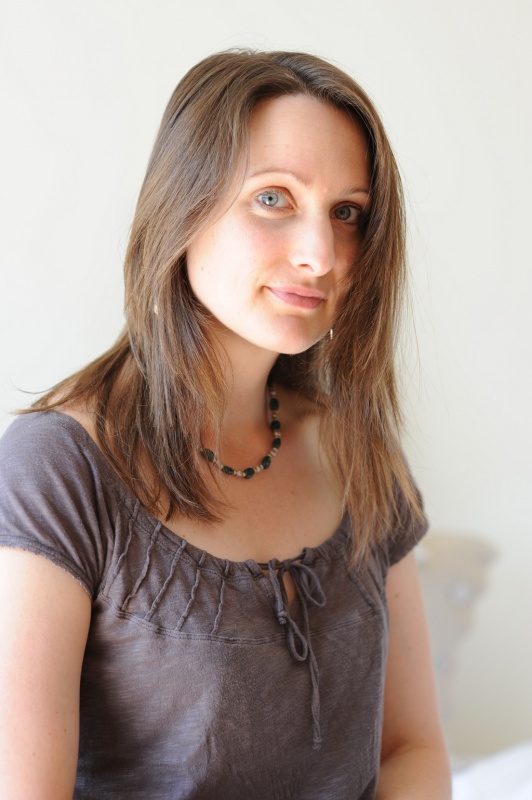
Katherine Webb. (Photo Credit, Andrew Morris.)
Can you tell us a little about your latest book, The Misbegotten?
It’s set in 1821 in Bath, and centres on a disparate group of people who find themselves drawn together – however unwillingly – by the disappearance of a young woman twelve years earlier. Some of them want to find out the truth about what happened to her, and some will go to any lengths to make sure that the truth stays buried…
How do you start a new book? Do you have any rituals? Do you plan?
No real rituals, but a strong habit – at the desk by 9AM, 2000 words minimum per day. I plan a bit. I do a lot of research for my historical settings, which results in a lot of notes, which I have next to me even if I don’t look at them that day. I have an outline of the plot – an idea of where each character and the plot will start and end up, but the way they get there tends to evolve as I’m writing. I certainly can’t write chapter plans or anything like that –I just work my way through it. Sometimes that means going back because I’ve left out something important, or because something I wanted to include doesn’t actually work, but that’s fine.

 by
by 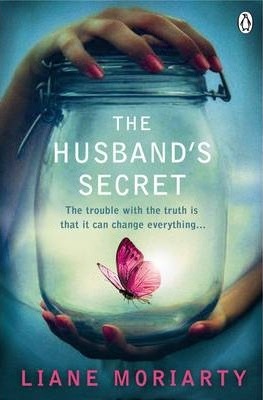
Penguin, August 2013.
The Husband’s Secret by Liane Moriarty.
Penguin, August 2013.
The Husband’s Secret firstly focuses on Cecelia who seems to have it all – a wonderful husband and perfect children. However, when she finds a sealed envelope addressed to her, in her husband’s handwriting saying ‘To my wife. To be opened in the event of my death,’ hidden among his things, she battles with the choice to open it.
It then turns to Tess who has just found out that her husband has fallen in love with someone else. Trying to escape the betrayal she feels, she takes her son and retreats back to her mother’s house in Sydney.
Finally, we have Rachel whose daughter was murdered many years before. Her main focus is now on her small grandson whose parents now want to take him out of the country.
These three women are soon bound together by this letter. The first part of the book sets up the characters and looks at their lives before Cecelia opens the letter. The second half is dealing with the aftermath once the letter is opened. I have to admit, when the book first began to focus on these three women, I wasn’t sure where the story was going to go. I love a good mystery though and once I’d got my head around who everyone was, I was hooked to the story and couldn’t put the book down.
It poses a very interesting question. If you found a letter addressed to you but with instructions not to open it, would you? I’m not sure I’d be able to resist.
Rachel’s and Tess’ stories are heart-breaking and although she was my least favourite character, I felt sorry for Cecelia when having to make a difficult choice – the truth or protecting her family and her life. It’s hard to know what anyone of us would do in that situation. The revelation in the letter I didn’t see coming straight away and I actually liked the fact that the secret was only revealed half way through. It established the characters well and the plot was well thought out – not giving too much away too soon.
I was intrigued as to how it was all going to be resolved at the end. I enjoyed this book and recommend it as a good holiday book.

 by
by  I was very pleased to be included in the blog tour for Liane Moriarty’s new novel, The Husband’s Secret. Liane lives in Australia and is the author of Three Wishes and What Alice Forgot as well as three books for children, The Space Brigade.
Hello Liane. Thanks for joining us today. How did you get the idea for The Husband’s Secret?
Two years ago I stumbled upon a fascinating article about real-life deathbed confessions. I learned about Christian Spurling, who confessed on his deathbed to faking a notorious photo of the Loch Ness Monster. There was a famous songwriter who was dying of cancer who wrote a letter admitting, after years of adamant denials, that she had plagiarized a lullaby melody. Then there was the hapless man who, after suffering a stroke, confessed he’d killed his neighbour thirty years earlier. The only problem was that he didn’t end up dying. After he was released from hospital, he went straight to jail. These stories, particularly the one about the man who didn’t die, got me thinking. I was intrigued by that overwhelming desire to share your darkest secret. So I came up with the idea of a man who feels such a powerful desire to share a secret that he sits down and writes a letter to his wife, to be opened in the event of his death. It’s a deathbed confession, except he’s not dead.
So far, what’s the best thing about being a writer?
The first memory is of sitting on a Sydney ferry and seeing the woman next to me open her handbag and pull out a copy of my first novel, Three Wishes. She then proceeded to read it. As if it was a real book! Until then I’d secretly wondered whether the whole process of publication had been a giant (cruel) practical joke.
The second memory is of sitting on my back steps watching my son play in the yard, while I was on a conference call with my literary agent, a film agent, and a Hollywood film producer. The producer was buying the film rights for What Alice Forgot. “We were thinking of someone like Jennifer Aniston or Reese Witherspoon for the role of Alice,” he said, just as my little boy bellowed, “I’m hungry!” It was quite surreal.
Which superpower would you have?
To fly. I know everybody has dreams about flying, but mine feel so very real. Each time I dream-fly, I think, “That’s right, of course I can fly—how could I have forgotten!”
What do you do in your spare time when you’re not writing?
I read in bed, read in the bath, read in the TV commercials, sleep, eat chocolate, work off all that chocolate in gym classes, ski (not that I ski every weekend, but I thought I should mention something outdoorsy), and now it occurs to me that I haven’t mentioned my children, and I don’t know how I could have forgotten them, because they are currently with the babysitter, screaming their darling little heads off in the hallway just outside my office door. What I actually do when I’m not writing is take care of my five-year-old son and three-year-old daughter, and I like that very much.
The next tour stop is The Friendly Shelf.

 by
by It makes me look very grand to say I have two writing spaces but bear with me – one of them was only mine on loan while I wrote The Second Life of Amy Archer. Both are blessed with very different – but equally fantastic – views. And both are clutter free. I’ve read a lot about a messy desk being conducive to great creativity but it doesn’t help me at all. I need clear space and lots of light.

The city view is from the room where I first had the idea for Amy Archer. I put the idea in a notebook and left it in a drawer for twenty years. The draw is just out of shot! I then went on and wrote another three novels at this desk, none of which got anywhere. The whiteboard was meant to be for planning and notes about characters but, as I don’t really plan, it’s usually just an outsize diary and shopping list. The assortment of magnets keeps my young niece entertained. Me too, truth be told.
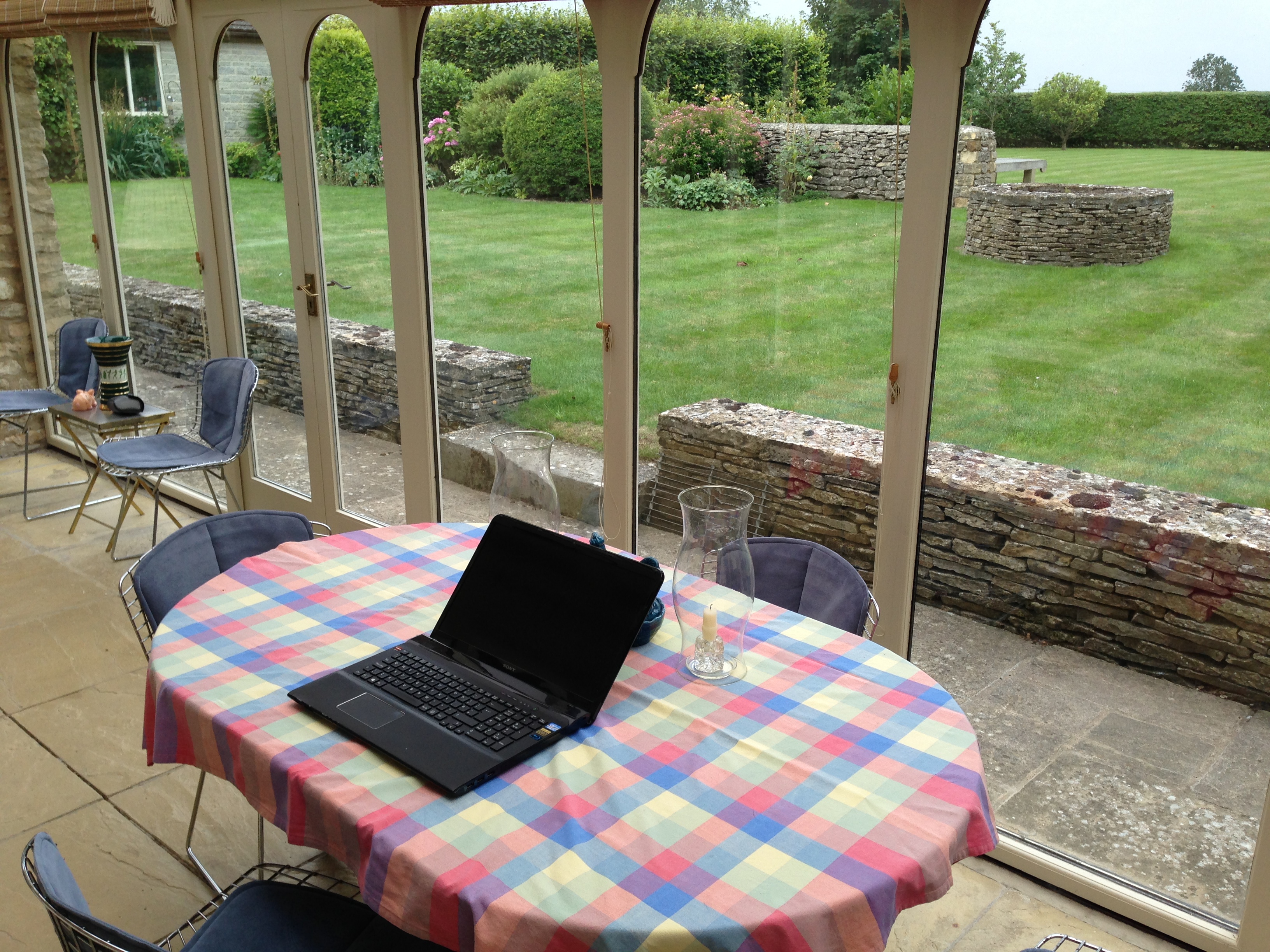
Despite the great skyscapes beyond the window, I felt a bit cooped up and needed a change of scene if I was to write the book. A friend offered me use of his conservatory in a remote part of the Cotswolds. Lucky, lucky me. Instead of planes all around me, I had birds. And rabbits. And stoats. Hunter and prey – a perfect backdrop for the tale I was telling. And the location of the house inspired my next book too; the well in the foreground plays a big part in The Prophecy of Bees.

 by
by 
RS Pateman, the author of The Second Life of Amy Archer tells us about his best writing moment so far.
There have been so many high points but the most recent happened just yesterday I had a tweet from someone in Perth, Australia, saying how much
she was enjoying my book. It blew my mind that someone on the other side of the world was reading my book. Also, every time I’ve been in a bookshop
for the last twenty years or so, I’ve always found the gap under ‘P’ where my book would go if I ever got down to actually writing one. I used to
visualise my book being there (usually between Ann Patchett and Boris Pasternak). Now that it’s happened, I don’t think seeing my book in a bookshop
will ever get boring.
To take part in Book Corner, click here.

 by
by Can you tell us about your book, The Second Life of Amy Archer and what was it about the idea that interested you?
Amy Archer is a psychological thriller about a mother’s search for the truth about her ten year old daughter Amy, who vanished from a nearby playground. She hasn’t been seen since. No body has ever been found. But on the tenth anniversary of Amy’s disappearance, a girl turns up on Beth’s doorstep – she looks like Amy, knows things only Amy could – and yet she’s still only ten years old. Esme claims to be Amy reincarnated and Beth’s sanity is pushed to the limit as she tries to work out if she’s the victim of an elaborate scam – or if her daughter has miraculously returned. I’m fascinated by the things people believe (and why they believe them) and by the power of faith, memory and hope. What is incontrovertible truth to one person, is total tosh to another. In the grey area in between, there’s a lot of fun to be had.
What’s your writing day like?
I’m an early bird. I try to be up and at my desk by 5.30 or 6.00am (easier in the summer than the winter of course!). Continue reading

 by
by 
Can you tell us about the Ryan Drake series?
Ryan Drake is a former British soldier who used to be involved in shady blacks ops work, before being court martialled and forced out under murky circumstances. For the past few years he’s been working for the CIA as a ‘Shepherd’, finding and rescuing lost or missing agents. However, an offer to wipe his record clean in exchange for rescuing a prisoner from a Russian jail sets in motion a chain of events that will change his life forever. The prisoner in question is a woman named Anya, a former operative with the CIA who holds the key to a web of conspiracy and betrayal stretching back almost 20 years. A threat to his family forces Drake to go on the run with her, and he soon learns that Anya is more than a match for anything the CIA can throw at her. The only question is whether they can work together long enough to stay alive.
Describe your typical writing day…
For me it’s less a writing day and more a writing evening. Continue reading

 by
by 
Isabel Ashdown
Remember the ‘Charley Says’ adverts, warning us away from dangerous places and menacing strangers? Despite these warnings, how many of us, as children, would still return to those forbidden locations time after time, in search of longed-for adventure? For me, it was the village dump, an illicit playground of abandoned cars and fridges and rusted bicycle wheels. We all knew it was unsafe, and we knew our parents would go spare if they caught us there. But it was an exciting place, rich and full of possibilities for a seven or eight year old child.
With age, I realise I have developed an ongoing fascination with derelict buildings and land; those neglected places that once rippled with life, but now lie to waste, fading away beneath vines and decay. In Hurry Up and Wait, I became quite obsessed with the abandoned Victorian building that once was my secondary school. I tracked down online photos of the interior in various states of decline, and found myself stalking the perimeters to snap a few shots to help inspire my writing …

 by
by 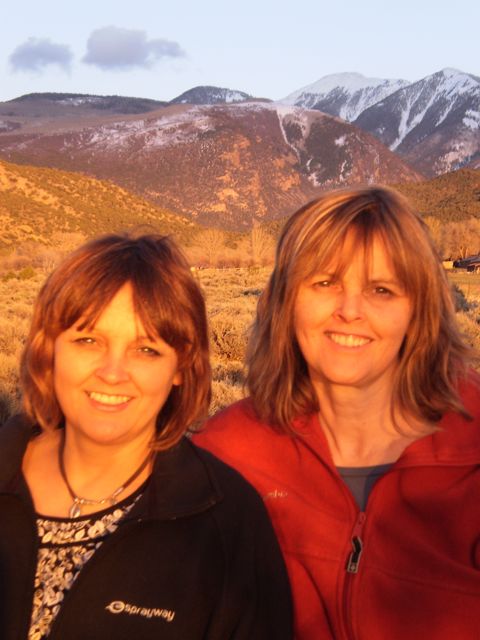 Ellie Campbell is the pen name of sisters and collaborators, Lorraine Campbell and Pam Burks. One is based in the UK, the other the USA, they write together via e-mail and phone. Their latest book, Looking for LaLa was published in March 2013….
Can you tell us about your book, Looking For LaLa.
Looking for La La is the funny, crazy story of Cathy, a bored, unappreciated housewife and mother of two. Her world of school runs, ferrying children here and there, and the occasional nights out with friends is radically transformed by the arrival of a love postcard to her husband. What follows next takes Cathy on a wild ride of suspicion, temptations, marital breakdown and some very dangerous territory. It’s a comedy but with situations that many women can identify with and, be warned, it does have its dark murder mystery side.
What’s it like writing as a partnership? Does it bring its own challenges? Continue reading

 by
by  I am very happy to be taking part in the blog tour for The Night Flower by Sarah Stovell. Today, Sarah chats about whom she would like to cast as her characters:
Actors who would play characters:
Rose: Rebecca Hall – she played the vindictive, nasty Sylvia Tietjens in Parade’s End so well, I think she’d make a great Rose. I loved the way she played Beth Raymer in ‘Lay the Favourite’ – she survived in a brutal world through the force of her character and I think Rose is all about survival.
Ma Dwyer: Helena Bonham Carter – because she plays cartoonish, larger-than-life characters brilliantly. I thought she made a fabulous landlady in ‘Les Miserables’ and I’m sure she could carry off a great Ma Dwyer.
Revered Sutton: Jim Broadbent – he’d so versatile and brilliant, he’d carry off a sleazy, hypocritical reverend better than anyone else. I really admired the way he played Lord Longford in the film ‘Longford’ which was about Lord Longford’s relationship with Myra Hindley and, in my very very wildest dreams, I’d love him to be in an adaptation of The Night Flower.
I really can’t think of anyone to play Miriam – all the young English actresses I can think of are all so posh and pretty. We need someone really gritty for her. And northern. She definitely needs to be northern
My review will be coming up soon and be sure to stop by the Reading in the Sunshine blog tomorrow for more content from Sarah.

 by
by 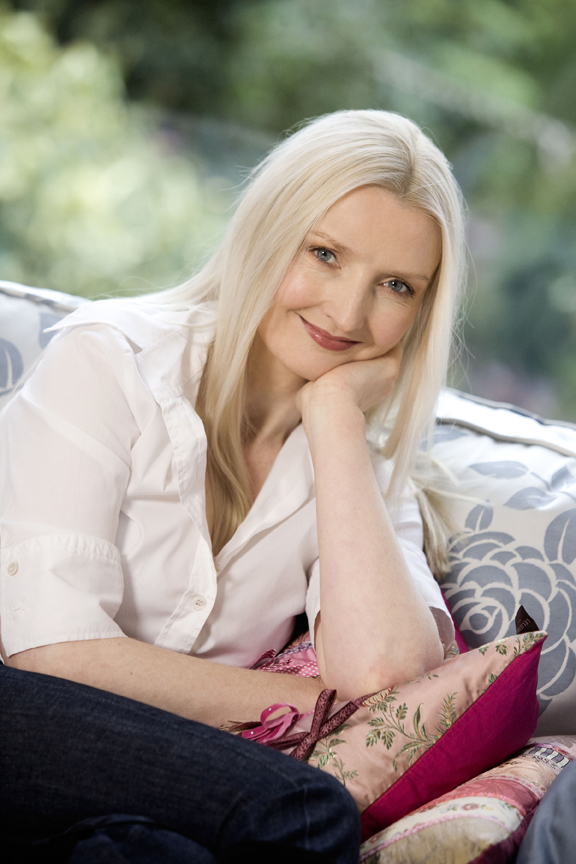 Claudia is the author of A Very Accidental Love Story, Will You Still Love Me Tomorrow and Personally, I Blame My Fairy Godmother. Her latest book, Me and You has just been released. Claudia stopped by Novel Kicks for a chat, as part of her blog tour. We talked about her typical writing day, who’d she have over for dinner and what makes her laugh.
Can you tell us about your new book, Me & You.
I’d be delighted to! ME AND YOU, centres around a heroine called Angie, who’s arranged to meet up with her best friend Kitty at a swanky health spa…only Kitty stands her up. No answer to her mobile or house phone, absolutely nothing. Which is so not like her. So Angie of course, does what any concerned pal would do, spirals off into a complete tailspin of panic. Calls just about every mutual friend they have, who all say, ‘but we thought Kitty was with you!’ Turns out though that no one has seen her in days, so Angie calls Kitty’s boyfriend Simon and between them they start searching, but yet again nothing. Just dead ends everywhere they turn. Course, pretty soon their initial concern morphs into full-blown panic. So in desperation, Angie and Simon go to the police and pretty soon, a nationwide search follows. But bubbling under it all is a whole other development; Simon and Angie’s

 by
by 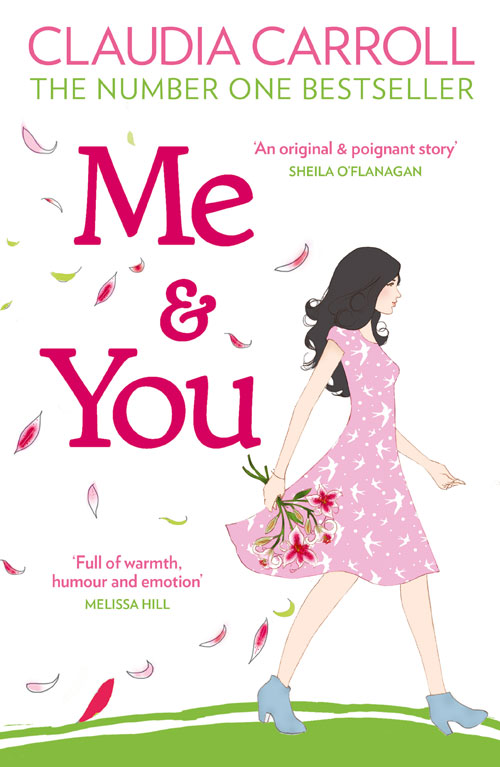
Avon, 1st August 2013.
Angie knows a lot about her best friend Kitty. She knows Kitty is mad and wild and loves to wear clashing colours. She knows she’s incredibly funny and generous but also very unreliable. And she knows that there is a perfect explanation for Kitty standing her up on her birthday. She thinks she knows everything about Kitty, except she doesn’t. Kitty knows that she is the happiest she has ever been. She knows she’s so lucky to have a lovely boyfriend, Simon and a best friend like Angie. But what she doesn’t know is that on this night, her past is finally going to catch up with her.
From the moment I received this book, I was looking forward to reading it. The cover was really cute and the story interesting – how could someone disappear into thin air? Why would they? Also, would we ever find out what happened? From the first page, I was hooked. There was mystery in the plot. I can’t resist a good mystery as I try to work out what has happened whilst I read. Angie is a warm, if slightly crazy character and, like her friends in the book, you can’t help but like her from the first page. Simon sounds like a lovely boyfriend to have and I also liked Jack; feeling there was more to him than first appeared and hoping it would be he if ended up with Angie (although you will have to read the book to find out if he does!) Written in part like a diary, this helped the plot along nicely (and helped establish between Angie and Kitty,) and I really felt as though I was on the same journey as the characters – like I was on a quest to find Kitty. I was intrigued to maybe know more of Kitty’s story once she left Ireland as I feel there’s a whole load of her story we didn’t get to see which, I understand wouldn’t have helped the pace of this book. I couldn’t put this book down (reading when I should have been packing up for a house move..oops.) I loved Me & You. It was my first proper introduction to Claudia’s books (there were others in my to read pile that are now definitely being pulled up the list,) and I’ve very firmly become a fan.

 by
by I was HUGELY excited to be asked to take part in Claudia Carroll’s blog tour for her new book, Me & You (Avon, 1st August 2013.) In her guest post, exclusive to Novel Kicks, Claudia talks about writing her two main characters, Angie and Kitty…
Just to tell you a wee bit about the book, ME AND YOU, it all centres around a heroine called Angie, who’s arranged to meet up with her best friend Kitty at a swanky health spa…only Kitty stands her up. No answer to her mobile or house phone, absolutely nothing. Which is so not like her.
So Angie of course, does what any concerned pal would do, spirals off into a complete tailspin of panic. Calls just about every mutual friend they have, who all say, ‘but we thought Kitty was with you!’ Turns out though that no one has seen her in days, so Angie calls Kitty’s boyfriend Simon and between them they start searching, but yet again nothing. Just dead ends everywhere they turn.

 by
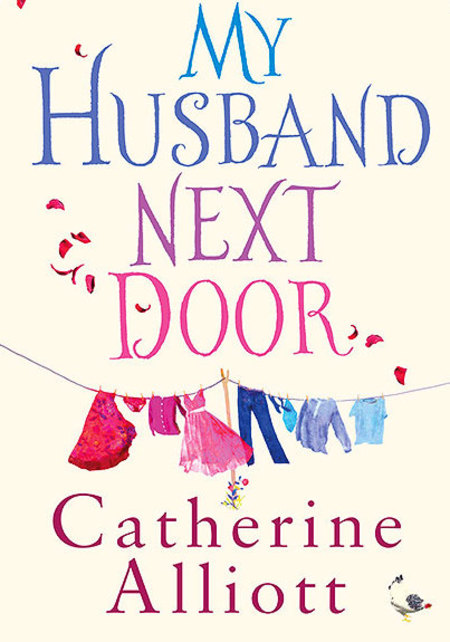
by  I was very excited to have been asked to take part in Catherine Alliott’s blog tour. Her new book, My Husband Next Door (1st August, Trade paperback £12.99/ebook £7.99, Michael Joseph) was my introduction to Catherine’s books and very good it was too, (click here for my review.) In her guest post, exclusive to Novel Kicks, Catherine talks about her tips for having houseguests.
Top Tips for Having House Guests
1) I love having house guests but one or two ground rules need to be established before they stay, like for how long. A friend of my sons’ was still in his habitual spot at the kitchen table eating cereal as the taxi arrived to take us to the airport and thence the South of France. I fully expected to find Arthur still in the kitchen eating cereal on our return.
2) I fail miserably on this front but the correct response to “Can I bring anything?” is “Yes please” or, even better, “A pudding would be lovely “. Don’t, as the weekend approaches, sit on the kitchen floor and cry about how much there is to do, or kick the dog/ husband instead.
3) Some people start drinking the moment they cross the threshold and since we’ve already built up a head of steam and would hate to peak without them, we’re thrilled. More troubling are the “flinchers at the bottle” to borrow a splendid phrase. Should such a guest materialise and a frantic search of the larder reveals only a sticky bottle of Ribena circa 1998, jerk your head meaningfully at one of the teenagers to make haste to the village shop, ignoring assurances that “tap water will be fine!”
4) Visiting children tend to be on their best behaviour and no trouble at all. In fact these days some even suggest that they make you a gin and tonic and light your cigarette for you. The same, however, cannot be said for dogs. If a guest asks to bring a dog, swallow your disappointment and check it doesn’t chase chickens. “I’m not sure” means “Yes.” One Irish terrier appeared at the lunch table having clearly had tremendous fun with the poultry. Her owner leaped to her feet shrieking: “I didn’t know Billie could get such a big cock in her mouth!”
5) Still on dogs, owners swear blind they are housetrained, but they always get over-excited in a strange house and make unerringly for the Aubusson carpet in the drawing room – the only thing Aunt Marigold left you. As you trill “it couldn’t matter less!” and scrub away with a J cloth, suggest that Co-Co from Belgravia kips in the car for the night? As a look of horror crosses the owner’s face, agree that she can of course sleep by the Aga, but perhaps not on the spareroom bed where you’ve nervously noticed her velvet cushion has been placed.
6) Keep the fathers off the trampoline after Sunday lunch. We’ve been to A & E too often.
 7) By all means have a visitors book, but be prepared for guests like my husband, who, after a heavenly week in a luxurious chalet in the Alps, wrote in our hosts’ tome: “Satisfactory.”
8) Likewise keep a dinner party book if you must. (You didn’t know they existed? They do). I found mine the other day. Clearly bought in a flush of young bridal enthusiasm twenty five years ago, a single entry records that on the 21st January 1989 I subjected eight people – who’s names, apart from my brother’s, mean nothing to me – to Chicken Marengo followed by pineapple cheesecake. The snowy white pages that follow suggest this wasn’t a resounding success.
9) Weekend guests always want to know how to leave the bed, which is lovely, but strippers are a bore. If they’ve stripped before you can shout “Leave it!” try not to mind. It means you can’t just flip the duvet, check the bottom sheet for watch springs and leave it for the next visiting teenager, but you’ll feel virtuous as you carry the pile of sheets down to be washed on Monday.
NB – I always change for grown ups. Standards must be maintained.
10) Even more about dogs. Hopefully your houseguests won’t fight after a long and intoxicating weekend, but your canine guests will. Just as when the children were young, your own dogs have to learn that a visiting dog can do no wrong and it is ALWAYS their fault. On no account put your hand into the teeth-gnashing fray, and if you must set about with the turquoise espadrille, make sure you only whack the home team.
NB – just like the dogs, you too will be tired and emotional and keen to see the back of your very dear friends, but on no account should you bite anyone.
11) A word about presents and recycling them, in particular, chocolates deemed Too Nice to scoff in front of Morse repeats. I recently took a recycled box of Charbonnet and Walker to a friend’s party and left them on the hall table. Unaware they were from me, she brought them back to my own dinner party three weeks later. The girl who’d originally given them to me was present. She told us she hadn’t bought them either. When we opened them, they were grey with age.
12) If you have very smart friends they might leave a tenner on the bedside table for your Daily. Resist the temptation to hoover it up yourself, muttering darkly about there only being one person who does any REAL work around here, and threaten any teenagers who loiter knowingly outside the spare room door. Instead, on Monday morning, pass the money on to the intended recipient, who will almost pass out with shock. Your warm glow will last about twenty seconds.
Buy Catherine’s new book, My Husband Next Door.
Buy A Crowded Marriage & The Wedding Day for a special offer price of £1.99 each.
Tomorrow, head along to Chick Lit Chloe for more exclusive content.

 by
by 
Lucy Clarke (credit: James Bowden.)
Can you tell us about your novel, The Sea Sisters?
It is a gripping mystery about two sisters, Mia and Katie. The story begins in London with Katie learning the devastating news that her headstrong younger sister, Mia, has been found dead in Bali – and the police claim it was suicide. But when Katie discovers that Mia left behind a travel journal, she decides to retrace the last few months of her sister’s life to uncover the mystery surrounding her death.
Describe your typical writing day…

 by
by  Looking back on my long writing career, there have been many memorable moments and one totally unforgettable year – 1983, when I not only gave birth to my son, but also had my first novel accepted. Fast forward a couple of years and I’m listening to the talk by Diane Pearson of Transworld which was to lead me to my agent, Judith Murdoch, and the publication of my first romantic comedy with Piatkus, Good Husband Material.

 by
by  Finish something – if you do that, you’ll be miles ahead of everyone else.
If you never edit yourself, start. Don’t be afraid to cut and change.
If you edit yourself too much, stop. You will never create a perfect first draft, just get one finished.
Don’t get close friends or family to critique your work. Their praise isn’t entirely unbiased and their criticism will annoy you.
Be prepared to put the novel in a drawer and leave it for six months while you start something else. Then go back to it and see what it’s like fresh. You’ll be surprised.

 by
by 
Jenni Fagan (credit: Urszula Soltys)
What’s your typical writing day like?
I have three main writing days per week, they begin with getting my toddler up, dressed, breakfasted and out the door. Then I usually make myself porridge, check e-mails, have a coffee. I like to start by 9am so I then have four hours to work in peace. I usually have to read through some of the chapters, or if I am confused I might have to print the entire novel off and go through it all with a biro, make notes, restructure. If I am doing a first draft then I just aim for momentum and try not to worry too much about whether it is any good or not. Around 1pm I will have lunch. If I have interview requests or other mails to respond to then I try and do that later once the writing is done.

 by
by Lucy Clarke (credit: James Bowden.)
Lucy Clarke, the author of our Book Corner title this month, The Sea Sisters, talks about her best writing moment so far…
Hearing the news that The Sea Sisters had been picked for the Richard and Judy list was very exciting. I was in the Philippines researching for a future novel when I got the call. My editor said, ‘I’ve got some wonderful news for you. The Sea Sisters has been chosen to be in the Richard & Judy Book Club. Congratulations, Lucy!’ I think I babbled something like, ‘Oh my god, oh my god! That’s amazing ! I can’t believe it!’

 by
by 
Read lots – you’ll absorb style and vocabulary
Write as often as you can – practice makes perfect
Get yourself a dedicated workspace and lots of stationery. If you want to be a writer – you need the official tools
Remember that writing isn’t easy – you will always hit sticky parts and think ‘this is rubbish’ – it’s quite normal
Don’t be held back by fear of rejection – if you have talent and resilience you will eventually find a door that opens for you and then you will be soooo glad that you fought for and won the best job in the world.

 by
by  Marlen Suyapa Bodden’s debut novel, The Wedding Gift was published by Century in May 2013.
What can you tell us about your new book The Wedding Gift?
It’s my debut novel and it’s set in the 1850s pre-Civil War American South. When Cornelius Allen gives his daughter Clarissa’s hand in marriage, he presents her with a wedding gift: the young slave she grew up with, Sarah. Sarah is also Allen’s daughter and Clarissa’s sister, a product of his longtime relationship with his house slave, Emmeline. When Clarissa’s husband suspects that their newborn son is illegitimate, Clarissa and Sarah are sent back to her parents, Cornelius and Theodora, in shame, setting in motion a series of events that will destroy this once powerful family.

 by
by  Antoine Laurain was born in Paris in the early 1970s. As well as being a novelist, Antoine has also directed short films and written screenplays. His latest book, the wonderful The President’s Hat was released in March by Gallic Books. We had a chat with Antoine and asked about his ideal dinner guests, whether he’s a planner and which book has had the most impact on him…
Can you describe your typical writing day?
You mean the ideal writing day… I feed my cat before going to do the market. I spend the morning reading over what I wrote the day before; meanwhile I’ve got a pot au feu on the stove. Lunchtime arrives and I eat the pot au feu, then I work until aperitif o’clock and … that’s the writing over for the day.
Can you tell us a little about your latest book, The President’s Hat.

 by
by  Sophie Kinsella, the author of the Shopaholic series gives her five tips for new writers:
Don’t talk about your work except to someone you absolutely trust. Certainly don’t announce to the world ‘I’m writing a novel’ as your family and friends will never stop asking you about it.
Write the book you would love to read yourself.
Don’t be afraid to experiment. You may not find your voice or style straight away.
Halfway through your project it will all seem impossible and you will be tempted to jack it in and begin another, far more exciting idea. Trust me, that idea will get difficult halfway through, too.
Finish!

 by
by 
Freya North
Can you describe your writing day?
I have to cram it between school runs – and I never work weekends. If I’m distracted at home, I take myself off to the local library to work.
Are any of your novels/characters based on you or people you know?
Continue reading

 by
by 
Every time you hear the theme tune to EastEnders start writing. When you hear the end credits stop. Do the same for the Sunday omnibus and you’ll have a book within a year. Jenny Colgan told me that and I believe her.
Mike’s new book, Turning Forty will be released in July.

 by
by
Children’s book author and creator of The Planets series, Phamie MacDonald talks about her favourite writing moments and shares her writing space….
My favourite writing moment so far – is any moment at all when I get lost in the story. Every writer knows that frustrating blank page syndrome when all the words seem to have fallen out of your brain so it’s always a joyful, glorious time when the words flow, the story fits together and you can feel a new world being created. Bliss.
 Phamie MacDonald |
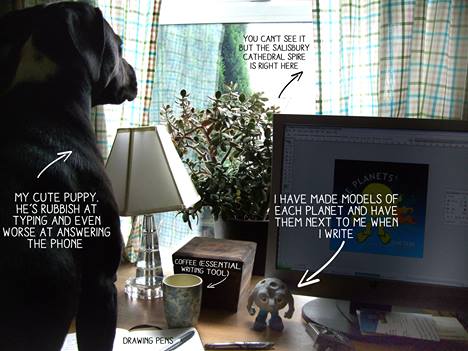 Phamie’s writing space. |
My favourite, favourite, favourite writing moment ever was when I first conceived my children’s book series idea, The Planets. Continue reading

 by
by  Gill Paul is the author of Women and Children First. Her latest book, The Affair was recently published by Avon.
 What’s your writing day like?
I’m at my desk at 9am and spend half an hour pottering on Twitter and answering emails that came in overnight before I settle down to edit what I wrote the day before and continue with the next chapter. There are dozens of stops for tea but while waiting for the kettle to boil I’m thinking about the sentence to come. I swim every day in an outdoor pond on Hampstead Heath and in winter it closes early so I’ll go up there at lunchtime to break the ice and get my endorphin rush. (Yes, I’m aware it sounds completely mental…) In summer the pond is open later so I go at 6ish when the light is beautiful. I generally work until 6 or 7 then try to go out somewhere in the evening so I’m not a completely boring hermit.
Can you tell us a little about your novel, The Affair?

 by
by 
Can you tell us about your debut novel, Jellybird?
Jellybird is a chilling tale of first love, loss and murder. Jessica Byrne’s childhood sweetheart, Thomas, disappeared seventeen years ago under violent circumstances, presumed drowned. The discovery of an old postcard sends Jessica in search of the truth. Risking her marriage and career to discover what happened the night Thomas vanished, she unearths lies and secrets, including an unsolved murder.
What’s your writing day like?

 by
by  Novel Kicks is very pleased to be part of Sarah Painter’s blog tour. We had a chat with Sarah to talk about her typical writing day, her favourite word and her ideal dinner guests…
Can you tell us about your novel, The Language of Spells?
Certainly! It’s funny, romantic fiction with a touch of magic. Gwen Harper has the uncanny ability to find lost things and a family with a history of magic. What she most wants, though, is to be normal. At eighteen, she left home and vowed not to go back, but when she inherits End House from her mysterious great aunt Iris she has no choice but to return and face the town that branded her a witch.
What’s your typical writing day like?

 by
by “Thank you for joining us, Andrew. So, what’s been your best writing moment so far?”
Thank you so much for asking that! Mostly you never get to describe these to anyone. So… the best one? Okay… my friends Piers and Becky had leant me their flat, and so I spent three weeks finishing off my book there. My concentration got more and more intense. I felt as if, by the end of it, my brain was finally fully switched off and I was free to hear the characters’ voices as they told their story…
 Author Andrew Clover (Photo by Maria Head.) |
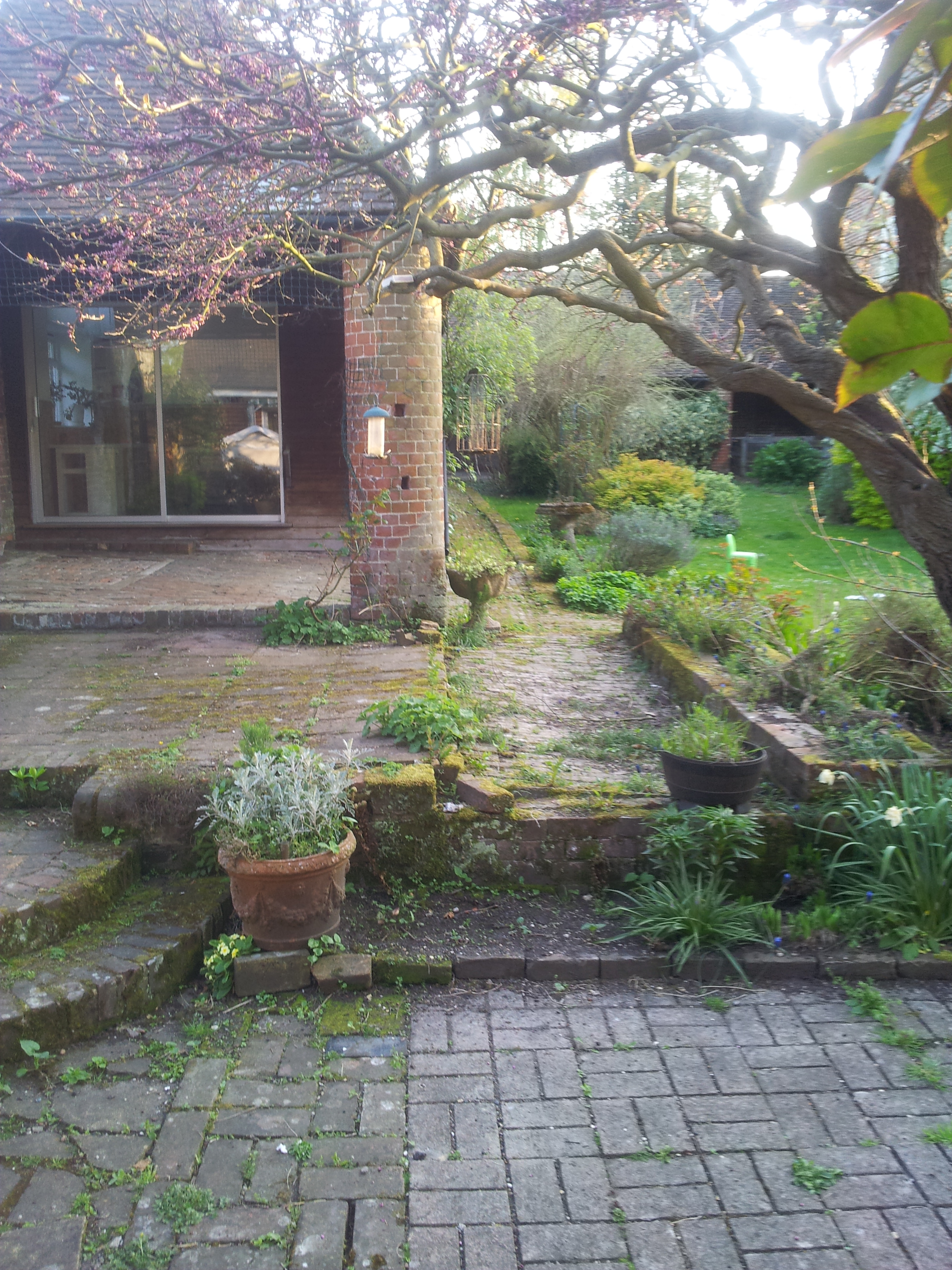 Andrew’s writing space. |

 by
by 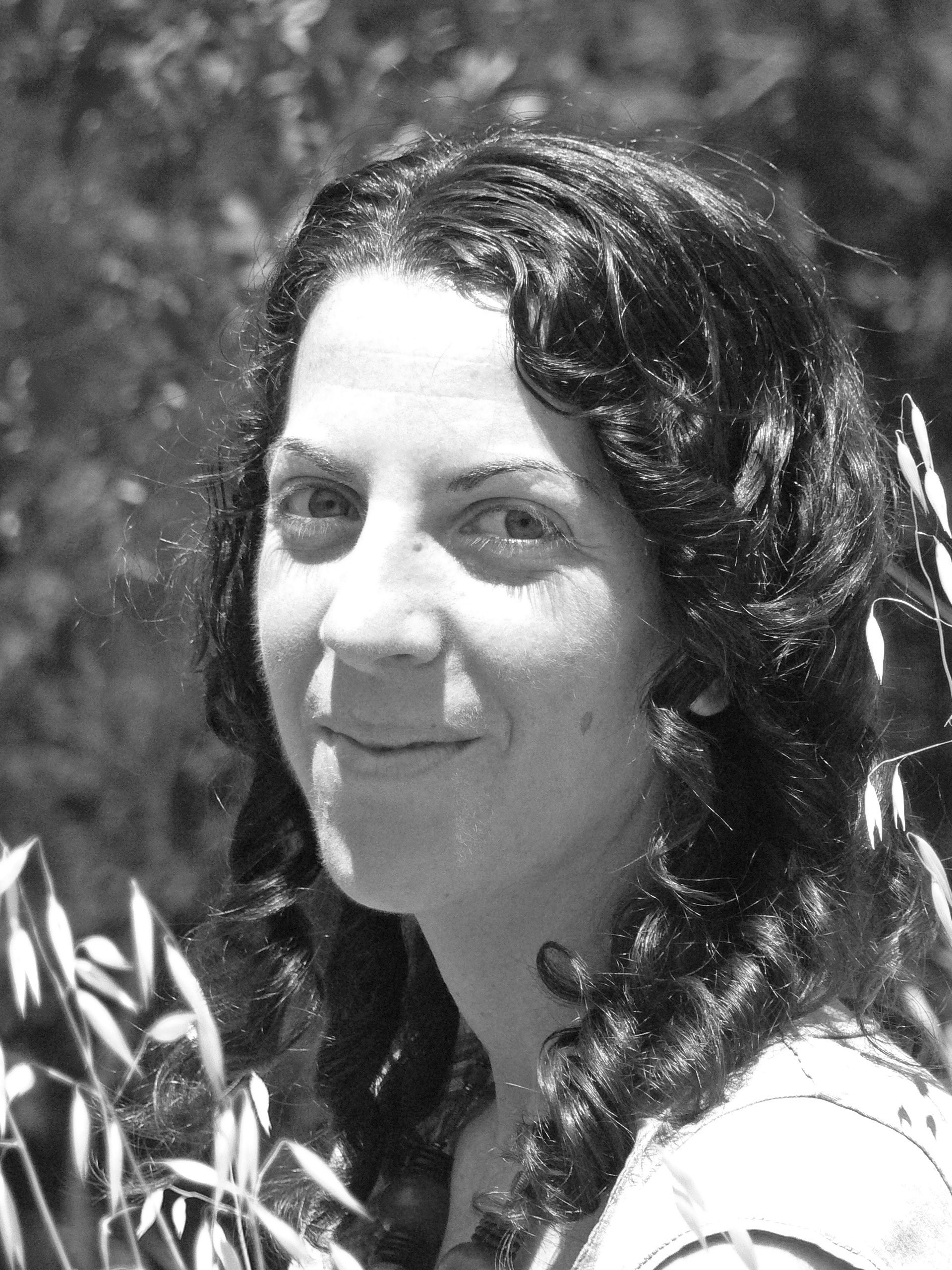
Fayette Fox
Can you tell us about your debut novel, The Deception Artist?
“The Deception Artist” is literary fiction, set during the recession of the late-80s. The protagonist is eight-year-old Ivy who has a vivid imagination and lies so people will like her. When the story begins, Ivy’s brother is sick in the hospital and their dad loses his job. Ivy’s best friend hates her and she’s afraid her parents might divorce. Ivy copes the best she can, through make-believe and lies, before abandoning her fantasies to try and uncover the truth.
What’s your typical writing day like?

 by
by 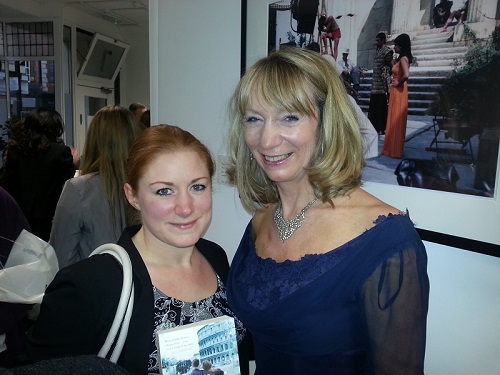
Helen and author Gill Paul.
By Helen Jackson.
I was lucky enough to get invited to Gill Paul’s The Affair Launch Party.
The party was held in The Green Rooms near Oxford Circus.
It was an Italian 1960s setting (as the novel is set in Rome in 1961/2), with pizza and prosecco for all.
Gill wore an amazing blue 1960s dress. The room was decorated with photos donated by a living member of the cast of Cleopatra, John Gayford, who snuck a camera onto the set amid the high security. Continue reading

 by
by My best writing moment – well, it’s almost 10 years now since my first book was published, so I have loads of great moments, especially when a lovely email from a reader pops into my inbox and makes me feel like a ‘proper author.’ I had one from Syria the other day!
 Kate Harrison |
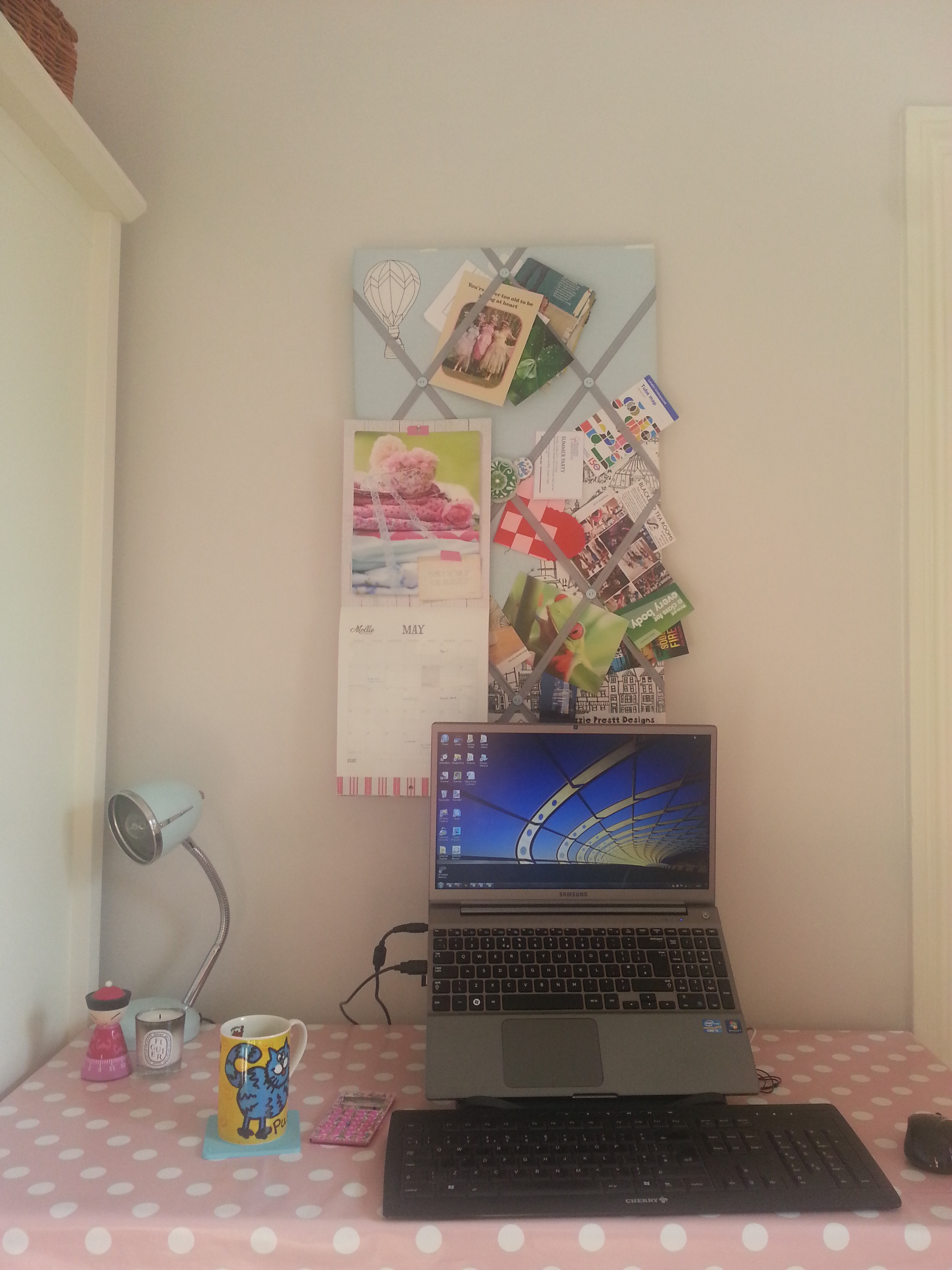 Kate’s writing space. |
But I think the most exciting part of the process is getting to see the cover for the first time – I always hold my breath when I open the email but it’s the first sign that the book is REALLY happening, and it still gives me a thrill to see books – my favourite things in the world, since I first learned to read – with my name on them… My workspace: doesn’t it look tidy? But the table-cloth is wipe-clean due to coffee stains, and you can’t see the chaos behind me. Neither can I, when I work, which is a good thing. The candle, coffee and Chinese kitchen timer are all there to help me focus – I use the timer to keep me off the internet for an hour at a time…
Follow Kate onTwitter @katewritesbooks

 by
by 
Andrew Clover (Photo, Maria Head.)
Can you tell us about your novel?
It’s called Learn Love In A Week. It’s about a wife called Polly who chucks her husband, because he’s too grumpy. He has a week to win her back. The reason is she gets an offer that no woman could refuse… She meets a man called James Hammond. He’s her ex. He’s her Road Not Travelled. He’s also attractive and rich and in a week’s time he’s inviting her to his hotel in the countryside, because he wants to give her the job she’s always wanted. He also wants her. Should she accept? Her best friend says: ‘Go’, but she’s stuck with a skanky man who resists commitment the way a dog resists the bath. Polly’s husband says: ‘Stay… I can change.’ But can he? After ten years, can you learn to love again? And if you could, would you still choose your partner?

 by
by Fayette Fox
Fayette Fox’s debut novel, “The Deception Artist” is literary fiction about childhood and make-believe, truth and lies. It was published by Myriad Editions in May 2013.
I needed to put my other interests aside. No cooking elaborate Thai curries, no crafternoons, or hikes in the English countryside. And no meeting up with friends for a drink. I had to focus. I had a novel to write. It was late October 2006 when a colleague told me about NaNoWriMo (National Novel Writing Month), a personal challenge to write a 50,000-word novel (about 175 pages) during November.
The longest thing I’d written for my Creative Writing BA was short stories and I hadn’t written fiction for several years. So writing a novel in a month sounded like fun. How do you plan a novel in two days? I’d been living in London, but decided to set my story in northern California in the late Eighties, the time and place of my own childhood. Less research, I figured. I dreamed up Ivy, a child protagonist with a vivid imagination who lies a lot.
I scribbled a few plot points on index cards and on November 1st, started writing. Every day after work, I worked on my novel. Focused and determined, nothing could stop me. Then a friend invited me to see a play with her. Sure, why not? Then another friend wanted to catch up over a drink. Before I knew it, I was slipping behind in my word-count. By the end of the month I’d written about 60 pages, way short of my goal, but also a personal record. Continue reading

 by
by 
Giovanna Fletcher
Can you tell us about your route to publication and the moment when you got your book deal?
I was encouraged to write by others after years of reviewing books for magazines and my blog. Sitting down and writing it was one thing, but nothing prepares you for the anxious wait once it’s been sent out to publishers. I loved the book, and so did my agent, but would anyone else? Luckily, yes! I was on the way to a wedding dress fitting when I got the news that Penguin had offered a deal… Needless to say it was quite a special day.
Can you tell us a bit about your debut novel, Billy and Me?
Billy and Me follows Sophie May as she falls for teen heartthrob Billy Buskin – a huge movie star. Like most of us, Sophie comes with baggage, and as a result she doesn’t cope very well in BIlly’s world.
When starting a book, are you a planner or do you have an idea and just see where it leads?

 by
by When I was a little girl in Rumford, Maine, USA, I used to go to my local library every week, and sometimes more. It was a short walk for me down a steep hill, and even though the walk back was up that steep hill, laden with books, I never minded because I could read all the way.
 |
 Julie’s Writing Garret. |
As a teenager, I got a job in the library shelving books and I read all of the books I possibly could. Quite often I read the books instead of shelving them. I always dreamed that one day, one of my books would be on the shelf there, along with my favourite authors. Now, every summer, I take a hardback copy of my latest book to the library in Rumford, Maine. And the librarian puts it on the shelf, along with my favourite authors. Every time it is a dream come true.

 by
by 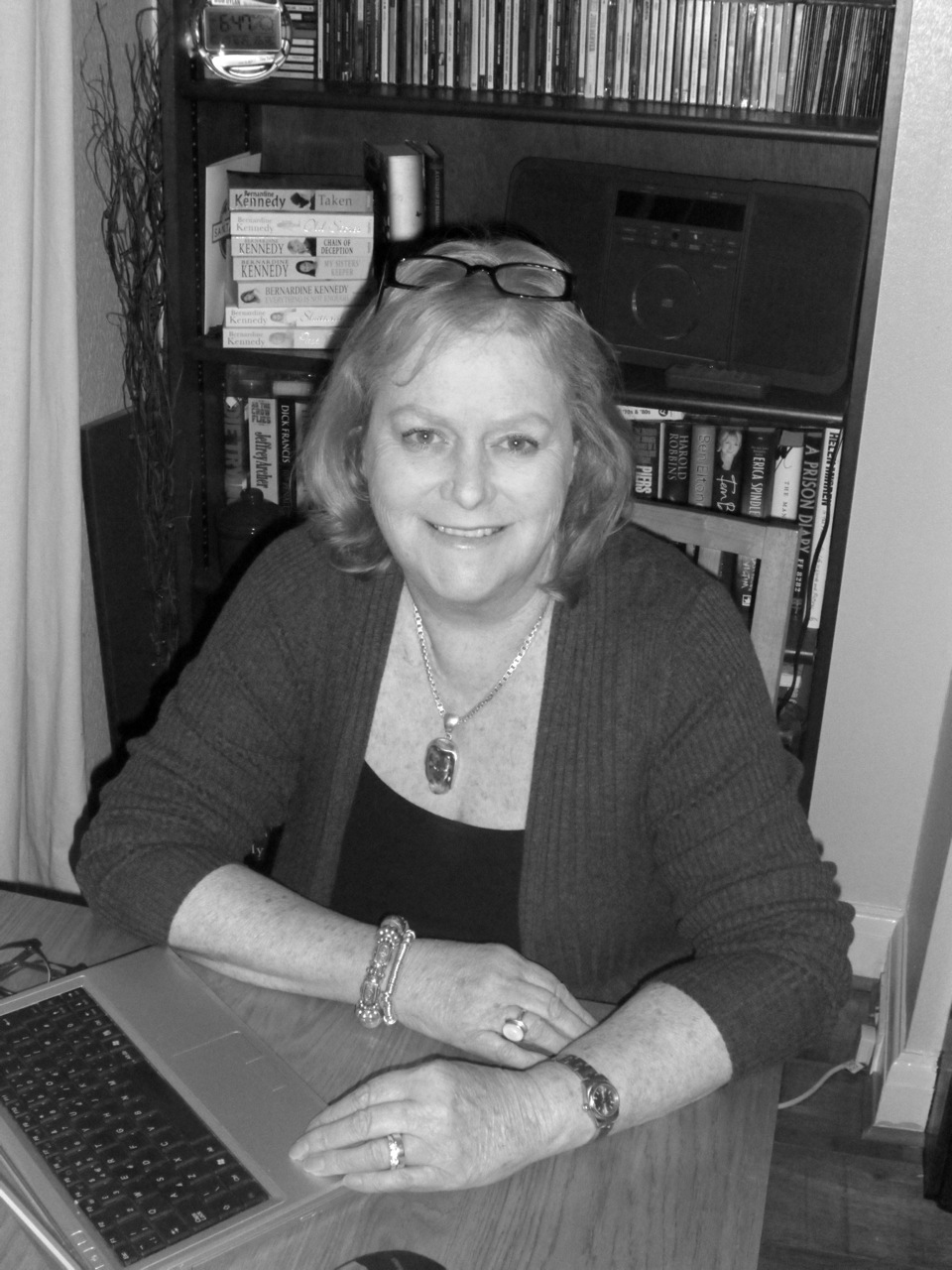 Bernardine Kennedy, under the pen name Marie Maxwell is the author of the novel, Ruby. Her latest book, Gracie was released by Avon in April 2013.
Can you tell us a little about your new book, Gracie?
Gracie is set in the 1950s and is about a young woman who grabs at the chance to draw a line under the mistakes she made in her past and move on with her life. The book starts with Gracie accepting a marriage proposal from Sean who she’s known for a long time. She’s so thrilled to be a step nearer her dream of a family life she jumps in with both feet and doesn’t listen to all the advice she’s given about thinking first and not keeping secrets from her fiancé! Gracie has a traumatic time over the course of the book as her life unravels ………….

 by
by  Stella Newman is the author of Pear-shaped. Her latest novel, Leftovers was released last month.
What’s your typical writing day like?
I don’t really have a typical writing day as such because I have a full time job. On a weekday I’ll go to work, and if I have any energy by the time I’m home, I’ll write for a few hours after dinner. At the weekends and on holidays I’ll try to do as full a day as possible, so up to 12 hours. Either way, I drink a lot of tea and coffee while I’m writing!
Do you plan or simply wing it?
I do plan quite a bit. Years ago I went on an Arvon creative writing course which I found incredibly inspiring, and one of my tutors, Kate Long, talked about how you should know your characters inside out, even if you don’t end up showcasing every detail about them on the page itself. So for example, you should know what was the first record each of your characters bought, even though that sort of info probably won’t be in the finished novel. I thought it was great advice, as it means your characters are fully formed in your head before you start pulling their strings.

 by
by “I’ve got two favourite moments of being a writer. The first was when I encountered a stranger reading my second novel, SPOTLIGHT, on the tube. I felt very awkward watching her, but when she laughed out loud while reading it I couldn’t stop smiling. It’s a treasured memory!
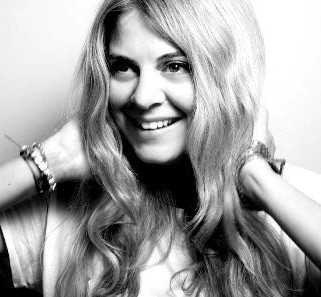 Ilana Fox |
 How I tend to work, in the living room with a cat on my lap. |
My second favourite moment was at my launch party for ALL THAT GLITTERS – I invited all my favourite book bloggers to come along as well as my friends and family because I wanted to give something back. People often forget that book bloggers are real people too (and not just people to send press releases to!), and it was so nice to finally meet people who I know virtually.”

 by
by
Can you tell us about your latest novel, Outrageous Fortune?
It’s a reversal of fortune story, with two girls born on the same day, one to great privilege and the other to a life of hardship. But events bring great changes, and Daisy, our rich girl, finds herself facing a huge challenge, while Chanelle, who’s grown up in poverty, does whatever it takes to get away from her background. And, of course, their lives become intertwined in unexpected ways…
Describe your typical writing day?
The writing day depends really on how close my deadline is. I always spend ages over the beginning of the book and then realise that time is disappearing, so then write much faster. Ironically, my endings are always better than my beginnings. I have written at home in the past, but I find that so distracting now that I’ve just got an office space outside home. And it’s great. It helps me treat writing more like a 9 to 5 job, and paying rent for my work space helps focus the mind wonderfully.

 by
by I often hear people say they’re going to write a novel…eventually, when they retire, or the children have left home (do they ever, these days?) and they have the right computer, or pen, or the wind is coming from the south west…
I’ve never really understood this, because if you’re a writer, you write. You burn to write. It’s part of who you are. And its fun, too – in fact, Stephen King says writing is the most fun you can have on your own and he’s quite right.
Perhaps it’s a fear of failure or success, but you won’t experience either unless you actually get the words down on the page, so why not start today? If your writing U-bend needs unblocking first, you should read Natalie Goldberg’s Writing Down the Bones, and all will soon be flowing freely. And I’m going to quote Stephen King again (you should read his book, On Writing) when he says that you should write your first draft with the study door closed, i.e., just for yourself, then the second draft with the door opened, rewriting it with an eye to your readers. That’s great advice – write with a red-hot pen, let the words rush out onto the page, then hone and polish till it sparkles.
For those going the traditional route and submitting to agents or publishers, a little market research in the Writers and Artists’ Yearbook beforehand can work wonders, so that you’re submitting to an agent or editor who actually handles/publishes the genre of fiction you write.
Of course, to do this you actually need to know what kind of novel you’ve written and make this clear in your synopsis, because if you don’t know, then the agent/publisher certainly won’t.
And once it’s gone, don’t wait for the novel to come back, but crack on with the next one straight away.

 by
by Can you describe your writing style in fifteen words or less.
Lyrical, passionate, intuitive and at times poetic.
What’s your typical writing day like?
I’m contracted to write two books a year which I love but instead of spacing it out sensibly, I leave actually sitting down to write the book until almost the last minute because I thrive under pressure and I think it makes my writing better. So then I’m left with long writing days. I could start early in the morning and not finish writing till midnight. This will go on for about six weeks, writing between 2-3000 words a day and on crazy days up to 7,000 words, but those days are few and far between. And as much as it becomes very intense I wouldn’t have it any other way.

 by
by If there’s one question a novelist (well, me, at least) always gets asked (apart from “where do you get your ideas from?”, to which I always reply “there’s a great website – IdeasForNovels dot com”), it’s “is the central character based on you?”. 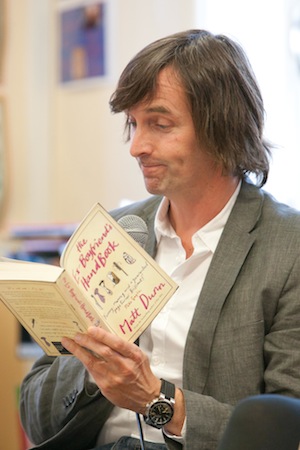 I’m never offended – after all, I don’t write books about serial killers – but though I don’t always like to admit it, the answer is quite often a resounding “yes”.
And I sometimes apply a similar approach to the supporting characters too. There’s a saying that goes something like: “when you write a novel, half your friends will be annoyed because they think they’re in it, and the other half will be even more annoyed because they’re not.” Most authors will probably smile wryly at this, but there’s a reason why, at the front of very novel, you’ll read a disclaimer that says something like ‘any similarity between characters and persons alive or dead is purely coincidental’, and that reason is, well, because any, ahem, similarity isn’t always, you know, purely coincidental. Well, at least in my books!
Of course, while most of us writers – me included – wouldn’t stoop so low as to completely and accurately reproduce our friends and family in the books we write, it’s probably fair to say that many of us do occasionally ‘borrow’ or exaggerate facets of people we know’s personalities, or pinch things they’ve said, or even the way they speak, in order to give life to characters on the page.
Certainly, the supporting characters in my first two books – Best Man and The Ex-Boyfriend’s Handbook – were based loosely on friends of mine. At the time – and it was early on in my writing career – it just seemed easier to imagine someone I knew, then just write that down. And it seemed to work.
I now know most novelists take a much more formal approach – spending ages writing full character CVs, or even question-and-answer profiles so they know exactly what a character’s like. This works well – I’ve done it myself recently. But strangely enough, I’ve found my best received characters have all had a dose of reality about them.

 by
by Novel Kicks was very exicted to be invitied along to meet some of the authors and lovely people at Avon Books.
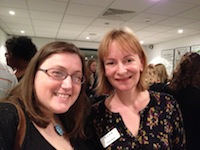
Helen and Laura had the opportunity to meet with Julia Williams, Claudia Carroll, Gill Paul and Fiona Gibson. We were able to chat about two of our favourite things – books and writing. A good night was had by all.
On arrival, we recieved name badges. Yes, we did get stupidly excited about name badges.

Laura with author Fiona Gibson who’s new book, Pedigree Mum is due out at the end of February.

 by
by Can you describe your writing style in less than fifteen words.

What’s your typical writing day like?
Deal with needful business first thing and get it done (or procrastinate … big time). Go to the writing space in my head and pick up where I left off. Break for a walk every day, rain or shine; out over the fields and up an old tree-arched lane – about 3 miles. On the walk I can ponder aspects of the story I’m working on or just ‘be’. Write in two hour chunks then stretch, make tea, smile. Keep track of time – my computer speaks the time every fifteen minutes to help me keep track. My aim is to write 4-5K words per full writing day. When I’m on a roll I can do more. If I side track into editing or other stuff it can be much less. Better focus and productivity comes from practise.

 by
by 
What’s your typical writing day like?
My writing sweet spot has always been the three or so hours after the coffee first hits my brain cells. So I try to reserve my mornings for creative work. After lunch, my artistic focus shifts to refreshing Twitter and procrastinating on returning important emails by looking at photo galleries of basset hounds running.
You started National Novel Writing Month. Did you have any idea it was going to be as successful as it is and are you taking part this year?
Never in my wildest dreams. When I organized the first event back in 1999, I honestly didn’t think the 21 of us who signed on would last the month. None of us knew what we were doing, and few of us had bothered to plan our books. The saving grace of the whole endeavor was that we met up after work and wrote together. That camaraderie made the inevitable difficult stretches endurable. Which in turn gave us the focus we needed to bring the stories to life. It sounds corny, but finding out we had these novels inside us that we hadn’t known was there was a little like discovering we could fly. And I thought: Dang. If we can do this, anyone can.
I am taking part in NaNoWriMo this year for the 14th (!) time—I’m about to wrap up a tale of two monsters who find a VHS tape and set out to return it. It’s pretty ridiculous, but I’m loving it.

 by
by
Can you tell us about your latest novel, A Winter Flame?
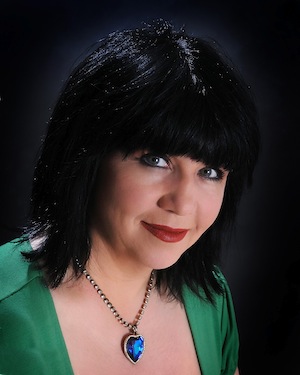
Milly Johnson
It’s about a woman – Eve – who hates Christmas, especially after her soldier fiancé was killed on Christmas Day, and is left a Christmas theme park by an eccentric old aunt – to be jointly run by herself and Jacques a man she has no knowledge of. Eve can’t move on from the loss of her fiancé and has become a semi-recluse but her mad business partner and the people of the park force Eve out of the past and into the here and now. I had great fun in writing it – Jacques is one of my favourite heroes and I wanted Eve to have her happy ending after so much sadness in her life. It’s fantastical of course – but if you can’t have a bit of magic in a Christmas story, when can you? Oh and it picks up the story of Violet in White Wedding so best to have read that one first if you want to avoid any spoilers.

 by
by
How did you begin the process of writing The Wedding Guests?
I started with Rob first and wrote his story from start to finish – almost like a short story. As I think with a lot of first time writers, I then realized nothing was in the present tense…
If you could do anything differently, what would it be?
I would put more fiction in my fiction. It’s counter intuitive as a journalist to lie.

 by
by
Can you tell us about Christmas with Mr Darcy?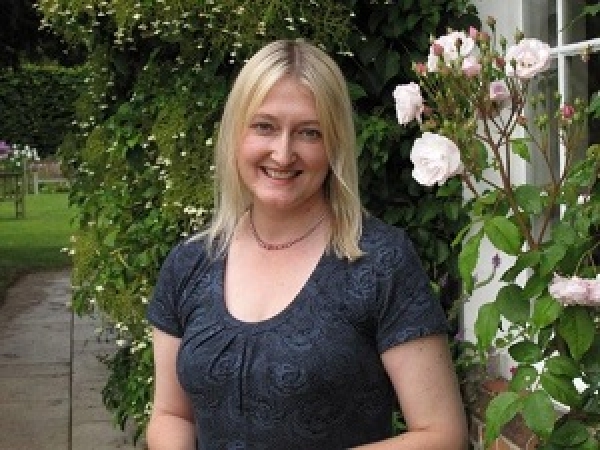
Christmas with Mr Darcy is a light-hearted novella sequel to my Austen Addicts’ Trilogy. All of the main characters from the first three books meet for a special Christmas conference at Purley Hall but, when a first edition of Pride and Prejudice goes missing, the fun and festivities stop as everybody turns detective.The novella was enormous fun to write and it was lovely to meet up with all of the characters again and see how they’re all getting on but readers don’t need to have read the trilogy first although they might get more out of the novella if they have.

 by
by Novel Kicks would like to welcome back Pauline Barclay to our blog….
Laura, thank you for having me here on your fantastic web site and thanks to your hospitality, I’m not a stranger here having appeared twice before. Though this time, as much as I would love to talk about my books and of course my new book due out at the end of this year, I will save all of that for another time if you’ll have me back.
Today, I’d like to tell you about Famous Five Plus which is an Indie Author Group. As an Indie author I know how hard it is to get your name out there to the widest audience. And of course whilst you are marketing yourself, you are not writing. Added to trying to balance writing and marketing you can often feel isolated having no one to talk to, to bounce ideas off or to share any success that might come your way. Writing is for many a solitary occupation and being an Indie author you can often feel even more isolated, but by sharing thoughts and ideas can make you feel less on your own. These are just some of the reasons I decided to set up Famous Five Plus to bring like mind people together who could share their experiences and support each other. So on 31st October 2011, I launched Famous Five Plus. To get the group off the ground I invited five authors I had become friendly with to join me. Since then many authors have asked to join the group.
Famous Five Plus is about working together as a group and supporting each other. Everyday I update the FFP web site with a new post, an extract from a member’s book, highlight an author, highlight one of the member’s trailers and more. All members are asked to promote these changes through social media: Twitter, Facebook or their own Blog / web sites. What is wonderful is that during the month everyone is promoted and everyone gets involved.

 by
by Tracey, your debut novel is called On The Island. Can you tell us a little about it?
On the Island is a story about a thirty-year-old teacher named Anna who has been hired to tutor sixteen-year-old cancer survivor T.J. Callahan. They were supposed to be spending the summer at the Callahan’s vacation rental in the Maldives. Unfortunately, the plane Anna and T.J. are traveling on crash-lands in the Indian Ocean. They make it to the shore of an uninhabited island and wait for a rescue that never comes.
Can you sum up your writing style in five words?
Fast-paced, sparse, emotional, easy, storyteller.

 by
by
What was your route to publication?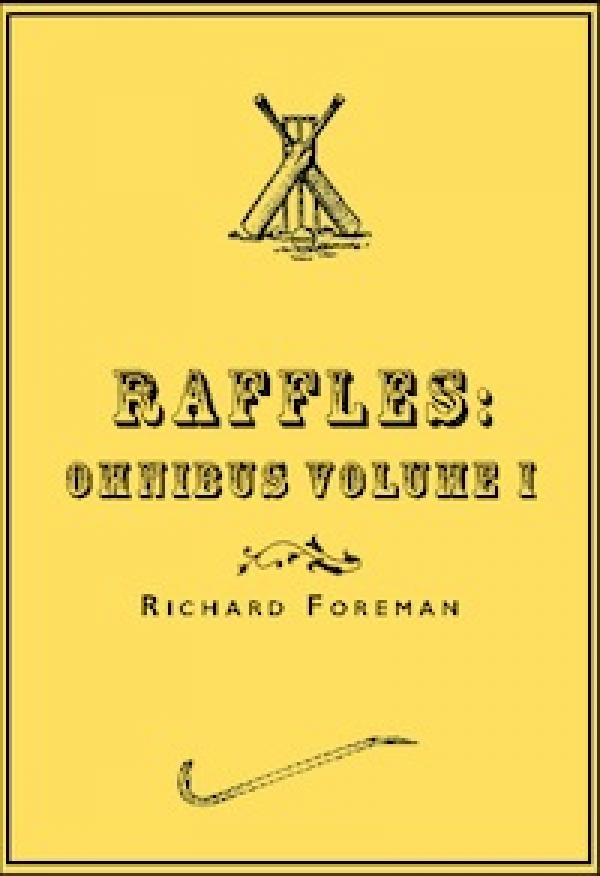
I have an agent for my novels, which she is trying to sell for an orthodox print deal, but the Raffles series of novellas are published with Endeavour Press, the UK’s leading digital publisher. As I am co-owner of the company, the acquisition meeting went smoothly.
I work with a number of authors, both as a publicist and publisher, and it’s apparent that there are as many different routes into the trade as there are writers. And I can add one more by saying that should you be interested in writing short fiction, or non-fiction, please visit the endeavourpress.com website. Please read the submissions page. You are likely to narrow down your odds further by reading Raffles and citing this piece.

 by
by
What was your route to publication?
A silly part of me believes that to be a worthy author I should have had to drag my manuscript around the publishing houses of London, begging someone to publish me. In actual fact I got spotted by an editor who encouraged me to write a novel. So I did just that and within six months I had a publishing deal. Had she not found me (via my Marie Claire blog) I probably wouldn’t have written a novel. I’d always wanted to be an author but it had genuinely never occurred to me to try – I just presumed I’d never make the grade.
Your latest novel is titled The Greatest Love Story of All Time. Can you tell us about it?
The Greatest Love Story of All Time is about Fran, a slightly bonkers journalist who, at the beginning of the novel, is living like a badger in her bed having just been dumped by the man she thought she was about to get engaged to. Her friends, who are now seriously fed up of her moping, break into her flat and demand that she pull herself together and get back out there on to the dating scene. Fran is appalled by this idea but eventually caves in, signing up to a bizarre eight-date deal that her friends have set her. But as she sets out trying to find love online she gets sidetracked by a beautiful woman called Nellie, by her increasingly alcoholic mother and by her evil cat whose life’s mission it is to eat Fran alive.

 by
by
You’ve just completed work on the fourth book in the Behind Blue Eyes series. Can you sum up the plot in a few sentences?
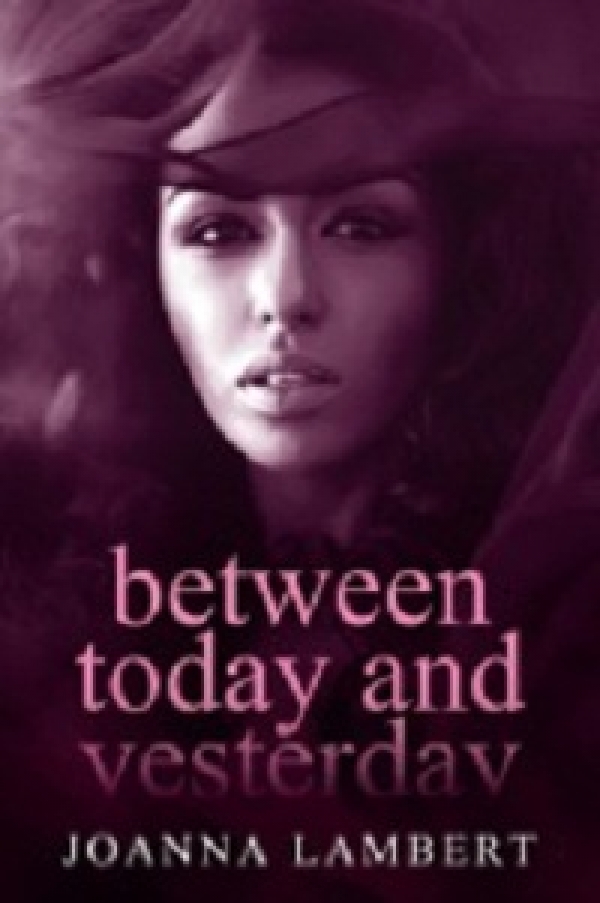
As with all my other novels there’s a strong central plot with sub-plots woven around it, so it’s not always easy to describe. However, I did an interview last year while I was in the middle of writing Between Today and Yesterday and one of the questions I was asked then was to sum the plot up in around thirty words. This was my response – The birth of a band; the death of a matriarch; a family in crisis; the search for a lost love child and someone from the past is back looking for revenge. I think that covers everything quite well and believe it or not, although they appear to be totally unrelated, they all blend quite seamlessly to become one story.

 by
by
Your latest novel is titled ROOK. Can you tell us about it?
Set in the ancient Sussex village of Bosham, where King Cnut is said to have proved even he could not command the waves, ROOK is a story of family, legacy and turning back the tides.
Nora has abandoned her career as a cellist, returning to her childhood home and her mother Ada, a fragile, bitter woman, who distils for herself a glamorous past as she smokes French cigarettes in her unkempt garden. A charming young documentary-maker arrives to shoot a film about King Cnut’s illegitimate daughter, whose body lies beneath the flagstones of the local church. As Jonny disturbs the fabric of the village, digging up tales of ancient battles and burials, the threads lead back to Ada and Nora, who find themselves face to face with the shameful secrets they had so carefully buried.
Rook explores the mystery surrounding Harold II’s burial place, the hidden histories of the Bayeux Tapestry and connections forged through three women’s stories.

 by
by
Your latest book is called Ten Minutes to Fall in Love. Can you tell us a little about it?
Ten Minutes is about a mixed-up young woman called Zu. Her mother was an alcoholic, who made her teenage years a misery. After she died, Zu left home, hoping never to return. But now she’s been forced back and she decides to clear her conscience she needs to find a new girlfriend for her father, Tony. Nothing goes to plan, however. There are dominatrixes, drug addicts and a trip to Ukraine with men who are desperate for a wife. Action-packed in other words.
Can you tell us about your writing day? Do you have a favourite time and place to write?
I try to write in my home office from 9am to 6pm four days a week, but the reality is probably three hours writing a sentence here and there, interspersed with three hours internet shopping, an hour on Twitter, an hour separating fighting kids and unloading the washing machine and an hour having lunch with my best friend (writers need to get out and about and talk to real people, you see!).

 by
by The defeat of Charles II by Cromwell’s forces at the Battle of Worcester on September 3, 1651 set off one of the most astonishing episodes in British history—Charles’s desperate six-week odyssey to reach safety in
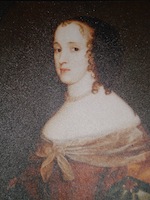
Portrait of Lady Jane which is hung at Mosely Old Hall.
France. It came to be known as the Royal Miracle because he narrowly eluded discovery and capture so many times.
One of the players in the astonishing tale was Jane Lane, an ordinary Staffordshire girl who risked her life to help the 21-year-old king escape. She had a pass allowing her and a manservant to travel the hundred miles to visit a friend near Bristol—a major port where the king might board a ship.
In a story that sounds like something out of fiction, Charles disguised himself as Jane’s servant, and she rode pillion (sitting side-saddle behind him while he rode astride) along roads traveled by cavalry patrols searching for him, through villages where the proclamation describing him and offering a reward for his capture was posted, and among hundreds of people who, if they had recognized him, had every reason to turn him in and none—but loyalty to the outlawed monarchy—to help him.
It was an improbable scheme. Charles was six feet two inches tall and very dark complexioned, not at all common looking for an Englishman of that time. But time after time he rode right under the noses of Roundhead soldiers without being recognized.
If he had been caught, he would certainly have been executed, and it is an open question whether the monarchy would have been restored as it eventually was after the death of Oliver Cromwell. What Jane did took great bravery, and she risked not only her life but the lives and lands of her family, as the fugitive king had been proclaimed a traitor, and anyone who helped him would be executed for treason. Continue reading

 by
by The thriller genre has always been a personal favourite, whether by way of novels or films, since intrigue and deceit, sprinkled with a generous helping of twists and turns, hold my interest and are heaven made for 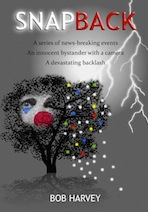 strong subtext. Because I believe it’s vital to stimulate the reader and maintain strong story momentum I tend to write in short chapters, which gives me an opportunity to break up the narrative and insert cliff-hangers in order to build tension and elements of mystery.
I think it’s important not to be didactic or preachy in any way, whatever points are relevant to the story with regard to human interaction, politics, greed, and so on. Whilst storytellers often feel it is part of their responsibility or even purpose to offer the benefit of personal insight and enlightenment to their readers, I tend to focus on creating a strong plot with interesting, credible, characters written in humorous vein. Snapback is a comedy-thriller created for entertainment value rather than anything of deeper significance, with a sting in the tail that involves invasion of privacy and our obsession with celebrity, these personal concerns being worked into the story without the need to bash the reader over the head with a metaphorical sledgehammer. Whatever serious situations occur within a story, the overall effect for me has to be a combination of mystery and fun, the prime objective being to sustain interest and be thought-provoking, but never to tread water, and always to entertain.
For this reason the hook, or set-up, is critical and after the first draft is completed I often rework the opening chapter, or write a completely new one, to ensure that the reader is swept immediately into the unfolding narrative. Tying up the plot lines is also essential. Readers should never be left to imagine their own endings (unless that is a specific intention) or be confused about any elements within the story. To that end, covering my tracks is part and parcel of the writing process. Continue reading

 by
by
Your latest release, The Pink Hotel was nominated for the Orange Prize. Can you give us a plot summary?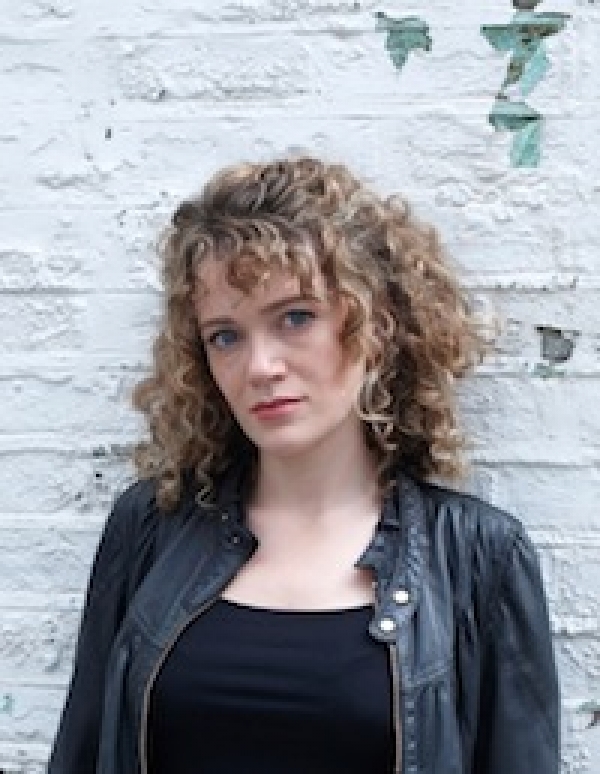
The Pink Hotel is about a androgynous, violent, nameless seventeen-year-old London girl who flies to LA to attend the wake of her estranged mother. She steals a suitcase of letters, clothes and photographs from her mother’s bedroom at the top of a huge pink hotel on Venice Beach, and spends her summer travelling around LA returning love letters and photographs to the men who knew her mother.
Where do you find your inspiration?
The Pink Hotel was inspired by living in Los Angeles for two years. When I first arrived in the city at the end of a road trip around California and Nevada, I stayed in this giant art-deco pink hotel on Venice Beach. Outside my window were children on rollerblades and cartoonish men and doll-shaped women and an old man playing the piano on the sidewalk. Like the protagonist of The Pink Hotel, I meant to stay for a week but ended up living in an apartment on the cusp of Thai Town and Little Armenia in East Hollywood, for much longer than expected.

 by
by
What was your route to publication?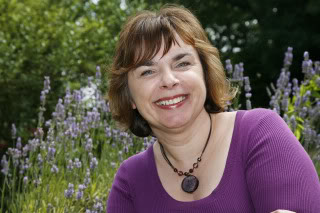
A short one! I was inspired to start writing fiction by a TV costume drama called North & South in 2004. I wrote a modern fanfic version and plunged straight into my first novel Decent Exposure which was published by Little Black Dress in 2006.
Your first novel won the RNA New Writers award – what made you choose the RNA and how valuable was the experience?
I was advised to join the RNA by just about every romantic fiction writer I met online. My critique from the New Writers Scheme was very insightful and the support I received ever since from many RNA members has been invaluable.

 by
by
Describe your typical writing day.
Writing is a job like any other and you have to treat it like that. After helping get the kids ready for school, I start up my computer and start writing. It’s always easier first thing in the morning because your mind is fresh, and you have been thinking about it overnight. I read an interview with Wilbur Smith once where he said he left a sentence half-finished so it was easy to get started again the next day.
I set myself a target of 1,000 words a day. Once I’ve done that, I can start dealing with e-mail and all the other things that need to be done.
How do you approach planning before beginning a book?
I do an incredibly detailed plan. I did quite a bit of ghost-writing, and when you do that you have to have a plan to show the publisher and ‘author’. But it is a good discipline. It is much easier to throw stuff out of plan that isn’t good enough – and, as I think Beethoven pointed out, it’s the notes you don’t write that really count.

 by
by Trisha Ashley, the author of Chocolate Shoes and Wedding Blues, The Magic Of Christmas and Wedding Tiers takes over our blog and tells us about her process between the first draft and finished manuscript.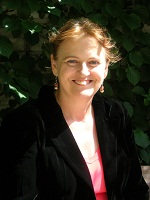
I write directly onto the computer, touch-typing, though I need to see my words in print on paper before the world I am writing about becomes real to me, so I print everything out. This can also be useful if your computer loses the chapter and you forgot to back up onto a memory stick or whatever.
My first drafts are usually somewhere between eighty and a hundred thousand words long and written in the stream-of-consciousness style made popular by James Joyce, since I just pour the words out onto the page and don’t always bother with the punctuation or typos. If I’m too tired to think creatively in the afternoon, though, I will often go back and tidy up the work I did in the morning. Continue reading

 by
by Describe your typical writing day.
Oh, I’m a messy writer, and a very busy one with that. No day is the same. If however I’m in the middle of writing a first draft, the world could collapse around me and I’d still be typing away furiously. This is when my husband brings me little treats, as I forget to eat, along with cups of coffee.
When I’m revising and editing I need more peace and have to work in chunks, carefully crafted around my children.
Any other day will see me scribbling away on bits of paper, notebooks, anything. I’ve been known to stop the car so I could jot something down. Other times I might spend all night on my laptop.
How do you approach planning before beginning a book?
Ah, this is interesting because a while ago I would have told I don’t really plan. However I’ve realised that’s not so true. The planning takes place in my head, hence the very fast first draft, I only have to sit down and type. It’s like a film in my head.
That said, very often I get more ideas for other projects and file them until I can go back to them.

 by
by
Tell us about your route to publication.
I’d been working as a news journalist for about six years and aged 28, on maternity leave, I decided it was time to start that novel I’d promised myself I would write. I found my agent, Darley Anderson, quite quickly and he gave me the encouragement needed to finish and edit and re-edit that first manuscript. Three in A Bed was published four years after I first set pen to paper – well… fingers to keyboard.
Your latest novel, The Jewels of Manhattan has recently been released. Can you tell us a little about it?
The Jewels was inspired by a line in a story written by my daughter: ‘Three girls decided to rob a jewellery shop.’ Why? I wondered, How? And: did they get away with it? My book about three Texan sisters living in Manhattan and getting drawn into a high stakes glamorous jewel theft grew from those urgent questions.
Where do you find inspiration?
Everywhere! From conversations with friends, from listening to other people’s experiences, from reading novels, newspapers, magazines… in art galleries, department stores (Annie Valentine was born on a shopping trip with an old friend). The more open you are to ideas, the more they seem to come at you. The other day I was walking the dog and I saw a bunch of mistletoe hanging from a bridge so that it dangled over our path. Now there is a story just waiting to be written!

 by
by