NK Chats To… Siân Turner
 Hi Siân. Thank you so much for joining me today. Can you tell us about your book, Patches through Time and what inspired it?
I’m a fan of the TV programme Bargain Hunt. While watching one episode, the presenter mentioned a commemorative coronation mug that could have been bought for £1 when new, which was worth more than £500 in the present day. It made me wonder what it would be like if you could travel back in time to collect cheap items from the past, then make a huge profit selling them back in your own time. It seemed appropriate that the time travel device needed would be found in an antique shop. Jake Patch was ‘born’ as the finder of ‘The Infinity Glass’, quickly followed by the sprite, Drusilla, and by Jake’s daughter Cass, who absolutely insisted on being the main protagonist.
What were the challenges when writing a book like this, especially as it’s part of a planned series?
It wasn’t planned to be a series. I wrote ‘Patches through Time’ as a standalone but, as I have done with some previous books, left a bit of an open ending for people to decide what they thought could happen next. Once the book started getting reviews, I noticed a lot of them said ‘There must be a sequel’ or ‘I need a prequel,’ so I decided to provide both in one book. So ‘Patches of the Past’ was inspired by keen reviewers, like yourself!
What’s your typical writing day like? Do you have any rituals like needing coffee or silence to write?
I absolutely detest coffee, so it’s a glass of water for me. Having started my working life in an office-based desk job, I’m very much a 9-5er – well, maybe more like a 9-4er these days, with a lunch break around Bargain Hunt time J. Working at home means some interruptions – mostly cats either shouting for snacks or deciding it’s time to sprawl across my desk. My office space is a corner of the living room, and I like working when it’s quiet. I’m lucky enough to have a view straight out to the apple trees at the bottom of my garden from my desk.


 by

Book Extract: Body Language By Brian Fitzgerald
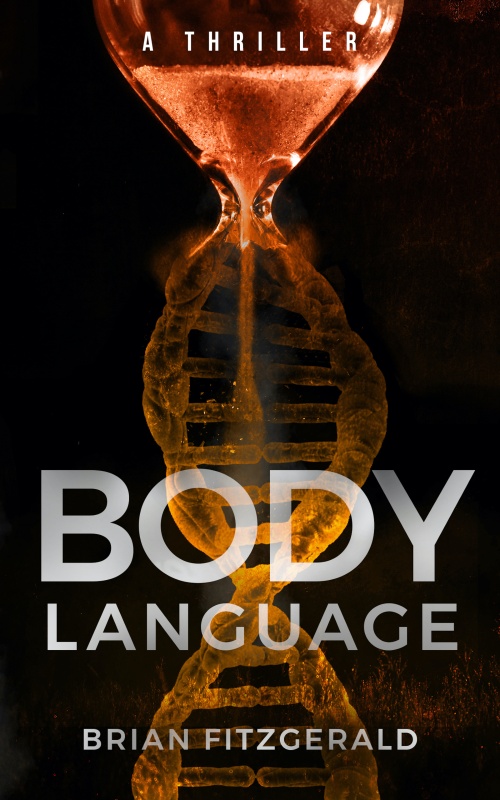 I’m happy to be welcoming Brian Fitzgerald to Novel Kicks as we shine a light on his book, Body Language.
When Alan Wright learns his ex-wife Andrea leapt to her death only hours after getting remarried to a man he hates, he’s heartbroken. When he receives a package in the mail two days after her death, filled with the documents she’d used to plan that wedding, he’s hurt and angry. And when he learns that Andrea’s bizarre last wishes require him to spread her ashes over a lake outside a small village in Africa, he’s beyond resentful. But love, loyalty and the uncanny power of human connection win out, sending Wright back into the volatile stew of hope and cynicism that is aid work in the poorest parts of the world. In the teeming city of Kinshasa and the remote villages of the Congo he not only rediscovers his love for Andrea, he comes to understand that buried in the strange details of the wedding itself were subtle clues she’d left for him. Those clues point him to a plan to unleash genetic engineering in a way so reckless that its failure could mean the end of all human life, while its success could leave the fundamental definition of humanity in the hands of small team of scientists and the government that supported them.
Body Language travels with breakneck speed from the glittering research labs of Cambridge Massachusetts to the darkest corners of the Democratic Republic of Congo. It’s a story of the modern power of science, money and greed pitted against the eternal strength of human connection, love and altruism, reaching across the boundaries of death itself.
Brian has shared an extract with us today. We hope you enjoy.
*****beginning of extract*****
One
Andrea uncrossed her long legs. The skin below her short dress was tanned from years in the African sun. On one calf a series of thin white scars showed where the inevitable wounds from jungle life had been left to heal undressed. She crossed her legs the opposite way and drummed her fingers on the soft arm of the plush white leather couch. The bald man sitting on the identical couch opposite her ignored these shows of impatience. He kept his gaze lowered to the glass coffee table between them, intent on his work. Andrea watched the reflection of the ceiling lights ripple unevenly across his shaved scalp as he turned his head back and forth, scanning the pile of documents laid out on the table. From time to time, he’d hold a page to the light in his thick, crooked fingers. He seemed to be looking for faint markings or perhaps for some sort of invisible ink. This amused Andrea in some small way. She knew it was all for show. His cryptography expert had already told him the documents were free from any codes or cyphers. Some of the pages he inspected were printouts from a computer, and some were handwritten in Andrea’s hasty, childlike penmanship.

 by
Novel Kicks Writing Room: You Are What You Carry
 Welcome back to the Novel Kicks Writing Room.
Today, we will be writing about a person before they embark on a journey.
A character is packing a bag. They are leaving somewhere — a city, a relationship, a job, a country — and they can only take what fits in one bag. Every object they choose to pack reveals something about who they are, what they value, and what they are willing to leave behind.
Before you start writing, decide three things about your character:
Where are they leaving?
Why are they leaving?
Are they coming back?
Write your answers in a sentence each. Keep them simple. These are your foundations, not your story.
Once you’ve done that, choose the objects:
Write a list of exactly five objects your character packs. For each one, write a single sentence explaining why they chose it. The objects should be specific and concrete — not “a book” but “a battered paperback copy of something specific with a coffee ring on the cover.” The more precise the detail, the more the object will tell the reader about the person holding it.
Now choose one object they almost pack but decide to leave behind. Write a sentence about why they put it back.
Write the scene.
Write the scene in 400–600 words. Your character is alone, packing. No dialogue. No other characters in the room. The only story is this person, this bag, and these objects.
As they pack each item, let the reader understand, through the way the character handles the object, hesitates, or moves quickly, what each one means. Don’t explain. Show.
The scene should begin with the bag empty and end with the bag zipped shut.
Have fun.

 by
Book Extract: House of Thieves By Rachel Walkley
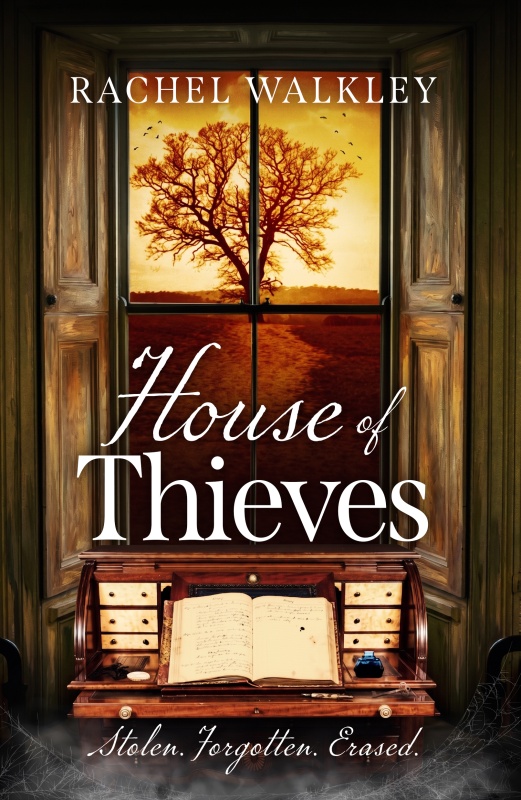 Please join me in welcoming Rachel Walkley to Novel Kicks and the blog tour for her book, House of Thieves.
At Terrington Hall, objects are treasured while people are forgotten.
Chief conservator Amy is restoring the Hurly family’s guilt-stained hoard when a theft forces her to hire Harrison, a security adviser on a personal quest to uncover his own history.
Unknown to anyone, an invisible presence woven into the fabric of the house watches their every move.
When Harrison uncovers a room sealed for decades, the investigation shifts from simple theft to the resurrection of murderous secrets. In a house where the past is too heavy to escape, the dead don’t need bodies to tell their stories — they just need someone to listen.
One house. Two mysteries. Two centuries apart.
Rachel has shared an extract with us. We hope you enjoy.
*****beginning of extract*****
Terrington Hall, for centuries, was home to the Hurly family until it was handed over to a charitable organisation and opened to the public for viewing. Unknown to Amy, the head of conservation and new member of staff, there is an invisible presence who continues to exist at Terrington Hall. This solitary inhabitant, waiting in the shadows, sets the scene…
*****
 Since Amy’s arrival at Terrington Hall, I often stay by her, move with her, as close as possible, as if I walk her steps, breathe the air she breathes and can see what is in front of her. But I don’t feel her thoughts or touch what she does. My hopes for salvation are fuelled by her curiosity, her diligence, especially if she discovers the truth behind the thieves that once lived at Terrington.
I’ve always relied on others for companionship, to breach the loneliness of my incorporeal existence. My chief occupation is listening to their conversations. They have been generous in keeping me abreast of the changes both in and outside the house. They read newspapers and magazines, speak of things and events that are difficult for me to comprehend until one explains something complex to another in a simple manner, as if to a child.

 by
Book Review: The Secret Dressmaker By Jenny O’Brien
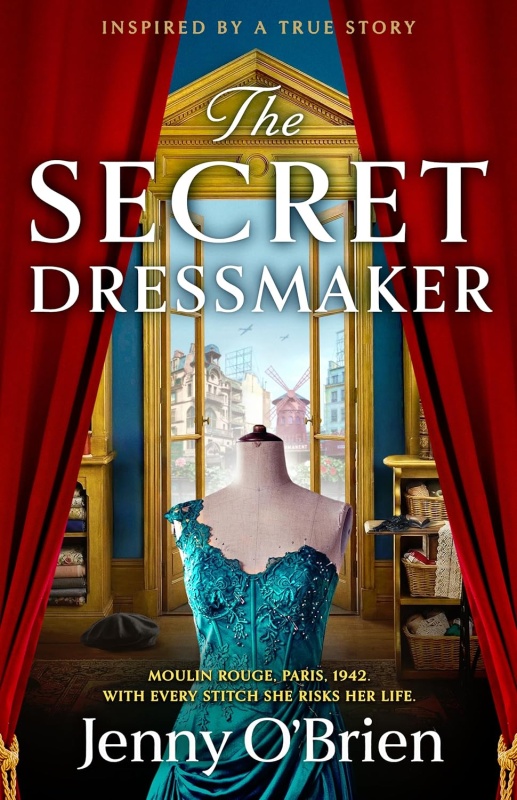 I’m so excited to be welcoming Jenny O’Brien back to Novel Kicks and the blog tour for her new book, The Secret Dressmaker.
Shelves of sequins in a kaleidoscope of colours. Bolts of silk and tulle against the back wall. The sewing room was the last place anyone had seen her daughter alive.
Northern Ireland, 1942. Flora Toussaint packs parachutes for the RAF, haunted by the twin daughters she was forced to give up eighteen years ago. When British intelligence shows her photographs of her girls – now young women in occupied Paris – her world shifts. One is safe. One has vanished. And their father, the celebrated couturier Lucien Lumineau, is suspected of collaborating with the Nazis.
Flora agrees to a dangerous mission: parachute into France, pose as a seamstress at the Moulin Rouge, and uncover the truth. Lodging above a brothel where Edith Piaf sings after hours and where Pablo Picasso still holds court, she mends costumes between shows, searches for any trace of her missing daughter between curfews, and circles closer to Lucien.
But Lucien isn’t the man she remembers. Neither is their history. And what Flora discovers will unravel everything she thought she knew – about Lucien, about her daughters, and about the night she gave them away.
A sweeping tale of wartime Paris, family secrets and impossible choices. Fans of Kate Quinn, Pam Jenoff and Kristin Hannah will be mesmerised by The Secret Dressmaker.
*****
Flora Toussaint is haunted by the choices of a past where she was persuaded to give up her twin daughters eighteen years before. When a secret mission gives her the opportunity to go back to Paris, her focus is on finding her girls, even when her simple presence in the city puts her in danger.
Having loved the first book in this series, The Resistance Knitting Club, I couldn’t wait to get going on this one. I am a big fan of novels based on true events, and I’m always intrigued to see how the author builds the fiction around the fact. In my opinion, Jenny O’ Brien is a master at it.

 by
Book Club