Author Interview: Miranda Richmond Mouillot
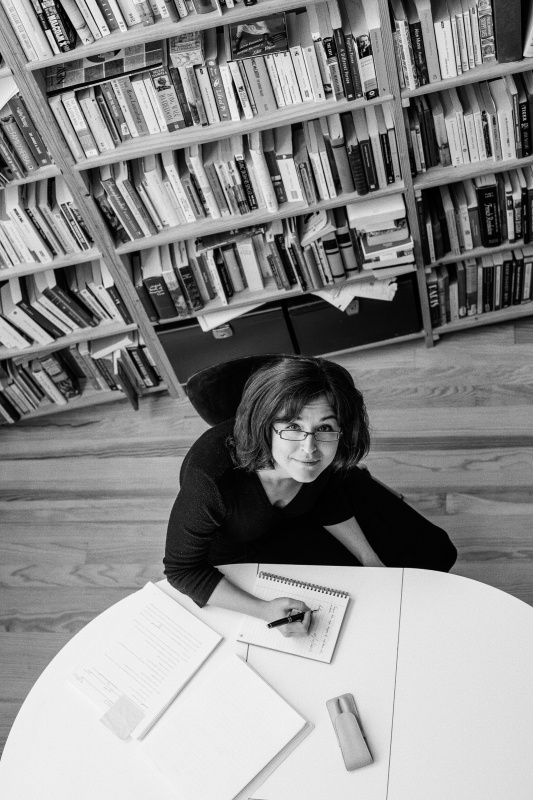 A Fifty-Year Silence is the new book from author, Miranda Richmond Mouillot and was released today. Miranda has joined us to chat about her new book. Firstly, she tells us a little about A Fifty-Year Silence and what inspired her to write it?
In 1953, my grandmother, Anna Munster, packed her bags and walked out on my grandfather Armand Jacoubovitch, taking the typewriter, a grapefruit knife, and their two children.
Five years before that day, in 1948, Armand and Anna bought a ruined stone house in the south of France a month before moving to America to start a new life.
Eight years before that day, in 1945, Anna gave birth to their first child while Armand prepared to begin his job at the Nuremberg Trials as one of just two or three court interpreters who were also victims of the accused.
Eleven years before that day, in 1942, Armand and Anna climbed over the Alps in a snowstorm, reached the border an hour after the guards had gone off duty, and escaped Nazi-occupied France to neutral Switzerland.
Thirteen years before that day, in 1940, when France fell to the Nazis, Armand walked three hundred kilometers to hide out with Anna in a village in the French Pyrenees.
And seventeen years before that day, in 1936, Armand and Anna met in a café in Strasbourg and fell passionately in love.
Or did they?
Here’s the thing: I never knew.
The story of what happened between my grandparents both before and after their divorce was total enigma to me throughout my childhood and young adult life. No one could tell me when or how they had met, or when or why they had gotten married. No one could explain just what had made their separation so acrimonious. No one knew, because half a century later, they still wouldn’t speak to one another. If they referred each other at all, it was in cryptic half-sentences. My grandfather couldn’t even bear to utter my grandmother’s name. All that remained of their life together were a few snapshots in a faded photo album. Those snapshots, those tiny, beautiful remnants of a life the war had completely destroyed – they were the beginning of writing this book: from a young age, I desperately, desperately wanted to know what had happened between them.


 by
by 
A Moment With: Holly Martin
 Holly Martin is the author or The Guestbook, The Sentinel and One Hundred Proposals (as well as One Hundred Christmas Proposals. All published by Carina.) She lives in Bedfordshire in a house with round windows.
She shares her five writing tips:
Read everything, the good, the bad, the ugly, the amazing. See how things work and how things don’t.
Watch people, listen to what they talk about, how they talk, walk and dress so you can create real life characters
Get people you trust to read it and give you feedback.
Don’t take any criticism or feedback personally
Never, ever give up
Learn more about Holly and her books at her blog: https://hollymartinwriter.wordpress.com

 by
by News: Barbara Taylor Bradford Launches Writing Competition
 Barbara Taylor Bradford OBE has joined forces with The Sunday Times to help discover the next generation of young female writers.
Barbara is an ambassador for the National Literacy Trust, an independent UK charity that transforms lives through literacy.
The Write Stuff short story competition is aimed at girls aged 11-18 and who live in the UK. It was launched nationwide on Sunday (22nd March.)
The competition has been initiated following research by National Literacy Trust of more than 14,000 girls revealing that only one in four girls aged 14 to 16 (23%) see writing as cool, and almost half prefer watching TV to reading (49%).
“I feel it’s critical to reach out to girls and young women who want to share a story they have created and inspire a new generation of female writers and readers. It’s really important that female authors like myself take the lead as role models for girls and young women and encourage them to reach their full potential,” says author, Barbara Taylor Bradford who is due to release her 30th novel, The Cavendon Women on 26th March 2015.

 by
by Novel Kicks Fiction Friday: Switching
 Friday 20th March 2015: Switching
Fiction Friday is our weekly writing prompt. The aim is to write for a minimum of five minutes and then keep going for as long as you can. Once you’ve finished, don’t edit, just post in the comments box below.
Today’s prompt: Think about something that has happened to you. It could be something strange, unusual or funny that happened to you as a child, or a teenager or something that happened last week. Once you have something, write about it from the perspective of someone else. You could also think of a situation someone you know has been in and put yourself in their shoes.

 by
by Book News: Upcoming Releases
Spring will soon be on its way. It is only two weeks until the clocks go forward and there is a promise of longer evenings and lighter mornings. It also means new books. I wanted to share with you five of the books that I am most looking forward to reading so far this year…
 The Girls by Lisa Jewell.
I love Lisa’s books and so I can’t wait for this one to be released. This one sounds very intriguing. The cover is so pretty too. This is due to be released by Century on 2nd July 2015.
Dark secrets, a devastating mystery and the games people play. You live on a picturesque communal garden square, an oasis in urban London where your children run free, in and out of other people’s houses. You’ve known your neighbours for years and you trust them. Implicitly. You think your children are safe. But are they really?Midsummer night: a thirteen-year-old girl is found unconscious in a dark corner of the garden square. What really happened to her? And who is responsible?

 by
by Bella’s Scribblings: Exceedingly Good Expectations
 My new claim to fame is that I have had a conversation with Mr Kipling about cakes. Not a dream, but a real life exchange with the real Mr Kipling. (Well, possibly not the real Mr Kipling because I don’t think there ever actually was a Mr Kipling who made the cakes – sorry if I’ve just shattered a fantasy).
Anyway, I love Twitter. Where else can you have a conversation with Mr Kipling? You see you really don’t know do you? ‘Mr Kipling’ (see I’ve put it in inverted commas just to prove that I know it’s not an actual person) asked me what type of Mr Kipling cake my book would be! Well, I was obviously thrilled but also a bit scared by the question.
Have you any idea how many different types of cake, slice and tart ‘Mr Kipling’ produces? Well it’s about twenty-six, which is more than enough to look through when you are put on the spot to decide which one your book is! This is the one only time I wished there was one of those silly questionnaires – ‘What type of Mr Kipling cake are you?’ but no, there’s never one when you need one is there?
Now, it is true, that there is a smidgeon of a chance that I over thought this one and that a complete review of all the Mr Kipling cake types alongside my story synopses was not essential but I had been asked a question and I wanted to give a thought through answer. The first Mr Kipling cake that popped into my head was French Fancy – yours too? How strange? Anyway, my book does have a couple of scenes in Paris but it is definitely not a French Fancy. Now don’t get me wrong, when the mood takes me I enjoy a French Fancy as much as the next person but it’s not my first choice and it’s not right for my book. My book simply isn’t that sweet.

 by
by Competitions: Have You Won a Copy of The Wronged?

 We were delighted to welcome Kimberley Chambers to Novel Kicks last week. To celebrate the release of her latest novel, The Wronged, thanks to Kimberley and HarperCollins, we had a The Wronged goodie bag to give away which included a signed copy of the book, a T-shirt, shot glass, poster and branded mug.
Congratulations to Sandra Treppas whose name was picked randomly from the entrants. Well done.
About The Wronged:
When the going gets tough, the Butlers get even… ‘Murdered in 1980 she was, bless her. Now I’ll tell you the story of everything that’s happened since…’ No parent should ever have to bury their child, but God knows the Butlers have buried more than their fair share. Now, Vinny and Michael are planning the downfall of all who’ve wronged them. The Butlers don’t forgive or forget, and they take their secrets to the grave. As yet more tragic events rip the family apart, loyalties are on a knife-edge. Times are changing in the East End, and the brothers who have always stuck together are at each other’s throats. As the old saying goes – you keep your friends close, and your enemies closer…But you keep your family right where you can see them. Continue reading

 by
by A Moment With: Laura Elliot
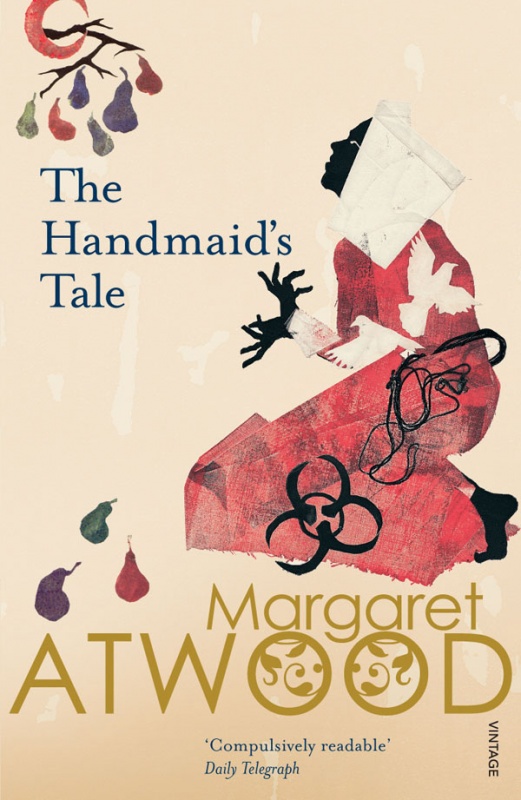
Vintage: New Ed Edition, July 1996
The Enduring Memory of a Handmaid’s Tale
I like books that scare me. The ones that keep my heart racing and my finger compulsively turning the pages – or, in in this era of Kindle, twitching on the next-page command. Such books usually conjure up a grim, dystopian world and leave me wondering if they could actually materialise as science advances and technology reaches further and further into our personal lives.
It must be twenty years since I read The Handmaid’s Tale by Margaret Atwood yet I can still bring the details of that story vividly to mind. Briefly, it’s about a totalitarian society that reforms after a nuclear explosion lays most of the United States to waste. The land is contaminated and many of the women who survived the catastrophe have become infertile. In this new, male dominated society these women are sent to clear up the nuclear waste and suffer obvious consequences as a result. The only ones to avoid this fate are the wives of the men in power –these men are known as The Commanders –and the ‘handmaids,’ young women like Offred, the narrator, who have remained fertile and are capable of producing children to populate this new world order.
The self-imposed belief in The Republic of Gilead is that only women are infertile, men remain fertile. This, of course, is untrue so many of these handmaids are unable to conceive and live in dread of being sent to the contaminated wastelands. Their babies, if they do conceive, will belong to The Commanders and their wives.

 by
by Cover Reveal: The Girl Who Wouldn’t Die by Marnie Riches
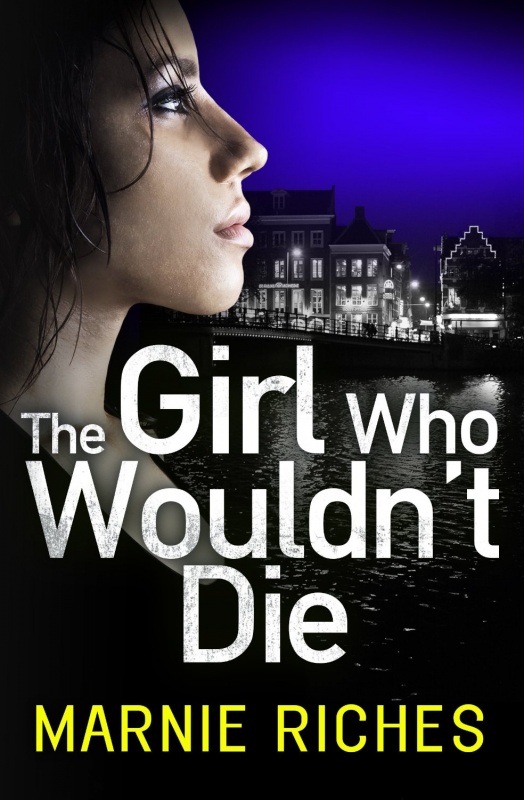 We are very excited to be part of the cover reveal for The Girl Who Wouldn’t Die which is the new novel from author, Marnie Riches.
Ta-dah, here it is. It’s due to be published by HarperCollins on 2nd April 2015.
About the book:
HE’S WATCHING HER. SHE DOESN’T KNOW IT…YET
When a bomb explodes at the University of Amsterdam, aspiring criminologist Georgina McKenzie is asked by the police to help flush out the killer. But the bomb is part of a much bigger, more sinister plot that will have the entire city quaking in fear.
And the killer has a very special part for George to play…
A thrilling race against time with a heroine you’ll be rooting for, this book will keep you up all night! Continue reading

 by
by Novel Kicks Fiction Friday: Back in Time
 Friday 13th March 2015: Back in Time.
Fiction Friday is our weekly writing prompt. The aim is to write for a minimum of five minutes and then keep going for as long as you can. Once you’ve finished, don’t edit, just post in the comments box below.
Today’s prompt:
You are accidentally transported back to the year of your birth. How you are dressed and how you look makes you stand out. Write about your arrival. What happens? How do people react? Then someone finds your smart phone and it’s new, magical technology that no one has seen before. What happens then?

 by
by Author Interview: J. Paul Henderson
 Hello Paul. Thank you so much for joining us. Can you tell us about Last Bus to Coffeeville and what inspired it?
Last Bus to Coffeeville is the story of five people whose lives, in one way or another, have jumped the tracks. The central story though, and the one that explains the bus journey to Coffeeville, is the fulfilment of a promise made by one friend to another almost fifty years previously, that if she inherits the Alzheimer’s that runs in her family, then he will bring her life to a dignified and timely ending.
My mother suffered from subtle stroke dementia for the last ten years of her life, and the idea for the key story came from watching her disappear and another person take her place. The experience made me wonder if someone in a similar situation, who knew the fate that awaited them, would make plans to bypass such misery.
Where would be the one place you would go if you could and why? (Present or a place in history.)
I’d like to be transported to the 1950s and spend my teenage years growing up in small town Middle America. The times were simpler then, the technology reduced, and I’d have been able to drive a large car with ridiculous tail fins. I also think I’d have enjoyed going to High School. This is an idyll, of course. If my colour changed during the transportation process I might well regret this decision. Growing up in 50s America wasn’t a barrel of laughs if you were black.
How much planning do you do before beginning a book? What has to be in place?
If I’m honest, not very much. I’ll have a vague notion about the story, know how it starts and how it ends, but no clear idea how the two dots join. For me, this makes the writing process more interesting – and also surprising.

 by
by
We are excited to be welcoming Kimberley Chambers today and kicking off her video blog tour for her new novel, The Wronged which is due to be released by Harper Collins on 12th March 2015.
Kimberley was previously a disc jockey, a street trader and a mini cab driver before writing her first novel, Billie Jo. She is now a full-time writer and she lives in Romford. Her latest novel is the third in the Butlers series (the first two being The Trap and Payback.
About The Wronged:
When the going gets tough, the Butlers get even… ‘Murdered in 1980 she was, bless her. Now I’ll tell you the story of everything that’s happened since…’ No parent should ever have to bury their child, but God knows the Butlers have buried more than their fair share. Now, Vinny and Michael are planning the downfall of all who’ve wronged them. The Butlers don’t forgive or forget, and they take their secrets to the grave. As yet more tragic events rip the family apart, loyalties are on a knife-edge. Times are changing in the East End, and the brothers who have always stuck together are at each other’s throats. As the old saying goes – you keep your friends close, and your enemies closer…But you keep your family right where you can see them.
We chat to Kimberley about her new book, her advice for new writers and her favourite place to write.
WIN A SIGNED COPY OF THE WRONGED. THIS COMPETITION IS NOW CLOSED.

 by
by Novel Kicks Fiction Friday: 500 Words
 Friday 6th March 2015: 500 words.
Fiction Friday is our weekly prompt. The aim is to write for a minimum of five minutes and then keep going for as long as you can. Once you’ve finished, don’t edit, just post in the comments box below.
Today’s prompt: The story, characters and theme are your choice but today, your challenge is that the whole story needs to be 500 words or less.

 by
by News: JoJo Moyes announces book sequel
 JoJo Moyes has announced that she is releasing a sequel to Me Before You. The new novel will be called After You and is due to be released in the autumn.
JoJo’s best selling novel, Me Before You is currently being adapted into a movie staring Sam Claflin (The Hunger Games, Love Rosie,) and Emila Clarke (Game of Thrones.)
On her website, JoJo said…
“I hadn’t planned to write a sequel to Me Before You. But working on the movie script, and reading the sheer volume of tweets and emails every day asking what Lou did with her life, meant that the characters never left me. It has been such a pleasure revisiting Lou and her family, and the Traynors, and confronting them with a whole new set of issues. As ever, they have made me laugh, and cry. I hope readers feel the same way at meeting them again.”
After You is due for release by Michael Joseph on 24th September 2015. I loved Me Before You and I can’t wait to find out what happens to Lou. If you can’t wait for the film or the book, Penguin have released a book trailer. Enjoy!

 by
by March’s Book Club: All My Friends Are Superheroes by Andrew Kaufman

Telegram Books, Feb 2006.
Book Corner is our monthly online book club.
How it works…
We love books and we love chatting about them even more. Every month, we pick a new book for discussion. We will post a question to kick things off and then you can talk about any of your thoughts about the book in the comments box below. The best thing about our book club is that EVERYONE CAN TAKE PART. It’s open to all. You can read the book at any point in the month or if you’ve already read it, tell us what you think.
This month, our pick is: All My Friends Are Superheroes by Andrew Kaufman.
About the book:
All Tom’s friends really are superheroes. Tom even married a superhero, the Perfectionist. But at their wedding the Perfectionist is hypnotized by her ex, Hypno, to believe that Tom is invisible. Nothing he does can make her see him. Six months later, the Perfectionist is sure that Tom has abandoned her, so she’s moving to Vancouver. She’ll use her superpowers to leave all the heartbreak behind. With no idea that Tom’s beside her, she boards the plane. Tom has, until they touch down, to convince her he’s there, or he loses her forever.
What are your general thoughts about this book? Did you like it? Dislike it? Discuss in the comments below.

 by
by Blog Tour: Creature Comforts by Trisha Ashley
 I am excited to be welcoming Trisha Ashley back to Novel Kicks. Her latest novel, Creature Comforts was released by Avon on 26th February and as part of the blog tour for the book, Trisha and Avon have shared an extract with us. Enjoy.
When we first met, it felt so right that I thought falling in love with him must be part of my preordained destiny. Even though my best friends, Lulu and Cameron, teased me about my conviction that I had a near-death experience and went to Heaven while I was in a coma after the accident, and was sent back only because I had some important purpose to perform in life, I knew it was real. Since then I just had to tune inwards to the voice of my guardian angel from time to time to check I’d taken the right turning … only with Kieran, I think I must have fallen for him so hard that I misread the message.
My path through life had appeared clearly marked till then, for after studying Textiles and Design, I’d accepted a job with the Women’s World Workshops Foundation, which sent me on assignments all over the world, though the majority were in India. The pay was minimal, but the job satisfaction immense: discovering the skills and artistic heritage of each area and finding ways of utilising them in the making of beautiful garments, the sale of which could transform the lives of the local women involved in the scheme and, through them, those of their families and even their whole communities.
And all the time I was amassing a huge portfolio of colours, designs, patterns, ideas and contacts, ready for the day when I would finally go home for good to Halfhidden, the small village in west Lancashire where I grew up, and set up my own business selling retro-inspired clothes.

 by
by Blog Tour: Review – Creature Comforts by Trisha Ashley
Izzy has broken off her engagement to her feckless fiancée Kieran and returned to her childhood home – the sleepy village of Halfhidden.
She soon realizes that life in the village is anything but peaceful – for one thing she’s living with her mad aunt Debo and her pack of dogs, and for another, Izzy has a lot of unanswered questions.
When she was a teenager, Izzy was involved in a terrible accident, involving various inhabitants of Halfhidden. As she sets out to discover what actually happened on the night of the accident, she realizes that her painful past is actually standing in the way of her future happiness. So when a handsome stranger comes to Halfhidden will she let love back into her life?
I have loved Trisha’s previous novels and I was excited to receive a review copy of her new novel, Creature Comforts. I always find a warmth and humour in Trisha’s novels and this one was no exception.
Izzy is a lovely character and I liked her from the beginning. She has a relatable quality to her and I wanted her to be OK throughout the course of the book. She simply wants to get on with her life and the only way she can do this is to find out what happened the night of the accident she was involved in when she was sixteen. She is a lovely girl but is not someone who is going to be walked over and I loved this about her.
The other characters are endearing. I loved Debo and Judy and I loved Lulu and Cameron together. I did not warm to Dan or Kieran at all but I think that was the point. Rufus was a great character and I knew from the beginning that he wasn’t going to be what he seemed or as horrible as people made out. I felt quite sorry for him actually – with all of the things he was having to deal with.

 by
by March: Which Book is This Anyway?
 It’s the second month of our new competition, Which Book is This Anyway?
Many of us judge books by their covers and make our choices based on that and the accompanying blurb. Our competition adds a little mystery.
The prize for this competition is a book but the identity of that book will not be revealed until the lucky winner receives it. It could be a recent new release or a well-known classic. Who knows? We won’t even reveal the genre. It’s a surprise.
All we will reveal about March’s choice is this: ‘A young girl’s tale about her strange family. This story has been described as clever, moving, fascinating and funny.’
How to enter:

 by
by Blog Tour: Writing Rituals and Inspriations by Rachel Abbott
 Hello Rachel, thank you for joining us. We’re delighted to be part of your blog tour. Your new novel is called Stranger Child. What’s it about and what inspired it?
If I had to find one word which sums up what Stranger Child is about, it would have to be revenge – but that nowhere near covers it.
Emma Jacobs met David – now her husband – several years ago, but they lost touch when she went to Australia. When she came back, she was horrified to learn that David’s first wife had been killed in a car accident, and his six-year-old daughter had disappeared from the scene. Now, six years later, Emma and David have put the past behind them and are happily married with a new baby, Ollie.
And then a stranger walks into their lives, and their world falls apart.
Emma discovers things about her own past that shock her, and when she contacts her old friend DCI Tom Douglas for help, their pursuit of the truth sets in motion a series of terrifying events that neither of them could have imagined.
Emotions run high in this book, and each of the main characters has to face a dilemma that nobody should ever have to deal with.
Can you tell us a little about your route to publication?
I am extremely fortunate in having an amazing agent who really looks after me well. I start with an idea of the story and the characters, and I send it to her. She mulls it over and comes back with the things she likes and the things she hates, and somehow or other we knock the outline into shape.
And then I write. I do nothing else – just sit at my desk and write. I love it, but the first draft is always pretty dire. However, it creates the framework, and from there I can go back and work out the detail.
When I’m happy, it goes for first edit – and I know that there will be lots of changes to be made. These are structural – sometimes quite major – but always good. There are a couple of rounds with the editors, and then it goes to line edit where we argue about the detail. Is this sentence necessary? Would we lose anything if we chopped out this paragraph? Then finally the copy edit – when I’m always surprised at the little details that I’ve missed.
We have Advance Review Copies prepared in paperback – this is something we have started with Stranger Child – and my publicists send out copies to anybody who is keen to review the book.
And as an independent author, I also have to think about the marketing, the cover, the blurb – it’s very much a full time job at every stage.

 by
by
 When Emma Joseph met her husband David, he was a man shattered by grief. His first wife had been killed outright when her car veered off the road. Just as tragically, their six-year-old daughter mysteriously vanished from the scene of the accident.
Now, six years later, Emma believes the painful years are behind them. She and David have built a new life together and have a beautiful baby son, Ollie.
Then a stranger walks into their lives, and their world tilts on its axis.
Emma’s life no longer feels secure. Does she know what really happened all those years ago? And why does she feel so frightened for herself and for her baby?
When a desperate Emma reaches out to her old friend DCI Tom Douglas for help, she puts all their lives in jeopardy. Before long, a web of deceit is revealed that shocks both Emma and Tom to the core.
They say you should never trust a stranger. Maybe they’re right.
(Warning: a couple of spoilers.)
This was my first book from author, Rachel Abbott. From the first page, this book had me hooked. I do like books like this; physiological thrillers that I can’t seem to put down. I was reading this book into the early hours where I looked up and suddenly realised it was three am.

 by
by Blog Tour: Stranger Child by Rachel Abbott

Black Dot Publishing, Feb 2015
We’re delighted to welcome Rachel Abbott to Novel Kicks. She is the author of three novels, Only The Innocent, The Back Road and Sleep Tight. Her fourth novel, Stranger Child has just been released on e-book. Today, we will chat to Rachel about her book but first, she has shared an extract Stranger Child. Enjoy!
Emma glanced out at the dismal day. The black clouds heavy with rain were creating such gloom that the kitchen lights were a necessity even this early in the afternoon.
For a moment, she was in a trance, staring at nothing because in her head she could see summer days when the garden was finished, the beds bursting with newly planted flowers. She could almost smell the lavender she would grow in the borders.
She wasn’t sure of the moment that it happened. It wasn’t an instant in time, it was more of a gradual awareness, but as she stared blindly at the black window, dreaming of the happy months ahead, something moved at the edge of her peripheral vision. Her eyes refocused from the garden to the surface of the glass, the bright lights of the kitchen against the dark sky beyond creating a perfect mirror.
Every nerve ending in her body prickled, and she gasped as her brain finally acknowledged what she was looking at.
It was a pair of eyes. A pair of eyes that were behind her, watching.
Close behind her. In her kitchen.

 by
by Competitions: Which Book is This Anyway February Winner
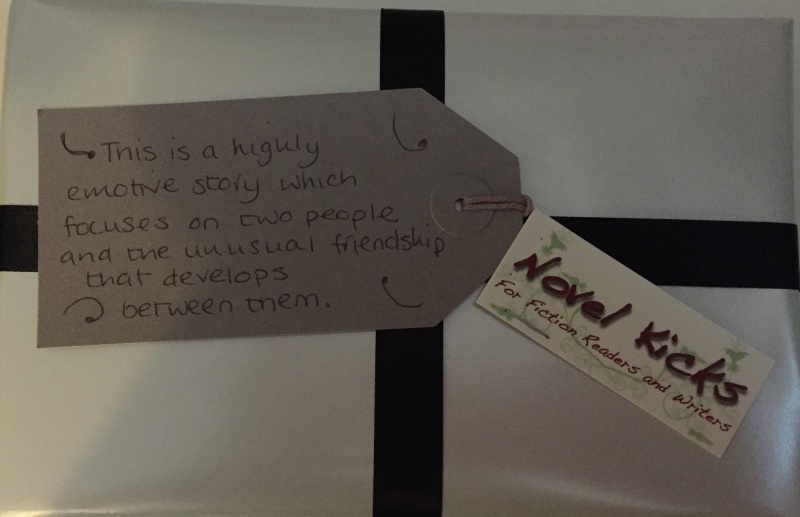 This month, we launched our new competition, Which Book is This Anyway?
The prize is a book but we’ve not revealed the title and won’t until the winner receives it.
Many of us judge books by their covers and make our choices based on that and the accompanying blurb. Our new competition adds a little mystery.
It could be a recent new release or a well-known classic. Who knows? We’ve not even revealed the genre. It’s a surprise.
All we did say about this book is that ‘It is a highly emotive story which focuses on two people and the unusual friendship that develops between them.’

 by
by Guy Mankowski on Writing How I Left The National Grid
 The writing process for How I Left The National was so distinct from that of my two previous novels, that it was almost like learning to play the keyboard after you’ve been playing guitar. This seems an apt, if somewhat pretentious description, given that this novel follows the story of an eighties post-punk musician, Robert Wardner. Wardner vanishes after a particularly controversial appearance on Top Of The Pops. During this performance he commits a shocking act which, during the more buttoned-up era of 80s Britain, causes enough of an impact that he never recovers.
My first novel, The Intimates, was mostly written over an intense eight-week period when I was 21. I lived and breathed the novel every single day almost in a hallucinogenic way. My second novel, Letters from Yelena, was written over a year and a half, and its writing coincided with a research trip to Russia in which a great deal of information about the world of Russian ballet was absorbed. This novel was set mainly in 80s Manchester, only a few hours away from me.
Somehow, it took over three years.

 by
by Bella’s Scribblings: Marketing Plans
 Apparently I have a marketing plan for my book! I’m very pleased because I was starting to panic when I got asked for the third time what my marketing strategy had been for my book and my answer had been to do a very convincing impression of a retarded goldfish.
I then scurried off to investigate whereupon (that’s a very good and much underused word by the way…) whereupon I discovered lots of wonderful advice about marketing your debut novel. Off the page jumped a very scary piece of advice that said you need to start marketing three years in advance.
So I went to check on the progress of the time travel machine the child is working on and sadly it’s not quite ready for use yet. Cue lots of nail-biting and hair pulling (all my own I’m not that strange).
After a large glass of Baileys (I’m still ‘tidying up’ after Christmas) I had another look at the amassed advice. All of it was very helpful and logical:

 by
by Novel Kicks Fiction Friday: Fly on The Wall
 Friday 27th February 2015: Fly on the Wall.
Fiction Friday is our weekly prompt. The aim is to write for a minimum of five minutes and then keep going for as long as you can. Once you’ve finished, don’t edit, just post in the comments box below.
Today’s prompt: Have you ever wanted to be a fly on the wall for a conversation you want to hear? Well, you are. Who do you hear? What do you hear?

 by
by
 Hello Jen. Thank you for joining us. Firstly, congratulations on The Bookshop Book becoming the official book for the 2014 Books are my Bag campaign. Can you tell us a little about it and how you developed the idea for the book?
Thank you! Well, I’ve always loved bookshops; they’re magical places full of nostalgia and possibility. They’re places to get lost in, and discover different worlds. I’ve worked in bookselling for the past seven years (since working part-time whilst completing my degree), and I’ve written a couple of books about the weird things that customers say in bookshops (because lots of weird things are said!). However, I also wanted to showcase the other side of the bookselling world: the bizarre but wonderful stories hidden behind the shelves; the history of the bookshop; the idea of the travelling bookshop, and bookshops in remote places… Book touring with Weird Things Customers Say in Bookshops led me to places such as Wigtown, a fantastic town with a dozen bookshops on the west coast of Scotland, which led me to discover that there’s an International Organisation of Book Towns – with several Book Towns across Europe and one in Australia in an old gold mining town. There are so many wonderful places out there that I thought needed to be shouted about: such as a bookshop in Africa that also sells cows, and a man in America called Walter Swan who opened up a bookshop that only stocked his book and nothing else… So, I asked my editor if I could write a book about weirdly wonderful bookshops around the world… and he said yes!
Did you visit all of the shops mentioned in The Bookshop Book?
The Bookshop Book looks at over 300 bookshops across six continents, so sadly I didn’t get to visit them all – though I spoke to people who had. I got to most of the bookshops in the UK, Paris, Berlin and Amsterdam (where I lived on a houseboat for a few days). When I was writing the book, I’d get up early and Skype with booksellers in Asia (like Ayuko, who runs a sushi-making class inside a bookshop), and Australia/NZ; then I’d go to work in my own bookshop, before skyping with booksellers in North America in the evening. So, I felt as though I was living in several different time zones – it was a bizarre, but wonderful, time. Continue reading

 by
by

Fourth Estate, 2010.
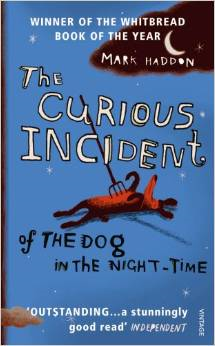
Vintage, 2004
This week, the Independent published a list of the best novels from the past two decades. A panel of literary experts have put together the list which helped mark the 20th Anniversary of the Bath Literature Festival.
The list was topped by Wolf Hall by Hilary Mantel which has ‘transformed the literary landscape’ according to artistic director, Viv Groskop.
I have to admit, I’ve only read one of the books listed below and that is The Curious Incident of the Dog in the Night-time by Mark Haddon (which I very much enjoyed.) There are a few that are on my TBR pile though. Do you agree with this list?
Captain Corelli’s Mandolin by Louis de Bernieres
Alias Grace by Margaret Atwood
American Pastoral by Philip Roth

 by
by Postbag: February
We’ve received some fantastic books already this month. We wanted to share a selection with you….
 Polly and The Puffin by Jenny Colgan.
As well as her latest novel, Summer at the Little Beach Bakery coming out at the end of February, Jenny has her first children’s book coming out on 26th February. Illustrated by Thomas Docherty, it’s available in paperback and as an e-book. It arrived beautifully wrapped with a cuddy puffin too.
About the book:
Polly heard a CRASH downstairs. Was it a monster? NO! Was it a spider alien? NO!
It was a little puffin with a broken wing…
When Polly discovers an injured puffin, she and her mummy look after him in their cottage by the sea.
Slowly, Neil’s wing heals and Polly must prepare herself to say goodbye to her new friend. Will she ever see him again?
(Little Browns Books for Young Readers, February 2015.)

 by
by A Moment With Jacqueline Harvey
 My writing day varies depending on where I am in the world. When I’m at home in Sydney I usually work in my study. It looks out onto two sunny courtyards and across to the upper storey of a beautiful Queen Anne style home. Some days if I’m editing I might walk up to one of the local coffee shops and work there – I like to be around the hum of people depending on what stage of the writing process I’m at.
I start my day with a skinny latte but try to limit myself to one coffee, so after that I’ll have one or two cups of tea.
I’m usually at my desk by 8am and often work until 6pm. I’ve only been writing full-time for two years and one thing I’ve found problematic is my lack of movement! I have to make sure that I get up and walk every half hour or so. To that end I investigated a brilliant standing desk arrangement last year. It has a large flexible arm to hold the computer screen and keyboard so you can adjust it to a sitting position and then push it up so you can stand. The negative impact of sitting for long periods is frightening, apart from the inevitable weight gain, so I hope the standing desk will work for me.

 by
by Writing Room: Party
 Writing Room is our online writing group.
We post a prompt. It could be a first line, a suggested exercise to work on plot or characters or it could be about writing about a situation. Once you’ve written your piece, post it in the comments box below. Anyone is welcome to take part and it’s an opportunity to post work plus give and gain feedback.
Today’s prompt: Your character is about to enter a party where they don’t know anyone. Using only dialogue, they meet two new people – one of which they like a lot and one they instantly dislike. Where this party is, the age and gender of your character is up to you. Write between 500 – 750 words.

 by
by The Rosie Effect Book Tour
 Graeme Simsion plans second UK bookshop tour.
Graeme’s novel, The Rosie Effect is due to be released by Penguin on 26th February 2015.
The Rosie Project tells the story of socially challenged Genetics professor Don Tillman and his unique challenge to find a wife and how his life is upheaved when he meets a girl called Rosie. It’s sequel, The Rosie Effect carries on and focuses on his life as he settles into a big city.
‘The Rosie Project has touched the hearts of millions worldwide with its irresistible blend of comedy, romance and poignancy. But it’s Don Tillman – a truly memorable creation who can proudly sit alongside Adrian Mole and Bridget Jones – who steals the show and we are thrilled to be reuniting him with thousands of readers and booksellers this Spring,’ says Maxine Hitchcock, the Publishing Director of Michael Joseph

 by
by Author Interview: Julie Shackman
 Hello Julie, thank you so much for joining us. Can you tell us about your debut novel, Rock My World and how did the idea originate?
Ruby Cameron is an ambitious reporter for a local paper where she is fed scraps of news, and lives with a man whose “idea of living dangerously is to leave the heating on when we pop out to the shops”. But after catching her squeaky clean boyfriend in flagrante delicto she ups sticks and moves into her own small home, only to discover the ghostly presence of a cheeky rock star who becomes her confidant as the dynamics of her small town, and her feelings about her dashing new boss, begin to throw up more questions than she can answer. Will Ruby discover who she really is, and perhaps more importantly, who she wants to be? I love music, especially rock and have to have music playing whilst I’m writing and the idea for Rock My World just came about from that.
Do you cast your characters and if so, did you have someone specific in mind for Ruby?
Yes, I tend to! I think my dream cast for Rock My World would be Santiago Cabrera for Stevie, my ghostly rock singer. He’s very attractive and has stage presence. For Ruby. someone lovely and passionate like Natalie Portman and for Matt, it would have to be the wolfish Bradley Cooper with those eyes of his!
What’s your writing process like – do you plan, edit as you go?
I tend to make sketchy notes before I start and read over the previous day’s writing to polish it a bit before starting the next chapter. Then once I’ve finished my novel, I’ll go over it again a few times to see where I can improve it.

 by
by Quick Spotlight: Real Monsters by Liam Brown
Real Monsters is due to be released by Legend Press on 1st March 2015.
‘Real Monsters is the story of two young lovers with a war wedged between them; a surreal and ferociously recognisable allegory for our war-torn times,’ says the author, Liam Brown.
It is the debut novel from Liam who is also the lead singer and guitarist for the band, Freelance Mourners.
It will be available in paperback and eBook formats. Click here to view the book on Amazon UK.
About Real Monsters:
We are surrounded by monsters. The lines are now so blurred, no one knows who the real enemy is anymore.

 by
by Author Interview: Kate Riordan
 The Girl in the Photograph was released by Penguin on 15h January 2015. Inspired by the beautiful Owlpen Manor in Gloucestershire, it’s the latest novel from author, Kate Riordan.
About the book:
When Alice Eveleigh arrives at Fiercombe Manor during the long, languid summer of 1933, she finds a house steeped in mystery and brimming with secrets. Sadness permeates its empty rooms and the isolated valley seems crowded with ghosts, none more alluring than Elizabeth Stanton whose only traces remain in a few tantalisingly blurred photographs. Why will no one speak of her? What happened a generation ago to make her vanish?As the sun beats down relentlessly, Alice becomes ever more determined to unearth the truth about the girl in the photograph – and stop her own life from becoming an eerie echo of Elizabeth’s . . .
In the video below, Kate talks about her inspiration for the book, her characters, what she wants the reader to take away from the novel and the themes of her novel. Click here to see a book trailer for The Girl in the Photograph.

 by
by Bella’s Scribblings: Publication Day!
 So yesterday was publication day for my debut novel ‘It Started at Sunset Cottage’ and I’m still too excited for words (actually bad luck I may be able to squeeze a few more out!) It’s a day I still struggle to believe is real because when I started writing my novel I had no plans, and certainly no expectation, of it being published. I have a million people to thank for getting me to this position but a wise and Yoda-like person (they’re old, not green, they do have quite big ears though…) pointed out that the key to all of this was me because I sat down and wrote the novel in the first place. I brushed it off as modestly as I could because I do genuinely believe that there is a great deal to do with luck and timing when it comes to getting published – your manuscript has to land on the right person’s desk at the right time and in an ever-changing world where everyone is looking for the next big thing (but nobody – I repeat NOBODY knows what that is) it takes a great deal of luck for that person to take a risk on you and your story.
However, Yoda does have a point. I come across so many people who either want to write a novel or are trying to write a novel and my response is always ‘You should do it.’ Interestingly I get a lot of responses to this and very few are ‘You’re absolutely right, I will start today!’ What they usually tell me are a big host of reasons why they can’t do it. Sometimes it’s a lack of confidence, in which case I encourage them to finish it all the same and give it to another writer to read. Because what’s the worst that can happen?

 by
by Novel Kicks Fiction Friday: Unlucky For Some?
 Friday 13th February 2015: Unlucky for some?
Fiction Friday is our weekly prompt. The aim is to write for a minimum of five minutes and then keep going for as long as you can. Once you’ve finished, don’t edit, just post in the comments box below.
Today’s prompt:
It’s Friday 13th. It is seen as unlucky for some. Is it unlucky for your character? Is your character superstitious? Write about something that happens to them today and how they deal with it. Are they usually lucky but then experience bad luck or do they get a reversal of fortune on Friday 13th where they suddenly become lucky?

 by
by Blog Tour: Don’t Mention The Rockstar by Bree Darcy
 We’re happy to welcome Bree Darcy to Novel Kicks. She is currently on her blog tour for her debut novel, Don’t Mention the Rockstar which was published as an e-book on 15th January 2015.
Hi Bree, thank you so much for joining us. Can you tell us a little about your book, Don’t Mention the Rock Star, and how the idea originated?
It’s essentially a story that examines the power of first love and whether someone can ever truly escape its magnetic pull. Kellie is a reporter for a showbiz website and one day she gets a blast from her past – in the form of her teenage boyfriend Andy (who went on to become a mega-famous singer). But Kellie has moved on with her life and certainly isn’t looking for a do-over with him. The story alternates between past and present, so readers get a glimpse into their relationship and discover why they aren’t together any more. I have no idea where the idea originated, other than these characters crashed into my head one day and simply wouldn’t leave me alone until I resolved their story.
Out of all the books you’ve read, which three have made the most impact and why?
The first book I remember being floored by was The Outsiders by S.E. Hinton. It’s a coming-of-age story set in the 60s and relates a tale about a guy called Ponyboy who’s dealing with gang rivalry. I have tried unsuccessfully to get my teen daughter to read it – or at least watch the film. Actually – even though the movie involved many of the 80s hottest young actors, such as Tom Cruise, Emilio Estevez, Matt Dillon and Rob Lowe, if you don’t know the story – read it, don’t watch it. The book is SO much better. Although I wonder if the drama of it all will seem a bit ho-hum to a teen today.
An obvious one for a chick lit lover perhaps, but I have to put Pride and Prejudice on this list. Loved Jane Austen’s humour, especially the exchanges between the meddling mother and the exasperated father; the characterisations of the different sisters, the thwarted romances, the repulsive Mr Collins and the haughty but hot Mr Darcy. He was, of course, the inspiration behind my pen-name.
I adored Where Rainbows End, by Cecelia Ahern, from the second I started reading it. I loved how over time something kept getting in the way of Rosie and Alex being together. I guess I have pursued a similar theme in my own book. And it’s probably why One Day by David Nicholls also struck a real chord with me too.

 by
by Blog Tour: Obsession in Death by JD Robb
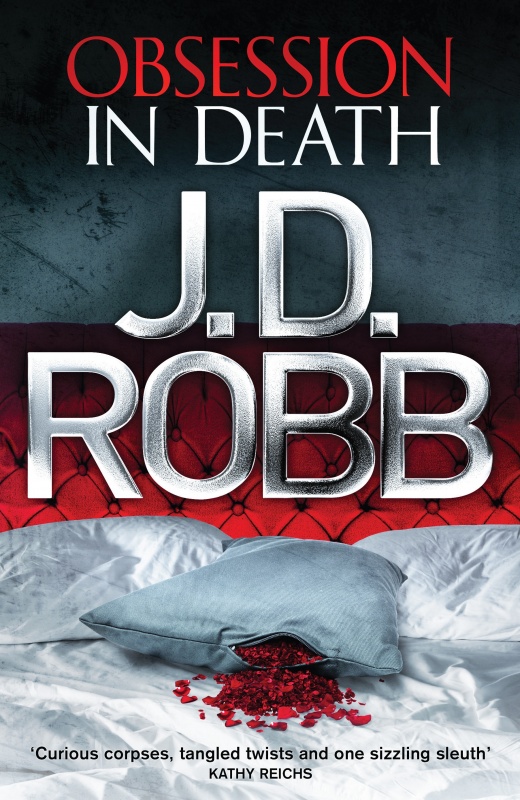
A crisp winter morning in New York, in a luxury apartment, the body of a woman lies stretched out on a huge bed. On the wall above, the killer has left a message in bold black ink: FOR LIEUTENANT EVE DALLAS, WITH GREAT ADMIRATION AND UNDERSTANDING.
Eve Dallas is used to unwanted attention. Famous for her high-profile cases and her marriage to billionaire businessman Roarke, she has learned to deal with intense public scrutiny and media gossip. But now Eve has become the object of a singular and deadly obsession. She has an ‘admirer’, who just can’t stop thinking about her. Who is convinced they have a special bond. Who is planning to kill for her – again and again.
With time against her, Eve is forced to play a delicate – and dangerous – psychological dance. Because the killer is desperate for something Eve can never provide – approval. And once that becomes clear, Eve knows her own life will be at risk – along with those she cares about the most.
This is the first of J.D Robb’s books I’ve read and I have to admit that I was pleasantly surprised. On opening the book I saw that it is the latest in a very long line of books all named along the same theme, {something} in death, so I was not sure how easy it would be to get into without knowing any of the characters. It turns out that my concerns were ill-founded. The book stands well on its own and although it references what I assume to be events from other books, prior knowledge it not required.

 by
by Review: The Wedding Proposal by Sue Moorcroft
 Elle Jamieson is a private person, in relationships as well as at work – and for good reason. But then she’s made redundant and with no ties to hold her, Elle heads off to sunny Malta.
Lucas Rose hates secrets – he prides himself on his ability to lay his cards on the table and he expects nothing less in return. He’s furious when his summer working as a divemaster is interrupted by the arrival of Elle, his ex, all thanks to his Uncle Simon’s misguided attempts at matchmaking.
Forced to live in close proximity, it’s hard to ignore what they had shared before Lucas’s wedding proposal scared Elle away. But then a phone call from England allows Lucas a rare glimpse of the true Elle. Can he deal with Elle’s closely guarded past when it finally comes to light?
Let’s get things straight from the start. There is only one thing wrong with this book – it has an ending!
Sue weaves her charms on this charming love story set mainly in Malta. Taking me back to my honeymoon in style, we follow Elle and Lucas as life and misunderstandings and sometimes misplaced pride try their best to keep the two of them apart. Continue reading

 by
by Courses and Competitions: BBC 500 Words
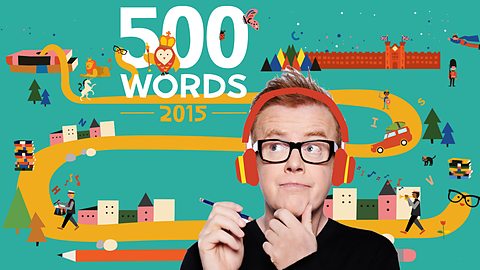 Are you aged between 5- 13? BBC Radio 2’s 500 words short story writing competition is back for 2015.
The competition is to encourage children to write and is open to ages 5-13. The competition will be split into two age categories: 5-9 and 10-13. (if you will be within the age of 5-13 on 29th May 2015 then you qualify.)
They are asking for an original piece of fiction, 500 words in length to be submitted by the closing date of Thursday 26th February at 19.00 (any entry made after this time wont be counted.)
It’s easy. Write your story, type it and then submit it via the 500 words website. It can be about any fictional topic of your choosing.
There are gold, silver and bronze prizes up for grabs in each age category.
Last year, the prizes was amazing. Not only were the gold winners in each age category awarded five hundred books for their school library, they personally won Chris Evans’ (BBC Radio 2’s breakfast show host,) height in books. That’s 1.88 meters worth of books.

 by
by Author Interview: David Beckler
 Hello David, thank you for joining us. Can you tell us about your novel, Brotherhood and how the idea originated?
Brotherhood is a novel about how ordinary people cope when violent criminals invade their lives. Most people turn to the police, but seventeen year old Philip Mason is suspected of murder so cannot. Instead he turns to his family, in the shape of his estranged uncle Byron and Byron’s friend Adam Sterling.
Although the novel begins with a murder – Philip’s friend Mugisa, a charismatic ex-child soldier from Uganda, kills another of their friends – I have concentrated on the effect of the killing on Philip’s and the victim’s families and friends. We do see the police investigation, through the eyes of DCI Siobhan Fahey, but I didn’t want to write a police procedural.
Both Mugisa and the victim’s uncle, gangster Ritchie McLaughlin – an uncompromising character I based on some of the people I met whilst working ‘on the doors’ in Manchester – are after Philip. His attempts to escape from them, and avoid being arrested, result in a fast paced thriller. Interleaved with the action, I wanted to contrast the relationships of Byron with his biological brother, Philip’s dad Samuel, and with Adam, a ‘brother in arms’. I also examine the relationship of Ritchie and his brother Kieran.
I have always enjoyed reading crime fiction and wanted to write crime novels which built on my experiences as a firefighter. I’d written two manuscripts featuring firefighter Adam Sterling, before I wrote Brotherhood.
The idea behind Brotherhood was to look at how easy it is for people, especially young men, to become involved in something they didn’t intend to, and end up in more trouble than they can handle. While visiting family in Ethiopia, I played football with a group of street kids. I thought about their likely futures and how, for so many kids who grow up on this continent, their lives can easily take a tragic turn. I incorporated the two strands, and the contrasting lives of Mugisa and Philip became entangled, with disastrous results for both of them – although Mugisa’s life had been a bit of a disaster long before he met Philip.
Do you plan before a novel and do you edit as you go?
The way I write is evolving as I gain experience. At first I began with just the main characters, an inciting incident – the ‘what if?’ question – and an ending. I had a vague idea of the bit in between. This meant that some scenes I wanted to include fell by the wayside and I had to do a lot of rewriting. I now prepare a more detailed plot which I make sure I keep to. I still have to do a certain amount of editing and rewriting but try not to do too much whilst writing the first draft as it slows the flow of the story.
Continue reading

 by
by
Today we are launching our new monthly book-themed competition ‘Which Book is This Anyway?’
Many of us judge books by their covers and make our choices based on that and the accompanying blurb. Our new competition will add a little mystery.
The prize for this competition is a book but the identity of that book will not be revealed until the lucky winner receives it. It could be a recent new release or a well-known classic. Who knows? We won’t even reveal the genre. It’s a surprise.
All we will reveal about this month’s choice is this: ‘It is a highly emotive story which focuses on two people and the unusual friendship that develops between them.’
How to enter:

 by
by Blog :
 Death Falls by Todd Ritter has just been released as an e-book by Avon (released 29th January 2015.) We’d like to welcome Todd to our blog today. As part of the blog tour, Todd has shared an extract from his novel (released as Bad Moon in the US.) Enjoy.
Maggie tightened her arms around the infant. One of her children was missing. She wasn’t going to let the other out of her sight until he was found.
She descended the stairs into the living room. The TV was still on, still broadcasting surreal pictures from another world. A second astronaut had joined Armstrong, both of them leaping like jackrabbits across the moon’s surface. Maggie moved right past it, not caring. Her only concern was her children, not the moon, or the astronauts, or the fact that she was running outside in the rain in bare feet, denim cut-offs and a T-shirt stained with baby puke.
She made it to the end of the driveway before seeing two men approach the house. One of them was Ken. The other was Mort Clark. Maggie looked past them, hoping to see Charlie lagging behind. He wasn’t.
“Did you find him?” Maggie asked as she met them in the middle of the street. “Where is he?”
“I don’t know,” Ken said. “I have no idea.”
He looked pale and haunted — more ghostlike than those astronauts on TV. The rain had flattened his hair. Large drops of it clung to his beard.

 by
by Competitions: Campari For Breakfast Winners
 Campari For Breakfast is the debut novel from author and actress, Sara Crowe.
Thanks to Sara and Transworld, we had two copies to give away.
Well done to Joanne Varney and Martin Turner who have both won a copy.
About Campari For Breakfast:
In 1987, Sue Bowl’s world changes for ever. Her mother dies, leaving her feeling like she’s lost a vital part of herself. And then her father shacks up with an awful man-eater called Ivana.
But Sue’s mother always told her to make the most of what she’s got – and what she’s got is a love of writing and some eccentric relatives. So Sue moves to her Aunt Coral’s crumbling ancestral home, where she fully intends to write a book and fall in love . . . and perhaps drink Campari for breakfast
(Released in paperback by Transworld on 29th January 2015.)

 by
by
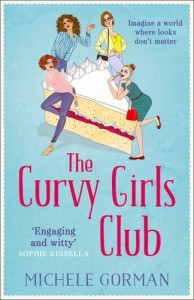
UK cover (Avon, Jan 2015.)
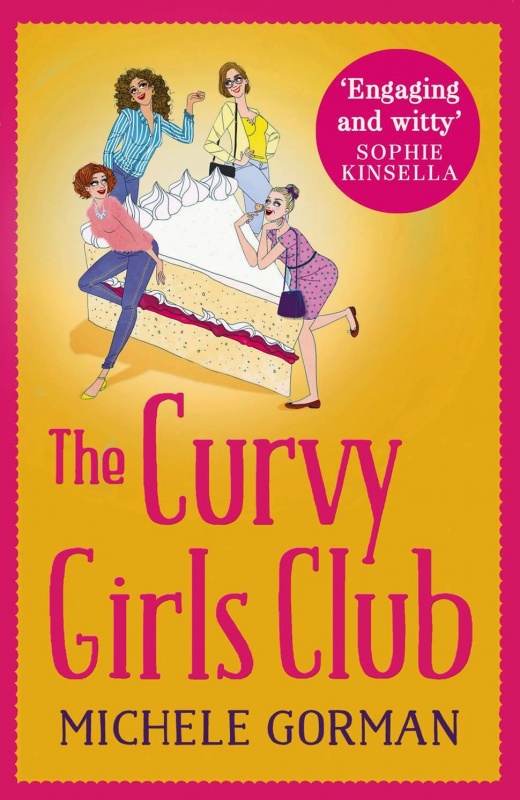
US cover.
A huge welcome to Michele Gorman who is visiting our blog today as part of her blog tour for her new novel, The Curvy Girls Club. Today, Michele shares with us her inspiration behind her book:
Lots of people have asked me where the idea for The Curvy Girls Club came from and, as with most of my books, it began with a question.
I was talking to my mum, who’d just said “It’s easy for you, you’re skinny.”
“I’m not skinny,” I said. “I’m normal.”
She smiled. “Honey, look around you. You’re not normal. We are.”
That got me thinking about labels. What’s “normal”? Does it mean the norm? If so then Mum was right, “overweight” is normal. We use words like skinny and fat as judgmental words, when really, they’re just adjectives. Continue reading

 by
by Blog Tour: That Part Was True by Deborah McKinlay

Photo credit: Paul Stuart
We happily welcome Deborah McKinlay to Novel Kicks and we’re pleased to be a part of the blog tour for her latest release, That Part Was True (published by Orion).
Welcome Deborah. Can you tell us a little about That Part Was True and the inspiration behind it?
I started with a seed of an idea – a woman who was profoundly isolated. That grew into the character of Eve, and the story developed from there.
Who would you invite to fantasy dinner party and what food would you serve?
Paddington Bear. Marmalade sandwiches (natch).
Which fictional character (books, TV or film,) would you like to swap places with for a day and why?
Holly Golightly. New York. The wit. The waistline.
Which three novels (out of all the ones you’ve read,) have impacted you most? Continue reading

 by
by Review: That Part Was True by Deborah McKinlay
 That Part Was True is the latest novel from author, Deborah McKinlay.
Eve Petworth writes to author, Jackson Cooper to praise him for a scene in one of his books. So impressed by her letter, Jackson replies and soon they discover their shared love of cookery and food and start regularly writing to one another. A friendship develops and soon there is even a suggestion of romance despite Jackson already having quite a complicated love life. Eve also has a tense relationship with her daughter who is not far off getting married. Jackson and Eve soon realise that, beyond all the drama, they may actually have a chance together. All they have to do is actually meet.
I had very few expectations going into this novel when I picked it up. I will say though that it has one of the most beautiful book covers. I love it.
This book has been described as a cross between One Day and 84 Charing Cross Road. However, not having any knowledge of the latter, I didn’t have much to make the comparison. This is also the first of Deborah’s books I have read.
The novel is told from both Jackson and Eve’s point of view with their letters woven in within the chapters. It does jump around between the two of them but I liked this. Continue reading

 by
by February’s Book Club: Everyday by David Levithan

Published by Electric Monkey, August 2013
Book Corner is our monthly online book club.
How it works…
We love books and we love chatting about them even more. Every month, we pick a new book for discussion. We will post a question to kick things off and then you can talk about any of your thoughts about the book in the comments box below. The best thing about our book club is that EVERYONE CAN TAKE PART. It’s open to all. You can read the book at any point in the month or if you’ve already read it, tell us what you think.
This month, our pick is: Everyday by David Levithan.
About the book:
Every day I am someone else.
I am myself – I know I am myself – but I am also someone else.
It has always been like this.

 by
by Blog Tour: As Good as it Gets by Fiona Gibson
 Today we are hosting the blog tour for As Good as it Gets, the brilliant new novel from Fiona Gibson. A huge welcome back to Novel Kicks for Fiona who has kindly shared an extract from her latest book. Enjoy.
Chapter One
Present Day
‘Hey, beautiful!’ the blond boy yells, nudging his friend. They watch, admiring, as the shopping crowds mill around us. There are more glances as we walk: some fleeting, others more direct. All this attention isn’t for me; Christ no, that hasn’t happened since Madonna vogued in a gold conical bra. Even then, it pretty much amounted to a bloke up some scaffolding yelling, ‘Your arse looks like two footballs!’ I’d adored my stretch jeans until that sole cruel comment killed the love affair stone dead. Not that I’m the kind of woman to take any notice of construction workers’ remarks. I mean, I’ve only festered over it for twenty-three years… Anyway, of course it’s not me who’s causing virtually every young male in this over-heated shopping mall to perform a quick double-take. I am thirty-eight years old with wavy, muddy brown hair that’s supposed to be shoulder-length but has outgrown its style, yet isn’t properly long – it’s just long-ish. That’s what my hair is: ish. I am also laden with copious bulging bags, like a yak. Judging by the odd glimpse in mirrored surfaces, I note that I have acquired a deathly pallor beneath the mall’s unforgiving lights. I also have what the magazines term ‘a shiny breakthrough’ on my nose and cheeks. Continue reading

 by
by Review: As Good As It Gets by Fiona Gibson
As Good As It Gets is the latest novel from author, Fiona Gibson.
I enjoyed Take Mum Out so I was looking forward to reading Fiona’s new novel. The book is told from the point of view of Charlotte Bristow. She is the wife of Will (who has been unemployed for a while and who is not her daughter’s biological father,) and mother to two teenagers, Rosie (who has just been spotted by a modelling agency) and Ollie. She was abandoned by Rosie’s father before she was born and hasn’t heard from him since. Charlotte and Will are in a little bit of a slump at the beginning of the novel.
At Rosie’s first photo shoot, Charlotte is talked into having some photos taken with her daughter for a feature a magazine is running and Charlotte ends up telling a couple of fibs. Before she knows it, her parents have received an e-mail from Frazer – Charlotte’s first love and Rosie’s father . He is wanting to make contact.
First of all, I wanted to say how much I love the cover of this book. So pretty.
I liked the main family. They seemed real and relatable. Charlotte was an interesting character. I found Will a little sulky at the beginning (understandable though considering his job situation,) but he changed gradually throughout the book. There were a few supporting characters but you don’t really get a chance to see them that much as the main focus is on Charlotte, Will and Frazer.

 by
by Novel Kicks Fiction Friday: Celebrity Dinner
 Friday 30th January 2015: Celebrity Dinner
Fiction Friday is our weekly prompt. The aim is to write for a minimum of five minutes and then keep going for as long as you can. Once you’ve finished, don’t edit, just post in the comments box below.
Today’s prompt:
Pick four of your favourite celebrities and invite them to dinner. Write about the evening. What happens? Do they all like one another? Does it end well or in disaster?

 by
by Review: That Night by Chevy Stevens
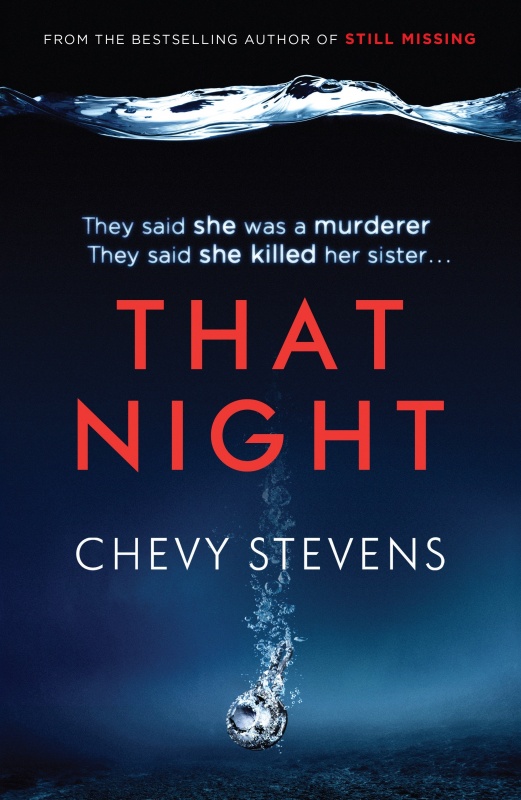 That Night is the latest novel from author, Chevy Stevens. Here’s the blurb:
Eighteen-year-old Toni and her boyfriend, Ryan, were wrongly convicted of the murder of her younger sister.
Seventeen years later, she’s out on parole and back in her hometown, but she’s struggling to adjust to a new life on the outside. Ryan is convinced he can uncover the truth; her mother still doesn’t believe Toni’s innocent; and the former high school girls who made Toni’s life miserable may have darker secrets than anyone can imagine. Before Toni can move forward, she must take a terrifying step back to her past to find out the truth and clear her name, before it’s too late.
I am new to Chevy’s books and so I didn’t know what to expect but reading the blurb, I found I was definitely intrigued. This book certainly appealed to my love of mysteries as I love trying to figure out what is going on.
That Night follows Toni through three stages of her life – her life as a teenager prior to the death of her sister, her situation through the trial and finally her life once she’s released from prison after serving her sentence for her sister’s murder.

 by
by Bella’s Scribblings: Editing – The Benefits of Memory Loss
 Just a short column this week as I am busy with all the usual commitments plus organising cake and wine for my debut novel publication day (eek) as well as trying to finish off all the Christmas chocolate by Easter (it’s a hard task but someone has to step forward) my only escape has been an afternoon with the child watching a bit of Disney’s Frozen. So my debut novel has a publication date of 12th February and we have now finished the editing. I’m not entirely sure what’s been going on as this is the first time I’ve been through this process and I’m still trying to manage my excitement levels which did reach a peak after seeing my lovely cover (by the very talented Jane Harwood).
Editing is when you really appreciate the wonder that is track changes. It makes it so easy to flick to the next query or amendment. It’s also good to go back to your manuscript with fresh eyes and to try to read it as a reader. It’s funny because I very rarely read the same book twice (I have a To Be Read pile to rival the Eiffel Tower so must keep forging ahead). The big exception to the not reading twice rule is my own novel because I have to read it to edit it, so I have read it many times. It does make you wonder if you have some sort of split personality disorder or acute memory loss when you read whole chunks that you can’t remember writing. Continue reading

 by
by Book News: Neil Gaiman
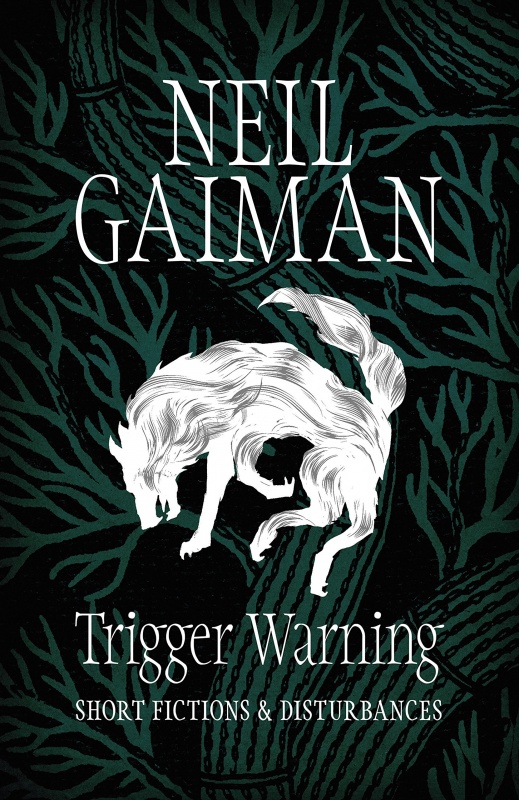 Great news for Neil Gaiman fans.
The author of Stardust and The Ocean at the End of the Lane is due to release the third collection of short fiction. It’s called Trigger Warning: Short Fictions and Disturbances and it’s due for release on 3rd February 2015 in hardback and e-book formats.
Trigger Warning mixes horror, ghost stories, science fiction and fairy tales and this also includes a never before published American Gods story, Black Dog.
Here’s a bit of the blurb:
In this new volume, Neil Gaiman pierces the veil of reality to reveal the enigmatic, shadowy world that lies beneath. Trigger Warning includes previously published pieces of short fiction-stories, verse, and a very special Doctor Who story that was written for the fiftieth anniversary of the beloved series in 2013-as well as BLACK DOG, a new tale that revisits the world of American Gods. Continue reading

 by
by
 We’ve been so delighted to be part of the blog tour for Campari for Breakfast. To celebrate the paperback release of Sara Crowe’s debut novel, thanks to Sara and Transworld, we have two copies to give away.
How to enter:
Simply comment on this post by the closing date which is 23.59 on Tuesday 3rd February 2015. The two winners will then be chosen at random from the entrants and announced on the Novel Kicks blog on Wednesday 4th February 2015. UK only. Good Luck!
(The winner will also be notified via e-mail. We will use the address you provide when you enter the draw. Don’t worry, it’s safe with us. Also don’t forget to check your junk folder. I try to get the prizes to you as quickly as I can. In this instance, the prize is coming directly from Sara’s publisher so please allow up to 28 days for delivery. If you’ve not received your prize after this time, please contact us via the blog and not social media as there is a danger with social media that we may miss your message.)
About Campari For Breakfast:

 by
by Blog Tour: Campari For Breakfast by Sara Crowe
We are very happy to be welcoming Sara Crowe back to Novel Kicks to celebrate the paperback release of her debut novel, Campari for Breakfast (which is released by Transworld tomorrow.) Sara has kindly shared an extract from her novel. Enjoy.
(Warning: some bad language.)
Sue
Sunday 4th January 1987
It was easy persuading Dad to let me leave. In my heart I’d hoped he would object, but since it would give him more time alone with Ivana, he didn’t. Persuading myself was easy too. Stay in Titford or go to Egham? Most of my friends are having gap years picking strawberries, living in communes, whereas I want to go straight into life with no gap, and earn good money doing it. And so Titford holds nothing for a girl of my ambition any more.
It’s an understandable and terrible fact that Dad’s taste has deserted him since we lost mum. I think he just got so lonely that anybody would do. He met Ivana at Titford golf club. She was playing a round with his boss and Dad was to take them to dinner. She’d really been after the boss, but settled for Dad’s attentions because the boss was a terrible lecture. I don’t know much about her, other than she comes from somewhere in Denmark. She just appeared out of nowhere like bad wind.
The only things I have to show for my life so far are a love of words and some interesting relatives, and mum always drilled me to make the best of what I’ve got. So in the end my decision has absolutely nothing to do with Dad or Ivana. Ultimately I think Green Place will be a good place to write.

 by
by Review: Campari For Breakfast by Sara Crowe
Campari For Breakfast is the first novel for actress and author, Sara Crowe.
Sue is mourning the loss of her mother and is not happy that her father seems to be moving on so soon after her mother’s death. Estranged a little from him, she goes to live with her Aunt at Green Place in a home that is pretty much falling down around them. Sue begins to try and rebuild her life as she tries to find the truth about her mother. In the process, she discovers a lot about herself and the people closest to her. This book is told from the point of view of Sue in 1987 and of her Aunt Coral, in the form of journal entries starting from when she was a girl.
I have to admit, I didn’t know what to expect from this book when I read the blurb but from the first few pages, I was hooked and could not put it down. Sue is a wonderfully original voice who is trying to discover who she is. She wants to be a writer and her short story, snippets of which are featured occasionally through the book are very witty.
Sue is very innocent and naive at the beginning of her story but I found that she’d come into her own a bit by the end.
The supporting characters were a cross between wonderful Continue reading

 by
by Review: The Time Keeper by Mitch Albom
 I love Mitch Albom’s previous novels (he sits alongside Nicholas Sparks in the ‘authors who succeed in making me cry’category.) The Five People You Meet in Heaven would easily make my top ten. As a result, there was a high expectation for this book (first impressions – I loved the cover.)
It focuses mainly on three people: A young girl (Sarah) who wants to stop time forever. An older man (Victor) who wants to do all he can to extend his time and finally Dor, the time-keeper, who becomes obsessed with measuring time and eventually becomes Father Time. He is sent on a journey to find Sarah and Victor in order to be able to complete his mission and escape the prison he has found himself in.
This book is only 256 pages and so I read it over the course of twenty-four hours. The chapters are short which for me makes it very easy to read. Mitch has a very relaxed style to his writing that I love and therefore I find that the themes he covers are easier to digest as a result.

 by
by Novel Kicks attends An Audience With David Nicholls
 I was very excited to hear that David Nichols was returning to his home town to host ‘An audience with.’ I was very fortunate to be able to attend this recent event at The Point in Eastleigh, Hampshire (In association with Eastleigh Library 25th Anniversary events.)
When we arrived, we promptly found our seats in the main auditorium. I have to admit, I didn’t quite know what to expect. I had never been to The Point before despite having lived near Eastleigh for nearly two years. I have quickly become a fan of the venue. It’s big enough to not feel cramped and small enough that I didn’t feel a million miles from the stage area where two chairs and a table had been placed in the middle.
To begin with, David talked about how Libraries play a huge part for him and how he will often find himself writing in the British Library as well as the London Library. He then chatted about his time in theatre and how through working there he found his love of words.

 by
by Mick’s Musings: Looking for an Agent!
 Okay, first things first, let’s be polite. May I wish each and every one of you a very Happy New Year and I hope you had a great Christmas too. So far as my Lady Wife and I are concerned, we’re still ploughing through the store of Christmas chocolate – it’s a dirty job, but someone’s got to do it! As for writing, 2015 for me is going to begin with unashamed ‘pleas’ (right word/expression?) as I am now stepping up my search for an Agent.
So, to refresh thy memories, I’m now in my 3rd year as member of the Romantic Novelist’s Association, New Writer’s Scheme (blurb just arrived to confirm in the post) and the tome I sent off to the Reader last year was deemed ready to send out to Agents, once the few amendments were made. It’s currently with 4 of these wonderful people and I did mean to send out for a few more prior to Christmas, but then I thought it wasn’t the best time at which to send it off, holidays on the way, parties etc., but now it’s time to hit the ‘Send’ button on my email and also get some ink for my printer. In the meantime, I’m going to put in the Synopsis below (resulting in a slightly longer blog post than normal.) Continue reading

 by
by Book Club
Recent Comments