NK Chats To….
Our Author Interviews and Guest Posts.
Our Author Interviews and Guest Posts.
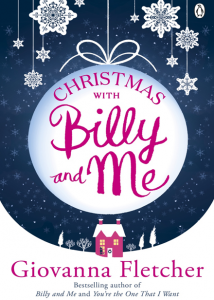
Penguin, November 2014
We had one copy of Christmas with Billy & Me by Giovanna Fletcher.
Well done to Lynne Cox who has won a copy of this lovely Christmas novella.
About Christmas with Billy & Me:
Christmas has come to Rosefont Hill and it’s destined to be a particularly special festive season for Sophie May.
When a smitten stranger emails Sophie to ask her if he can propose to the woman he loves in her little teashop, the romantic in her finds it impossible to refuse. Even though Christmas is her busiest time of year she has her own sweetheart, Hollywood actor Billy Buskin, to lend a helping hand. How could she say no to making someone’s dream come true?
As Sophie and Billy work together to plan the perfect fairy-tale proposal for this couple, excitement in Rosefont Hill is mounting. Who is this mysterious man? And who is the lucky lady he’s about to get down on one knee for?
To view the e-book edition on Amazon: http://www.amazon.co.uk
To view the e-book edition in the ibooks store: https://itunes.apple.com
To view the paperback edition exclusive to Waterstones: www.waterstones.com


 by
by 

Penguin, November 2014
We’re giving you the chance to win a copy of Christmas with Billy & Me by Giovanna Fletcher.
We have one copy to give away. It’s a great book to curl up with through Christmas. Scroll down for details on how to enter.
About the book:
Christmas has come to Rosefont Hill and it’s destined to be a particularly special festive season for Sophie May.
When a smitten stranger emails Sophie to ask her if he can propose to the woman he loves in her little teashop, the romantic in her finds it impossible to refuse. Even though Christmas is her busiest time of year she has her own sweetheart, Hollywood actor Billy Buskin, to lend a helping hand. How could she say no to making someone’s dream come true?
As Sophie and Billy work together to plan the perfect fairy-tale proposal for this couple, excitement in Rosefont Hill is mounting. Who is this mysterious man? And who is the lucky lady he’s about to get down on one knee for?
How to enter:

 by
by  Hello Susan, thank you so much for joining us. Can you tell us a little about A Little in Love and how the idea originated?
A Little In Love is the tale of Eponine from Les Miserables – an account of her childhood, and of her own role in the events of Hugo’s classic book. The idea was not, in fact, my own: I was approached by Chicken House and asked if I’d consider writing of Eponine for them. But as soon as the idea was shared with me, I loved it. I accepted very quickly – because of all the characters in Les Mis, it’s always been Eponine who I’ve found the most intriguing. She’s complex, feisty, flawed, selfless – and yet she is only peripheral in Hugo’s tale. It has been a joy to spend time with her, and finally give her a voice.
What were the challenges of writing a book around a character that was already so established and well known?
The most intimidating part of the project was the idea that I might create an Eponine that others wouldn’t like – that she might not seem like their Eponine, the one they’d always imagined and loved from the book, musical or play. We all have our own idea of what a character looks like, sounds like or behaves: instinctively, I think, we can be protective of them! I knew who my Eponine was, but would she be other peoples’? I’m also aware that Les Mis has an extraordinary following and fan base; it has inspired passion in so many, and fierce loyalty. All this was quite overwhelming! But ultimately I felt that all I could do was treat Eponine with tenderness and deep affection, and to stay as faithful to the novel as I could.

 by
by  We are delighted to welcome Joanna to our blog today. Her new novel, Red Rose, White Rose focuses on Cicely Neville and her half-brother, Cuthbert. It was released by Harper on 4th December 2014. Joanna talks to us today about what inspired her to write Red Rose, White Rose.
Red Rose, White Rose: It only takes one little fact to set off a chain reaction…
When people ask what inspired me to write a novel about Cicely Neville they are surprised when I say it was the discovery that she was the youngest child in her family. Nothing very unusual about that you may think but when I add that the family consisted of no less than twenty-two children perhaps you might begin to understand why my curiosity was piqued? Then consider the following additional facts; that fifteenth century England was about to plunge into the Wars of the Roses, that the Nevilles were staunch Lancastrians (Red Rose) and that Cicely married the Duke of York (White Rose) and I think you might appreciate that this struck me as the framework for some fascinating historical fiction.
Cicely’s father was the Earl of Westmorland, which used to be a county in north-west England but has now been subsumed by the county of Cumbria and no longer officially exists, except in the name of a local newspaper and a motorway service station on the M6! However, in the fifteenth century it was the heartland of one of the kingdom’s most powerful families, the Nevilles. Ralph Neville was granted the Earldom of Westmorland by King Richard II towards the end of the fourteenth century but when Henry of Lancaster usurped Richard’s throne in 1399, Ralph had recently taken Henry’s half-sister Joan Beaufort as his second wife and therefore felt obliged to support his new brother-in-law. It turned out to be a good move because the new king heaped honours and wealth on those lords who had backed his seizure of the crown.

 by
by Harper, December 2014
In fifteenth century England the Neville family rules the north with an iron fist. Ralph Neville, Earl of Westmorland, a giant of a man and a staunch Lancastrian, cunningly consolidates power by negotiating brilliant marriages for his children. The last betrothal he arranges before he dies is between his youngest daughter, nine-year-old Cicely, and his ward Richard, the thirteen-year-old Duke of York, England’s richest heir.
Told through the eyes of Cicely and her half-brother Cuthbert, Red Rose, White Rose is the story of one of the most powerful women in England during one of its most turbulent periods. Born of Lancaster and married to York, the willowy and wayward Cicely treads a hazardous path through love, loss and imprisonment and between the violent factions of Lancaster and York, as the Wars of the Roses tear England’s ruling families apart.
Red Rose, While Rose is told from two points of view – Cicely who ends up married to The Duke of York, Richard (who is not the easiest man to live with,) and Cuthbert, her illegitimate half-brother. I liked the fact that there were two points of view as it gave me an insight into both sides. Cicely on her own would only have been able to take the story so far and so Cuthbert gives us an insight into the time on the battlefields – information Cicely would have no knowledge of as her story is from the domestic side.
I love it when fiction is mixed in with fact. Cuthbert is fictional but I found that I really liked his character and I connected with him in a way that I didn’t quite with other characters. He felt very real in my mind and the author has done such a great job giving him a voice. I found his situation interesting. He is seen to be accepted into Cicely’s immediate family but has to fight for his legitimacy as far as everyone else is concerned.
The two points of view also gave a very interesting account of how different it was for men and woman but in my opinion, it also shows how much importance the women’s behaviour had on their husbands and how they were forced to make difficult choices once married.

 by
by  Carla Curuso lives in Adelaide and as well as being the author of Catch of the Day, Mommy Blogger and Unlucky for Some, she is also involved in the Adelaide Chick-Lit Book Club and the Life, Love & Laugh blog. Her novel, A Pretty Mess is available on Amazon and Pretty Famous will be available on 1st February 2015.
Carla shares her five writing tips…
1. Don’t follow trends.
2. Be yourself and find your own unique voice.
3. Write every day – it’s the best way to keep ‘inside the head’ of a story/character and stay excited by it. Even if you only write 300-600 words a day, it’s amazing how the word count builds up overtime. I find I can only write in a few-hour blocks anyway, then I’m not inspired anymore! It’s a marathon not a sprint. Plus, you’ll have a better story if you have ‘creative thinking time’ in between, pushing the novel in different directions you might not have thought of earlier.
4. Write the kind of book you’d feel excited to pick up from a shelf. (Sophie Kinsella said something like that and it’s so true!)
5. Write your ‘own’ story. Your life experience might seem boring to you, as compared to, say, Gwyneth Paltrow’s life, but it’s actually a goldmine. Nobody has experienced exactly the same kind of things as you have – the people you’ve met, the places you’ve been, the emotions you’ve felt. Draw on it and you’ll write authentically and keep people captivated!
Read our interview with Carla.
Find Carla at www.carlacaruso.com.au and information about her latest works at http://www.harpercollins.com.au
The Adelaide Chick-Lit Book Club is on Facebook and the Life, Love and Laughs blog can be found at http://www.lifeluvnlaughs.blogspot.com.au/

 by
by  Day thirty of National Novel Writing Month. Earlier, author Julie Cohen took us through her editing process and now Talli Roland talks to us about her experience with self publishing.
Self-publishing provides another route for authors to get their books directly to an audience. I think it’s wonderful to be living in a time when authors have choices. No longer do they need reach readers through a publisher – they can decide what is right for them and for the book.
I had a wonderful relationship with my publisher, but as a small independent, their distribution reach was limited. Most of my sales were ebooks, and I’d spent a great deal of time building up my platform. It made sense for me to go out on my own, hire a cover designer and an editor, and keep my profits. It was very scary jumping ship – jumping off the ship! – but I’m so pleased I did.
It’s been an amazing journey – hard, challenging, and somewhat obsessive – but I’ve really enjoyed having control over everything from cover to content to timelines. And it’s been wonderful to make living from writing, too. That said, like any business, sales can fluctuate, depending on many factors. You don’t have the security of an advance from a publisher, so that can be a little daunting.

 by
by  This is it. Day thirty of National Novel Writing Month. Well done to all who have finished, good luck to all the people who are still going and if you didn’t manage it, you’ve still got words written that you didn’t have when you began which is fantastic. Today, Julie Cohen joins us to chat about her editing process (she uses Post-its and I have to say I like her style.)
After I’ve finished the first (very rough) draft of my novel, I usually have a list of all the things I want to change. I write it all down as instructions to myself.
After that, I often spend some time analysing what I’ve written. I find that Post-Its are really handy for this. I outline the entire book, event by event, using colour-coded Post-Its for each story thread. Then I arrange in them in order on the wall, or on paper.
This method lets me see all of the story at a glance. It can make it much easier to understand where you’ve got problems, and to see where new parts can fit, or irrelevant parts need to be cut.
Here’s a picture of one of my novels after it’s had the Post-It treatment.

Julie is the best-selling author of Getting Away With It and Dear Thing and Where Loves Lies (which was released by Bantam Press on 31st July.) To find out more about Julie, visit her website: http://www.julie-cohen.com

 by
by  Jane Fallon’s books include Getting Rid of Matthew, Foursome and Got You Back. Her latest, Skeletons was released by Penguin earlier this year. She’s also a producer whose credits include Teachers and This Life. On day twenty-nine of National Novel Writing Month, she talks to us about supporting characters:
Your supporting characters create your world. They’re your colour and texture. Without them your book will feel two-dimensional and flat. Every character, however small a part they play needs to feel authentic and alive. It’s always a temptation to try to use shorthand to get across a character who is only going to appear a few times in your book. Everyone understands a cliche. But if you do that your reader is going to lose their sense of disbelief. You’ve asked them to immerse themselves into the world you’ve created so it’s important that world never feels cliched or flimsy. Make sure they’re as real as your leads.
Lesser characters can also be like a breath of fresh air – light relief, a pause from the intensity of the main story. They can throw a different light on your main characters. allowing us to see our heroes in a different way. They are what makes us feel we have entered a world that exists whether we’re there or not. Don’t underestimate them.
To find out more about Jane, visit her website: http://www.janefallon.co.uk

 by
by 
Cathie Hartigan-
National Novel Writing Month finishes tomorrow. I can’t believe we are almost at the end of another year. I hope you’ve had a good month. If you’re still going; that 50,000 word goal still being elusive, you can do it! Today, Cathie Hartigan talks about whether there is a right place to write:
Is there a right place to write? Perhaps there is, but it certainly isn’t the same place for everyone. I’ve met writers who can only work in a café or with the television on and those who need complete silence and become all night long writers. My friend and colleague, novelist Sophie Duffy writes in a lovely shed at the bottom of her garden, although she also recommends writing in bed. Hopeless for me! I fall asleep almost immediately.
My writing space is doubles as the HQ for CreativeWritingMatters and it’s chock full of files, books, several computers and stationary for England. We all know writing is sedentary so in order to get some exercise and not be distracted by a sudden need to turn on the washing machine, I take myself to the wonderful Devon and Exeter Institution (it’s a library, honest!) as often as I can. There I can sit at a huge mahogany table, which has nothing on it except a fabulous shine. Perfect. I’m nose to screen until from across the green I hear the Cathedral clock strike five and it’s time for the library to close.

 by
by 
 Suzanne McCourt also joins us on day twenty-seven of National Novel Writing Month. Her debut novel, The Lost Child has been released today. She shares with us her writing process and route to publication.
It took me almost ten years to write The Lost Child, in part because I tried to control the process: I thought writing came from my head and it took some time to discover that it needed to come from my heart. Losing my mother and having four family deaths within eight months, taught me a lot about letting go of control. So did Barbara Turner-Vesselago’s freefall writing workshops. But it was only when I let myself trust the voice of a child who’d tried to take over a previous novel—only when I allowed Sylvie to tell her own story—that The Lost Child began to unfold without interference from me.
Nabokov suggests that a writer is part storyteller, teacher and enchanter, and that by far the most important of these is enchanter. One of the great joys of writing from Sylvie’s perspective was that I was able to enter a child’s world of innocence, spontaneity, vulnerability and humour and lose myself in the process.

 by
by  Day twenty-seven of National Novel Writing Month and Ali McNamara joins us today to talk about returning to a character.
It’s lovely to write again about a bunch of characters you’ve got to know in a previous book. It’s like meeting up with old friends again, and that’s exactly how I feel when I return to Scarlett and her Notting Hill friends.
I’ve written about them three times now, and it becomes easier with every book. Both you and the reader already know so much about each character, that you know just how they’ll behave in every situation.
There aren’t many drawbacks – trying to keep a new reader who might not have read the other books in the series, up to date with what’s gone on in previous stories is probably the trickiest thing, as you don’t want to bore fans of the series with lots of information they already know. But hopefully I usually find a way to suit all!
I love writing the Notting Hill series, and I really hope to write more in the future.
Ali is the author of the Notting Hill series which include From Notting Hill with Love Actually, From Notting Hill to New York, Actually and her new novel, From Notting Hill with Four Weddings Actually which was released by Sphere in October.
To find out about Ali and the fantastic Notting Hill series, visit her website: www.alimcnamara.co.uk
You can also follow her on Twitter @AliMcNamara

 by
by  NaNoWriMo is almost over. Most of you will be almost at the end. Tracy Buchanan talks to us about plot twists.
The best plot twists are the most believable ones. Don’t you hate it in novels or films where a twist is thrown in for the drama, and while it might be a ‘wow, really?’ moment, it doesn’t feel true to the characters as it sinks in.
The actions that lead to that twist need to be completely convincing and not out of character. Subtle hints (foreshadowing, as we call it) need to be littered throughout the novel, so subtle that it’s only when you read those final pages that you realise how it all ties together.
A little technique I use (and this doesn’t just apply to plot twists, it can also apply to ‘reveals’ in general, so elements of information held from the reader until later on) is to list the reveals I want to unveil. Then beneath each one, list how I can hint at these reveals throughout the novel without giving anything away.

 by
by  With NaNoWriMo, the pressure to write anything in the thirty days is tough. Should you make it easier for yourself and write what you know? Does it help or hinder your writing? Portia MacIntosh tells us whether she thinks it does or doesn’t…
Stick with what you know, that’s what they say. Well when it comes to writing, sticking with what I know is something that has served me well so far.
The truth is that I never set out to become a writer, it just sort of happened. As a teenager I got ‘in’ with a few pretty big bands at the time. This lead to me spending a lot of time around touring musicians and eventually getting a job in the industry. With lots of cool stories to tell and lots of empty hours waiting around for soundchecks or struggling to sleep on the tour bus, I started thinking about ways to show people what life behind the scenes was like – not the approved version you read about in autobiographies or see in documentaries – and I knew that it was important to keep things anonymous, lest I get sued or, even worse, kicked out of the inner circle and no longer invited to the cool parties.
It was during the writing of my first two books about the music industry that I realised I loved telling stories, and that I wanted to write lots more books about lots of different things. That’s when I realised that I didn’t need to keep writing about showbiz to benefit from letting my real life influencing my fictional work. You don’t need an unusual job or to have been through something out of the ordinary, anyone can let their day-to-day life influence their writing. Here are some of the pros and cons.

 by
by  Day twenty five of NaNoWriMo. Only five days left. Today, Sue Watson tells about whether she thinks character or plot is more important.
If a great character doesn’t have a reasonable plot it won’t work and at the same time, if a fantastic plot has cardboard characters then neither will work, so it’s a tough question. However, if I had to choose, I’d say for me the character is absolutely the most important. Well developed, believable characters drive the plot, and sometimes even change the direction of a novel.
I always plan a novel through my main character or characters; for me it may be a woman who has a problem/ a sadness/ or something in her past that has brought her to this point and causes her to behave in a certain way. I like to know my character’s star signs, their favourite colours, foods and preferred music – all these elements help to build the character and help me to imagine their choices and the way they live. It may never be necessary to reveal all this minutiae to the reader – but it helps me as the writer to really get under my character’s skin, create realistic dialogue and decide how they would react to a situation or another person.

 by
by  80s Soho. So sexy. So sassy. So sordid. So the right time, right place to set my first novel.
Soho was never so-so. What better backdrop for my first book: I am Ella. Buy me?
Working in advertising agencies in the heart of the city allowed me to get up close and personal with one of the most exciting places on earth.
Boys dressed as girls, and women competing in a man’s world – everywhere I looked sisters were ‘doing it for themselves’ to quote the lexicon of 80s cool, Annie Lennox.
By night, Madame Jo-Jos was, and I hope always will be, home to the beautiful people – impossibly tall, exotic creatures sashaying across the stage in vertiginous heels and feathered frocks.
By day, after a bad morning, my analgesic of choice was usually a glass of something cold dispensed by the latest bar. Staggering out of one of those dark, smoky caverns, my eyes slowly adjusting to the stark afternoon light, I would often collide with an ageing celebrity darting furtively from a sex shop, clutching guilty pleasures in brown bags.

 by
by 
Rob Pateman (Photo Paul Stuart)
Author, Rob Pateman is with us today (day 24 of NaNoWriMo,) to talk about creating believeable characters.
The grit in the oyster cell makes the pearl – and it’s the friction between the antagonist and the protagonist that lies at the heart of a good book.
The conflict between them drives the narrative, so establish early on what’s at stake for both characters. It could be life or death, financial ruin, the moral high ground, the end of civilisation as we know it, property, family happiness or something more tenuous, like love or truth.
With the basic tension set up, your characters’ personalities, attitudes, beliefs, and life circumstances will begin to follow. One might be demure, conventional, social and funny. The other more calculating, secretive and moody. And the social and funny one might not necessarily be your protagonist!
People aren’t all black and white – so your characters can’t be either. There has to be some light and shade to make them believable and make your readers more likely to engage with them.
Rob writes under the name, R.S Pateman and is the author of The Second Life of Amy Archer. His new book, The Prophecy of Bees was released earlier this month (both published by Orion.) For more information on Rob and his novels, visit his website: http://rspateman.com/

 by
by  Kelly Florentia is the second author to join us today for our collection of posts to coincide with NaNoWriMo. Kelly joins us to talk about short stories.
I love reading short stories. There’s something quite gratifying about a sharp, tight tale with a satisfying or clever ending. Although not as widely read as novels, short stories are a lot more prominent than some people may think. Breakfast at Tiffany’s is a film adaptation of Truman Capote’s novella (1958). And Alfred Hitchcock’s 1963 classic The Birds was inspired by Daphne Du Maurier’s short story of the same name taken from her anthology The Apple Tree (1952). Oscar Wilde, one of my favourite authors of all time, mainly wrote plays and short stories.
Producing fine, short literature requires great skill and tenacity. Unlike a novel, you only have a few hundred or a few thousand words to create a strong, believable plot with convincing characters and a fulfilling conclusion. Your aim is to engage readers within the first sentence, keep them connected, and not let them down in the last paragraph with a poor or predictable finish. Most of the stories I write have a twist or surprise ending simply because that’s what I like to read, but not all short stories need to take this form. Stories can be humorous, moving, romantic, inspirational or chilling. But, primarily, they must be entertaining.
Personally, the most challenging aspect of short story writing is coming up with new ideas. Magazine editors are always on the lookout for fresh material, and the last thing you want is for your reader to find your story predictable or worn. So when ideas arise I jot them down and work on them later. Ideas are everywhere. A comment someone makes, a newspaper article, a conversation, something I see on T.V. or read on the internet.

 by
by  In our second post today to coincide with National Novel Writing Month, we talk to author, Christina Jones about her route to publication and how all started with a boy called Tony…
My route to publication was – to quote every contestant X-Factor has ever had – a bit of a roller-coaster… And a lifelong roller-coaster at that… I’d always enjoyed writing stories and making things up, and I had my first short story published when I was 14 (in a teenage magazine – remember them?). I wrote about Tony from the chip shop who I was madly in love with and who ignored me and went out with my best friend instead. I poured every bit of teenage heartbroken angst into that story I can tell you! I sent it to the magazine without ever thinking it’d be published – but they loved it, bought it and paid what was a fortune to me then, and it opened up a nice little niche for me – and I carried on writing short stories, serials, articles (I became the pop correspondent for “Jackie” – was the envy of all my friends!), and anything else they’d pay me for (!) for the teenage mags while I was still at school, and then did the same for the women’s magazines for years. It was my hobby – and I was earning enough pocket money from it to have a couple of nice holidays each year – and that was about as far as I ever imagined my writing career was going.

 by
by  We are now into the last week of National Novel Writing Month. I can’t believe we are almost at the end already. If you’re having a month like me, it’s going to be a marathon to the end or if you’re near the end or have finished already, I applaud you. Today, we chat with author Rob Sinclair about the challenges of writing his debut novel.
For Dance with the Enemy, the biggest challenge for me was that I when I first started writing it I hadn’t really learned the craft properly. Writing was something entirely new to me. I’d never been on any courses or anything like that. I’m certainly no expert now even, with only three books under my belt, but I know I’ve learnt a lot on the way already. So Dance with the Enemy was a really steep learning curve for me – there were things I tried which didn’t work, mistakes I made in terms of my approach to writing including style, plotting, structure etc. All those have been ironed out over time but it meant that Dance with the Enemy was really quite a belaboured project by the end. Continue reading

 by
by  We are twenty days into National Novel Writing Month. How is everyone getting on? Today, we have the author of The Dead Wife’s Handbook, Hannah Beckerman who is sharing her five writing tips…
1. Write a lot. That’s not meant to sound glib. Writing’s like a game of pass the parcel: you have to wade through all the boring, tedious layers of wrapping on the outside before you get to the prize in the middle. And with writing, it can take an inordinate amount of time to reach that prize.
2. Be brave. I don’t just mean in terms of what you write (although obviously that too). But allow other people you trust to read and comment on what you’ve written. It’s scary putting yourself out there but it can be invaluable in helping your work develop.
3. Suit yourself. Some people will insist that you have to write in a particular place or according to a particular routine. But writing’s one of the most personal things you can do and you need to find what works for you.
4. Be disciplined. Wherever you choose to work on your writing, don’t forget that it is work. Lots of people ask me if I wait for inspiration to write. The answer is a resounding no. You have to write through the days when you’re not in the mood and when you know what you’re writing will end up in the virtual (or even the real) bin. But that’s how you get to the days when you write something that you know just might be okay. Sometimes, on really good days, something that’s even better than okay.

 by
by  Nicci Gerrard is one half of the writing team, Nicci French. On day nineteen of National Novel Writing Month, Nicci talks to us about the challenges and advantages of writing as part of a team
Writing can be solitary and also rather frightening – and sometimes it can feel like going mad (and I write in an attic). Writing with Sean is less solitary and less frightening, and there’s something rather exhilarating about going mad with another person – folie a deux. In many ways the actual process of writing isn’t so different from when I write solo novels, because Sean and I actually never write together (we did try once, at the end of our first book, The Memory Game, in an act of symbolic unity – but it was dreadful: we took about an hour to come up with one drab sentence, and squabbled throughout).
There are things that are straightforwardly lovely and fun – like the planning, when we go for long walks, or sit over coffee and tea and wine, and bounce ideas off each other without fear of being ridiculous. But usually the advantages are also the challenges – what’s good about writing together can also be what’s hard. We have to trust each other and to be vulnerable in front of each other. We have to allow the other to edit an even to erase our precious words. And there’s nowhere to hide – most relationships thrive with areas of separation, with boundaries .

 by
by Rob Pateman (Photo Paul Stuart)
R.S Pateman is the author of The Second Life of Amy Archer. His new novel, The Prophecy of Bees is due for release on 20th November. Rob talks to us about writing the second novel.
Sometimes it seems as if the writing life is one big obstacle course. Don’t get me wrong – I love what I do and feel blessed for being able to do it. But it isn’t all plain sailing.
There’s the anxiety of getting the first novel written; you’re isolated, not certain if what you’re writing is any good and the dream of publication seems distant and unlikely.
Then there’s the stress and disappointment associated with finding an agent, the lack of any concrete feedback, the finality of ‘sorry, no, not for us.’ Until of course, that magic day when someone finally says yes.
But you’re not done yet. Next up is submitting your novel to publishers, which is even more nerve-wracking than the search for an agent as the dream is that bit closer. Until, if you’re lucky, a publisher makes an offer on your novel.
The package my agent, Oli Munson at A M Heath, sent out to publishers included the manuscript of The Second Life of Amy Archer – and a synopsis for a second novel, The Prophecy of Bees.

 by
by 
 I always look forward to anything by Katie Fforde and I can’t wait for her new release coming in February 2015.
Being released by Century on 12th February, it’s called A Vintage Wedding and I am totally in love with this cover. If you want to have a sneak peek of her new book, Katie is releasing a collection of Christmas short stories and there will be a preview of A Vintage Wedding inside. A Christmas Feast is being released by Arrow in paperback and electronically and is available to buy from 4th December 2014. Both books are available for pre-order from Amazon.
A little about A Vintage Wedding:
Beth, Rachel and Lindy are looking for new beginnings.

 by
by  Earlier, we heard from author, Deborah Lawrenson about how she deals with the mid-book slump and now we catch up with Cathy Kelly to see how she deals with that dreaded mid-book stall…
I keep writing and tell myself I am an idiot about a hundred times. It’s such a dreadful thing to go through and I go through many of them with each book, and I force myself to stay at the computer, when really, a good walk helps. What I’ve written still looks dreadful when I come back but I am somehow calmed!
Cathy Kelly is the best-selling author of The Honey Queen, Just Between Us and The House on Willow Street. Her latest novel, It Started With Paris was released by Orion in October 2014. Read our interview with her by clicking here.

 by
by  Monday has rolled around once again and we are now over halfway through November and National Novel Writing Month. Most of the people taking part will be over 25,000 words into their NaNoWriMo novel (or not even close if you are having a writing month like mine.) At this stage, it’s very easy to fall into the mid-book slump. Later on today, we will be hearing from Cathy Kelly with her advice on how to conquer the mid-book slump but first, we hear from the author of The Sea Garden, Deborah Lawrenson. She gives us her advice on what she does to get through it.
The mid-book slump is a genuine threat. For me, it’s the moment when the thought strikes that what I’ve written so far might all be a load of rubbish, an implausible story and so tangled that any readers will rip it to shreds. How do I get over it?
I just walk away from it for a few days. I don’t stop working, though. I keep a notebook for each book, beginning with ideas, details of characters, reminders to myself, and whole passages of writing I’ve played around with. This is the time to re-read the notebook, and keep it close to jot down my thoughts.

 by
by  Jo is the author of non-fiction, poetry and short stories. Her first novel, Significance was released by Seren Books last month. We had a chat with Jo about her book, her ideal dinner guests and her favourite word…
Hi Jo, thank you so much for joining us. Can you tell us about your novel, Significance and how the idea originated?
The idea for the novel came from two sources; first, a sort of unease about reading and watching stories about murder. Like a lot of people I have enjoyed the recent Nordic Noir TV series The Killing and The Bridge, and I’ve also enjoyed novels on the same theme. On the other hand real murder as it hits our headlines is brutal and awful and it has often been said that while we remember the names of the killers the victims’ names are forgotten. I think the book is also informed by a series of murders in the town where I lived of three girls the same age as me at the time. Two of them had been to the same club as my friend and I on the night they died and so obviously this had an impact, and while I never knew them I have never forgotten them. So it was exploring these memories and ideas that provided the backbone of the book.
Out of all the books you’ve read, which three have made the most impact on you?
So many books come to mind, but for different reasons – if I think about impact my first thoughts go to those books that had a real emotional impact – for example, Sophie’s Choice by William Styron, one passage of which made me weep loudly and uncontrollably on the London underground. Edna O’Brien’s The Country Girls Trilogy has also remained memorable for its tragicomic scenes and O’Brien’s droll understated humour. Ian McEwan’s collection of short stories, First Love, Last Rites impressed for the strangeness of the situations his characters found themselves in, the borderlands of loneliness and love with dark undertones of decay.

 by
by 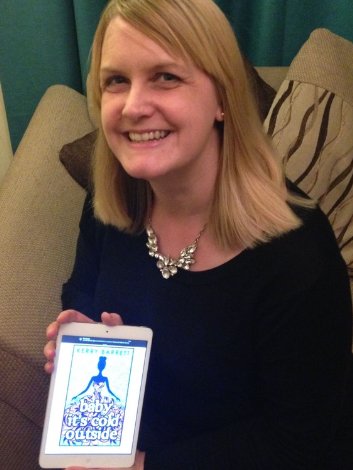 Kerry is the author of the Could It Be Magic series. The first in the series is Bewitched, Bothered and Bewildered followed by I Put a Spell on You. The third book in the series, Baby, it’s Cold Outside was released at the beginning of last month. We had a catch up with Kerry where we chat about her book series, her writing rituals and Chocolate!
Can you tell us a little about your Could It Be Magic Series?
The series follows Esme, who’s a lawyer, and her cousin Harmony, known as Harry. Harry runs her own business and is a successful, sassy, together 30-something. Esme’s a few years younger. She’s more relaxed than Harry – about some things. Oh, and they’re both witches. Esme is reluctant to use the powers she’s inherited from her mum while Harry embraces them and has built her whole life around them.
Is there a fictional character you’d like to swap places with for a day and why?
Oooh, that’s a good question! I think I’d like to swap places with Becky Bloomwood from Sophie Kinsella’s brilliant Shopaholic novels. She always has so much fun!
Out of all the books you’ve read, which three have impacted you most and why?
At the moment I can’t stop thinking about The Woman Who Stole My Life – the latest novel by Marian Keyes, which I have just finished. It’s really staying with me and I keep wondering what I would do if I found myself in Stella’s position. It’s very thought-provoking. Another book that has stayed with me is Life After Life by Kate Atkinson, which I absolutely loved because of all the alternatives it offered. I find myself thinking about that a lot. And Possession by AS Byatt is the most perfect novel I’ve ever read. I remember when I finished it thinking I’d never have to read another novel again because that was always going to be the best. In fact, I’ve read hundreds – thousands probably – of novels since then and I must go back an re-read it to see if I still think that way!

 by
by  Day twelve of National Novel Writing Month. So far we’ve heard from Jill Mansell who talked about planning a novel, Victoria Fox who gave us advice about discipline and Milly Johnson who chatted to us about heroes. Today, Margaret James joins us. She talks to us about what elements she believes creates a great story.
A great story needs a great premise – think of the tag lines and/or memorable quotes from some of the movies you’ve seen and you’ll soon come up with one yourself. Here are a few to get you thinking.
Love means never having to say you’re sorry.
You killed my father so prepare to die.
Houston, we have a problem.
Toto, I have a feeling we’re not in Kansas any more.

 by
by  Carla Curuso lives in Adelaide and as well as being the author of Catch of the Day, Mommy Blogger and Unlucky for Some, she is also involved in the Adelaide Chick-Lit Book Club and the Life, Love & Laugh blog. Her novel, A Pretty Mess is available on Amazon and Pretty Famous will be available on 1st February 2015.
We chat with Carla about her novel, Sophie Kinsella and Gossip Girl.
Hello Carla, thank you so much for joining us. Can you tell us about your novel, A Pretty Mess, and how the idea originated?
Yes! A Pretty Mess is the first in my ‘Astonvale’ rom-com mystery series. (Following on from it is Pretty Shore and Pretty Famous.) It surrounds a neat-freak professional organiser – Celeste Pretty – who gets caught up in messy mysteries with a sexy builder (Lenny Muscat)! I’ve always had a bit of a fascination with professional organisers who de-clutter people’s homes and offices for a living. Maybe because my mum was such a clean-freak Virgo. We weren’t allowed to wear our shoes in the house and the family home always looked like a magazine spread, seriously
Can you tell us about your route to publication?
My background is in print journalism (newspapers and magazines), so I’ve always written for a living. But being a novelist is what I REALLY wanted to do since I was, like, five. I just took a while to get serious about it and actually send anything anywhere! I reckon it took about three years, when I went freelance as a journalist – working from home – that I focused more on the novel dream and properly did anything.

 by
by  Talli is releasing two new books before Christmas and is also giving away a Kindle Fire.
Talli Roland’s previous novels include Build a Man and The No-Kids Club. She has two new book releases coming before Christmas and she has also announced a great giveaway too (details at the bottom of the post.)
The first book she has coming out is a novella called Married by Midnight: A Christmas Story. It’s due to be released by Notting Hill Press on 14th November 2014 and it’s currently priced at 89 pence* on Amazon UK (a bargain in our opinion,) and $1.49* on Amazon US (it’s already available on the US store.)
It’s a Christmas book so we can’t help but be excited.
Here’s the blurb:
Christmas is coming . . . and so is the biggest day of Kate’s life.
While choosing a vintage dress for her Christmas Eve wedding, Kate finds a cryptic note pinned to the inside of a 1930s gown. As doubts about her own ceremony loom, Kate is determined to track down the dress’ owner and determine what became of her – and the marriage.
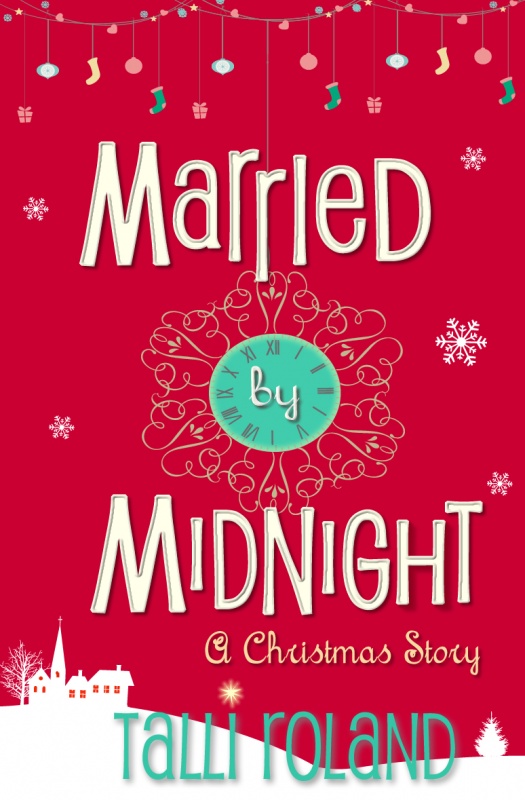 Will Kate find the answers she’s seeking to propel her down the aisle, or will her discovery prompt her to call off the wedding for good?
If a Christmas novella wasn’t enough, Talli also has a new Serenity Holland book coming out (the third in the series – Build A Man and Construct a Couple being the first two.) It’s called Marriage to Measure, it’s due to also be released by Notting Hill Press and will be available to buy on 10th December 2014 (it’s available to pre-order at a special price of 99 pence* on Amazon UK and $1.61 on Amazon US.)
About Marriage to Measure:
When Serenity Holland proposes to her long-time boyfriend Jeremy, she’s certain ‘forever’ is a perfect fit. As the wedding train steams forward, though, Serenity starts to wonder if they really are an ideal match. From a crusty old ring to a dilapidated house she’s left to renovate on her own – not to mention the appearance of Jeremy’s clingy ex-fiancée – engagement feels more like disengagement.
Even worse, wedding planning’s like a bad hangover as Serenity juggles the wishes of family and friends with her bossy mother-in-law-to-be, resulting in a Frankenwedding nothing like the simple ceremony she envisioned.
 Can Serenity knit her relationship back together and fashion a celebration that suits, or will ‘I do’ become ‘I don’t’?
To celebrate the release of her new book and novella, Talli is giving you the chance to win a Kindle Fire HD 8GB. It’s open to anyone living in the UK & Europe, Canada and the US. There are a few ways you can enter and you can also enter as many times as you like. Just follow this link to see how to enter. The contest closes on 10th December (the day Marriage to Measure is released.)
To find out more about Talli and her novels, visit her website at http://www.talliroland.com/
(*prices correct at the time of publication.)

 by
by  On day eleven of National Novel Writing Month, Sunday Times best-selling author, Milly Johnson joins us today as we talk about perfectly imperfect heroes.
When I am thinking up the perfect hero, the first thing I do is make him (ironically) imperfect. A totally perfect hero would be too daunting. George Clooney belongs on a pedestal, not wandering around a car boot sale on a Sunday morning. My heroes have flaws, they have made mistakes in life and become stronger people because of that. They are attainable and interesting. They have a good work ethic and are kind to animals. I could not write convincingly about a hero who kicked cats and preferred life on the dole. Flaws make a hero believable, but you have to find the right balance. A hero with too many flaws would be a pain in the butt and unattractive to readers. A good starting point is writing about someone who would be imperfectly perfect for you. Trawl the internet and find someone you like so you have a visual in your head when you are writing about him.
Lookswise… well, the faces I find most attractive have character. Features might not be flawless, but together they work. My hero’s nose may be slightly large, but on a strong face, a small straight nose would look ridiculous (analyse Liam Neeson’s features – small eyes, crooked nose, thin lips – but dynamite when placed together!). Strong female leads need even stronger men. I would have thought that 99.9% of women find being cared for and protected by someone physically and mentally strong a turn-on.

 by
by  We are now on our fifth day into National Novel Writing Month. How is everyone doing?
All throughout November, to coincide with National Novel Writing Month, we will be bringing you advice on aspects of writing from a variety of authors including Ali McNamara, Jane Fallon and Nicci Gerrard.
Today, we catch up with best-selling author, Jill Mansell who is talking about planning that novel. She says:
The trouble with planning out a whole novel’s worth of plot in advance is that you are bound to get much better ideas during the course of the book that knock the initial careful plans completely off course and render them useless. Since it’s so important to have the best plot possible, I now only plan it out in the very vaguest of ways, with Post-It notes stuck to a huge length of paper.

 by
by  We are delighted to welcome author, Luca Veste to Novel Kicks and his blog tour for his new novel, The Dying Place which was released by Avon on e-book on 23rd October and is due to be released in paperback at the beginning of December.
Luca talks to us about creating suspense and making you turn one more page…
I was asked at an event recently if I was disappointed if someone told me they had read one of my books in a day or similar length. The idea being that something for which I had put in more than a year’s worth of work had been devoured within short space of time somehow diminished the output in some way. I, of course, answered no – I’m actually inordinately pleased if I’m told that someone ‘couldn’t put the book down’! In a world full of seemingly endless distractions, the thought someone can shun all of those and concentrate solely on one thing for more than ten minutes has to be a good thing. And this is something that is of great importance to me when writing and rewriting a novel… how do I keep a reader turning those pages?
Creating suspense isn’t something I have found to be organic during the writing process. It takes time and effort to keep a level of intrigue going throughout a read, with building blocks spread within a novel. Suspense is derived from asking questions and not instantly revealing answers – instead, you keep a reader interested in finding out the answers to the mysteries created in a variety of ways. My initial concern is with character. In order to keep a reader invested is to create characters which will resonate and make people interested in what happens to them. If I want to keep someone reading the novel engaged with what is occurring, I need to create characters who the reader cares enough about to see what will happen to them next. In DEAD GONE, the character of Jemma Barnes runs throughout the novel, with her capture and mental torture occurring over a long period of time. It was important to me that people would care about her predicament, so her personality had to come through in the chapters in which she appeared or other characters talked about her. The reader had to care whether or not she was going to make it or not. Similarly, in my new novel THE DYING PLACE, what is happening to the characters of Goldie – and the rest of the teenagers and what they are being put through – meant I had to make people care about them in some way. I made this more difficult for myself by creating characters which are often the most maligned in society. Issues surrounding young people and the problems a small section of them cause is often the focus of negative media. Creating a moral dilemma for people reading became a major part of writing the novel.

 by
by  Once inside…there’s no way out
A fate worse than death…
DI Murphy and DS Rossi discover the body of known troublemaker Dean Hughes, dumped on the steps of St Mary’s Church in West Derby, Liverpool. His body is covered with the unmistakable marks of torture.
As they hunt for the killer, they discover a worrying pattern. Other teenagers, all young delinquents, have been disappearing without a trace.
Who is clearing the streets of Liverpool?
Where are the other missing boys being held?
And can Murphy and Rossi find them before they meet the same fate as Dean?
I was a huge fan of Dead Gone (the debut novel by Luca Veste,) so I was intrigued to be reading his latest book, The Dying Place.
Set in Liverpool, we return to DI David Murphy and his partner, DS Laura Rossi as they race to save a group of teenagers that are disappearing and being held against their will.

 by
by Nicci Gerrard is one half of the writing duo, Nicci French. She is also the author of The Winter House, Missing Persons and The Moment You Were Gone. Her latest novel, The Twilight Hour was released by Penguin on 23rd October. We chat with Nicci about her writing, her new novel and her favourite word.
Hello Nicci. Thank you so much for joining us. Can you tell us about your novel, The Twilight Hour and how the idea originated?
Thanks so much for having me! And for asking me these questions.
The Twilight Hour is really about the past and present life of Eleanor Lee. Now in her nineties and blind, she needs to tidy away her life before her family discovers secrets that she has kept hidden for seven decades. She is about to be moved from her old house by the sea to a home and she employs a lost young man called Peter Mistley to go through all her papers and photos. Gradually he – and the reader – are drawn back into Eleanor’s turbulent history, her love and her guilt. I wanted the novel to shift between two times and to unwind a story that still has power over the present. I also wanted to show how the old – who are often invisible to us – contain all the selves they have ever been. Eleanor might be in her mid-nineties and close to her death, but she is also youthful, caustic, purposeful, passionate and complicated. She still has hopes and desires. She is brimful of memories.
I first thought of writing The Twilight Hour when I and my siblings were moving my very old and extremely frail parents out of the family home. It was very poignant, gathering together a life and packing it away, deciding what to keep and what to discard We came across a film of their wedding day, and that ghostly sense of their young and radiant selves was powerfully moving.
Do you plan much before a novel and do you edit as you go?
I do plan – or at least, I have to have a sense of the journey the novel will make and I have to know why I’m writing it, what is its beating heart, if that makes sense. But then, my plan always goes awry, because of course a novel isn’t like a machine. It won’t obey you. Characters don’t want to do what you thought they should. They go their own way – and that’s good, it’s when the novel is working and taking on life.
I edit as I go – which often means throwing things away and starting again. And then when I’ve finished. And then after my agent has read it. And then after the publisher has read it….But often I think that I know from the start if something is working or not, and if it isn’t all the editing in the world can’t save it.

 by
by  Thanks to Cathy and the lovely people at Orion, we had THREE copies of It Started With Paris to give away.
Well done to: Tracy Shephard, Aisling Quinn and Leila Benhamida. You’ve all won a copy of the book.
About It Started With Paris.
It all started with Paris. At the top of the Eiffel Tower, a young man proposes to his girlfriend, cheered on by delighted tourists. In that second, everything changes, not just for the happy couple, but for the family and friends awaiting their return in Bridgeport, Ireland…
Leila’s been nursing a badly broken heart since her love-rat husband just upped and left her one morning, but she’s determined to put on a brave face for the bride.

 by
by 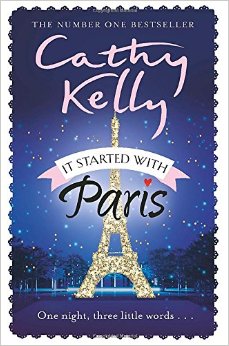 Thanks to Cathy and those lovely people at Orion, we have THREE copies of It Started With Paris to give away.
About the book:
It all started with Paris. At the top of the Eiffel Tower, a young man proposes to his girlfriend, cheered on by delighted tourists. In that second, everything changes, not just for the happy couple, but for the family and friends awaiting their return in Bridgeport, Ireland…
Leila’s been nursing a badly broken heart since her love-rat husband just upped and left her one morning, but she’s determined to put on a brave face for the bride.
Vonnie, a widow and exceptional cake-maker, is just daring to let love back into her life, although someone seems determined to stop it.
And Grace, a divorced head teacher, finds the impending wedding of her son means that she’s spending more time with her ex-husband. After all those years apart, is it possible she’s made a mistake?
HOW TO ENTER:

 by
by It all started with Paris. At the top of the Eiffel Tower, a young man proposes to his girlfriend, cheered on by delighted tourists. In that second, everything changes, not just for the happy couple, but for the family and friends awaiting their return in Bridgeport, Ireland…
Leila’s been nursing a badly broken heart since her love-rat husband just upped and left her one morning, but she’s determined to put on a brave face for the bride.
Vonnie, a widow and exceptional cake-maker, is just daring to let love back into her life, although someone seems determined to stop it.
And Grace, a divorced head teacher, finds the impending wedding of her son means that she’s spending more time with her ex-husband. After all those years apart, is it possible she’s made a mistake?
With her warmth and insight, Cathy Kelly weaves a delightful tale spinning out from a once-in-a-lifetime moment, drawing together a terrific cast of characters who feel like old friends.
(Published by Orion on 9th October 2014.)
It Started With Paris begins with a couple, Michael and Katy getting engaged at the top of the Eiffel Tower in Paris. It then looks at how their engagement affects the people around them – focusing on three women in particular; Grace (a head teacher and Michael’s mother.) Grace is still great friends with her ex, Stephen.
Leila is a twenty-nine year old who is divorced and whose mother is in hospital following a car accident and finally Vonnie, who has come to Ireland following the death of her husband.

 by
by We are so happy to be welcoming Cathy Kelly to our blog today and her blog tour for her new novel, It Started With Paris (released by Orion on 9th October.)
Hello Cathy. Thank you so much for joining us. Can you tell us a little about your new book, It Started with Paris and how the idea originated?
Hello! I begin to think about one book when I’m half-way through another one and during the writing of The Honey Queen, I began to think the classic writer thing of ‘what if…?’ In this case, it was what if I wrote about women who had gone through divorce or were alone through widowhood and looked at how their lives had changed and how they found love again. So then I came up with lovely 29-year-old Leila, who has a glam job in the film industry and was married to love rat Tynan, who got up one morning and walked out – for someone with legs up to her armpits. Nightmare, right? Then there’s Grace, in her fifties, who is divorced and has a really civilized relationship with her ex, so that they spend a lot of time together when their son gets engaged and Grace looks at her ex (who is happily with another woman now) and wonders: ‘Did we split up without trying hard enough?”
And finally, there’s American mum-of-one, Vonnie, who lost her husband tragically, came to Ireland so she’d be able to live without expecting to see him all the time, and she falls in love with a man who was married – and whose ex-wife is not so happy with it all. Basically, the book is about how life is never black and white, how relationships are wonderful and sometimes difficult, and hopefully, there’s plenty of humour and hope.
Do you have any writing rituals?
A very strong cup of coffee with a decreasing amount of sugar. I am trying so hard to give it up because it’s so bad for you – wrinkles, inflammation, the list goes on – but I LOVE it. I bring my sons to school, come home, stick on the washing, do my emails, then make a decent cup of coffee and write.

 by
by  Nell is a member of the Romantic Novelists’ Association. Her books include Christmas Ever After, The New Bay Series and Radio Gaga. We chat to Nell about her books, fictional characters and theme songs.
Can you tell us a little about the books you write and about your latest book, Sophie’s Choice?
I write contemporary women’s fiction with a dash of humour and a pinch of suspense. Sophie’s Choice is the first in the Ever After series. Christmas Ever After – the second book, was written as a stand alone but readers begged for Sophie’s love story so I gave in. Book 3 in the series will be out before Christmas and is called It Happened at Midnight and is the final one in the trilogy.
How much planning do you do before starting a book? Do you edit as you go?
I do very little planning. I have the characters in my head and I know what their problems are but the rest just writes itself. I don’t edit as I go. I wait till the story is completely done before I start to tinker with it.
What’s different with writing a book for a series and writing a ‘stand alone’ novel?
It’s hard writing series or linked books. You have to remember every detail from what’s gone before and ensure characters that have continuing storylines are still developing and keeping to their original concepts. Plus, you need to keep your timelines straight. Sophie’s Choice happens five years before Christmas Ever After. What advice would you give to someone thinking of writing a series of books? Keep a series’bible’ so you don’t have to keep looking back through your storylines to check your facts.

 by
by  Marissa Tejada’s debut women’s fiction novel Chasing Athens was released by Musa Publishing in April 2014. Marissa had a chat with us about her work.
Can you tell us about your novel, Chasing Athens, and how the idea came about?
Chasing Athens tells the story of a heartbroken American ex-pat Ava Martin who is inspired to continue living abroad in Greece after her new husband literally walks out on her. That abrupt decision leads her through a humorous, touching and cultural journey that forces her to confront her disappointing past and redefine the true meaning of home.
I knew I wanted to write a story that was influenced from my experiences as an American expat living in Europe. There were so many funny, strange, crazy, sad, tragic moments happening around me from all angles. Contemporary women’s fiction is one of my favorite genres. I think it was natural that a romantic comedy set abroad in a foreign place came about in my mind. I had some messages and themes I knew I wanted to express and that’s how my novel came about.
Have you ever got writers block and if so, how do you deal with it?
I go and do something other than sit at my desk. I can go take a walk and go for a coffee at a café. It’s the perfect excuse to go to the gym.
Who would you invite to a fantasy dinner party?
I’d love to have Brad Pitt and Angelina Jolie. They are so beautiful and Hollywood. I’d love to have women’s fiction authors Wendy Holden and Jennifer Weiner. I’d include author and linguist Noam Chomsky. I think Jon Stewart and Conan O’Brien are both super funny and smart. George Clooney, well, because he’s George Clooney.

 by
by 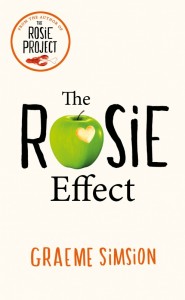 Thanks to Graeme, Penguin and FMcM Associates, we had ONE copy of The Rosie Effect to give away.
Well done to Derek Norton from Co Durham who has won a copy of the book.
About the book:
With the Wife Project complete, Don settles into a new job and married life in New York. But it’s not long before certain events are taken out of his control and it’s time to embark on a new project . . .
As Don tries to get to grips with the requirements of starting a family, his unusual research style gets him into trouble.
To make matters worse, Don has invited his closest friend to stay with them, but Gene is not exactly the best model for martial happiness. As Don’s life with Rosie continues to be unpredictable, he needs to remember that emotional support is just as important as practical expertise.
Join Don and Rosie in the next chapter of their weird and wonderful journey.
The Rosie Effect by Graeme Simsion is published by Michael Joseph on 25th September, £14.99 hardback
Follow Graeme on Twitter: @GraemeSimsion

 by
by  Thanks to Graeme, Penguin and FMcM Associates, we have ONE copy of The Rosie Effect to give away.
About the book:
With the Wife Project complete, Don settles into a new job and married life in New York. But it’s not long before certain events are taken out of his control and it’s time to embark on a new project . . .
As Don tries to get to grips with the requirements of starting a family, his unusual research style gets him into trouble.
To make matters worse, Don has invited his closest friend to stay with them, but Gene is not exactly the best model for martial happiness. As Don’s life with Rosie continues to be unpredictable, he needs to remember that emotional support is just as important as practical expertise.
Join Don and Rosie in the next chapter of their weird and wonderful journey.
How to enter:

 by
by  With the Wife Project complete, Don settles into a new job and married life in New York. But it’s not long before certain events are taken out of his control and it’s time to embark on a new project . . .
As Don tries to get to grips with the requirements of starting a family, his unusual research style gets him into trouble.
To make matters worse, Don has invited his closest friend to stay with them, but Gene is not exactly the best model for martial happiness. As Don’s life with Rosie continues to be unpredictable, he needs to remember that emotional support is just as important as practical expertise.
Join Don and Rosie in the next chapter of their weird and wonderful journey.
I have been looking forward to this book for months. I loved The Rosie Project so there was a little bit of an expectation with this follow-up. I don’t think you’d be able to read this one without reading The Rosie Project first. It doesn’t stand on its own.
It picks up where The Rosie Project left off. Don and Rosie are now married and are living in New York (I love this fact as New York is one of my favourite cities. I had my honeymoon there.)
I have to say, it was so lovely being back in Don’s company. He’s like a friend I’d not seen in a while. There is something so nice and endearing about him and something interesting in how he sees the world. He’s become one of my favourite characters. It was nice to catch up with the other characters in this book but to be honest, both books for me are about Don and how he copes with the world around him and this book certainly gives him loads to try and cope with. His and Rosie’s relationship is tested and some of what they go through can be very relatable.

 by
by  We are very delighted to be welcoming Graeme Simsion to our blog today and his blog tour for his new novel, The Rosie Effect which is the follow-up to the fantastic, The Rosie Project. Graeme talks to us about how writing much of the novel in New York influenced it.
I had about half of The Rosie Effect drafted, and a clear idea of where it was going, when I arrived in New York with my wife for three weeks in December 2013. We had spent seven months there in 2010, and this was a chance to catch up with friends and revisit favourite places. A holiday: but I had vague intentions of working on the novel, which I felt would benefit from being written ‘on location’. By the time we arrived, those intentions had crystallised into a plan: I would try to write two thousand words every day and finish the draft. As motivation, I promised myself that any day on which I failed to meet the target would be an alcohol-free day.
One of the pleasures of NYC is its bars and restaurants, and I’m a reasonably enthusiastic consumer of wine and the occasional cocktail (‘occasional’ meaning ‘on the occasion of being in New York and it being evening’). I didn’t miss a day. My wife was particularly impressed to find me up at 7 a.m. on Christmas morning, writing diligently. We had champagne with the turkey.

 by
by Nell is a member of the Romantic Novelists’ Association. Her books include Christmas Ever After, The New Bay Series and Radio Gaga. Today, Nell shares her five tips for new writers.
Read lots.
Keep writing.
Write what you love.
Don’t be scared to reach out to other writers.
Never be scared to edit.
For more information about Nell and her books, visit her website: www.nelldixon.com
Follow Nell on Twitter.
For more information on the Romantic Novelists’ Association, visit their website: www.rna-uk.org

 by
by 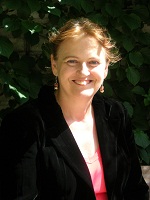 We are very happy to welcome Trisha Ashley to our blog today as we kick off the blog tour for her new short story, A Piece of Cake which was released today by Avon.
Trisha will be sharing one of her own recipes shortly but first, we review the book.
A Piece of Cake is the latest short story from best-selling novelist, Trisha Ashley.
Kate is an accomplished cake maker and is currently making the cake for her best friend, Laura who is getting married. Also, much to Kate’s annoyance, as if she’s not got enough to do, Laura is trying to play matchmaker and set Kate up with her groom’s best man, Wes. However, Kate has met Wes before and first impressions die hard. The last thing Kate wants is a romantic encounter with Wes.
This short story was so charming. Once I started reading I couldn’t stop. I am a huge fan of Trisha’s books and this one did not disappoint. Despite its length, it still has the humour and warmth that I would usually find in Trisha’s novels.
I found that the characters were well-rounded and I liked Kate and Laura’s dynamic.
Wes was an interesting love interest who is charmingly awkward toward Kate and this, to me made their relationship and interactions more realistic and believable.
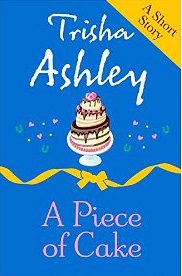 I read this book within about twenty minutes. I would love to know what happens next actually. This book is perfect if you are looking for a quick read before bed, or on the bus or looking for something to read for a relaxing session in the bath.
I loved A Piece of Cake. Bravo, Trisha.
To celebrate the release of her latest short story, Trisha shares with us her recipe for Caribbean-style Chocolate Rum cake and we have to say, it looks scrummy.
Caribbean-style Chocolate Rum Cake (Serves 12)
I spent some Christmases in Antigua and Grand Cayman, where I substituted the usual fruit cake for a local speciality, Rum Cake. You can get them in different flavours all over the Caribbean, but it’s taken me a few attempts to recreate anything similar at home. Here’s my recipe for chocolate rum cake, which is as close as I can get to the original and makes a perfect alternative to the traditional Christmas cake.

 by
by  A member of the Romantic Novelists’ Association, Janice’s debut novel, Mary & The Marquis was released by Mills and Boon Historical earlier this month. We chat to Janice about her book, her approach to her writing and her advice for new writers.
Can you tell us a little about your debut novel, Mary and the Marquis and how the idea originated?
Mary and the Marquis is set in Northumberland in the autumn of 1811. When destitute widow Mary Vale aids an injured man on the road, she is shocked to discover he is the reclusive Lucas Alastair, Marquis of Rothley. She’s intrigued by him, but when she offers to nurse him back to health in return for shelter he proves a difficult patient. Lucas hides some deep emotion beneath his brusque manner, and a stolen kiss leaves Mary longing for more… She’s able to help mend his physical injuries, but can Mary heal the wounds of his painful past?
The idea came from a mental image of a young woman, with two small children, walking through a gloomy wood. Suddenly a deep, rasping groan sounds from amongst the trees. Who is she? Why is she in that wood? Where is she going? What is that noise?
Did you plan much before starting the novel?
I probably knew more about Mary and Lucas’s pasts than I did about what would happen in the actual story. I had ideas for the turning points, but I didn’t plan in any great detail, which is probably why the editing caused me such headaches! I had to delete a few scenes entirely – always hard to do.
How do you approach editing?
Every day, I go over what I wrote the day before as a way of immersing myself back in the story. I do tend to edit at that point, although I’m well aware it can be a waste of time if that particular section ends up deleted (see previous question). I should try and break that habit!

 by
by  Paige Toon has worked at various magazines before becoming Reviews Editor at Heat Magazine. Her novels include The Longest Holiday and One Perfect Summer. Her new book, Thirteen Weddings was released in May. We chat with Paige about her book, her favourite word, Tom Cruise and Simon Cowell.
Can you tell us a little about Thirteen Weddings and where did the idea originate?
It’s about a wedding photographer who falls in love with a groom. The year before last I went to four weddings in one summer and I remember watching the wedding photographers and imagining what it would be like to be such an important part of two complete strangers’ ‘best days of their lives’ – I thought it would be an interesting subject for a story.
If Thirteen Weddings had a soundtrack, what songs would you include?
Love by Daughter – even Bronte listens to this song when she’s thinking about Alex. I also listened to a lot of Lana Del Ray while I was writing it – dark and moody yet totally beautiful.
What’s your favourite word and why?
‘Aah’ – I seem to say it a lot on Twitter when I’m conversing with my lovely readers!

 by
by 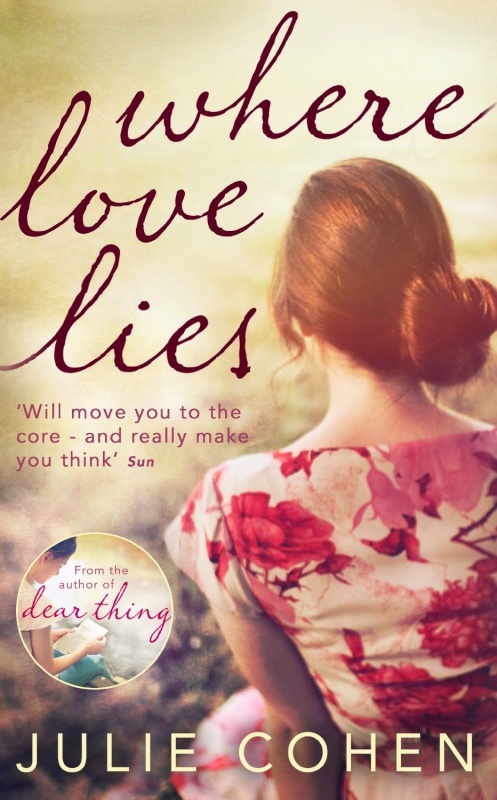 Thanks to Julie and the lovely people at Bantam Press we had THREE copies of Where Love Lies to give away.
Well done to Elaine from Lancashire, Rich from Surrey and Annette from Staffordshire who have all won a copy of Where Love Lies.
Here is a little about the novel:
Lately, Felicity just can’t shake a shadow of uncertainty. Her husband Quinn is the kindest person she knows and loves her peculiarities more than Felicity feels she deserves. But suddenly it’s as if she doesn’t quite belong.
Then Felicity experiences something extraordinary: a scent of perfume in the air which evokes memories that have been settled within her for a long time, untouched and undisturbed. As it happens again and again, the memories of a man Felicity hasn’t seen for ten years also flutter to the surface. And so do the feelings of being deeply, exquisitely in love . . .
Overwhelmed and bewildered by her emotions, Felicity tries to resist sinking blissfully into the past. But what if something truly isn’t as it should be? What if her mind has been playing tricks on her heart?
Which would you trust?
Where Loves Lies is available to buy via Amazon and other leading bookstores.

 by
by We are super excited to be welcoming Julie Cohen to our blog today. Julie is the best-selling author of Getting Away With It and Dear Thing. Her new novel, Where Loves Lies was released by Bantam Press on 31st July. We are very happy to be kicking off her blog tour today for her new novel. We chat with Julie about her book, her writing rituals and Sherlock Holmes…
Can you tell us about your new book, Where Love Lies and how the idea originated?
I’m calling it a sort of twisted love story. It’s about Felicity, who has been happily married to Quinn for a year—at least she thinks she is happily married. Until out of the blue one day she starts to smell the scent of frangipani, and along with that, she experiences overwhelming memories of a man she was in love with ten years ago, before she met Quinn. Believing this is some sort of sign, she leaves Quinn, to find Ewan, her first love, and discover why she is having these emotions. On the way she grapples with the different kinds of love, and tries to understand her own heart. But sometimes our heart is not ours to control…
I can’t actually tell you how the idea began, because if I did, it would give away part of the story! But it is based, very loosely, on something that actually happened to a friend of mine. I talk about it in a note at the end of the book, so you will have to read the book to find out! Sorry.
Which fictional character would you like to chat to and what would you talk about?
I am an enormous Sherlock Holmes geek, and have been for most of my life—so much so that I’m an official cartoonist for the Sherlock Holmes Society, and I’ve written an alt-reality Sherlock Holmes story that will be published later in the year, under my initials JE Cohen. So I would love to talk to Mr Holmes. In the stories, he’s a charming conversationalist as well as the world’s greatest detective. I’d like to go to dinner with him, and maybe a violin concert, and then I would tag along whilst he solved one of his cases!
Do you have any writing rituals?
I always make a soundtrack for my novels. Sometimes it’s songs that reflect what the book is about, and sometimes it’s just songs that I like and which get me in the mood for writing. My soundtrack for Where Love Lies included ‘Never Going Back’ by Fleetwood Mac, and ‘Our Day Will Come’ by Amy Winehouse.

 by
by
THIS COMPETITION IS NOW CLOSED.
Julie Cohen kicks off her blog tour with us today for her new novel, Where Love Lies which was released by Bantam Press on 31st July (we will shortly be chatting to her about her new book.)
Thanks to Julie and the lovely people at Bantam Press we have THREE copies of Where Love Lies to give away.
Here is a little about the novel:
Lately, Felicity just can’t shake a shadow of uncertainty. Her husband Quinn is the kindest person she knows and loves her peculiarities more than Felicity feels she deserves. But suddenly it’s as if she doesn’t quite belong.
Then Felicity experiences something extraordinary: a scent of perfume in the air which evokes memories that have been settled within her for a long time, untouched and undisturbed. As it happens again and again, the memories of a man Felicity hasn’t seen for ten years also flutter to the surface. And so do the feelings of being deeply, exquisitely in love . . .
Overwhelmed and bewildered by her emotions, Felicity tries to resist sinking blissfully into the past. But what if something truly isn’t as it should be? What if her mind has been playing tricks on her heart?
Which would you trust?
HOW TO ENTER:

 by
by 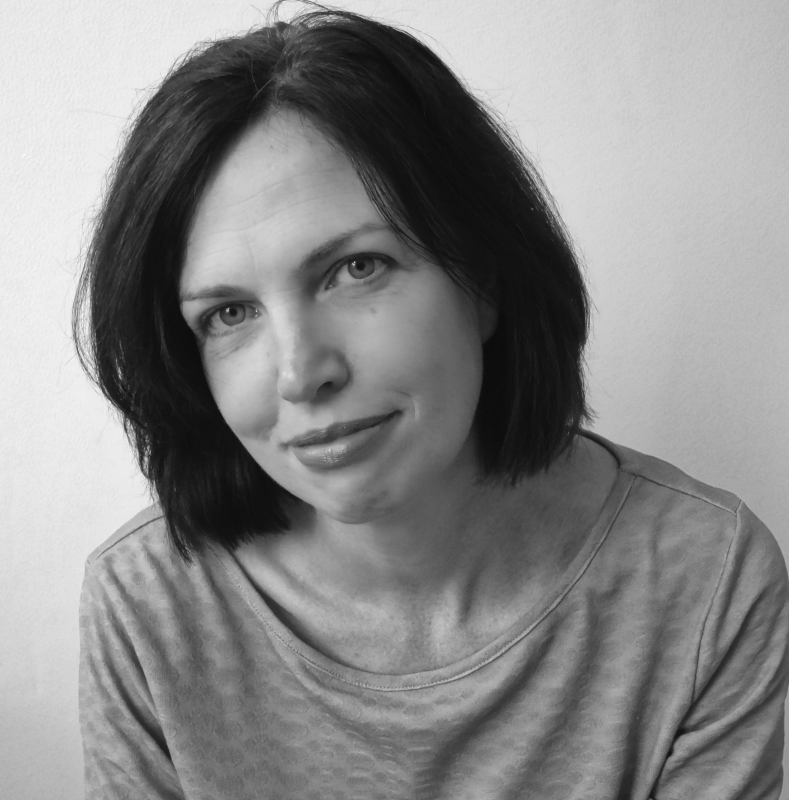 Kathryn’s first collection, Sunday at the Skin Launderette won the Forward Prize for best first collection in 2008. Her short stories have been published in magazines and broadcast on Radio 4. Her first novel, Love and Fallout was published by Seren Books in 2014. We chat with Kathryn about her book, her planning process and Oscar Wilde.
Can you tell us about your novel, Love and Fallout and how the idea originated?
The idea for the novel evolved from a short story I was writing about a charity worker who gets a sudden and unwelcome TV makeover. To help fill in my character’s history, I did some research into the Greenham Common peace camp where she’d protested as a teenager, and the more I read the more fascinated I became.
As I looked at film footage of the 1980s demonstrations, particularly ‘Embrace the Base’, when thirty-thousand women joined hands around the military airbase, I wondered where those women were now and what they might be doing. My original story grew: my character had a secret from her past, an old friend of hers turned up, and gradually a novel began to take shape.
What’s your planning process like when writing a novel?
This is my first novel so I don’t have a tried and tested method. Love and Fallout became difficult to control as the story expanded, and mid-way through I had to stop and properly consider the plot. Writing into the unknown is exciting, but I learned that it’s also necessary to have a loose idea of what’s ahead or you’ll write yourself into a corner.

 by
by 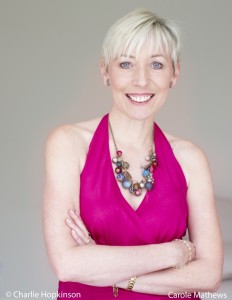 Carole Matthews is the best-selling author whose books include Summer Daydreams (which was nominated for the Melissa Nathan award,) and A Place to Call Home (which was released earlier this year.)
Today, Carole shares her five writing tips…
1. Write every day.
2. Write what’s in your heart.
3. Don’t follow the latest trend. By the time you’ve written your book, it will have passed.
4. Don’t make excuses about why you can’t find time to write.
5. Don’t give up. Determination is the key. And a great story, of course.
Carole can be found at her website, www.carolematthews.com

 by
by  We are very excited to be welcoming Jon Rance and his blog tour for This Family Life today. Jon’s previous novels include Happy Endings and This Twentysomething Life. His new book, This Family Life, is the sequel to Jon’s novel, This Thirtysomething Life and was released recently by Amazon Media (the kindle version is currently only 99 pence.)
Jon joins us today to talk about his new book and he also gives us a sneak preview too. Hi Jon and welcome….
Hello and a HUGE thank you to Novel Kicks for hosting what is the fourteenth stop on my ‘This Family Life’ Blog Tour. If you missed the last blog you can see it here http://hell4heather.com/
So hello again and today I’m going to talk about my new novel ‘This Family Life’. The book is written as a diary from the point of view of thirtysomething husband and new father, Harry Spencer. The book is the sequel to ‘This Thirtysomething Life’ and Harry’s job as a secondary school teacher wasn’t really integral to the plot in that book, but in ‘This Family Life’ I wanted to explore his career a lot more.
In this book, new father Harry realises that now he’s a parent it’s time he started taking his job more seriously, and so when he’s offered a promotion to head of department, he sees this as the chance to prove to his wife Emily, and more importantly to himself that he can do it. I was lucky enough to have a very good friend who’s actually a teacher and is also head of his department, and so he gave me some great inside information on what it’s really like.
The school scenes in the book were some of my favourite to write and I hope I conveyed what it’s really like. Obviously I added a lot more comedy and took some literary freedom with it, but I tried to add it bits of reality in a hopefully a humorous way. There’s a bit when Harry takes the job as head of department and he gets his new schedule, full of meetings, pre-meetings, training, and other tasks and he innocently asks, ‘And when am I going to find time to actually teach?’ and he’s laughed at, but he wasn’t joking. This is one of those moments that I know a lot of teachers have, and I hope that although in the book it’s sort of a joke, it’s something that teachers can relate to.

 by
by  Thanks to Kate and Transworld, we had three copies of Liberty Silk to give away to celebrate it’s release in the UK.
Well done to Rebecca Carden from Cambridgeshire, Charlotte Ingham from the UK and Tammy Tudor from Greater Manchester. You’ve all won a copy of the book.
About Liberty Silk:
One beautiful dress is the key to three brave women’s destinies.
France 1919: Jessie is celebrating the last heady days of her honeymoon. But when her husband suddenly disappears she finds herself bereft. Until a chance encounter thrusts her into the centre of the intoxicating world of Parisian high life.
Hollywood 1945: Lisa has come a long way from her quiet, unassuming life in London and is taking Hollywood by storm. But all that glitters is not gold, and as the smoke and mirrors of the lifestyle she so longed for shatter around her there are some secrets she can never escape.

 by
by Paige Toon worked at various magazines before becoming Reviews Editor at Heat Magazine. Her novels include The Longest Holiday and One Perfect Summer. Her new book, Thirteen Weddings was released in May. Today, Paige shares her five writing tips with us.
1. Write what you want to, not what you think you should.
2. If you’re stuck on a tricky scene, move on to something you want to write about and come back later.
3. Make sure your grammar and spelling is perfect before you even think about sending your book off to an agent. Ask someone you trust to check it over.
4. Consult the Writers & Artists’ Yearbook to find a few agents that are right for you – there are tips inside to help you draft a letter.
5. Don’t feel too disheartened about rejection – you can always self-publish your book and spread the word that way. It might just be that what you have written is not quite right for an agent at that particular time, but that’s not to say you won’t ever get a book deal. Don’t give up!
You can find out more about Paige by visiting www.paigetoon.com
Follow Paige on Twitter: @PaigeToonAuthor

 by
by 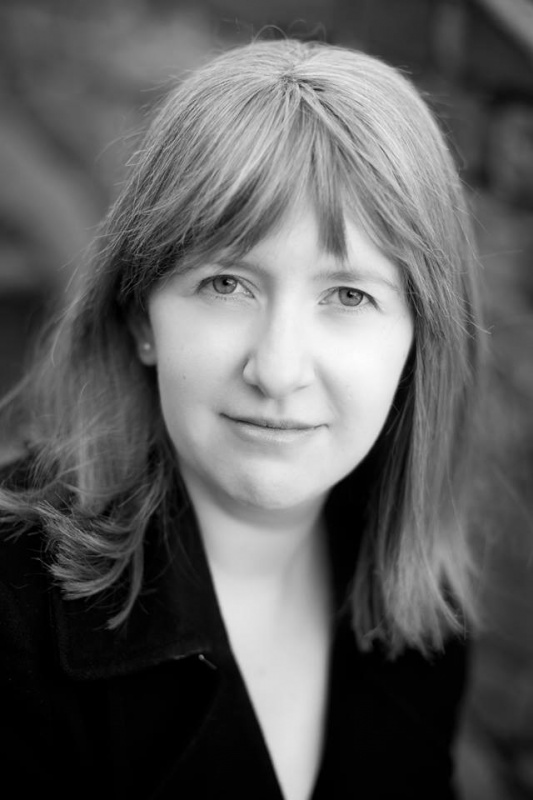 Amy’s first book, Yours is Mine was released by Carina in 2013. We catch up with her to chat about her latest book, Three Steps Behind You (which was released in March of this year.) We talk about her book, her writing rituals and James McAvoy.
Hi Amy, can you tell us about Three Steps Behind You?
Three Steps Behind You is a twisting tale of toxic friendship, psychopathic fixation and author identity. Set in North London and Soho, it tells of Dan, a crime writer who believes he has to experience everything in order to write about it. Method writing, if you will. But underlying Dan’s writing is the obsessional need to get closer to childhood friend, Adam, and Adam’s wife, Nicole. And he’ll keep trying until he achieves it – however brutal the method. The book is all first person through the eyes of Dan, so you really enter into his psychotic little world.
What attracted you to the psychological thriller genre?
I’m a big fan of Hitchcock, who is a real master of the psychological thriller on-screen. There is such technical skill in keeping an audience hooked, even as they feel uneasy, and I wanted to have a go myself. It’s also fun as a writer to create the very intense worlds that a thriller needs. You really immerse yourself in the world of your characters and the style of the genre. For Three Steps Behind You, I wrote my first draft in three months, which was a delightfully claustrophobic experience. Hopefully the reader then shares in some of that intensity.
Do you have any writing rituals?
I try to keep those to a minimum because I think they can be an excuse for not writing unless the ritual is complete – which would mean you couldn’t snatch small bits of time here and there to write. When I’m having a day devoted to writing, though, I generally go for a walk before I write, to wake my brain up, and remind myself about the outside world. Then as soon as possible after I return, I’ll draw back the curtains in my study, fire up my laptop, take off my watch, and start to write.

 by
by  We are very happy to welcome Lindsey Kelk back to Novel Kicks. Her new book, What a Girl Wants will be released by Harper on 17th July 2014. As part of her blog tour, we had a chat with Lindsey about anthems, favourite words and writing advice…
Hi Lindsey, can you tell us about your new book?
It’s called What a Girl Wants and it’s the follow up to last summer’s About a Girl. It’s fun, funny read, all about the choices people have to make in life and what the consequences might be if they make the wrong ones!
Which three words would best describe you?
Loyal, funny, tired
What song would be your anthem? Which one do you think Tess would pick?
Get Up by SLeater-Kinney. Tess would really struggle because she’s not good with music or bands. She’d probably let Amy choose it for her – actually, she should choose I Knew You Were Trouble!
Favourite word and why?
It would be one of the bad ones so I can’t say. Such a sense of satisfaction…

 by
by  We are very excited to welcome Kate Beaufoy and her blog tour to Novel Kicks. Her new book, Liberty Silk was released by Transworld on 3rd July. We chat to Kate about her book (look out for our review soon,) her writing tips and the fictional character she’d like to meet…
Can you tell us about Liberty Silk and how the idea came about?
After writing a dozen novels as Kate Thompson, I really wanted to write something different. The idea for Liberty Silk came about when I found a cache of my grandmother’s letters in the attic. Written nearly a hundred years ago, they were entertaining, moving and full of fascinating detail about life after the Great War, when she and her artist husband spent their honeymoon traveling through France and Italy. I decided to use the letters as a backdrop to an epic story spanning three generations and three continents, and – because I was writing in a different genre – I took the opportunity to avail of a nom de plume. Beaufoy was my grandmother’s maiden name.
Are you a planner, and do you edit as you go?
Most of my plans consist of scraps of paper covered in indecipherable handwriting, which I discover lying around the house after the novel has been finished. Lots of my ideas get trashed during the writing process, as do some characters. I’ll fine a note to myself saying something like: ‘Louisa’s star sign is Gemini’, and then I’ll wonder ‘who the hell is Louisa?’
I never used to edit as I wrote, and was in the habit of notching up massive daily word count of two to three thousand words (one day I worked for thirteen solid hours and notched up six thousand!), but these days I edit rigorously and continuously – I’m lucky if I manage a thousand words a day (this does not suit all writers, many of whom prefer to finish before they edit). As for how the book ends: I usually have the last sentence in my head all the way through, from day one. And I always, always cry when I finish a novel. I’m actually inconsolable.
Is there a book you’ve read that has made a big impact on you?
I wish I could say there was, but I think that the impact books make is a cumulative thing. I don’t remember a time I couldn’t read, and every book I’ve opened since has made some kind of impact on me, whether positive or negative. You can learn a lot about writing from reading books that you consider badly written, and asking yourself why.
Do you have any writing rituals?
I can write mostly anywhere, but I love a space where I can spread notes, books, print-outs, photographs, etc. I know immediately where I can lay my hands on something, even though it all looks madly disorganised. I also prepare a flask of very strong black coffee at the start of every writing day, and often eat lunch at the computer. I do try and exercise every morning, but sometimes I start work almost the minute my eyes open, and spend the day working in bed, especially when I’m approaching the end of a novel. Then I lock myself away for thirty-six hours until I type ‘The End’.
If you could time travel for a day, where would you go and why?
It depends on the book I am working on. For Liberty Silk I should have loved to have travelled to the French Riviera in the 1920s to meet up with the crowd of hedonists I wrote about – Coco Chanel, Pablo Picasso, Scott Fitzgerald and his wife Zelda, who was the darling of the jazz age. And of course, there is the allure of 1940s Hollywood, an era that also features in the book. It seems über glamorous, but during the days of the big studios women – even some of the most fabulous stars – were treated like so much cattle. The book I am currently working on is set during the Victorian era; but since much of the action takes during the time of the Irish famine, I can say that it is one of the periods in history I would emphatically least like to visit.
Is there a fictional character you’d like to meet?
I would like to meet Teddy Lloyd, the cool, rather sexy art master in Muriel Spark’s famous novel, The Prime of Miss Jean Brodie. The character is said to be based on my grandfather, who was a remarkably charismatic man.
Favourite Word?
It changes every day. Yesterday it was ‘lachrymose’, today it is ‘svelte’.
Five tips for new writers?
1: Here is a brilliant trick! I learned it by accident, when I cut and pasted an extract of my work into the body of an email and read it back. Either do just that, or reformat your writing, using a different font and paragraph layout. This helps you to read it with a completely new sensibility.
2: Don’t announce to anyone who isn’t a close friend that you’re embarking on a novel. You will regret it every time someone asks if you have finished it/found an agent/when your publication date is.
3: An extension of tip 2, above: Don’t be tempted to post details of your progress on social media. Aspiring writers will not love you when you declare that you have completed 100,000 words when they are struggling with their first chapter.
4: When your first draft is finished, don’t show it to ANYONE who does not love you. Even the best of friends can have an agenda, and Schadenfreude is an occupational hazard. You don’t need to be told that you’re the new Donna Tartt, but you do need to be handled with kid-gloves.
5: Try not to let your research show. You may have done painstaking homework on beautiful Bugatti motors, but your reader does not need to know that the 1919 models were fitted with overhead camshaft 4-cylinder 1,368cc engines.
About Liberty Silk:
One beautiful dress is the key to three brave women’s destinies.
France 1919: Jessie is celebrating the last heady days of her honeymoon. But when her husband suddenly disappears she finds herself bereft. Until a chance encounter thrusts her into the centre of the intoxicating world of Parisian high life.
Hollywood 1945: Lisa has come a long way from her quiet, unassuming life in London and is taking Hollywood by storm. But all that glitters is not gold, and as the smoke and mirrors of the lifestyle she so longed for shatter around her there are some secrets she can never escape.
London 1965: Cat, headstrong and independent, drawn to danger and passionately opposed to injustice, has no idea of the legacy that precedes her. Once past secrets are unveiled, she has the chance to find out what liberty really means…
An evocative story of survival, betrayal and the invincibility of love.
Visit Kate’s website at http://www.katebeaufoy.com
Liberty Silk was released by Transworld on 3rd July and is available in paperback and e-book. Buy from Amazon.

 by
by  As part of of the Blog Tour for No Mercy, we had two copies of the book to give away thanks to John and Avon.
Well done to Carol Peace and Tracey Walsh who have both won a copy.
About the book:
The peaceful town of Wintersville is a place safe from the crime and congestion of city life, where neighbours feel like family. It’s the perfect place to live.
But when a teenager is discovered brutally murdered in the woods, it becomes clear that a psychopath is roaming the streets. Dr Ben Stevenson, the town’s medical examiner, and father of two young boys, becomes entangled in the hunt for the murderer, determined to keep his family safe.
But as Ben uncovers the dark secrets of his seemingly quiet community, he confronts a truth that will haunt him forever and puts those he loves in serious danger.
(No Mercy was released by Avon on 3rd July 2014 and is availalbe in paperback and e-book.)

 by
by  Kathryn Freeman made herself a new year resolution back in 2010 to make time to write her novel. Too Charming was released digitally by Choc Lit in September 2013. Her new book, Do Opposites Attract? was released on 7th July 2014. We chat with Kathryn about her book, her theme song and Scooby Doo…
Hi Kathryn. Thank you for joining us. First, can you tell us about your route to publication? How important was joining the RNA New Writers scheme to you?
At the time it felt as if my route was a long and bumpy one, going nowhere, but looking back now it could have been so much worse! I didn’t write my first book until around 5 years ago, but once I’d got the bug I couldn’t stop writing. Of course there followed several years of disappointments when I sent the first few books off to agents and publishers and the rejections flooded in. Then I did my research (umm, perhaps I should have done this first?) and sent the next two manuscripts to the NWS. That, I believe, was my turning point. I followed their advice and submitted the amended versions to Choc Lit – and was stunned and delighted when both were accepted.
Can you tell us a little about your new book, Do Opposites Attract?
The story line came from my desire to write about a rough, gruff hero who’d had a dubious upbringing but was trying to put it all behind him. He became Mitch McBride, Chief Medical Officer for a charity called Medic SOS who provide medical aid to areas devastated by a natural disaster. While he’s out working in a tornado hit part of South America, he meets Brianna Worthington, his opposite in every way.

 by
by  I’m pleased to welcome Tracy Buchanan to Novel Kicks. As part of the blog tour to celebrate the release of The Atlas of Us, we have an extract from the book. Happy reading!
Her voice trails off, her eyes losing focus as the bus slows down. A large spiky roof with gold spires comes into view, a mountain shrouded in trees behind it. As the bus draws closer, the whole temple appears before us, curved and ornate with tiered icing-sugar walls and arched windows fringed with gold. Two painted tiger statues adorn its entrance, looking ready to pounce on the frantic relatives and tired- looking officials hurrying around the busy area in front of it. This must be where the foreign embassies are: white canopies, rows and rows of photo boards, lines of desks weighed down with paperwork and flags.
I try to find the Union Jack among all the other flags, as if it might blur the strangeness of this place a little. But all I can see is a tiny beige monkey that is weaving in and out of the table legs. I make a mental note to tell the girls about it. They’ll want to know things like that when I get back. They don’t need to know about the bodies I’ve seen floating in the sea, nor the turned-over cars.

 by
by The Atlas of Us is about family, loss, resilience, reconciliation and hope…
When Louise Fenton flies to Thailand to find her mother, Nora, after the Boxing Day tsunami, she fears the worst when the only trace she can find is her mother’s distinctive bag. In the bag is a beautifully crafted atlas owned by travel journalist Claire Shreve, with her notes and mementos slipped in-between the pages. The journal tells the story of Claire’s struggle to find her place in the world following a life-altering revelation, and a tumultuous love affair.
Louise treks across Thailand’s scarred landscape, exploring Claire’s atlas to try to make sense of the connection between this woman and the mother she is so desperate to find.
As devastated people are beginning to put their lives back together, Louise uncovers the secrets that nearly destroyed Claire and the man she loved – the same secrets her mother has been guarding all these years …
This book has such a beautiful cover but from the blurb, I was intrigued to find out how the author was going to tackle the subject matter (the story is set around the tsunami that happened in 2004.)
Told from the point of view of two seemingly unconnected women, Louise and Claire, the story immediately drew me in. It does jump around between the two storylines but this helped build up the mystery and suspense – that urge to keep turning the page as I wanted to know what would happen. I particularly resonated with certain aspects of Claire’s life.

 by
by  We’re very happy to welcome Kerry Fisher to Novel Kicks. As part of her blog tour to celebrate the release of The School Gate Survival Guide, Kerry talks to us about her new book, her writing rituals and The Famous Five.
Hi Kerry. Can you tell us a little about The School Gate Survival Guide and how the idea originated?
The idea came to me years ago when I lived in Italy and noticed that social snobbery was mainly confined to job title and geographical location – north vs. south. I was often introduced as ‘Dottoressa (Doctor) Fisher’ even though I’ve got a degree in languages! (I was always terrified there’d be some medical emergency and I’d have to say, ‘I can’t help with the heart attack but I can give you a hand with the subjunctive’.) When I came back to Britain, I noticed that there were all sorts of little social judgements constantly taking place – where you came from and your job was just the beginning. So I decided to write a humorous book about class and thought that the school gates would make a perfect comedic vehicle – a kind of Downton Abbey in a contemporary school setting.
If you were told you were only allowed to pick three things to survive, what would they be?
I’m not going to count my family as they’re a given. My needs are very few, but I couldn’t survive without the friends I’ve know for years. I don’t think anything can compete with that feeling of flopping down with a glass of wine and bouncing from topic to topic without having to fill in any back story. The dog is pretty vital – I love walking her and seeing the changing seasons. If I didn’t have her to exercise me, I’d have to spend even more time being ridiculed by my children when I hula-hoop on the Wii Fit! I don’t care about ‘stuff’ – I hate shopping and am still dinosauring about with an ancient mobile, much to the despair of my daughter. If I were really pushed for something else, I’d have to say, as a service to humankind, I should continue to have pedicures to avoid contaminating the environment with my aesthetically displeasing duck-billed platypus feet.

 by
by  Feisty Maia Etxeleku is a cleaner for ladies who lunch. She spends her life wiping up spilt Sauvignon and hoovering around handbags before rushing back home to skivvy after her children’s feckless father on an estate where survival depends on your ability to look the other way.
But an unusual inheritance catapults her into a different world where no child can survive without organic apricots and Kumon maths classes – and no woman can contemplate a week without Pilates and pedicures.
As she blunders through a middle class minefield, dashing from coffee mornings to her mops and buckets, she is drawn to the one man who can help her family fit in. But is his interest in her purely professional or will her modern My Fair Lady experiment end in disaster?
Maia is a character with whom the reader can immediately empathise with and I liked her straight away. She had an honest feeling about her. She is a mother of two who is working hard to make a better life for herself and her two children, Harley and Bronte. Her partner, Colin, is very little help. He’s lazy, unemployed and feels entitled to sponge off Maia who struggles to make ends meet working as a cleaner.

 by
by